


The outbreak that ended America’s measles-free status began 24 days before RFK Jr. took office. The decline in vaccination began years before that. And “failure to vaccinate” was never the whole story.
On November 17, the Pan American Health Organization announced that the United States had lost the measles elimination status it had held since 2000, after concluding that the virus had circulated continuously for at least 12 months (PAHO).
Within hours the story had a single cause and a single culprit. Kentucky Governor Andy Beshear said the setback “was 100% avoidable and is the result of one person: RFK Jr.” and added, “Remove him now” (Yahoo News). Pennsylvania Governor Josh Shapiro said there is “a clear line from the misinformation, vaccine skepticism, and incompetence of RFK Jr. to this devastating news” (Yahoo News). Politico’s headline reported that Democrats blame Kennedy and are weighing oversight (Politico).
One person. That is a claim that can be checked against a calendar, and against the same official documents the headlines were built on.
This article does that. Then it does something the coverage has not done: it takes the Secretary’s own promise to talk honestly about “vaccine benefits and risks” and follows it through. The MMR vaccine reduces overt measles. The outbreak is real. Neither fact makes “one man did this” true, and neither makes “failure to vaccinate” the whole story.
The clock started before he did
Elimination status is lost when one chain of measles transmission continues in a country for 12 months or more (PAHO technical Q&A). So the first question is when the chain began.
PAHO’s answer is in its own briefing for journalists: “United States: outbreak began on 20 January 2025; the 12-month threshold was reached on 20 January 2026” (PAHO technical Q&A).
Robert F. Kennedy Jr. was sworn in as Secretary of Health and Human Services on February 13, 2025 (HHS). That is 24 days after the date PAHO gives for the start of the outbreak that cost the country its status.
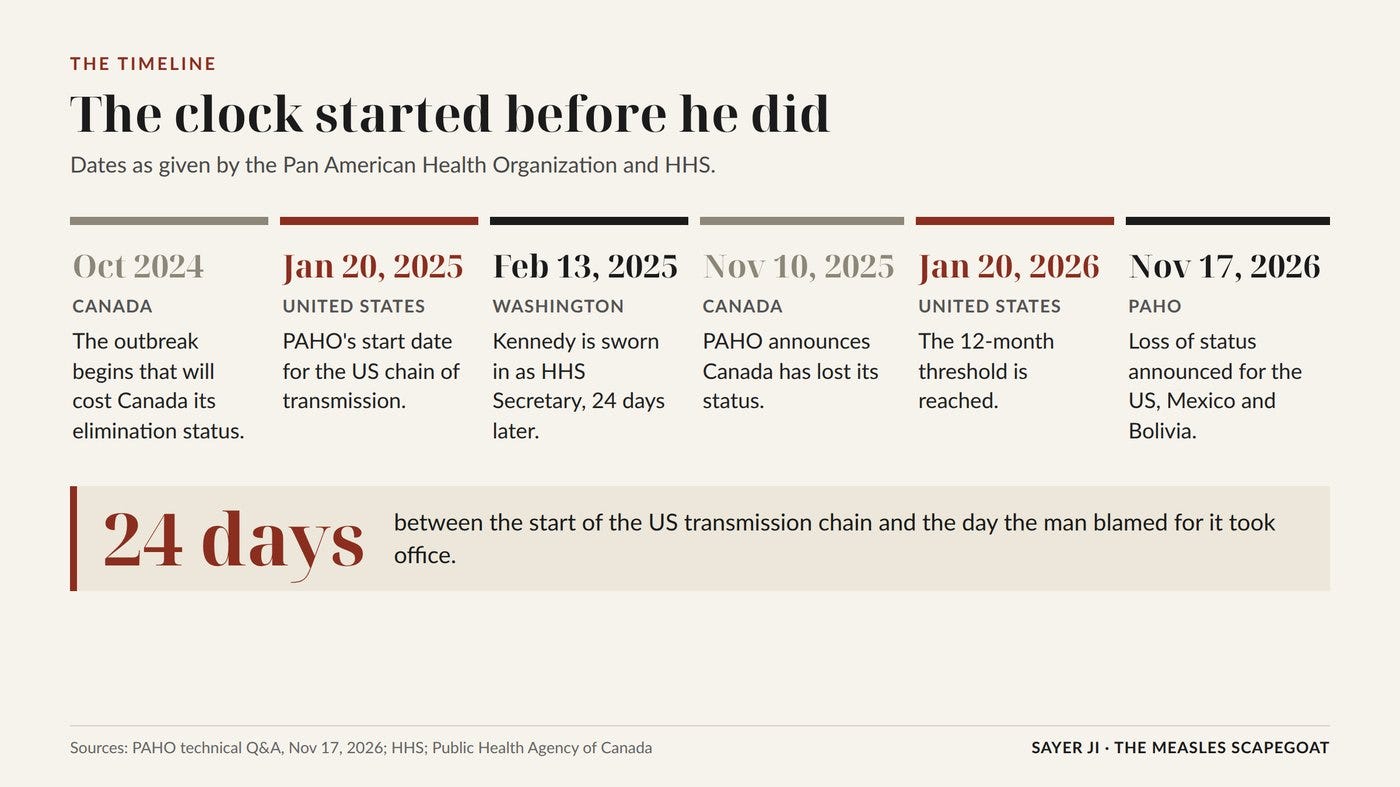
The United States was not the first to fall. Canada’s outbreak began in October 2024, and PAHO announced the loss of Canada’s status on November 10, 2025 (PAHO technical Q&A; Public Health Agency of Canada). Mexico and Bolivia lost theirs in the same announcement as the United States (PAHO). In Europe, six countries were found to have lost elimination status on the basis of 2024 data: Armenia, Austria, Azerbaijan, Spain, the United Kingdom and Uzbekistan (PAHO technical Q&A).
None of those countries has Robert F. Kennedy Jr. as its health secretary.
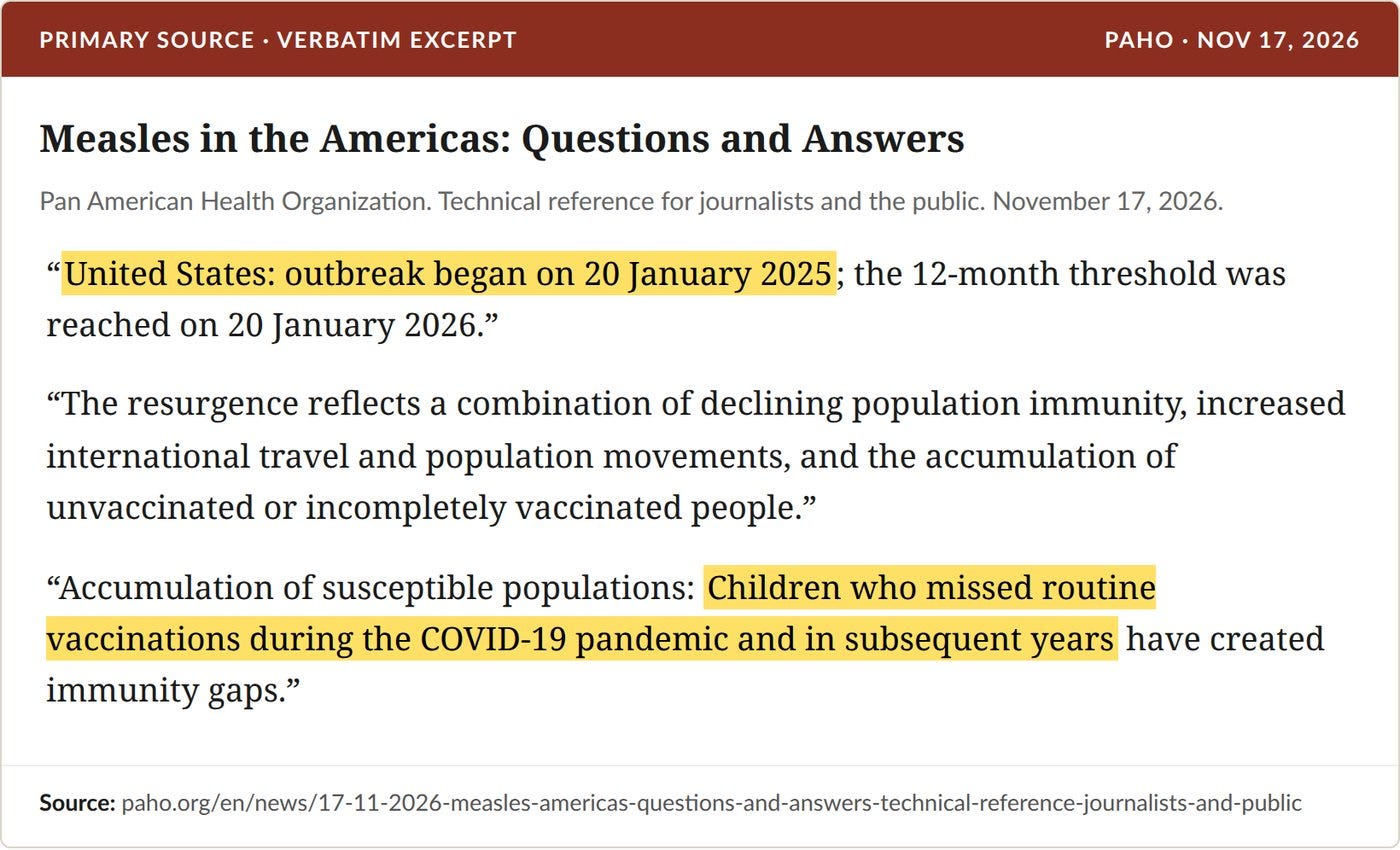
PAHO’s explanation of why measles came back does not mention any American official. It says “the resurgence of measles is a global challenge” and lists overlapping factors: declining coverage, children who missed routine vaccinations “during the COVID-19 pandemic and in subsequent years,” uneven coverage between communities, hesitancy and misinformation, barriers to health services, and international travel (PAHO technical Q&A).
The decline began in 2020
The critics’ strongest evidence is vaccination coverage, so it deserves a straight look.
The share of US kindergartners with two MMR doses was 95.2% in the 2019–20 school year. It then fell to 93.9%, 93.0%, 93.1%, 92.7%, and 92.5% by 2024–25 (CDC COCA call slides). Every one of those school years began before Kennedy took office. In 2025–26, the first school year to begin on his watch, coverage was 92.4% (CDC SchoolVaxView).
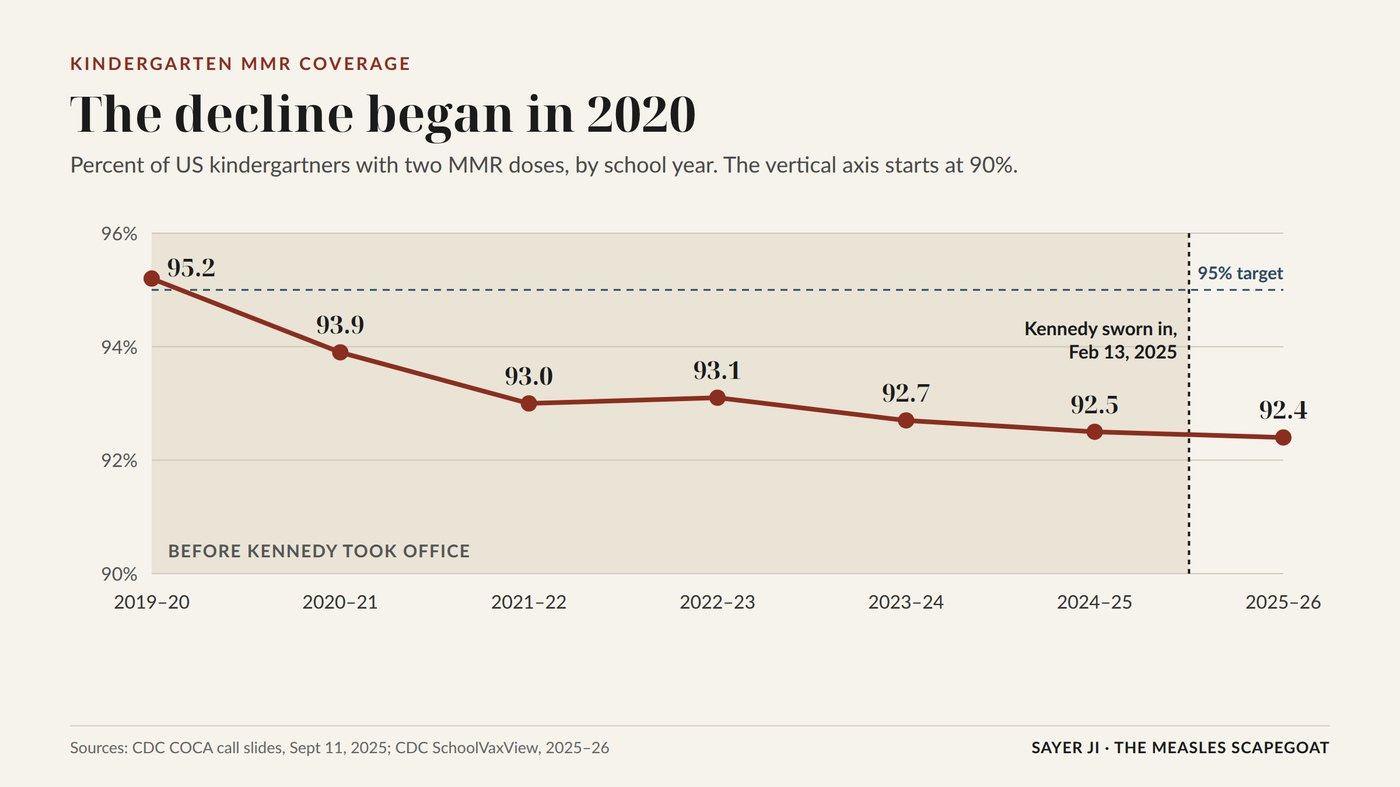
Put plainly: of a 2.8-point decline, 2.7 points were already gone.
THE TECHNICAL RECORD, AND THE OTHER SIDE’S BEST POINT
In 2025–26, exemptions from one or more vaccines among kindergartners rose to 4.2% from 3.6% the year before, a bigger one-year move than the 0.1-point change in coverage (CDC SchoolVaxView). That is a fair thing for his critics to raise. There is also a serious version of their argument that no calendar can settle: that Kennedy spent years, as a private citizen, raising doubts about vaccines, and that this fed the decline. That is a claim about influence, and people can argue it honestly. It is a different claim from the one the governors made, which is that a 26-year status was lost because of what one official did after February 13, 2025.
Public confidence follows the same calendar. In July 2024, seven months before Kennedy was sworn in, Gallup found that 40% of US adults said it was “extremely important” for parents to vaccinate their children. In 2019 the figure was 58% (Gallup).
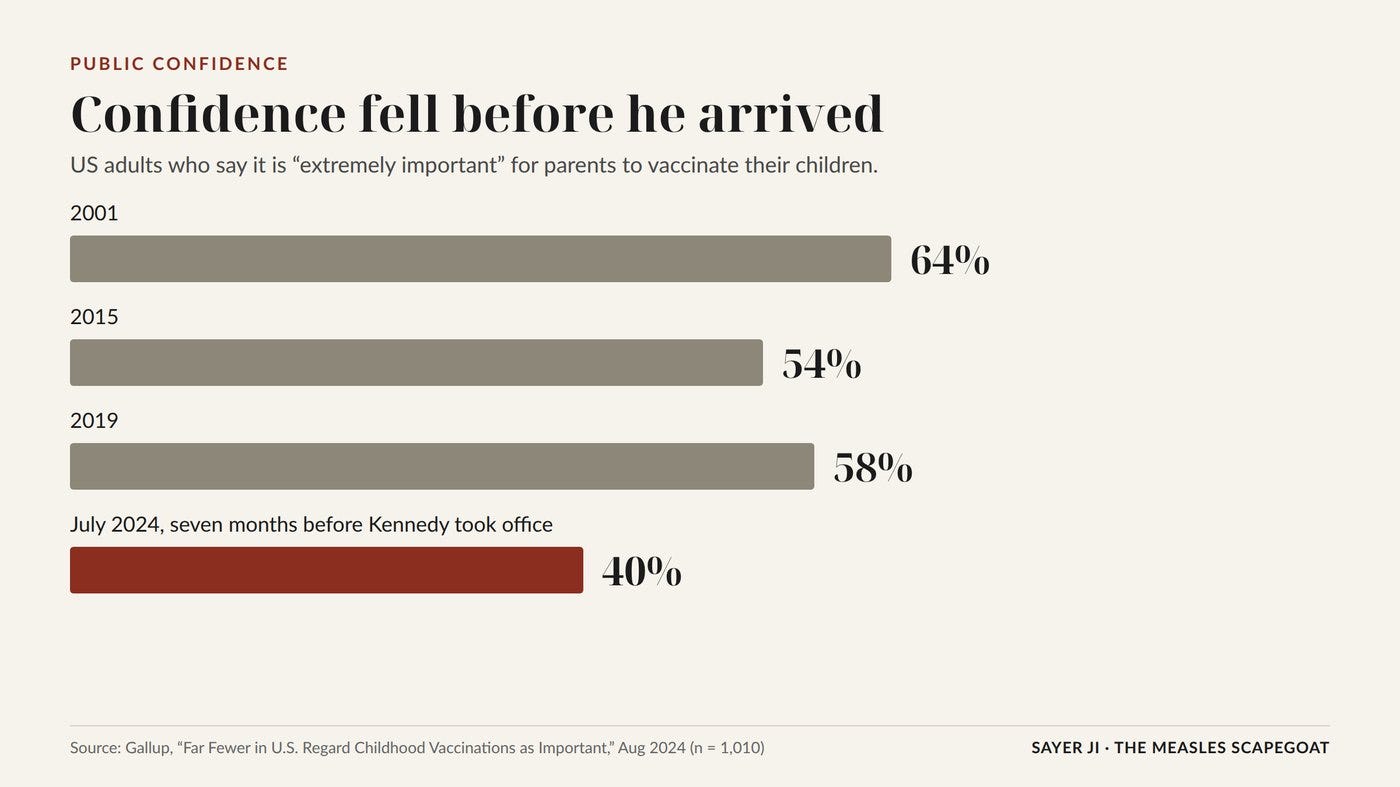
Something broke between 2019 and 2024. Kennedy did not run the public health agencies in those years.
What Kennedy actually said
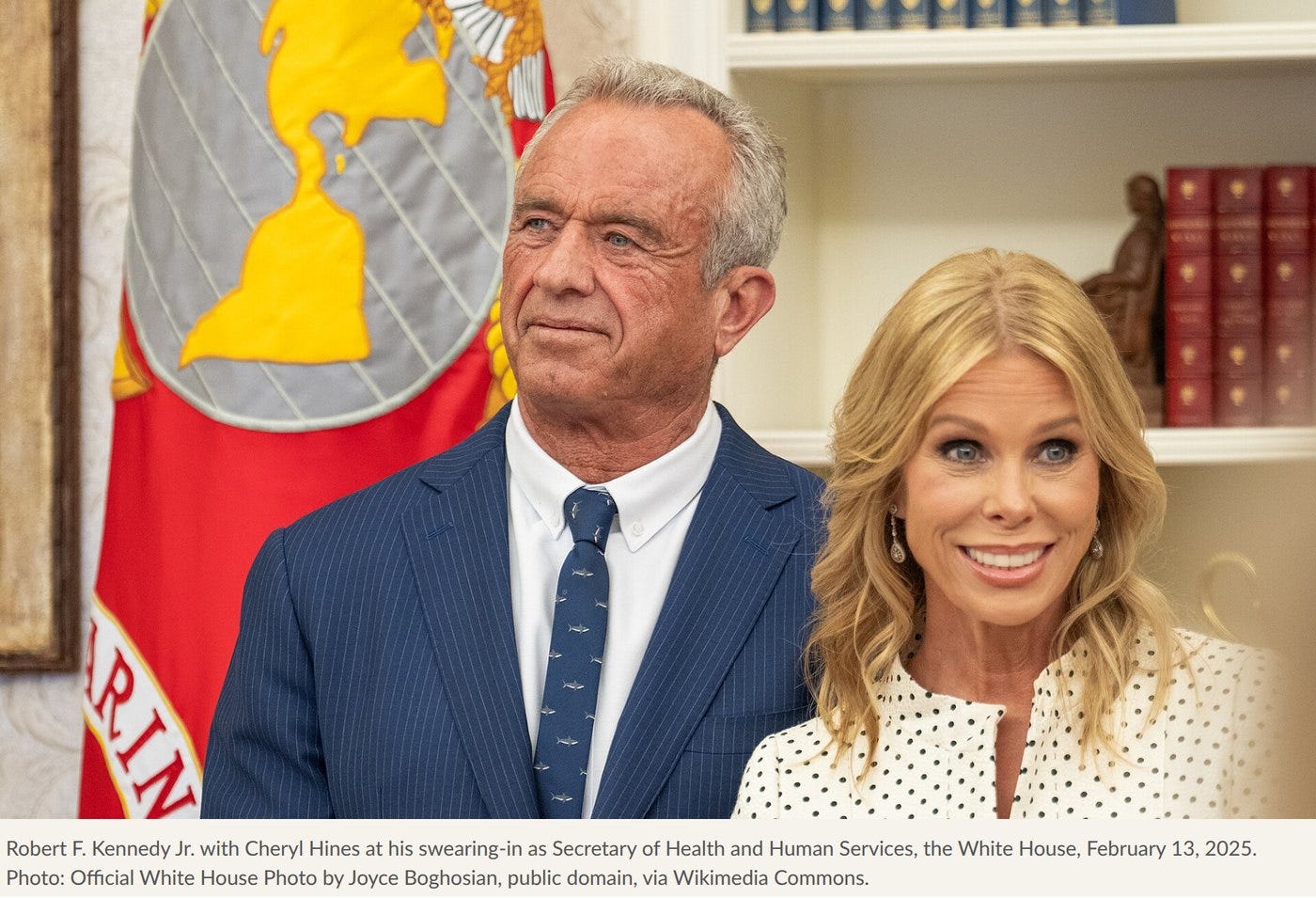
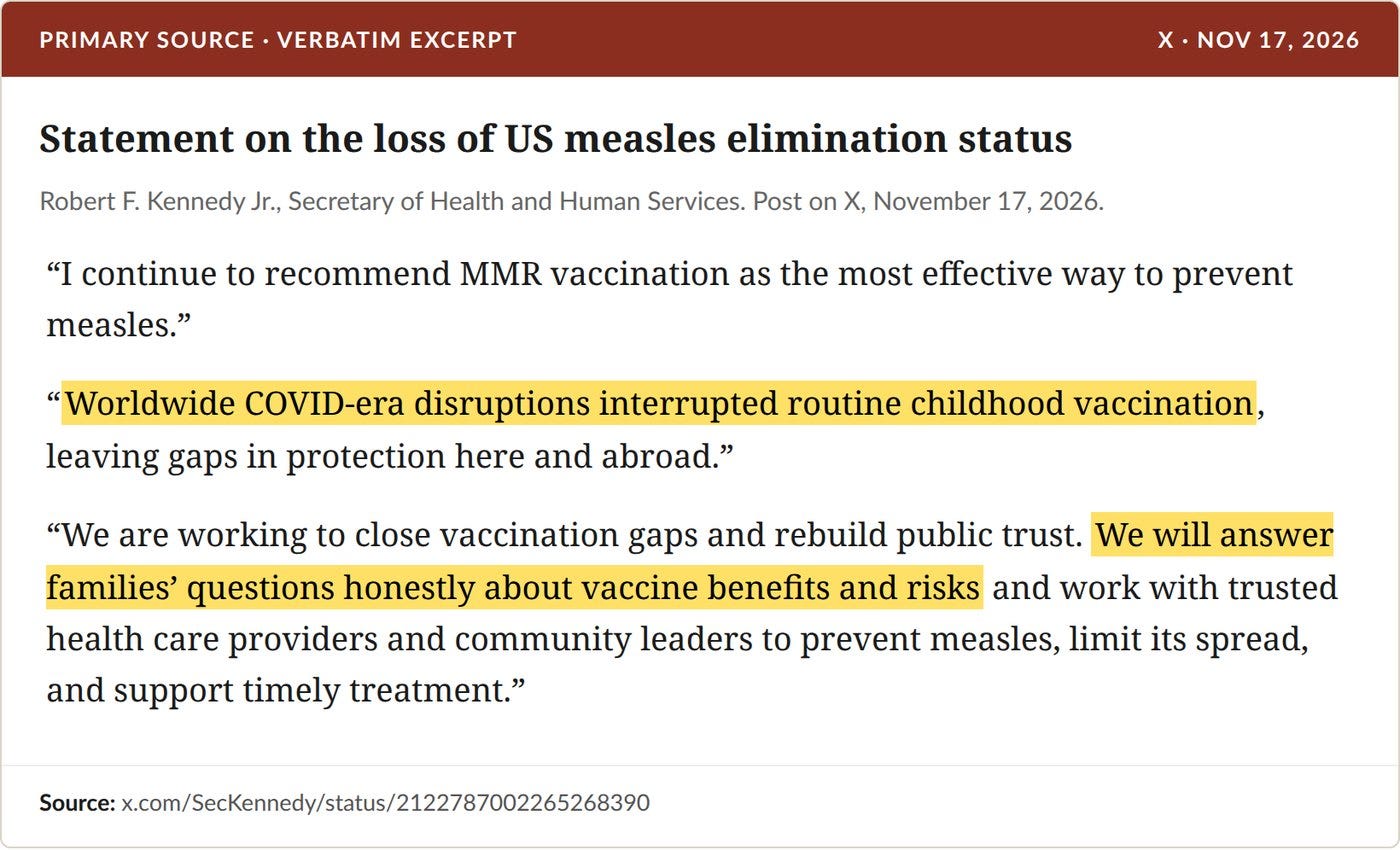
Read the statement he posted on the day of the announcement. It opens: “We will stop measles outbreaks, protect American families, and work to regain U.S. measles elimination status. I continue to recommend MMR vaccination as the most effective way to prevent measles” (Kennedy on X).


He then names the cause the governors left out: “Worldwide COVID-era disruptions interrupted routine childhood vaccination, leaving gaps in protection here and abroad” (Kennedy on X). That is the same factor PAHO lists.
And he makes two commitments that I think matter more than anything else in the statement.
The first: “We will answer families’ questions honestly about vaccine benefits and risks.”
The second: “We will support Americans who become ill, regardless of vaccination status, and for the first time equip health care providers with guidance to diagnose and treat measles and its complications” (Kennedy on X).
The federal response is also on the record. CDC says it has provided approximately $100 million in additional funding since August for measles and other vaccine-preventable diseases, and the director of PAHO, the body that withdrew the status, said: “We commend the significant efforts undertaken by the United States to manage the measles outbreak” (CDC joint statement).
So the man blamed for measles is recommending the measles vaccine, his department is funding the outbreak response, and the organization that made the ruling has commended that response. Whatever one thinks of him, “the result of one person” is not what the documents show.
He is right that the shot reduces measles. At what cost?
Kennedy’s statement is correct on the central point, and I am not going to pretend otherwise. As of November 12, CDC counted 5,412 confirmed cases in 2026. Ninety-six percent were in people classed as unvaccinated or of unknown vaccination status, 2% had one MMR dose, and 2% had two (CDC). Where the virus has been sequenced at scale, it is wild-type measles, not the vaccine strain (Emerging Infectious Diseases).
The MMR vaccine reduces overt measles. That is settled. Whether it contributes to subclinical shedding and measles-associated harms and infection, or exosomal shedding with adverse consequences, remains to be fully investigated and established.
And so, what is not settled is the other half of his sentence: benefits and risks. A program can work and still carry costs. A public that is told only about the benefits eventually stops believing the people doing the telling. That, more than any one official, is what the Gallup line shows.
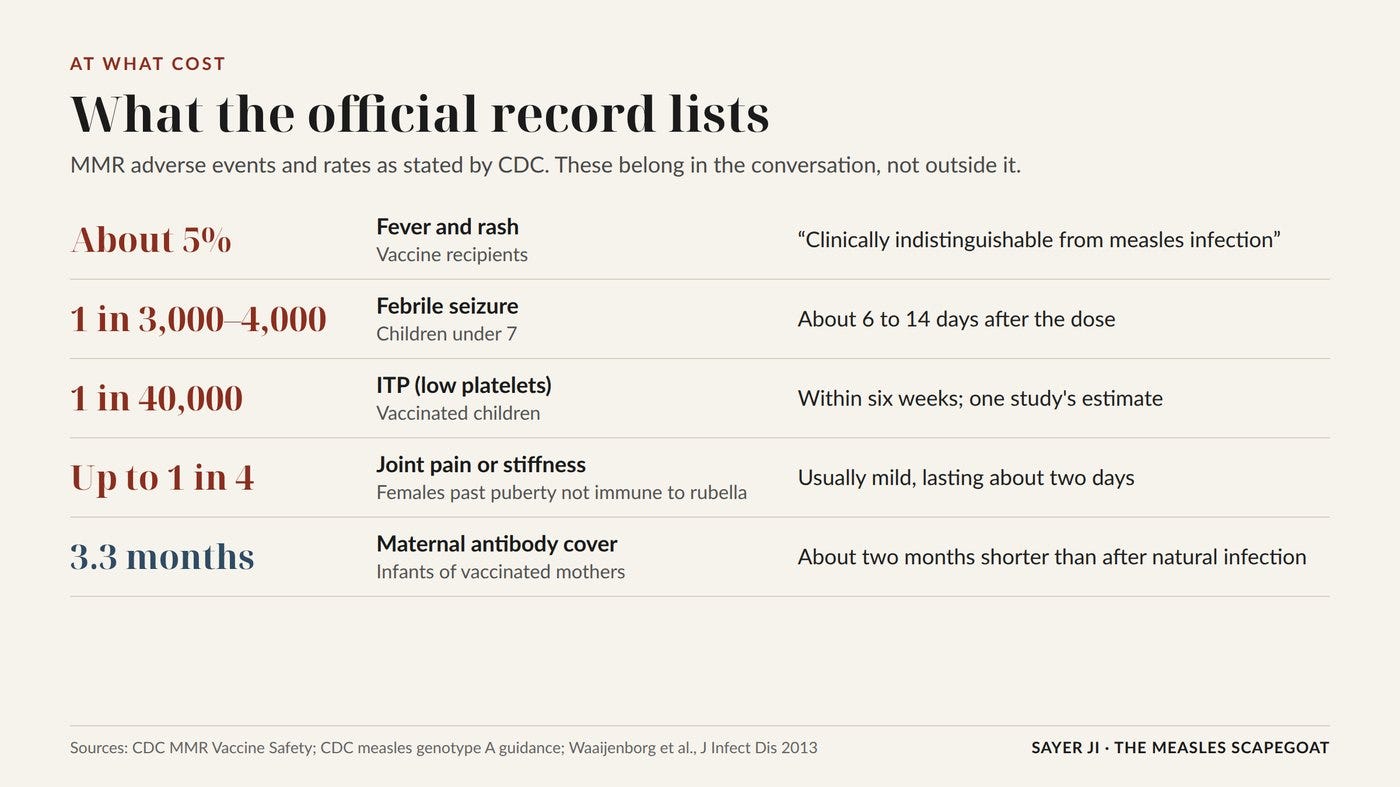
Here is what the official record itself lists.
THE TECHNICAL RECORD
CDC states that febrile seizures occur in about 1 in 3,000 to 4,000 children under 7 in the 6 to 14 days after MMR; that the risk of immune thrombocytopenic purpura (ITP) is raised for six weeks, with one study estimating 1 case per 40,000 vaccinated children; and that joint pain or stiffness occurs in up to 1 in 4 females past puberty who were not already immune to rubella (CDC MMR Vaccine Safety). Federal law requires that the Vaccine Information Statement, which lists risks and contraindications, be given before every dose (CDC; MMR Vaccine Information Statement). None of these figures shows that the risks outweigh the benefits, and CDC calls the MMR vaccine “the best way to protect against measles and its complications” (CDC clinical overview). They show that there is a ledger, and that it has two columns.
Beyond the listed side effects, there are four costs the “failure to vaccinate” story leaves out. Each one comes from the agencies’ own papers.
Cost one: the vaccine fails in a known minority
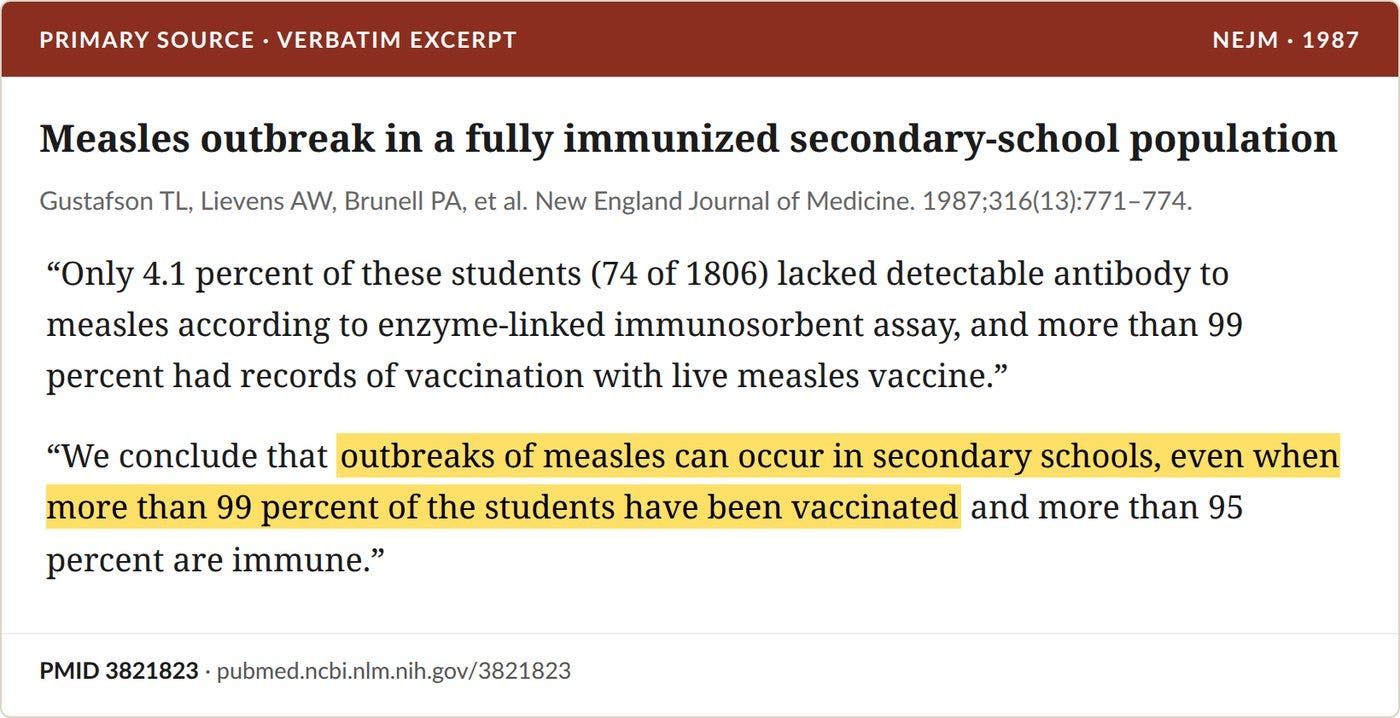
In the 1980s, measles moved through American schools where almost everyone had been vaccinated.
Corpus Christi, Texas, 1985. More than 99% of students had records of vaccination. The authors concluded “that outbreaks of measles can occur in secondary schools, even when more than 99 percent of the students have been vaccinated and more than 95 percent are immune” (Gustafson et al., NEJM 1987).
Montana, 1985. 137 cases over 12 generations of spread, in schools where 98.7% of students were appropriately vaccinated (Davis et al., American Journal of Epidemiology 1987).
Colorado, 1988. 84 cases at a college where more than 98% of students had documented immunity; 83% of the cases had been vaccinated (Hersh et al., American Journal of Public Health 1991).
Quebec City, 1989. 1,363 confirmed cases in a population with 99.0% coverage. The authors wrote: “Incomplete vaccination coverage is not a valid explanation for the Quebec City measles outbreak” (Boulianne et al., Canadian Journal of Public Health 1991).
THE TECHNICAL RECORD, AND ITS LIMITS
These were single-dose-era outbreaks, and the same papers report the vaccine working in most recipients: effectiveness was 96.9% in Montana and 94% in Colorado (Davis et al.; Hersh et al.). What they show is narrower: a few percent of non-responders is enough to sustain measles in a crowded, highly vaccinated setting. CDC’s own history says 1989 “measles outbreaks among vaccinated school-aged children” prompted the second dose (CDC), and CDC states that “the second dose of MMR is administered to address primary vaccine failure” (CDC clinical overview).
“Vaccine failure” is a term from the agencies’ own literature. It is not an invention of critics.
Cost two: vaccinated people can catch it and pass it on
In 2011 a New York City outbreak began with a patient who had two documented doses. Four contacts caught measles from her. The authors called it “the first report of measles transmission from a twice-vaccinated individual with documented secondary vaccine failure” (Rosen et al., Clinical Infectious Diseases 2014).
In 2026 a systematic review put numbers on it. Across 33 studies it found 70 vaccinated people who transmitted measles, producing 237 secondary cases and 812 cases in total once later generations were traced (Wright et al., Expert Review of Vaccines 2026).
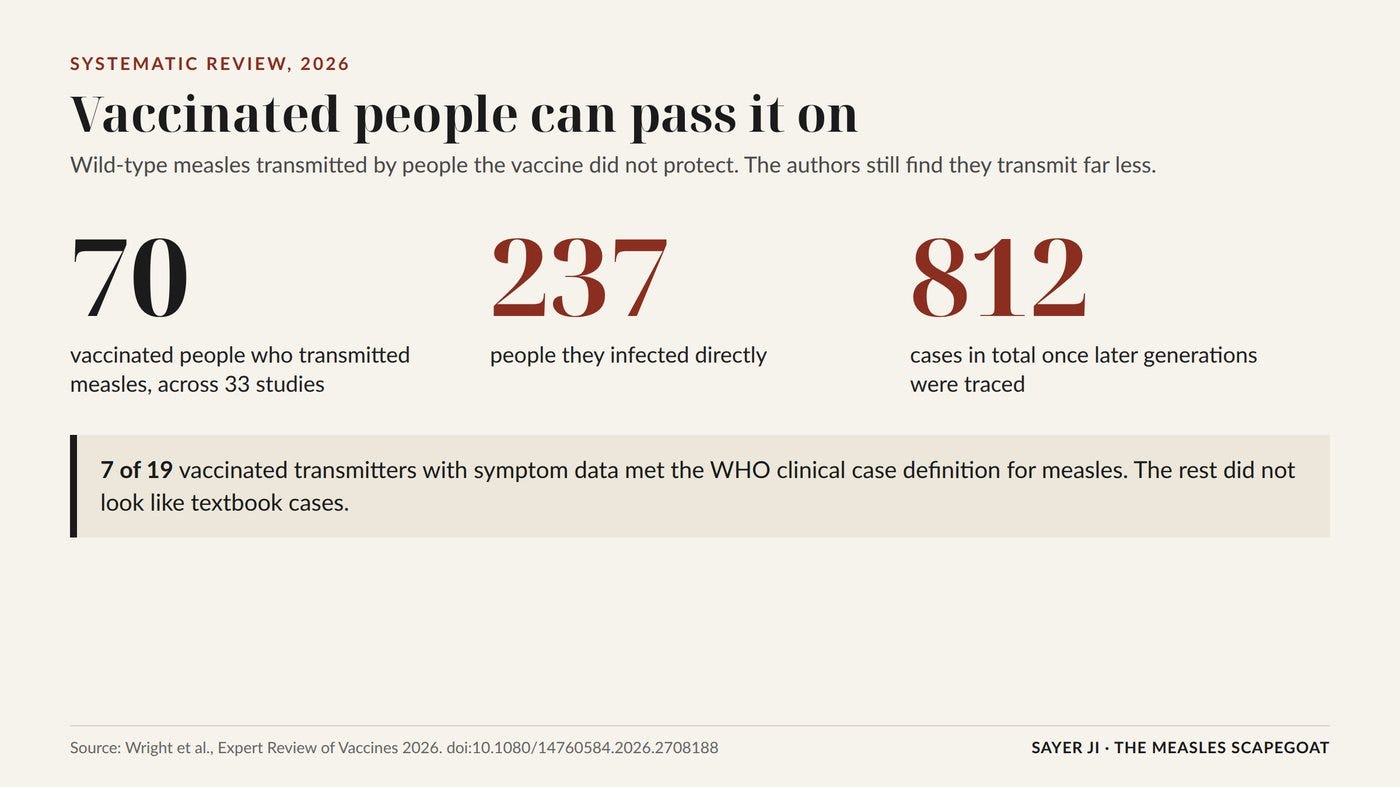
One finding deserves more attention than it got. Of the 19 vaccinated transmitters with symptom data, “only 7 of 19 (36.8%) transmitters met the WHO measles clinical case definition” (Wright et al.). Breakthrough measles is often mild and does not look like the textbook. A surveillance system that tests people who look like textbook measles will tend to miss it.
THE TECHNICAL RECORD, AND ITS LIMITS
This is wild-type measles passed on by people the vaccine did not protect. It is not the vaccine virus spreading. Vaccinated cases also transmit less: in 2,218 US cases from 2001 to 2017, the average number of people each patient infected was 0.76 for the unvaccinated, 0.17 for one-dose recipients and 0.27 for two-dose recipients (Gastañaduy et al., JAMA Pediatrics 2020). I covered this literature in Vaccinated People Can Spread Measles.
Vaccinated people are not the engine of this outbreak. They are also not the sealed firewall the public has been told about. Both statements come from the same studies.
Cost three: the shot produces a measles look-alike
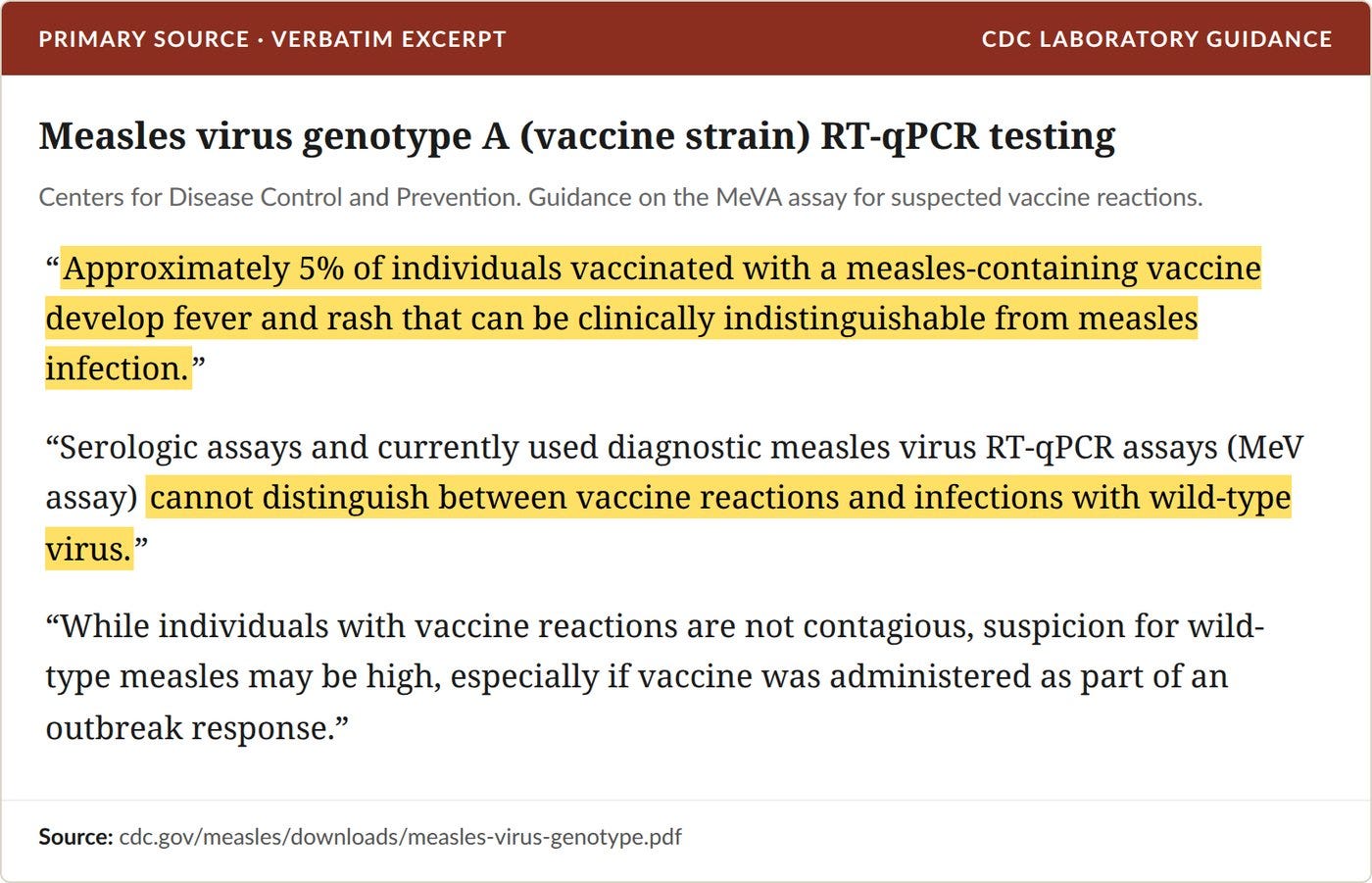
MMR contains a live, ostensibly ‘weakened’ measles virus. In a minority of recipients it causes an illness that looks like measles. CDC’s laboratory guidance says: “Approximately 5% of individuals vaccinated with a measles-containing vaccine develop fever and rash that can be clinically indistinguishable from measles infection” (CDC genotype A guidance).
It also tests like measles. The same document: “Serologic assays and currently used diagnostic measles virus RT-qPCR assays (MeV assay) cannot distinguish between vaccine reactions and infections with wild-type virus” (CDC genotype A guidance). Only a strain-specific test or sequencing can tell them apart, and CDC’s manual says genotype identification “is required to distinguish wild type from vaccine strain if vaccinated within 21 days of rash onset” (CDC surveillance manual, chapter 7).
This is not hypothetical. In 2019 New Hampshire announced a confirmed measles case in a child and published the places where others might have been exposed. Days later it reversed itself: the child had been vaccinated shortly before, and genotyping found the vaccine strain (NH Division of Public Health Services; NHPR).
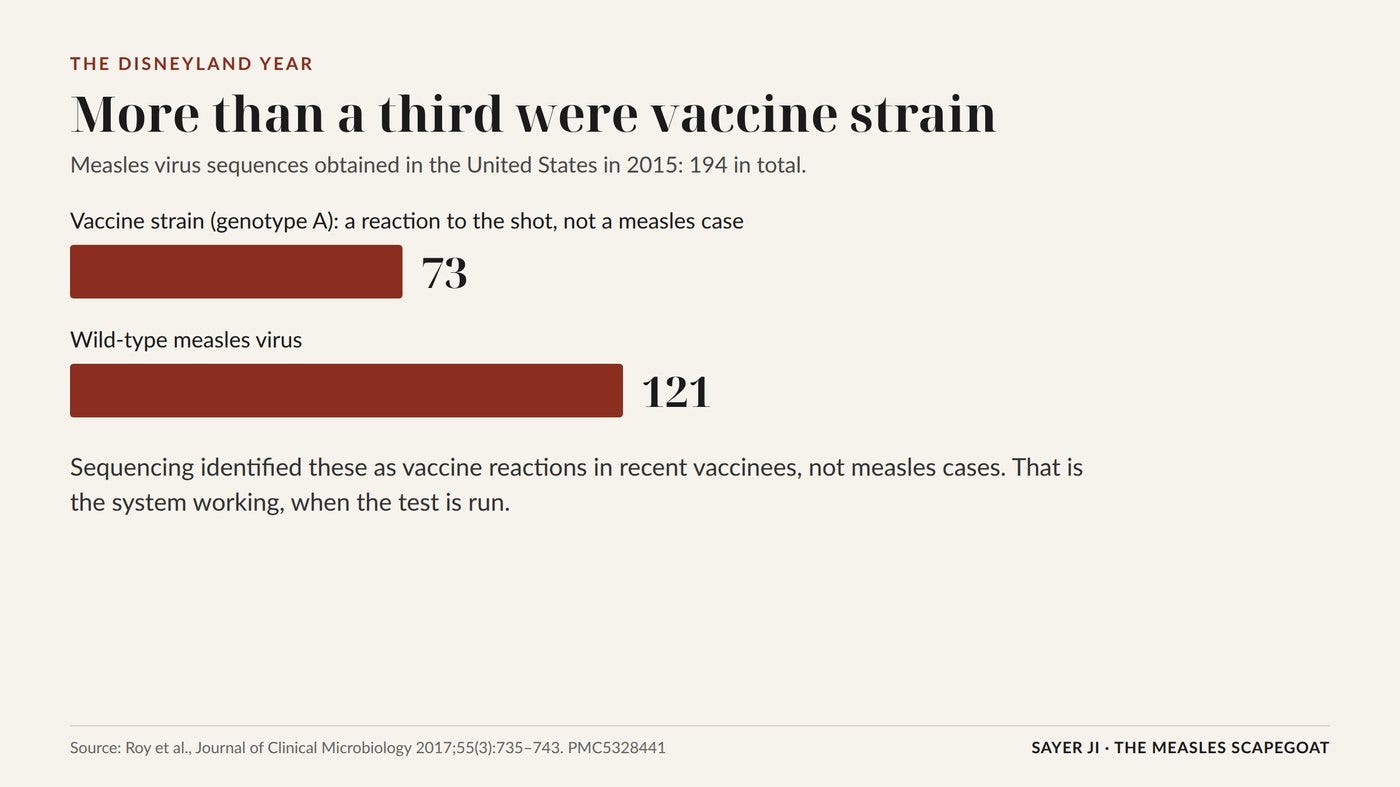
And in the Disneyland year, the scientists who built the vaccine-strain test reported that “of the 194 measles virus sequences obtained in the United States in 2015, 73 were identified as vaccine sequences” (Roy et al., Journal of Clinical Microbiology 2017).
Now set that beside an outbreak response. Pennsylvania providers normally give about 25,000 MMR doses a month. In September they gave more than 56,000, and in October nearly 62,000 (Pennsylvania Department of Health).
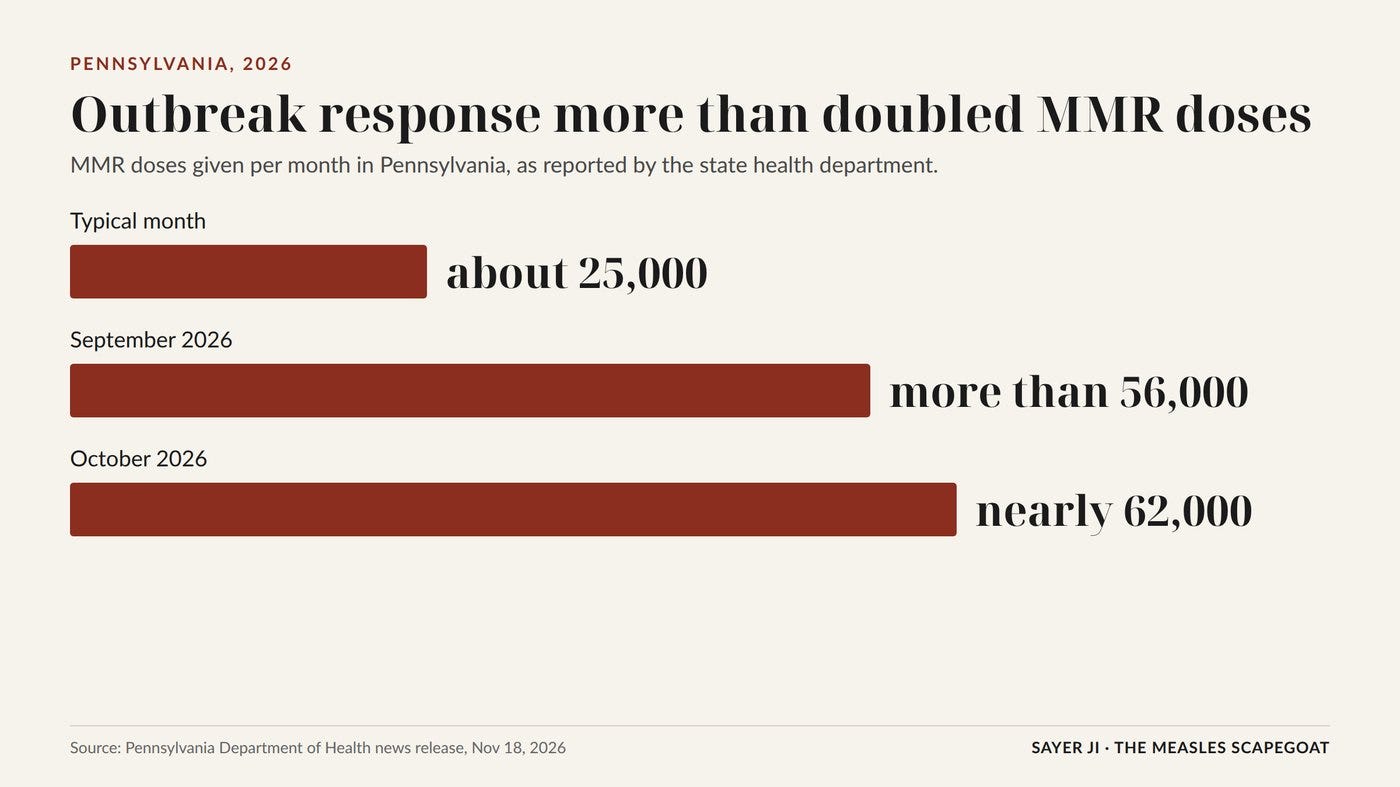
That is roughly 68,000 doses above the usual level in two months. If even one in a hundred of those extra recipients developed a fever-and-rash reaction, that would be several hundred measles look-alike illnesses in outbreak counties. The true number is unknown, and reactions are less common in people getting a second dose. But anyone swabbed in the weeks after the shot could test positive on the routine assay.
THE TECHNICAL RECORD, AND ITS LIMITS
A vaccine reaction is an illness in the person vaccinated. No study has confirmed it passing to anyone else: a systematic review of 773 articles found “no evidence of human-to-human transmission of the measles vaccine virus” (Greenwood et al., Vaccine 2016), and CDC’s guidance states that “individuals with vaccine reactions are not contagious” (CDC genotype A guidance). Vaccine RNA can be detected in children’s noses for up to 29 days after the dose (Washam et al., Journal of Clinical Virology 2024), but detection is not transmission. I reviewed the unconfirmed reports in The Measles Certainty Gap. The honest position is that vaccine-strain spread is undemonstrated, not that it is or is not happening.
The system has an answer for the look-alike problem: test recent vaccinees with the strain-specific assay and exclude the reactions. The trouble is that nobody publishes whether that was done, how often, or with what result. And the media runs with the story that the unvaccinated are the cause, before anyone even thinks to do the proper validation work.
Cost four: a count that does not show its work
Three features of measles surveillance decide what the headline numbers mean.
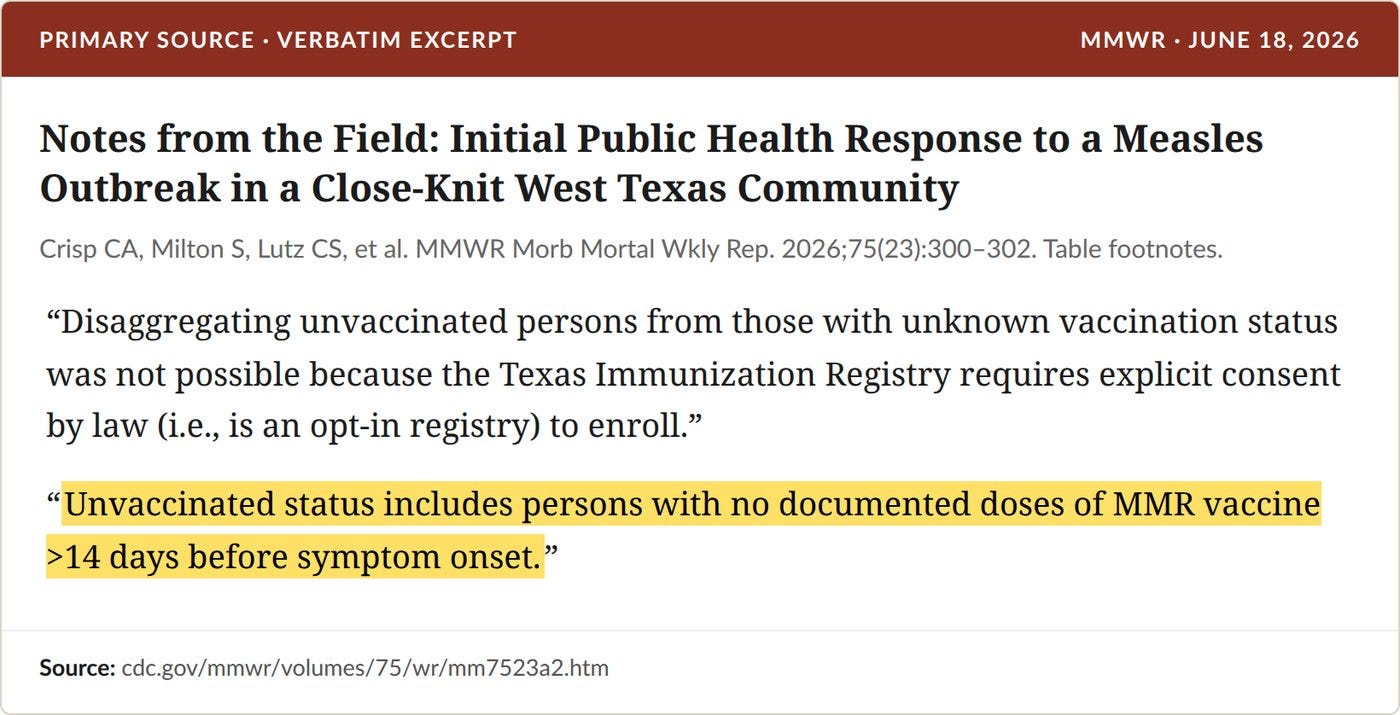
“Unvaccinated” does not always mean never vaccinated. In CDC’s report on the West Texas outbreak, the definition reads: “Unvaccinated status includes persons with no documented doses of MMR vaccine >14 days before symptom onset” (MMWR 2026). A child who got a first dose at an outbreak clinic and developed fever and rash nine days later is, under that rule, unvaccinated. That is the same window in which vaccine reactions appear. There is a defensible reason for the rule, since a dose given days earlier has not had time to protect. But it means the “unvaccinated” column can contain the very people for whom CDC says strain testing is required.
“Unvaccinated or unknown” is two groups reported as one. In early 2025, 96% of cases were unvaccinated or of unknown status; outside Texas, where the two could be separated, 77% were unvaccinated and 14% unknown (MMWR 2025). In the Texas genome study, 38.7% of sequenced patients had unknown vaccination status (Emerging Infectious Diseases).
A confirmed case does not require a strain test. A case can be confirmed by an epidemiologic link to a laboratory-confirmed case (CDC surveillance manual). In the one national report that gave the figure, specimens from 251 of 800 cases were sequenced, and all 251 were wild-type (MMWR 2025).
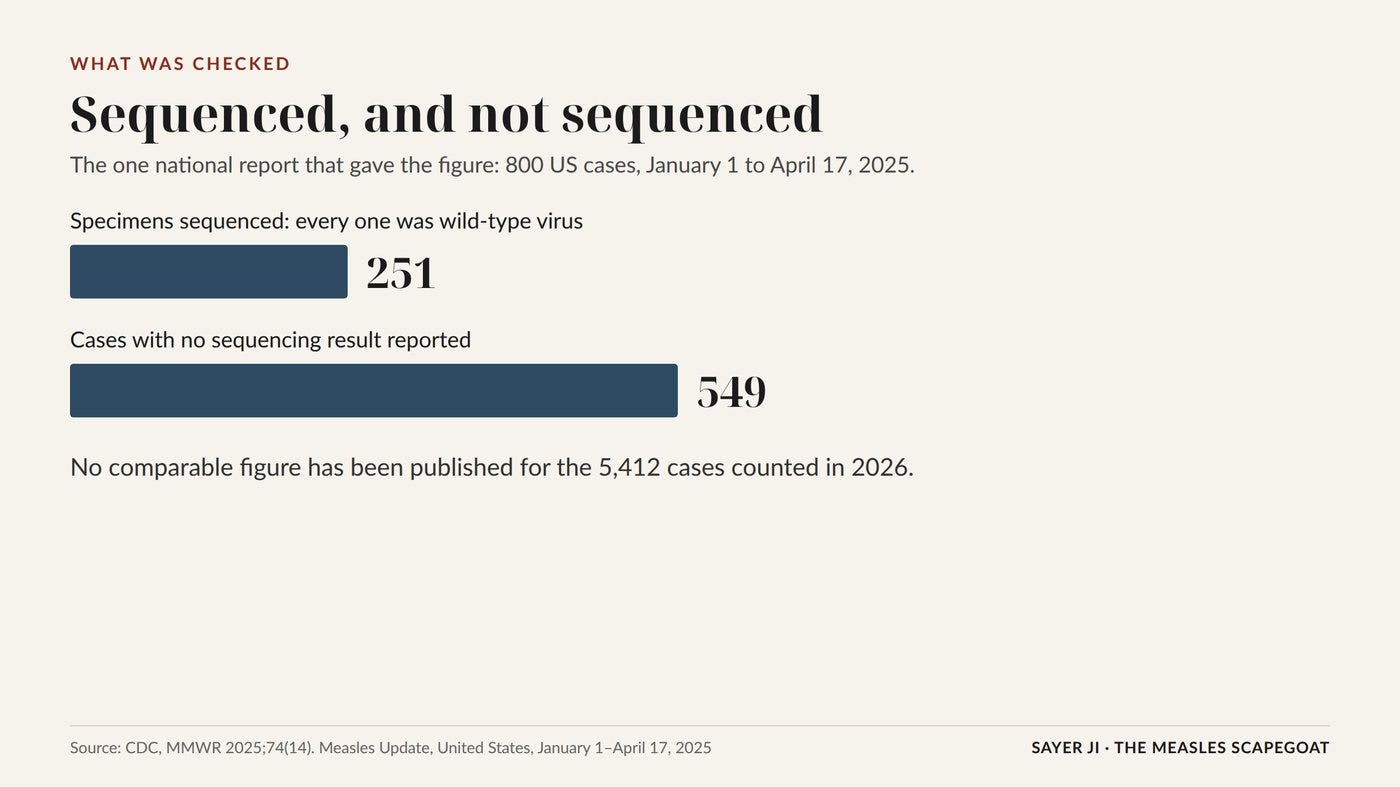
That is real evidence of what is circulating, and I do not dispute it. It is also a 31% sample from early 2025. For 2026, PAHO’s briefing describes the “same genotype and lineage” standard but gives no US genotype or sequencing count (PAHO technical Q&A), and CNN reported that “it’s not clear what data the committee relied on” (CNN).
Without the denominator, “96% unvaccinated” is a figure the public is asked to take on trust. Trust is exactly what is in short supply.
Measles hysteria in perspective
Hours after the announcement I posted this.
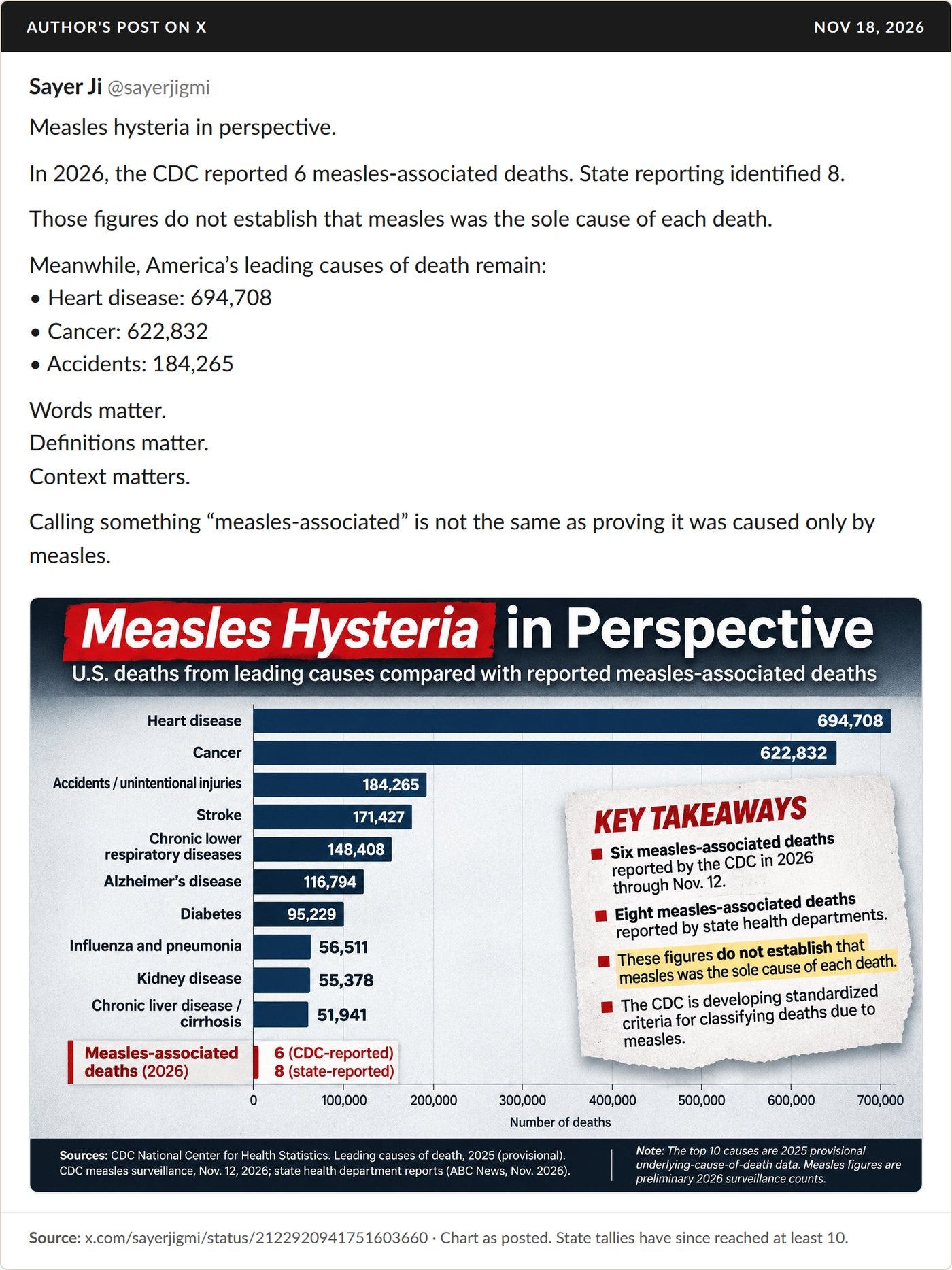
The leading-cause figures are the federal government’s own provisional counts for 2025: heart disease 694,708, cancer 622,832, unintentional injuries 184,265 (National Center for Health Statistics). You can read the post on X.
The measles numbers have moved since, and they should be stated as they stand. CDC lists six measles-associated deaths (operative word “associated”; dying ‘with’ measles is not the same thing as dying ‘from’ measles. State health departments had reported ten by November 13 (ABC News), and Pennsylvania confirmed its eighth on November 18 (Pennsylvania Department of Health).
The gap between those totals is the point. CDC’s figure is the lower one, and the agency has switched to counting from death-certificate data (Reuters). Pennsylvania counts a death as measles-associated when a person with confirmed measles dies within 30 days of symptoms, unless the death resulted from an unrelated event (Al Jazeera). And in one of the first two Pennsylvania deaths, a newborn, the Lancaster County coroner said the cause was a laceration of the spleen and that measles did not contribute (LancasterOnline; NBC News).
Every one of these deaths is a loss to a family, and measles can contribute to serious illness: about 1 in 9 reported cases this year was hospitalized (CDC). Perspective is not dismissal. It is asking that a word like “associated” be defined before it is used to assign blame. CDC says it is now working with state epidemiologists on a single definition of a measles death (Contagion Live). That work should have come first.
The COVID era, and one standard for both counts
Kennedy’s statement points to the COVID era as the moment routine vaccination was disrupted. I think the era did something else as well, and the Gallup line records it. It taught a large part of the public that questions about cost would not be answered.
Here is the clearest example I know. On October 23 I posted a comparison.
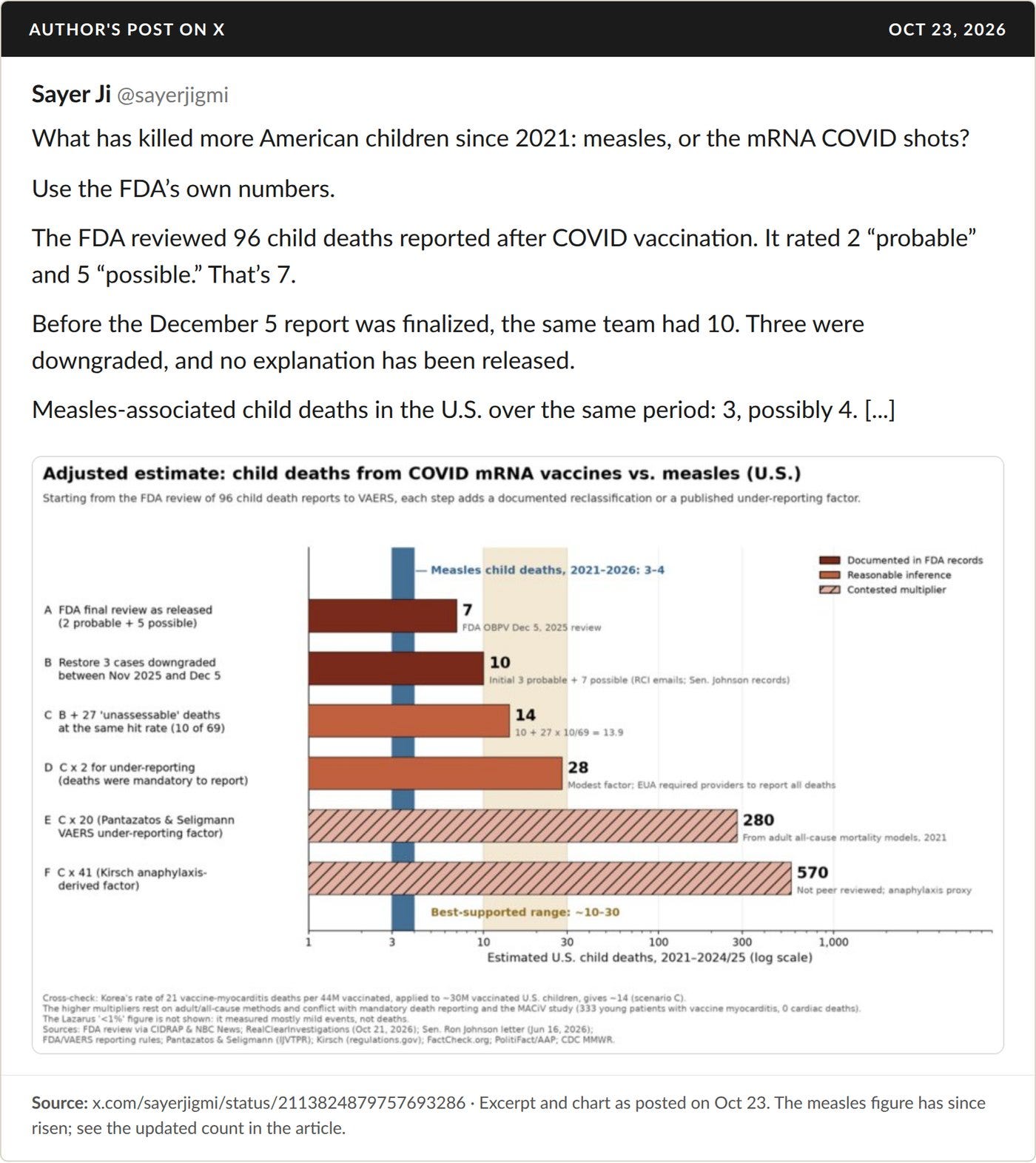
The FDA numbers in that post come from the agency’s own review. FDA safety staff examined 96 reports of US child deaths after COVID-19 vaccination. They classed none as certain, two as probably related and five as possibly related; 62 were classed unlikely and 27 could not be assessed (FDA memorandum, December 5, 2025). An earlier internal FDA memo had put the number at “no fewer than 10” (FDA). All seven cases involved the heart, most of them myocarditis (MedPage Today).
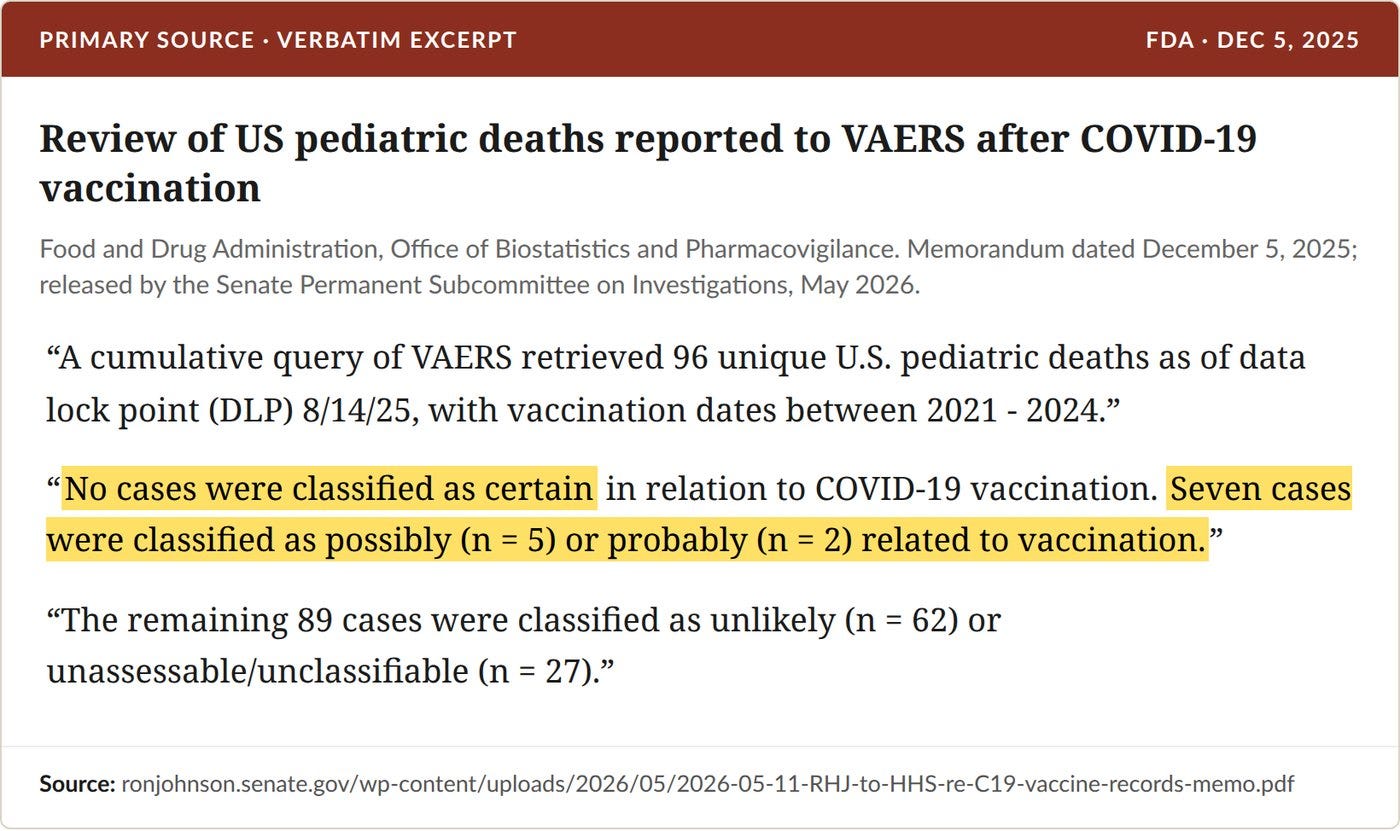
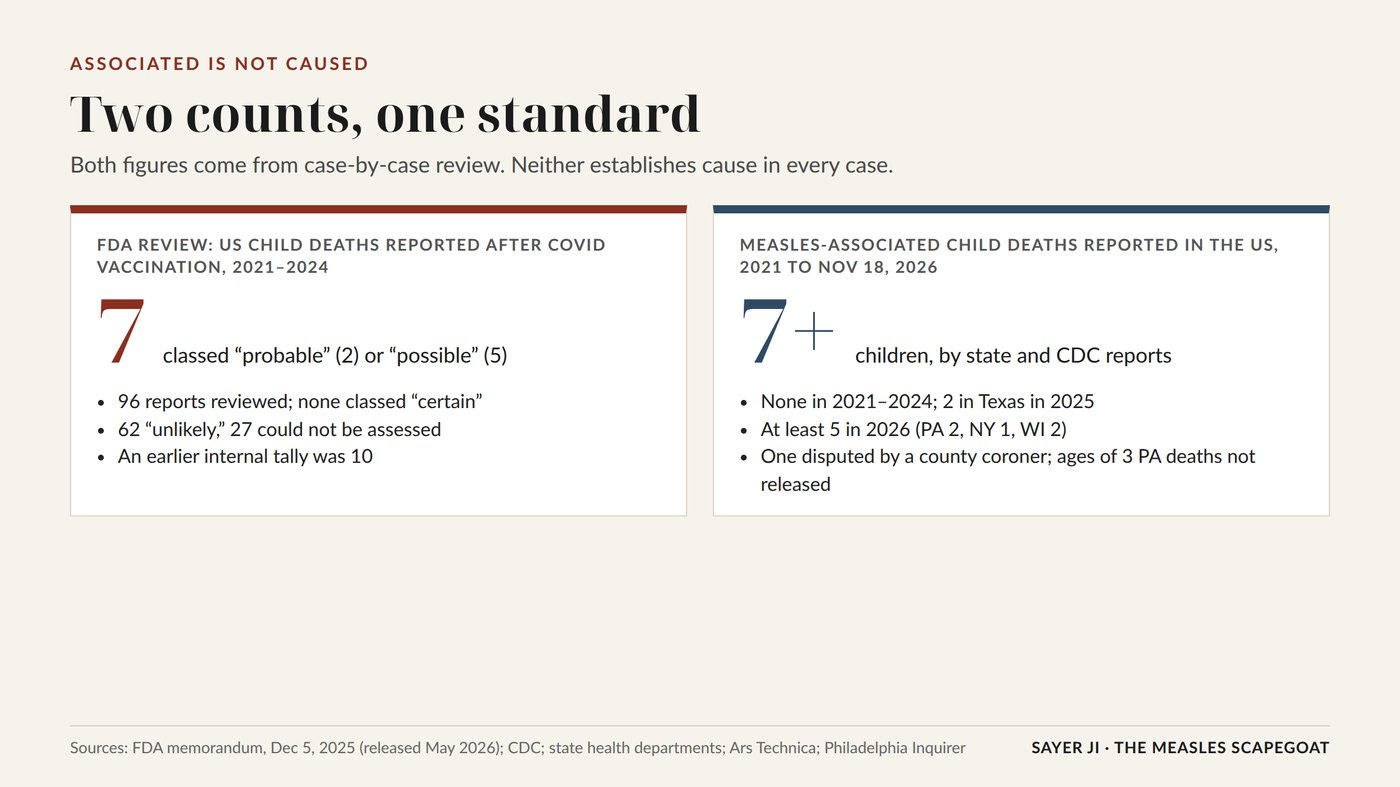
The measles side of that comparison needs updating, and I am updating it here. When I posted, the count of measles-associated child deaths since 2021 stood at three or four. It is now at least seven: two children in Texas in 2025 (WCJB), and at least five children among this year’s deaths, including infants in Pennsylvania, New York and Wisconsin (WCJB; Ars Technica). So the FDA’s figure is no longer about double the measles figure. On today’s reports the two are roughly level.
THE TECHNICAL RECORD, AND ITS LIMITS
The FDA memo’s categories do not establish cause. “Possible” means another explanation may be equally likely; “probable” means an alternative is unlikely but cannot be ruled out (NBC News). The further figures in my post, about 14 deaths, are my own extrapolations and not FDA findings: one applies the reviewed cases’ rate to the 27 that could not be assessed, the other applies a Korean national study’s 21 myocarditis deaths among 44.3 million vaccinated people aged 12 and over to US children (Cho et al., European Heart Journal 2023). The FDA team’s analysis recommended a safety labeling change (CIDRAP); the latest safety labeling update listed on the FDA’s Comirnaty page is dated June 25, 2025 (FDA).
I am not asking anyone to treat the FDA’s seven as proven. I am asking for one standard. “Associated” is not “caused” when the subject is measles, and it is not “caused” when the subject is a vaccine. If seven “possible or probable” deaths after a shot call for caution, footnotes and no headlines, then a 30-day “measles-associated” definition calls for the same. If the measles count is fit for the front page, so was the other one.
The public noticed the difference in treatment. That is the COVID-era disruption the coverage does not name, and it predates this health secretary.
The politics arrived before the evidence
Measles is now a campaign asset, and the paper trail is public.
On August 17–18, Public Policy Polling surveyed 525 voters for two Democratic-aligned groups. The poll tested which messages made voters “view Republicans less favorably,” including one stating that measles “has now returned as vaccines have been reduced” (Public Policy Polling memo). The release declared that “vaccines are on the ballot” and called vaccine policy “the GOP’s greatest existential and political liability in the midterms” (314 Action).
Six days after the poll was released, Pennsylvania announced its first two “measles-associated deaths.” I documented the sequence in The Measles Message Was Ready Before the Deaths Were Announced. The timing does not prove coordination, and I have not claimed it does. It shows that the frame existed before the facts it was applied to.
We have seen the pattern before. The 2014–15 Disneyland outbreak involved 125 cases. Among the 110 California patients, 45% were unvaccinated, 12% had one or more documented doses, and 43% had unknown or undocumented vaccination status; specimens from 30 patients were genotyped, and the source of the outbreak was never identified (MMWR 2015). California’s SB277, which removed the personal-belief exemption for every family in the state, was signed on June 30, 2015 (California Senate Bill 277).
The Disneyland data did not show a vaccine-failure outbreak; documented vaccinees were about one case in eight. What the data showed is how little was known when the law was written. Nearly half the cases had no vaccination record, the source was unknown, and in that same year more than a third of US measles sequences turned out to be vaccine strain (Roy et al.). A fear cycle outran its evidence and left permanent law behind.
In 2015 the cycle produced a mandate. In 2026 it is producing a scapegoat. And we can expect calls for further vaccine mandates, or removal of vaccine exemptions to increase as the year progresses, and especially in January of 2027, when the Democrats take power. I wish this was not such a partisan prediction, but if history tells us anything, the Democratic Party is intent on stripping mandates even as the public continues to push back at a scale that is truly unprecedented in US history.
Two questions I am keeping open, carefully
The environmental record. I have reported that Pennsylvania ran residential pyrethroid mosquito fogging during the same months as its outbreak response (September 2 investigation). It is important to say what that supports. Pesticides do not cause measles, and a pesticide rash would not test positive for measles RNA. The record I maintain at Restore Transparency currently shows no logged 2026 adulticide application in Lancaster County, the outbreak’s center. What remains is a records question: when a state runs an emergency health campaign and a chemical application program in neighboring areas, it should be able to produce a reconciled account of both. Until the pending records requests are answered, this is a question about disclosure, not a finding about cause.
Natural infection. Mothers who had measles pass longer-lasting protection to their babies. In the Netherlands, infants of mostly vaccinated mothers were protected by maternal antibodies for an estimated 3.3 months, about two months less than in communities where most mothers had been naturally infected (Waaijenborg et al., Journal of Infectious Diseases 2013). That is a real cost of a vaccinated population, carried by infants too young for the shot, and Pennsylvania now recommends an early “zero dose” at 6 to 11 months in affected counties (Pennsylvania Department of Health).
THE TECHNICAL RECORD, AND ITS LIMITS
A Japanese cohort of more than 100,000 adults linked a recalled history of measles and mumps to lower cardiovascular mortality (Kubota et al., Atherosclerosis 2015). It shows association in survivors, not cause. Against it stands harder evidence of harm: measles erased 11% to 73% of children’s existing antibodies to other pathogens (Mina et al., Science 2019). US measles mortality fell from 14.1 to 0.2 per 100,000 between 1900 and 1960, before any vaccine (Vaccines 2020), but infections had not fallen: CDC estimates 3 to 4 million cases and 400 to 500 deaths a year in the decade before the vaccine (CDC). The evidence does not support telling parents that catching measles is good for a child. It supports saying that vaccine-derived immunity is not identical to natural immunity, and that a program built on it has to plan for the gaps.
What honest reporting would require
Print the dates. Any story assigning blame for the loss of status should state when the outbreak chain began and when coverage began to fall.
Publish the genotyping denominator. For every outbreak: how many cases were sequenced or strain-tested, and the results.
Report recent vaccinees separately. How many cases had a dose within 21 days of rash, how many were strain-tested, and how many were excluded as vaccine reactions.
Split “unvaccinated” from “unknown,” and state how doses given within 14 days of symptoms are classified.
Adopt one published definition of a measles death, and apply the same causal standard to deaths reported after vaccination.
Keep the Secretary’s promise. Put the risks next to the benefits every time, in the same type size.
None of this is anti-vaccine. Every item comes from the agencies’ own manuals, or from limits their own scientists wrote down.
What this article does not claim
It does not claim the MMR vaccine caused, or is driving, the 2025–2026 outbreaks. Published sequencing shows wild-type virus, and most cases are in people who were not vaccinated. (Although this assessment depends on trust in the reporting bodies, which is at a historical low due to active coverups of vaccine harms and suppression of the voices that question them).
It does not claim the vaccine strain spreads from person to person. That has never been confirmed, with the caveat that the absence of evidence is not evidence of absence.
It does not claim measles is universally harmless, or that natural infection is preferable to vaccination (even if the latter view is legitimate from the perspective of honest risk/benefit analysis).
It does not claim that pesticide exposure explains measles cases, with the caveat that unless spray logs are revealed in places like Lancaster PA, we’ll never know the truth.
It does not claim that any COVID-19 vaccine death has been proven by the FDA whose categories are “possible” and “probable.” (personally, I think the real death toll from Covid vaccines are orders of magnitude higher than official estimates).
It does not claim that Kennedy’s years of advocacy on revealing the suppressed harms of vaccines, and the egregious violation of informed consent by the medical estaliblishment had no effect on vaccine confidence. It claims the timeline does not support blaming the loss of status on his 21 months in office.
What it claims is this. The outbreak chain began before Kennedy was sworn in. The decline in coverage and confidence began years before that, across a period he had no part in governing. His statement recommends the vaccine and promises honesty about its risks. And “failure to vaccinate” is a partial account presented as a complete one, which is how a country ends up needing someone to blame.
A country that wants its elimination status back needs its citizens’ trust more than it needs a scapegoat. Trust is built by showing the work.
“We will answer families’ questions honestly about vaccine benefits and risks.”
Robert F. Kennedy Jr., Secretary of Health and Human Services, November 17, 2026
This article is for educational purposes and is not medical advice. Decisions about vaccination and medical care should be made with a qualified health professional who knows your circumstances.
Sources
Yahoo News: https://www.yahoo.com/news/us/articles/rfk-jr-faces-fierce-backlash-053457586.html
PAHO technical Q&A: https://www.paho.org/en/news/17-11-2026-measles-americas-questions-and-answers-technical-reference-journalists-and-public
Public Health Agency of Canada: https://www.canada.ca/en/public-health/services/diseases/measles/canada-response.html
CDC COCA call slides: https://www.cdc.gov/coca/media/pdfs/2025/COCA-Call-Slides_09.11.25_Combined-FINALV2.pdf
CDC SchoolVaxView: https://www.cdc.gov/schoolvaxview/data/index.html
Gallup: https://news.gallup.com/poll/648308/far-fewer-regard-childhood-vaccinations-important.aspx
Kennedy on X:
CDC joint statement: https://www.cdc.gov/media/releases/2026/loss-of-usmeasles-elimination-status.html
Emerging Infectious Diseases: https://wwwnc.cdc.gov/eid/article/32/10/26-0494_article
CDC MMR Vaccine Safety: https://www.cdc.gov/vaccine-safety/vaccines/mmr.html
MMR Vaccine Information Statement: https://www.cdc.gov/vaccines/hcp/current-vis/mmr.html
CDC clinical overview: https://www.cdc.gov/measles/hcp/clinical-overview/index.html
Gustafson et al., NEJM 1987: https://pubmed.ncbi.nlm.nih.gov/3821823/
Davis et al., American Journal of Epidemiology 1987: https://pubmed.ncbi.nlm.nih.gov/3618578/
Hersh et al., American Journal of Public Health 1991: https://pubmed.ncbi.nlm.nih.gov/1994745/
Boulianne et al., Canadian Journal of Public Health 1991: https://pubmed.ncbi.nlm.nih.gov/1884314/
Rosen et al., Clinical Infectious Diseases 2014: https://pubmed.ncbi.nlm.nih.gov/24585562/
Wright et al., Expert Review of Vaccines 2026: https://www.tandfonline.com/doi/full/10.1080/14760584.2026.2708188
Gastañaduy et al., JAMA Pediatrics 2020: https://pubmed.ncbi.nlm.nih.gov/31738391/
Vaccinated People Can Spread Measles: https://read.sayerji.com/p/vaccinated-people-can-spread-measles
CDC genotype A guidance: https://www.cdc.gov/measles/downloads/measles-virus-genotype.pdf
CDC surveillance manual, chapter 7: https://www.cdc.gov/surv-manual/php/table-of-contents/chapter-7-measles.html
NH Division of Public Health Services: https://www.brookfieldnh.gov/DocumentCenter/View/962/Measles-Update-052019
NHPR: https://www.nhpr.org/post/dhhs-nh-child-didnt-have-measles-just-vaccine-reaction
Roy et al., Journal of Clinical Microbiology 2017: https://pmc.ncbi.nlm.nih.gov/articles/PMC5328441/
Pennsylvania Department of Health: https://www.pa.gov/agencies/health/newsroom/pa-department-of-health-confirms-eighth-measles-associated-death
Greenwood et al., Vaccine 2016: https://pubmed.ncbi.nlm.nih.gov/27083423/
Washam et al., Journal of Clinical Virology 2024: https://pubmed.ncbi.nlm.nih.gov/38823291/
The Measles Certainty Gap: https://read.sayerji.com/p/the-measles-certainty-gap
MMWR 2026: https://www.cdc.gov/mmwr/volumes/75/wr/mm7523a2.htm
MMWR 2025: https://www.cdc.gov/mmwr/volumes/74/wr/mm7414a1.htm
CNN: https://us.cnn.com/2026/11/13/health/us-measles-elimination-status
National Center for Health Statistics: https://www.ncbi.nlm.nih.gov/books/NBK623755/
on X:


ABC News: https://abcnews.com/Health/measles-cases-nationwide-top-5400-outbreaks-spread-us/story?id=138108176
Contagion Live: https://www.contagionlive.com/view/measles-update-november-13-2026
FDA memorandum, December 5, 2025: https://www.ronjohnson.senate.gov/wp-content/uploads/2026/05/2026-05-11-RHJ-to-HHS-re-C19-vaccine-records-memo.pdf
MedPage Today: https://www.medpagetoday.com/infectiousdisease/covid19vaccine/121337
Ars Technica: https://arstechnica.com/health/2026/11/us-now-comfortable-with-children-dying-of-measles-as-death-toll-hits-10/
Cho et al., European Heart Journal 2023: https://academic.oup.com/eurheartj/article/44/24/2234/7188747
Public Policy Polling memo: https://www.314action.org/wp-content/uploads/2026/08/PPP-Polling-Memo-August-2026.pdf
The Measles Message Was Ready Before the Deaths Were Announced: https://read.sayerji.com/p/the-measles-message-was-ready-before
MMWR 2015: https://www.cdc.gov/mmwr/preview/mmwrhtml/mm6406a5.htm
California Senate Bill 277: https://en.wikipedia.org/wiki/California_Senate_Bill_277
September 2 investigation: https://read.sayerji.com/p/exclusive-they-are-spraying-neurotoxins
Restore Transparency:
https://restoretransparency.com/#/
Waaijenborg et al., Journal of Infectious Diseases 2013: https://pubmed.ncbi.nlm.nih.gov/23661802/
Kubota et al., Atherosclerosis 2015: https://pubmed.ncbi.nlm.nih.gov/26122188/
Mina et al., Science 2019: https://pubmed.ncbi.nlm.nih.gov/31672891/
Vaccines 2020: https://pmc.ncbi.nlm.nih.gov/articles/PMC7712487/pdf/vaccines-08-00561.pdf