


Why clean water isn’t enough, and four ways to make it biological again: sea salt, lemon, chlorophyll, and one for the road.
In my last piece on this subject, I asked a question almost no one asks the tired person in front of them: not how much water are you drinking, but what kind? (Your Fatigue Is Not a Hydration Problem.)
The response told me something. Many of you already filter your water with devices like the AquaTru or similar reverse-osmosis technology. Many of you already drink more than you used to. And many of you still feel flat. So this piece is the practical follow-up: what is wrong with the water most of us drink, and the simplest ways I know to turn clean water back into what I call biological water, the kind of water the body evolved with.
We will go from the kitchen to the road: sea salt and trace minerals, lemon, chlorophyll, and finally the option I use when I am traveling or simply don’t have time to do it myself.
The Problem With Tap Water
Public sanitation was one of the great advances of the modern era. It largely ended the waterborne epidemics that once killed people in the millions. But as I wrote in Why There Is No Such Thing as “Safe” Tap Water, it traded one problem for another: acute infection for chronic, low-dose exposure to industrial chemicals that pass through the system or are created by it.
The numbers are hard to ignore. The Environmental Working Group’s latest update, built on 2021 to 2023 testing from nearly 50,000 water systems, identified 324 contaminants in U.S. drinking water, with detectable levels in almost all community water systems (EWG). The U.S. Geological Survey, testing water taken straight from kitchen taps, estimated that at least 45% of the nation’s tap water contains one or more PFAS “forever chemicals” (USGS).
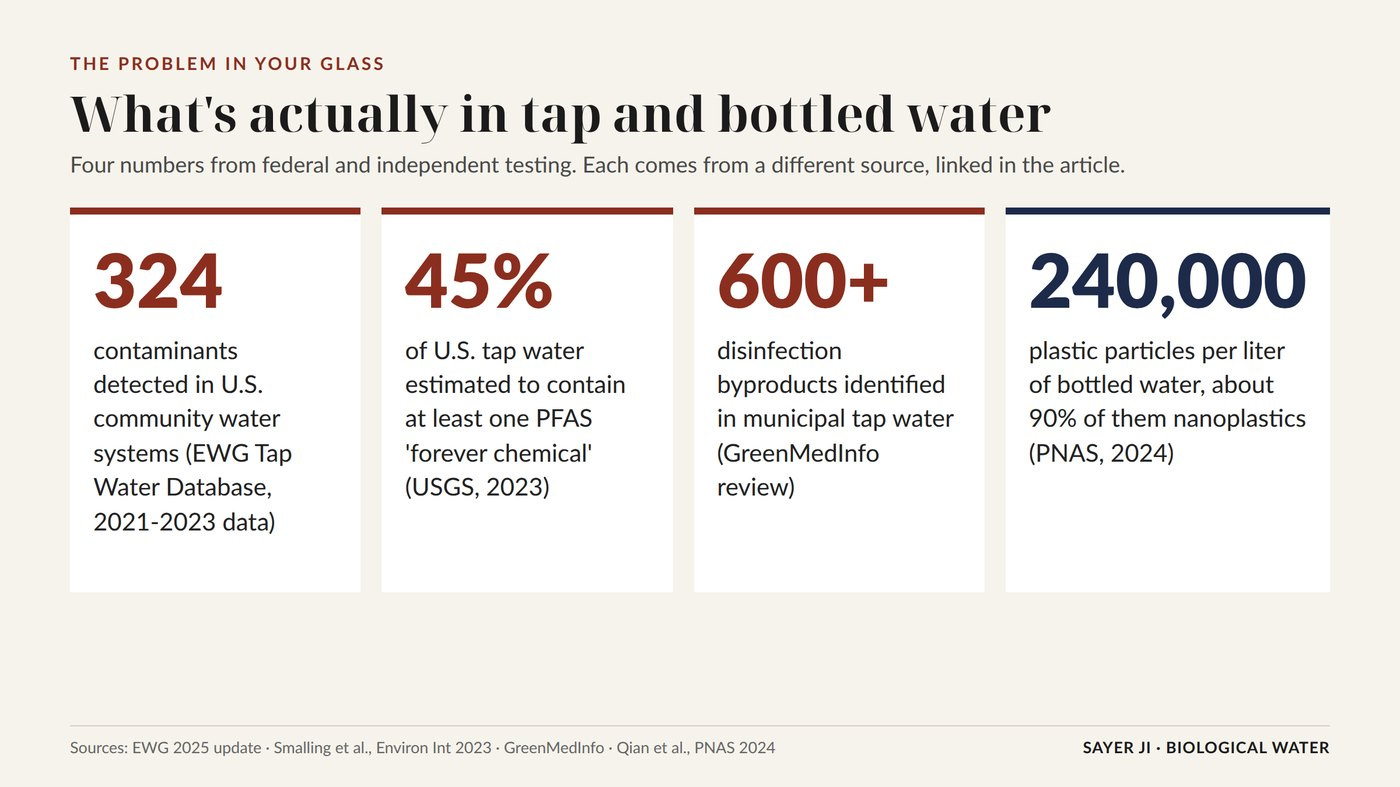
Then there is the treatment itself. Chlorine reacts with organic matter to form disinfection byproducts, and more than 600 of them have been identified in municipal tap water (GreenMedInfo). As water researcher Dr. Speiser explains in The Myth of Clean Water, the trihalomethanes in this group are classed by the EPA as probable carcinogens, and because chlorine volatilizes in hot water, you also inhale and absorb them in the shower.
Fluoride deserves its own sentence. In 2024 the National Toxicology Program concluded, with moderate confidence, that fluoride exposures above 1.5 mg/L are associated with lower IQ in children (NTP). The same review says there were not enough data to determine whether the 0.7 mg/L used in U.S. water fluoridation affects IQ, which is exactly the question that should have been settled before it was added to the public’s water. We’ve fought hard in my home state of Florida to have it removed, for exactly this reason. Water should hydrate NOT medicate.
And the deepest problem is not any single chemical. It is the mixture. Regulators test contaminants one at a time, while your body receives them all at once. As The Myth of Clean Water notes, endocrine-disrupting chemicals can produce significant effects in combination even when each is present below the dose that does anything on its own. Also, the dose does not make the poison, in all cases. Sometimes small concentrations of toxicants have far higher than expected toxicity.
The Problem With Bottled Water
Bottled water feels like the escape hatch. Often it is not. Many of the biggest brands sell reverse osmosis purified municipal water, as the GreenMedInfo Research Group pointed out, and then package it in plastic.
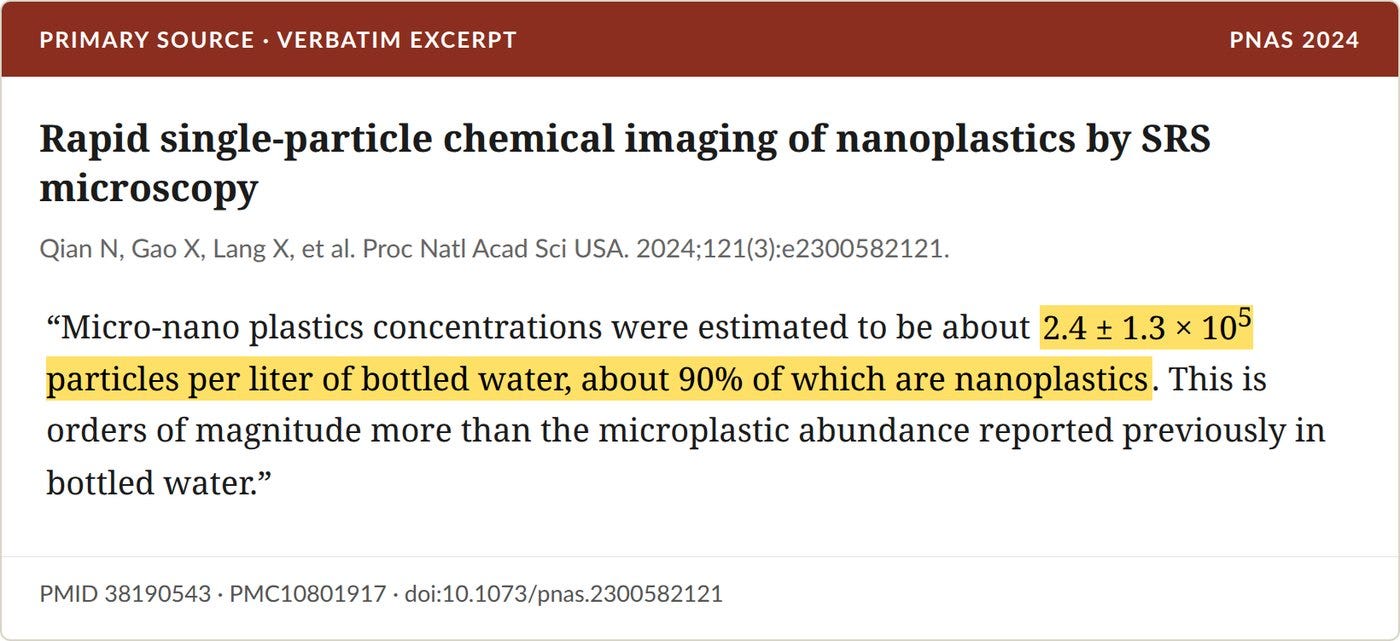
That plastic does not stay in the bottle. In 2024, Columbia University researchers used a new laser imaging method to count individual particles and found roughly 240,000 plastic particles per liter of bottled water, about 90% of them nanoplastics small enough to cross into tissues (Qian et al., PNAS).
The Problem With “Bulk” Water
Here is where the conversation usually stops, and where I think it should begin. Even water that is perfectly clean may not be the water your cells actually use.
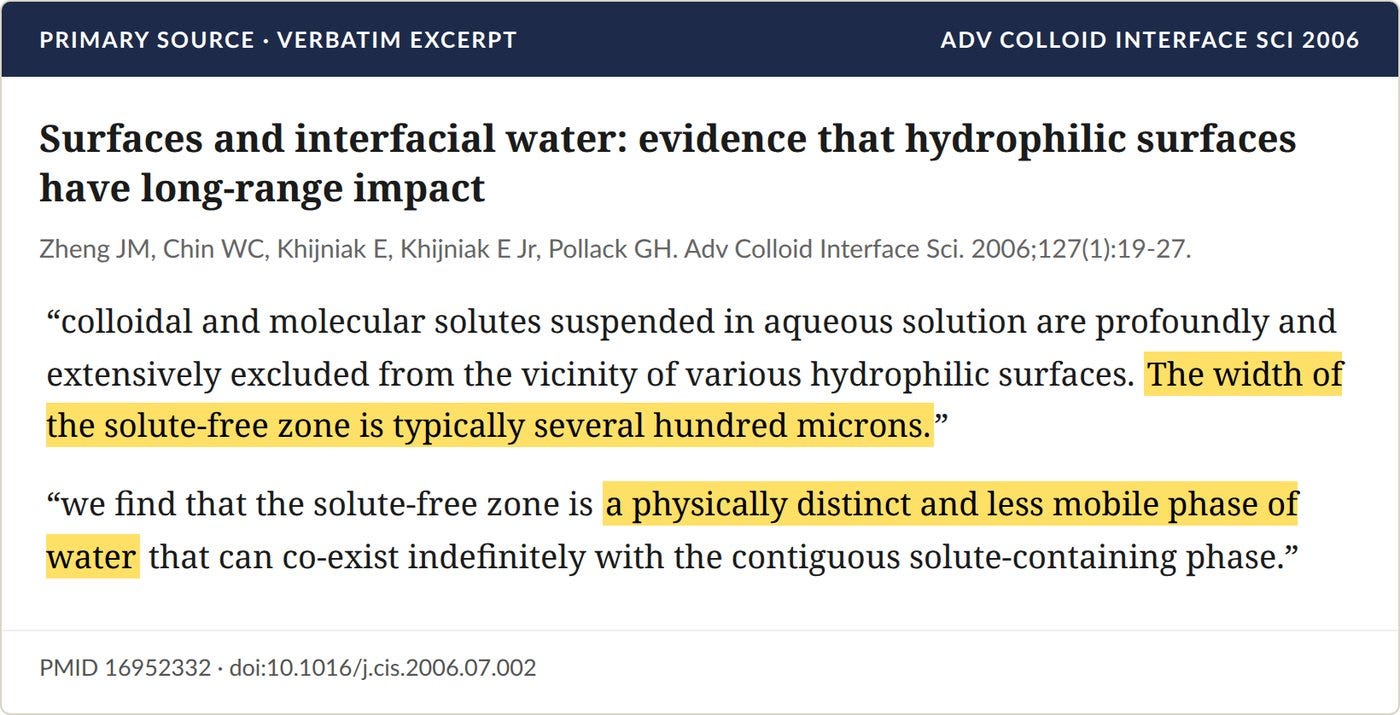
University of Washington bioengineer Gerald Pollack has spent two decades studying what happens to water next to water-loving (hydrophilic) surfaces, like the surfaces of cell membranes and proteins. His lab found that water there organizes into a zone that pushes out particles and dissolved substances, a zone often several hundred microns wide, which they describe as a physically distinct, more ordered phase (Zheng et al., 2006). Pollack calls it exclusion zone, or EZ, water. Ordinary liquid water, the disordered kind in your glass, he calls bulk water.
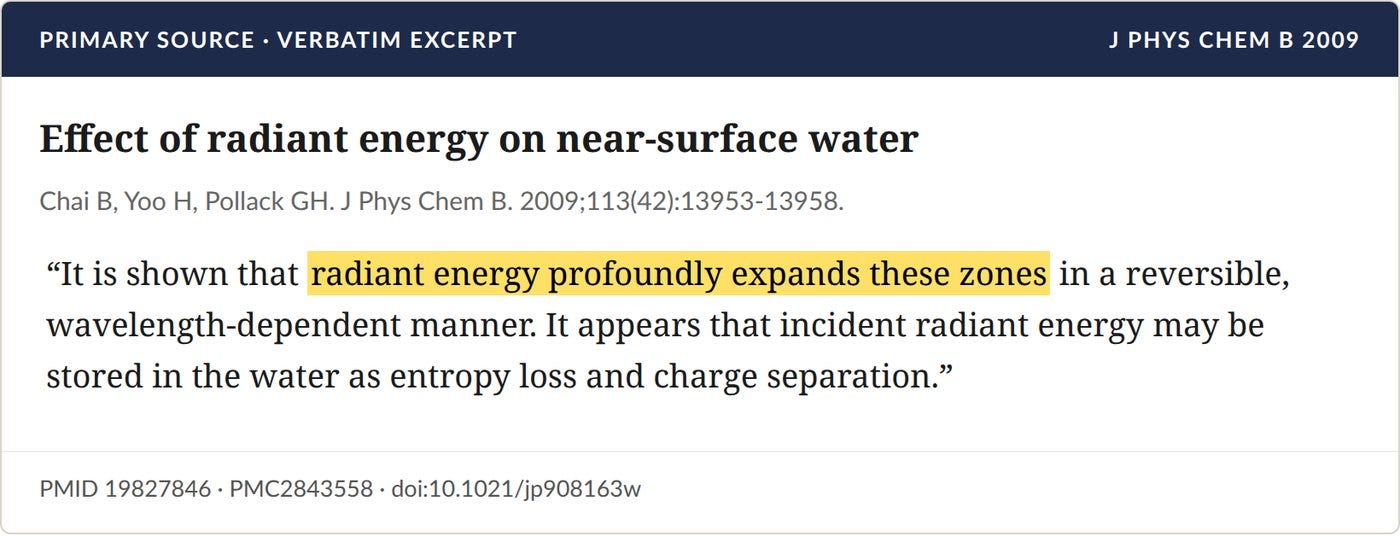
The striking part is where the energy comes from. In a follow-up study, the lab showed that radiant energy, especially infrared light, expands these zones in a reversible, wavelength-dependent way (Chai, Yoo and Pollack, 2009). Light, in other words, appears to charge water.
As my friend Charles Eisenstein wrote in his review of The Fourth Phase of Water, the larger implication is philosophical as much as chemical: water may not be a generic, structureless substance, with every sample identical to every other. Its structure may depend on what it has touched.
The Purification Paradox
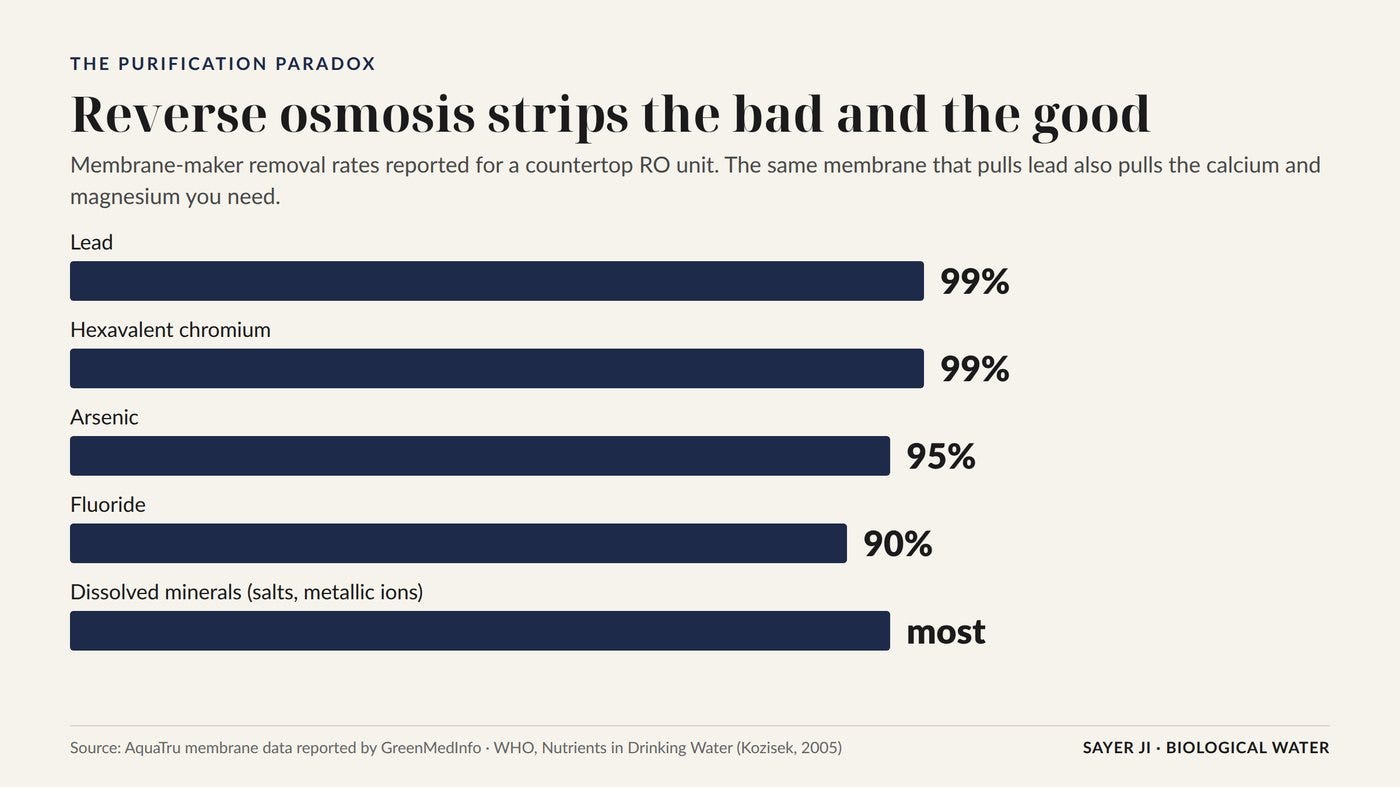
So we purify. I do it myself, and I recommend it. A good reverse osmosis system removes the overwhelming majority of lead, arsenic, hexavalent chromium and fluoride, by the membrane maker’s own figures (GreenMedInfo). As I said in a short video on the best kind of water to drink, in a post-industrial world you have to deal with the water quality problem yourself.
But the membrane does not know the difference between lead and magnesium. It takes out “metallic ions, salts” as a class. What comes out the other side is chemically clean and biologically empty.
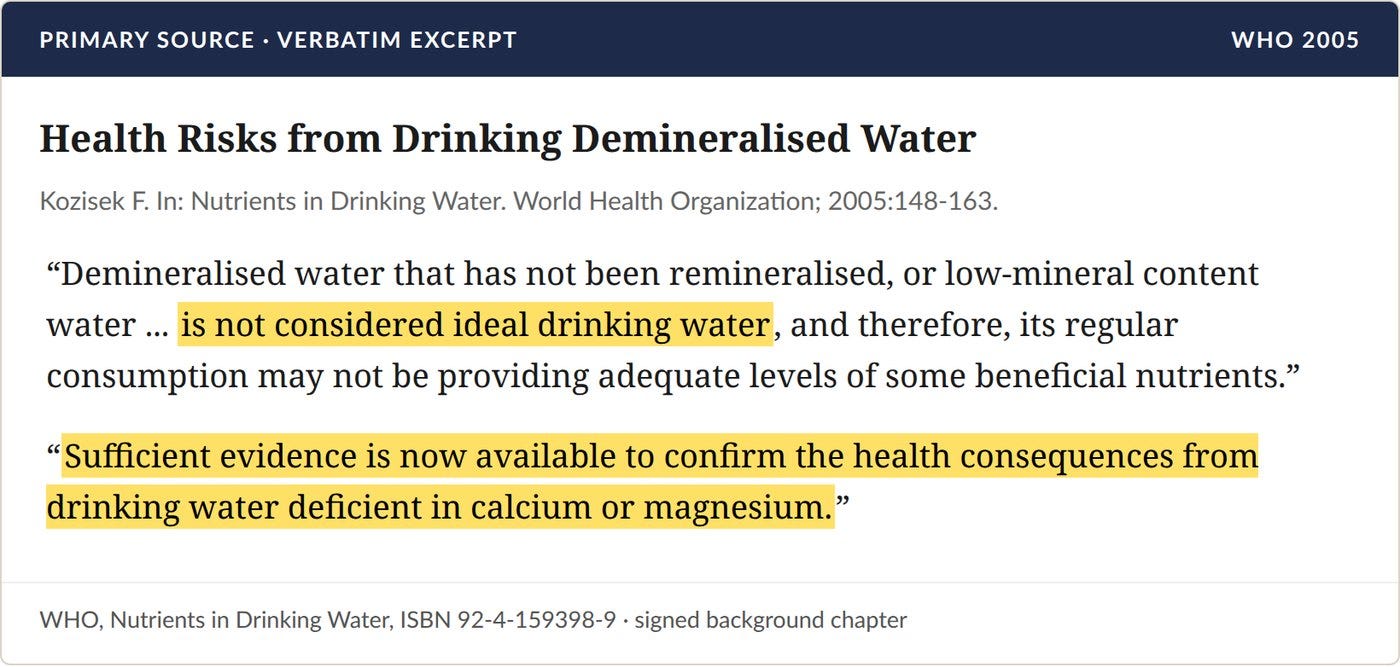
The World Health Organization took this seriously enough to commission a review. Its author, Frantisek Kozisek of the Czech National Institute of Public Health, concluded that demineralised water that has not been remineralised “is not considered ideal drinking water,” and that sufficient evidence now confirms health consequences from water deficient in calcium or magnesium (WHO, Nutrients in Drinking Water). The same volume reports that an earlier WHO-commissioned team recommended demineralised water contain at least 100 mg/L of dissolved salts and 30 mg/L of calcium (WHO).
Here’s the counterpoint:
Germany’s Federal Institute for Risk Assessment reviewed the same question and concluded that, with a balanced diet and normal drinking amounts, it could identify no adverse effects that would justify advising against very low-mineral water, and called parts of the Kozisek review outdated (BfR). The operative words are “balanced diet.” Most people’s diets are not, which is why I remineralize.
The answer is not to go back to the tap. It is to purify, and then put back what nature put there.
What Biological Water Means
The best biological water doesn’t come from a faucet at all. It comes from food: the water inside watermelon, cucumber, celery, citrus and leafy greens, already wrapped in minerals, organic acids and plant structure, as I described in the earlier piece. Spring water emerging from mineral-rich rock is the next closest thing.
For the water you drink by the glass, the goal is to imitate that: a clean base, plus a mineral matrix, plus the living compounds that plants carry. Here are four ways, from simplest to easiest.
Method 1: Sea Salt and Trace Minerals
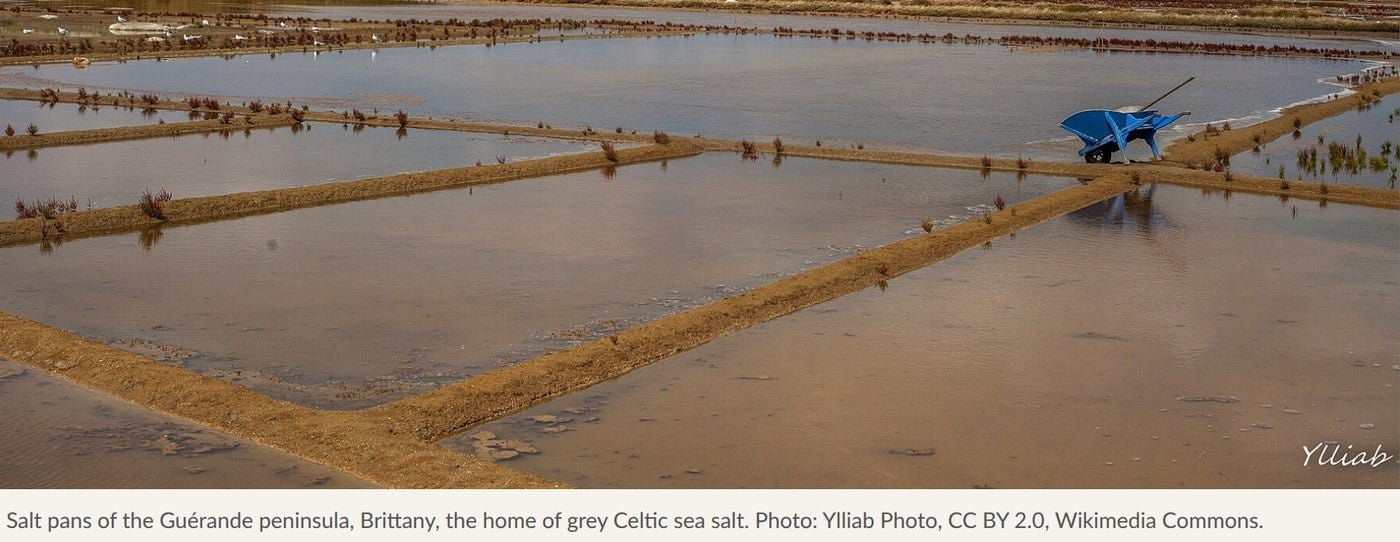
This is the foundation. The late Dr. Nicholas Gonzalez, building on Dr. Fereydoon Batmanghelidj’s work, recommended 8 to 10 glasses of water a day along with about half a teaspoon of good-quality sea salt, such as Celtic or Himalayan, spread across that water (Water, Energy, and the Perils of Dehydration).
Per liter of purified water: a small pinch, about 1/8 teaspoon, of unrefined sea salt. You should barely taste it. If it tastes salty, it is too much.
Or trace-mineral drops, used as labeled, if you want minerals without sodium.
Shake or stir well, and give it a minute to dissolve.
The technical record
For scale: a full teaspoon of table salt carries about 2,300 mg of sodium, the federal daily limit for adults (FDA). A 1/8 teaspoon pinch is therefore roughly 290 mg, less by volume for coarse, moist sea salt. Salt quality matters: a study of 39 salt brands from six continents found microplastics in most sea salts, with the highest counts in salts from Asia (Kim et al., 2018). Choose a brand that publishes independent heavy-metal and microplastic testing.
Method 2: Lemon
Lemon is the simplest upgrade and the most underrated. It makes water something you want to drink, which matters more than people think. And it brings citrate, the compound your kidneys use to keep calcium from crystallizing.
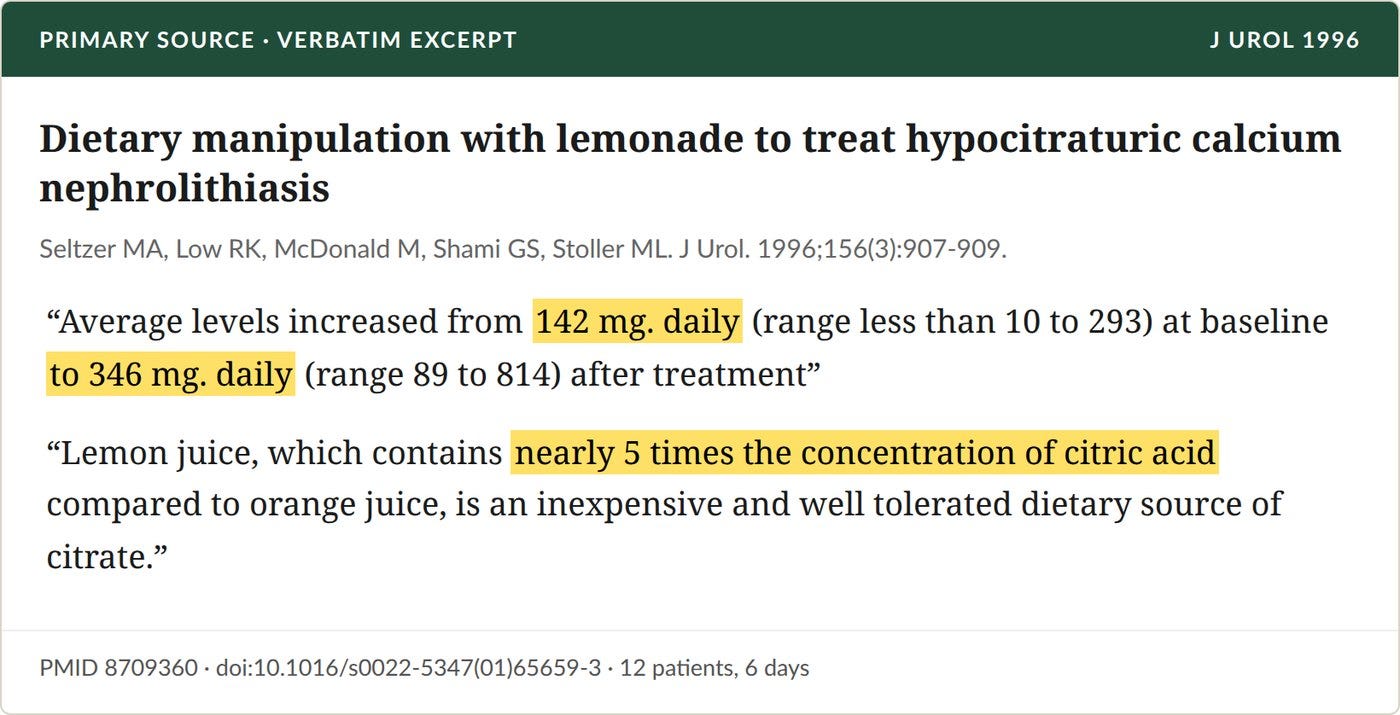
In a small 1996 study, patients with low urinary citrate drank about 4 ounces of lemon juice diluted into 2 liters of water through the day. In six days, their urinary citrate more than doubled, from 142 to 346 mg a day on average (Seltzer et al., Journal of Urology). The researchers noted that lemon juice contains nearly five times the citric acid of orange juice.
Per liter: the juice of half a fresh lemon. Add it to your mineralized water from Method 1.
Protect your teeth: lemon is acidic. Sip rather than swish, and rinse with plain water afterward.
Method 3: Chlorophyll
This is the green layer, and it is where water starts to meet light. Chlorophyll is the molecule plants use to turn sunlight into chemical energy. In a remarkable 2014 study, researchers showed that a chlorophyll metabolite allowed mammalian mitochondria to capture light and make ATP, and that worms fed the metabolite made more ATP in light and lived longer (Xu et al., Journal of Cell Science). They found the same metabolites accumulating in mice, rats and pigs fed chlorophyll-rich diets.
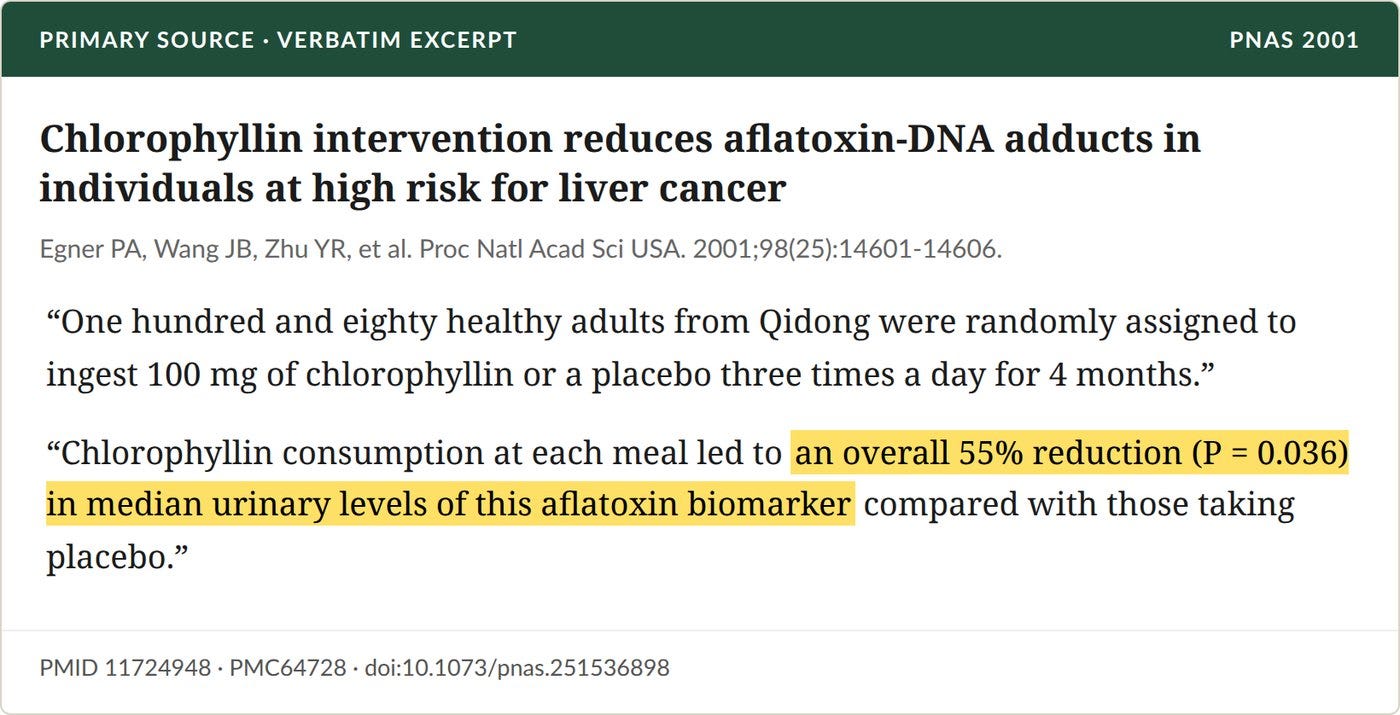
The human evidence is about protection. In a randomized, placebo-controlled trial of 180 adults in a region of China with high aflatoxin exposure, 100 mg of chlorophyllin at each meal cut a urinary marker of aflatoxin DNA damage by 55% (Egner et al., PNAS). A later study found both natural chlorophyll and chlorophyllin reduced how much aflatoxin volunteers absorbed (Jubert et al., 2009).
Best: fresh greens, such as a handful of parsley, watercress or spinach blended into your water as a light green drink.
Easiest: liquid chlorophyll, used as labeled.
An honest caveat to consider:
Most liquid “chlorophyll” sold in stores is chlorophyllin, a semisynthetic, water-soluble derivative (Egner et al.). The light-to-ATP finding comes from isolated mitochondria, worms and animals, not human trials. No study has tested chlorophyll as a way to “structure” drinking water, although if you use this method, you’ll see how different it feels. I find it quite lovely, and I use it for its detoxifying, food-derived benefits and treat everything beyond that as promising and still to be formally demonstrated.
Putting It Together: The Daily Glass
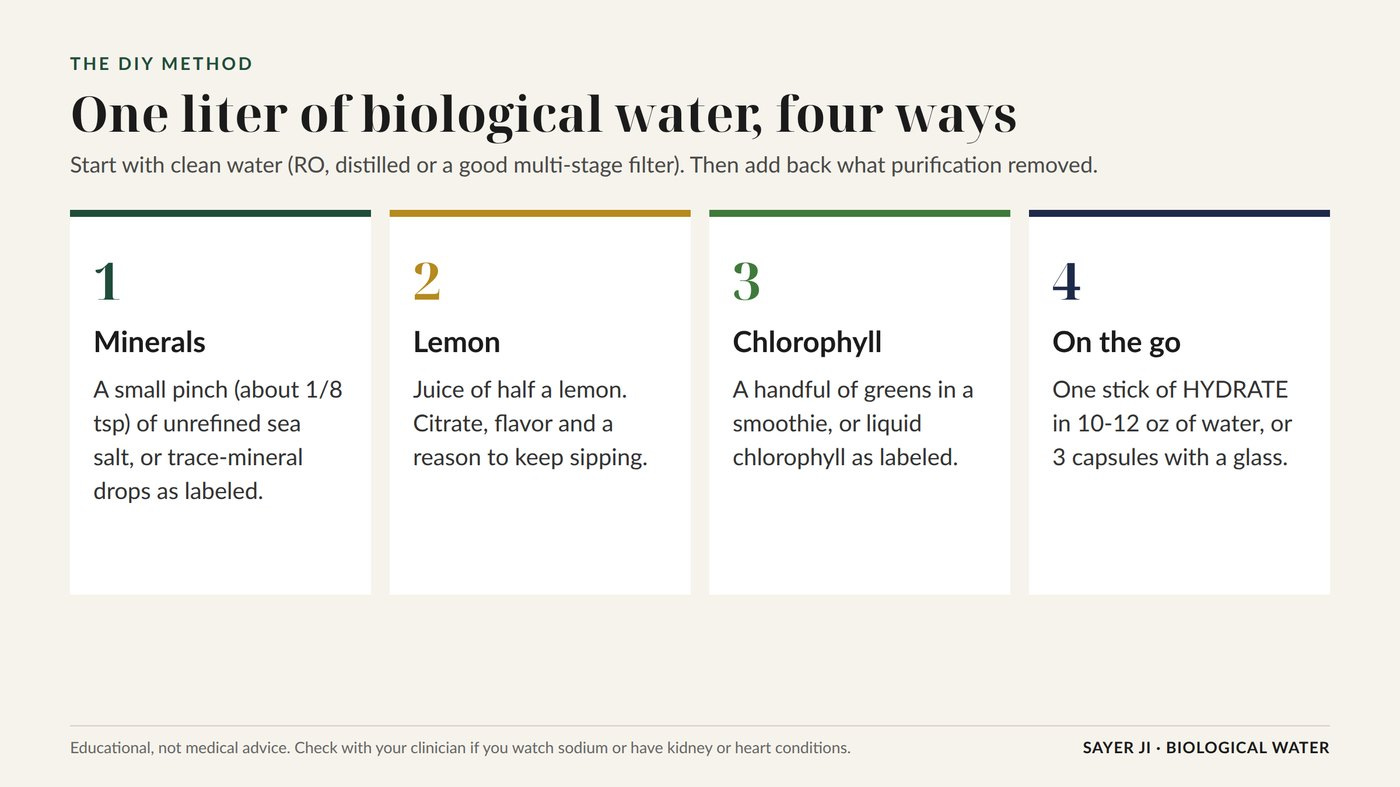
Here is how I would make a liter at home:
Start with a liter of purified water, ideally in glass.
Add a small pinch of unrefined sea salt or trace-mineral drops.
Squeeze in half a lemon.
Add a splash of liquid chlorophyll, or blend in a few greens.
If you can, let it sit in sunlight for a few minutes before drinking. Pollack’s work suggests light energizes water. It costs nothing, and I count it as a bonus rather than a requirement.
Method 4: When You’re on the Go
All of that works beautifully in a kitchen. It does not work in an airport, a hotel room, a long drive or a week when you simply don’t have the bandwidth. For those moments, I use ViCera HYDRATE, which I first shared in The Hydration Hack That Changes Everything. I use 2 packets a day, on average, and take it wherever I travel.
What I like is that it is essentially the DIY method in a stick. Instead of a lab-made electrolyte blend, its minerals come from a 2.5 g whole-food blend of Celtic Sea Salt, whole-plant red algae, a marine magnesium complex, organic spirulina and humic soil extract (ViCera). That is minerals from the sea, greens from spirulina, and trace elements from soil, all in one place.
Here is the value, straight from ViCera’s own materials:
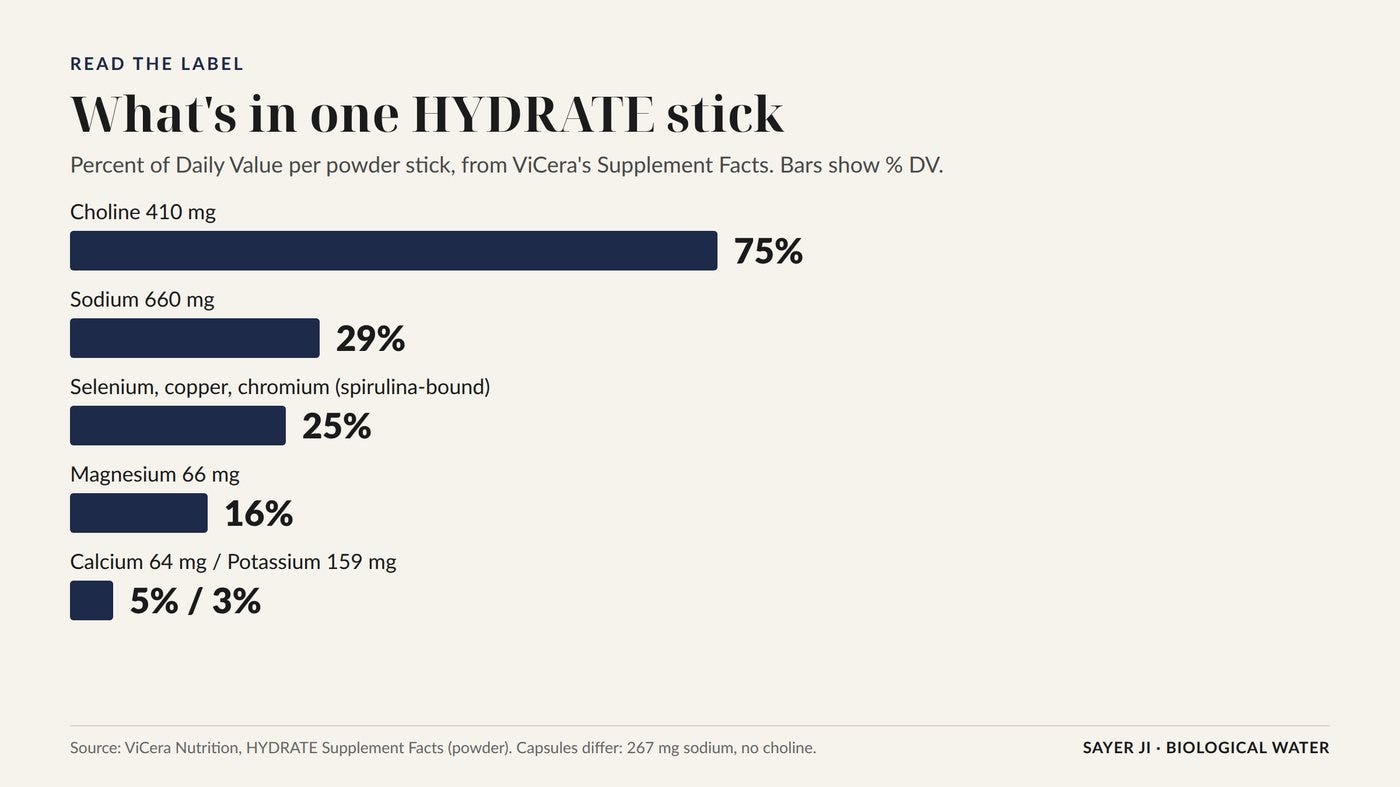
Seven minerals, not two. Plenty of mixes stop at sodium and potassium. Each stick adds magnesium, calcium, and selenium, copper and chromium at 25% of Daily Value each, bound to organic spirulina (ViCera).
More than twice the electrolytes of leading sports beverages, by ViCera’s comparison, plus humic and fulvic compounds that the company says supply dozens of organically bound minerals (ViCera product page).
A probiotic that works on minerals. Bacillus subtilis AB22, 2 billion CFU at manufacture, which ViCera describes as helping liberate minerals from food (ViCera).
410 mg of choline per powder stick, 75% of Daily Value, for brain function (ViCera).
No sugar and no dyes. It is sweetened with monk fruit and stevia, and the Very Berry color comes from beet root and spirulina extract.
Made in an FDA-registered, cGMP-certified facility and backed by a 100% money-back guarantee (ViCera).
Mix one stick into 10 to 12 ounces of water. It comes in Limeade, flavored with natural lemon and lime, and Very Berry. If you prefer no flavor and no sweetener at all, the capsules go with a plain glass of purified water. It tastes like minerals, because it is full of them. If it is strong for you, add more water.
For the GreenMedInfo community, ViCera is offering 25% off one-time purchases through our dedicated HYDRATE page, applied automatically with code HYDRATE25, through November 15 or while this production run lasts. That brings a 30-stick box from $59.95 to $44.96, about $1.50 a serving, and two boxes ship free.
The technical record
Per HYDRATE powder stick: sodium 660 mg (29% DV), potassium 159 mg (3%), magnesium 66 mg (16%), calcium 64 mg (5%), selenium 13.8 mcg, copper 225 mcg and chromium 8.75 mcg (25% each), choline 410 mg (75%). Capsules: 267 mg sodium per 3-capsule serving, no choline (ViCera Supplement Facts).
These statements have not been evaluated by the FDA. Disclosure: this is a partner link, and purchases support GreenMedInfo’s research and education.
A Simple Daily Rhythm
Wake: half a liter of biological water before coffee, DIY or a HYDRATE stick.
Through the day: sip on a schedule. Dr. Batmanghelidj warned that chronic dehydration blunts the thirst signal, so thirst is a late indicator (Your Fatigue Is Not a Hydration Problem).
Coffee and tea: don’t count them as water. Gonzalez reported a patient whose cholesterol fell 63 points in six weeks after he replaced eight cups of herbal tea a day with water (Gonzalez).
Sweat, sauna, flights: this is when minerals matter most. Add a serving.
Outside: get morning light on your skin. If Pollack is right, it helps your body’s own water do its work.
Safety
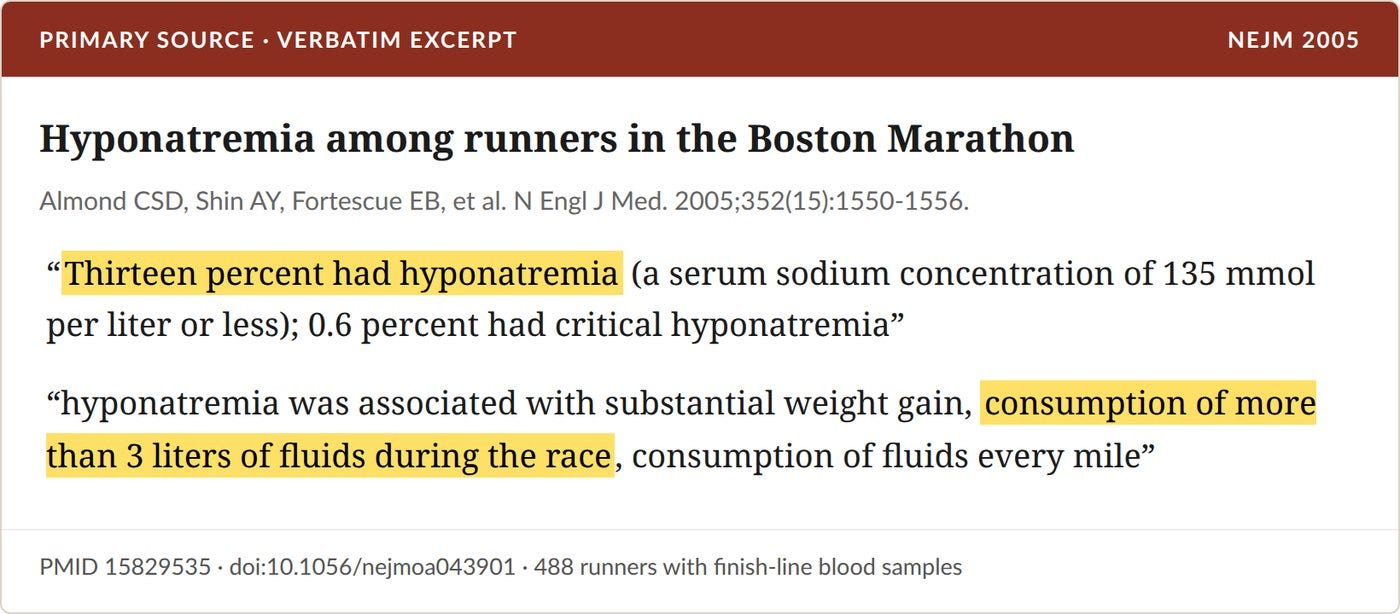
More is not always better. At the 2002 Boston Marathon, 13% of runners tested at the finish had low blood sodium, and drinking more than 3 liters during the race was a risk factor (Almond et al., NEJM). Large volumes of plain, mineral-free water are the riskiest version. If you have kidney disease, heart failure or high blood pressure, are on a sodium-restricted diet, take diuretics or other medications, or are pregnant or nursing, talk to your clinician before adding salt or electrolytes.
Water the Body Recognizes
The body is not short on water so much as it is short on water it recognizes: water carrying the minerals of the sea, the acids of fruit and the green chemistry of plants, the way water always did before it ran through pipes and plastic. Purify it, then bring it back to life.
Clean is the starting point. Biological is the goal.
“The key to unlock the door.”
Gerald Pollack, on what the fourth phase of water may be for many natural phenomena, as quoted in The Hydration Hack That Changes Everything
This article is for educational purposes and is not medical advice. Consult a qualified healthcare practitioner before changing your health regimen, especially if you have a medical condition or take medication.
Sources
Your Fatigue Is Not a Hydration Problem: https://read.sayerji.com/p/your-fatigue-is-not-a-hydration-problem
Why There Is No Such Thing as “Safe” Tap Water: https://greenmedinfo.com/content/why-there-no-such-thing-safe-tap-water
GreenMedInfo: https://greenmedinfo.com/content/game-changing-water-purifier-displaces-bottle-water-industrys-dominance2
The Myth of Clean Water: https://greenmedinfo.com/content/myth-clean-water
NTP: https://ntp.niehs.nih.gov/research/assessments/noncancer/completed/fluoride
Qian et al., PNAS: https://pmc.ncbi.nlm.nih.gov/articles/PMC10801917/
Zheng et al., 2006: https://pubmed.ncbi.nlm.nih.gov/16952332/
Chai, Yoo and Pollack, 2009: https://pmc.ncbi.nlm.nih.gov/articles/PMC2843558/
review of The Fourth Phase of Water: https://greenmedinfo.com/content/waters-heterodoxy-review-gerald-pollack-s-fourth-phase-water
Florea et al., 2014: https://pmc.ncbi.nlm.nih.gov/articles/PMC4020040/
short video on the best kind of water to drink: https://greenmedinfo.com/videos/what-is-the-best-kind-of-water-to-drink
WHO, Nutrients in Drinking Water: https://iris.who.int/bitstream/handle/10665/43403/9241593989_eng.pdf
Water, Energy, and the Perils of Dehydration: https://greenmedinfo.com/content/water-energy-and-perils-dehydration
FDA: https://www.fda.gov/food/nutrition-education-resources-materials/sodium-your-diet
Kim et al., 2018: https://pubmed.ncbi.nlm.nih.gov/30285421/
Seltzer et al., Journal of Urology: https://pubmed.ncbi.nlm.nih.gov/8709360/
Xu et al., Journal of Cell Science: https://pmc.ncbi.nlm.nih.gov/articles/PMC6518289/
Egner et al., PNAS: https://pmc.ncbi.nlm.nih.gov/articles/PMC64728/
Jubert et al., 2009: https://pmc.ncbi.nlm.nih.gov/articles/PMC5314947/
ViCera HYDRATE: https://viceranutrition.com/pages/hydrate-greenmedinfo?sca_ref=8986306.V3UE9QR2FoZneEY
The Hydration Hack That Changes Everything: https://read.sayerji.com/p/the-hydration-hack-that-changes-everything
ViCera product page: https://viceranutrition.com/products/hydrate-capsules
ViCera: https://viceranutrition.com
Almond et al., NEJM: https://pubmed.ncbi.nlm.nih.gov/15829535
The best water I've ever had is from a running stream high in the mountains. I wonder what can be said about well water? How about water that moves? Like what Viktor Schauberger described. Has anyone compared water in a variety of natural environments? What distinguishes it in it's effect on the body? And it is very intriguing the factor of sunlight and water. Water and plants, within and near. Water and rocks. Water and movement. Water frozen and unfreezing. Water that moves through dirt. Anyone have any thoughts?
Any thoughts or insight on Aurmina?