

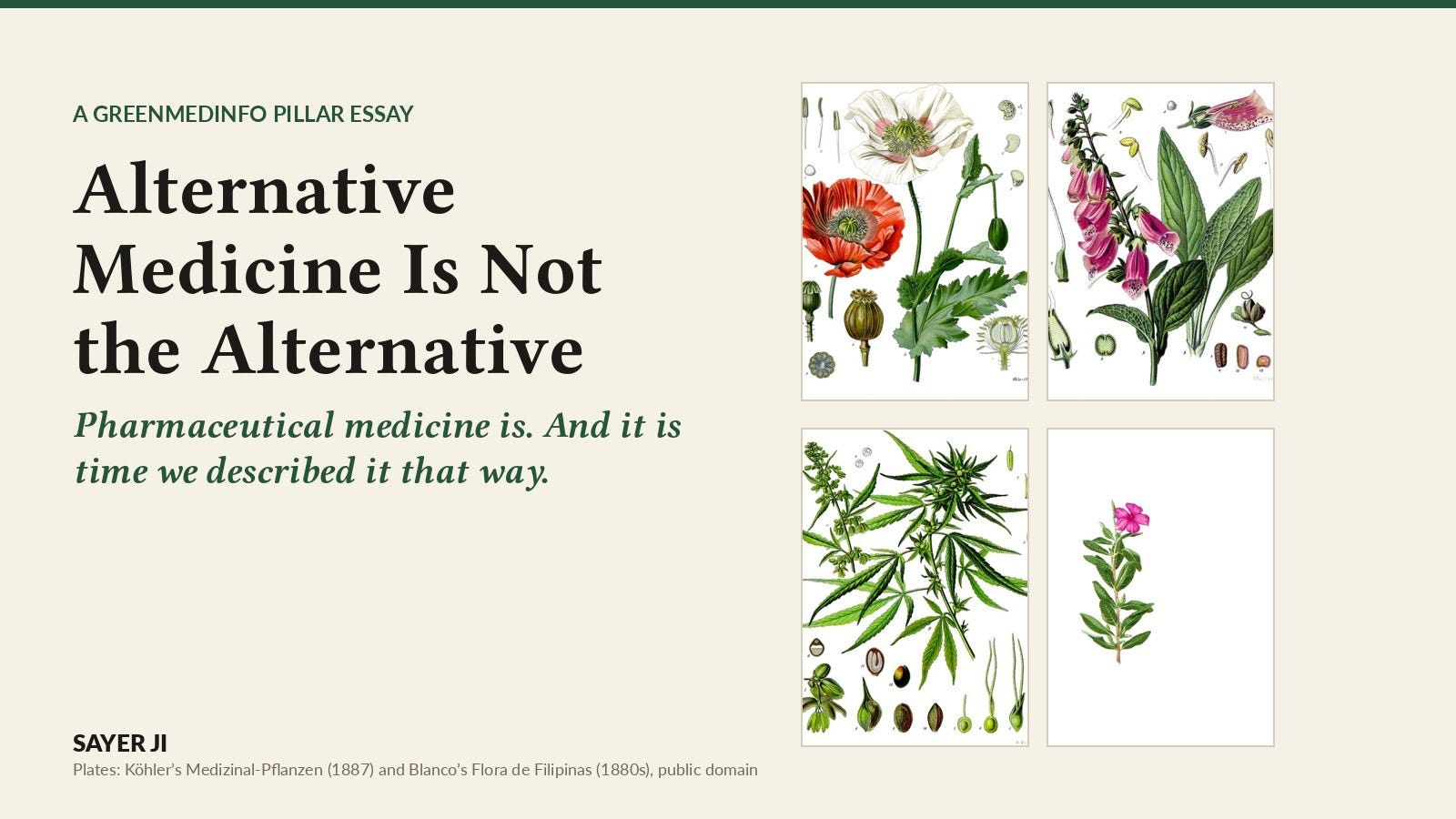
Pharmaceutical medicine is. And it is time we described it that way.
Somewhere this morning, a grandmother in Kerala is stirring turmeric into warm milk for a coughing grandchild. In Oaxaca, a mother is steeping chamomile and a sprig of epazote. In Accra, a father is boiling ginger with lemon and honey. In a village outside Kraków, someone is pouring the first glass of the season’s elderberry syrup.
None of them would call what they are doing “alternative.” It is simply what their families have always done. It is medicine.
Yet in the vocabulary of most Western newsrooms, medical journals, insurance codes and regulatory agencies, every one of them is practicing “alternative medicine.” That one word quietly places them at the margins of a story in which a different system sits at the center, the default, the norm against which everything else is measured.
This essay is about that word: who chose it, what it hides, and why the historical, demographic, economic, legal and scientific evidence all point the other way.
Humanity’s original medicine is food, plants, minerals, light, movement, sleep, touch, community and the body’s own extraordinary capacity to repair itself. Pharmaceutical medicine is something else: care built around isolated, synthesized and usually patented molecules. It is recent, specialized and, in the right moment, brilliant. But it is the newcomer. It is the departure from the norm. By any honest accounting, it is the alternative.
The argument in brief
History. Written plant medicine goes back at least 3,500 years. The first plant alkaloid was isolated in 1804. Pharmaceutical dominance is about a century old. [Prehistorical use of plant medicine goes back to its use by insects.]
Demography. The World Health Organization estimates that around 80% of the world’s population uses traditional medicine, and 170 of its 194 Member States report its use.
Economics. The global wellness economy is now almost four times the size of the pharmaceutical industry.
Structure. The line between “medicine” and “alternative” follows ownership, meaning patents, definitions and the cost of proof. It does not follow evidence of what works.
What this is not. It is not a claim that drugs are bad or that everything natural is good. It is a claim that our words should describe, not rank.
Alternative to What?
Start with the oldest written records. The Egyptian Ebers Papyrus, dated to about 1550 BCE, lists roughly 700 drugs and 800 prescriptions, many drawn from the plant kingdom. India’s Charaka Samhita describes some 500 plants. In the first century, the Greek physician Dioscorides compiled De Materia Medica, a work regarded as the forerunner of modern pharmacopoeias.
The father of Western medicine never actually said “Let food be thy medicine.” Scholars who searched the Hippocratic corpus could not find the line. What survives is more radical than the slogan. A later text in the same tradition, De alimento, says: “In food excellent medication, in food bad medication, bad and good relatively.” The Greek word translated as “medication” is pharmakeiē. Hold on to that word. We will return to it.
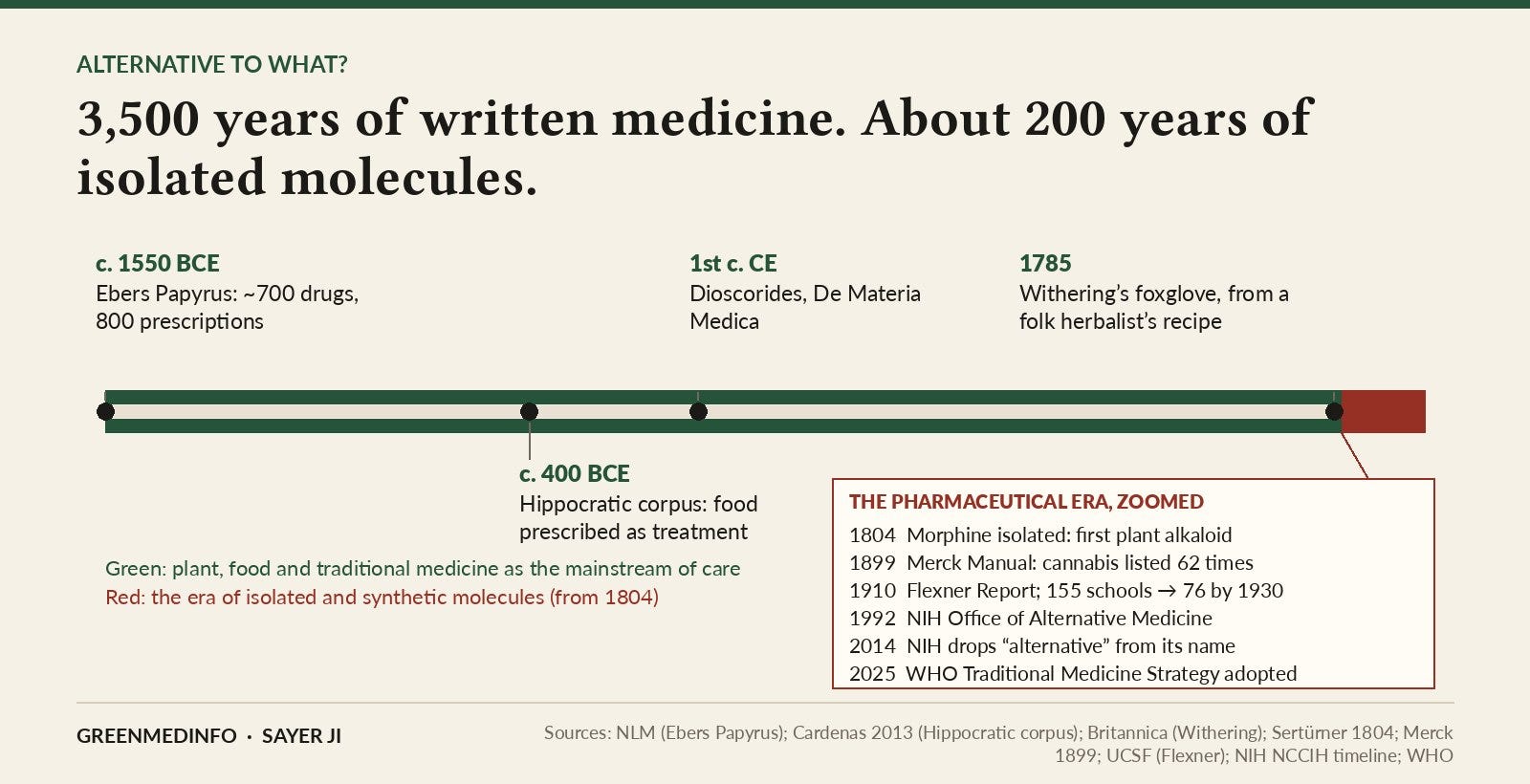
For nearly all of that span, there was no “alternative.” There was only medicine, and most of it grew.
The modern break came quietly. In 1804, a young German apothecary’s assistant, Friedrich Sertürner, isolated morphine from opium. It was the first alkaloid ever pulled out of any plant. For the first time, the active compound could be separated from the living whole. This was a genuine achievement. It was also the conceptual seed of everything that followed: the idea that the useful part of nature is the part that can be extracted, standardized and eventually owned.
Even then, nature led and industry followed. In 1775, the English physician William Withering was asked about a family remedy for dropsy, a dangerous swelling we now associate with heart failure. The recipe had long been kept secret by an old woman in Shropshire and combined twenty or more herbs. Withering identified the foxglove among them, spent ten years documenting cases, and published his account in 1785. Today digitalis remains the active ingredient of the drugs digoxin and digitoxin.
The pattern repeats across the pharmacopoeia. The World Health Organization notes that aspirin drew on traditional willow-bark formulations, the contraceptive pill was developed from wild yam roots, and childhood cancer treatments were based on the rosy periwinkle. By WHO’s estimate, some 40% of approved pharmaceutical products in use today derive from natural substances.
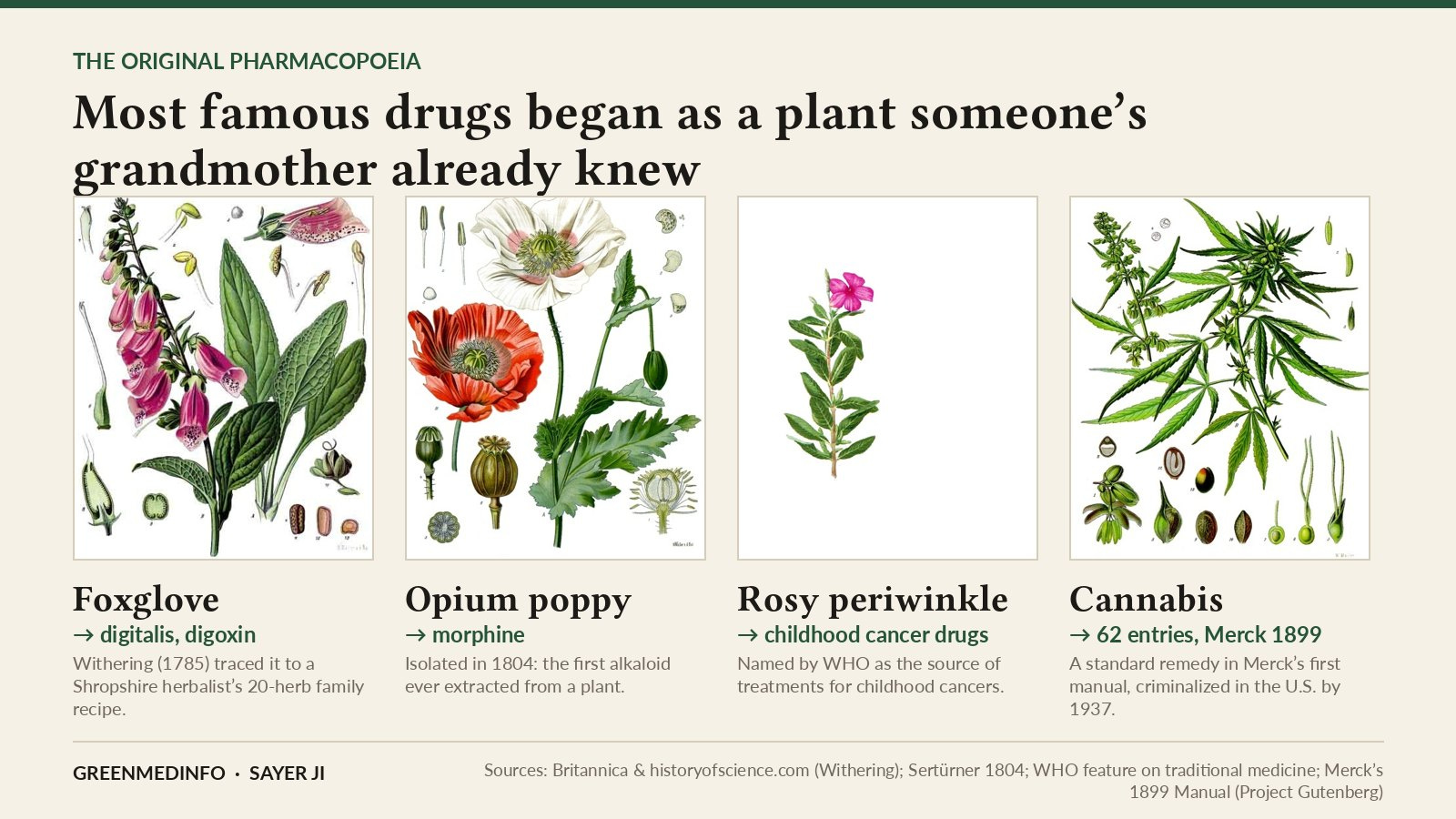
Now look at the moment just before the pharmaceutical takeover. The first edition of Merck’s Manual, published in 1899, is freely available on Project Gutenberg. It presents itself as a ready-reference covering “the entire eligible Materia Medica,” and the word “cannabis” appears in it 62 times. As I documented in They Called It “Alternative.” It Was Always the Original., the manual is a compendium of arnica, valerian, myrrh, cod liver oil, papain and dozens of other natural agents. Physicians prescribed them and pharmacists dispensed them as the standard of care.
A generation later, in 1932, America’s pharmacists distributed a large-format Medicinal Plant Map of the United States under the heading “The Service of Pharmacy.” Its text is unambiguous: “It has been stated that upwards of 70 percent of all medicines employed are plant products.”
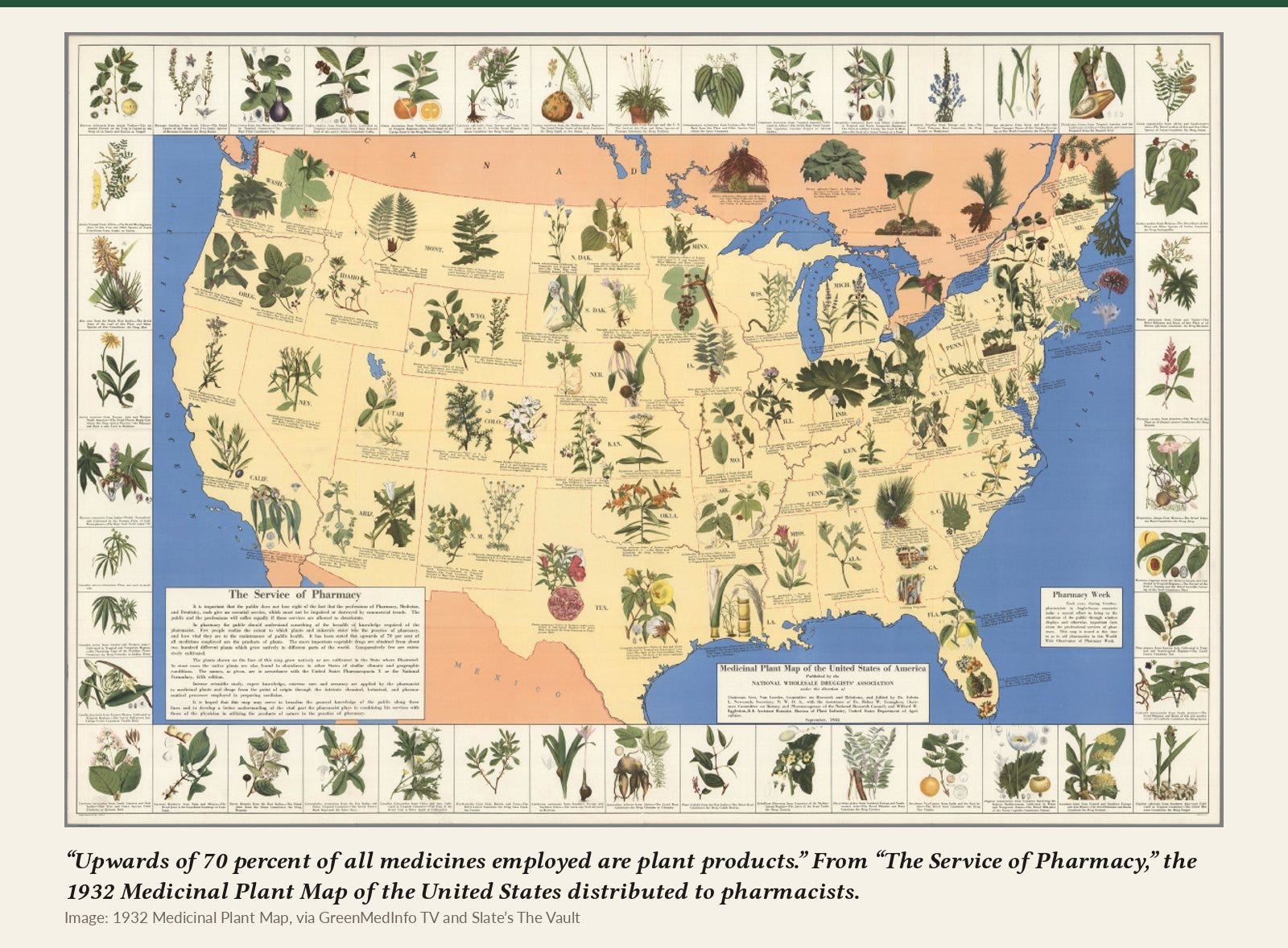
Seventy percent. Plant medicine was not a fringe practice clinging to the edges of real medicine. Within living memory, it was real medicine. Five years after that map was printed, the United States began criminalizing one of its most prominent entries, cannabis, with the Marihuana Tax Act of 1937.
So when someone calls herbal, nutritional or traditional medicine “alternative,” the honest question is: alternative to what? Not to the medicine of 1550 BCE, 1785, 1899 or 1932. Only to a system that has held the center for roughly a century.
Pharmakeia: The Oldest Word for a Double Edge
The Greek phármakon meant remedy and poison at once. Its cousin pharmakeia, the root of our word “pharmacy,” appears in the New Testament’s Book of Revelation, where the King James translators rendered it “sorceries”: “for by thy sorceries were all nations deceived.” In Pharmakeia: The Oldest Word for Poisoned Medicine, I traced how a single word held healing, poisoning and enchantment together. The ancients understood something we have tried to forget. The same substance can heal or harm depending on dose, preparation, context and the intentions of whoever dispenses it.
That last variable matters most. When a remedy becomes a product, the seller’s interest and the patient’s interest can drift apart. Withering knew this. He published his foxglove monograph partly to keep less experienced doctors from giving the plant without proper caution, because the dose separating medicine from poison was narrow.
Two centuries later, that warning reads as prophecy. A widely cited 1998 meta-analysis in JAMA estimated that 6.7% of hospitalized U.S. patients experienced a serious adverse drug reaction. It also estimated that 106,000 died from adverse reactions to drugs that were properly prescribed and administered. That would make such reactions between the fourth and sixth leading cause of death in the country.
Technical note. Lazarou et al. (JAMA 1998;279:1200–1205) pooled 39 prospective studies. The 106,000 figure is an extrapolation with a wide confidence interval (roughly 76,000–137,000), and it excludes prescribing errors, overdoses and drug abuse. It counts in-hospital reactions only. It is therefore an estimate of harm under correct use, not a total.
In an earlier GreenMedInfo essay, I asked whether drug-driven medicine has become a form of human sacrifice. I did not mean that literally. I meant it structurally: a system that accepts a predictable toll of injury and death as the cost of doing business, then files that toll under the gentle heading of “side effects.” The ancient word already contained this warning. Pharmakeia was never simply “medicine.” It was medicine that had to be watched.
How the Original Became “Alternative”
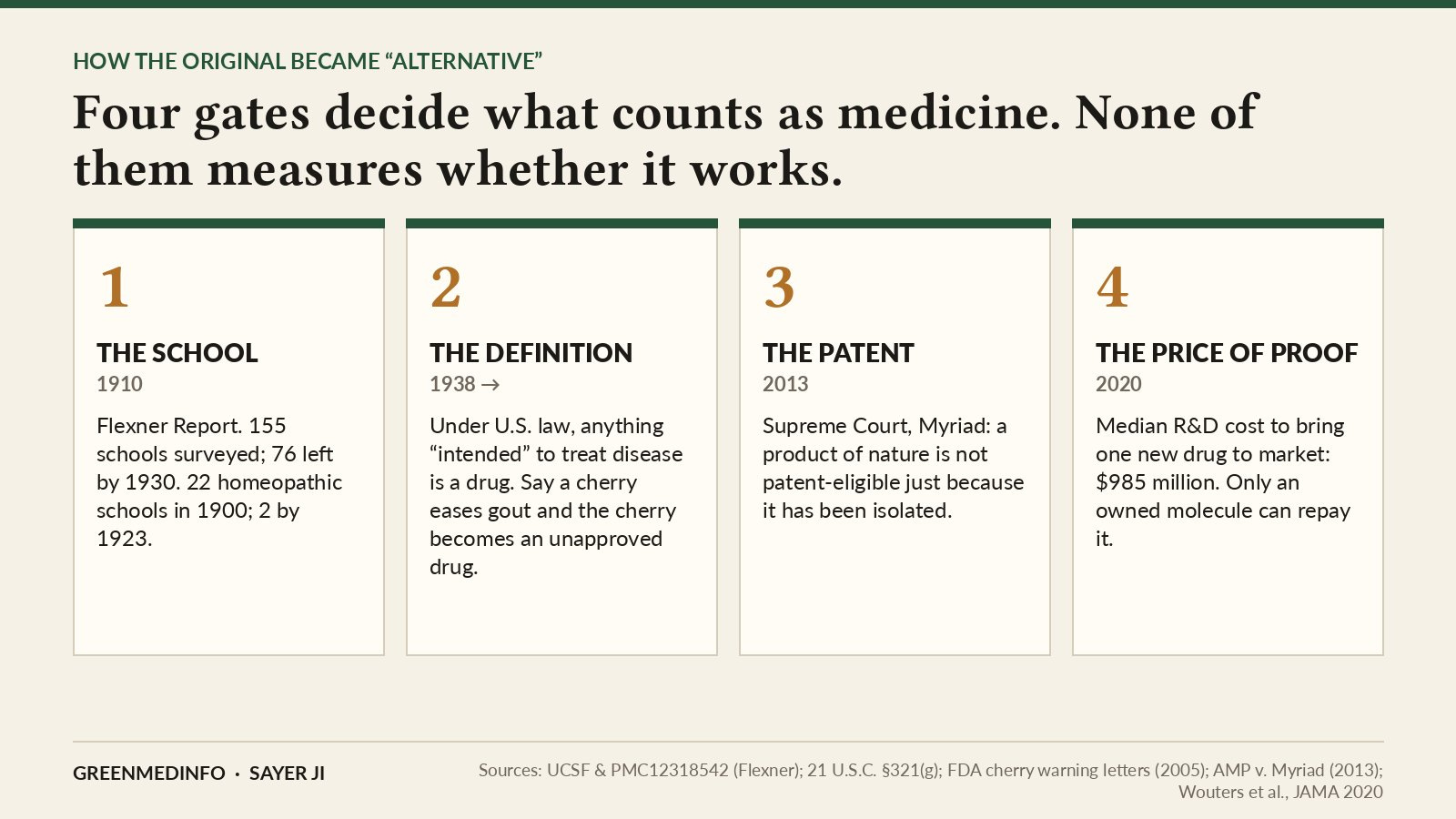
If plant and food medicine was mainstream within living memory, how did it become marginal so fast? It was not mainly through a series of decisive trials proving it worthless. It happened through four gates. Each one controls what counts as medicine, and none of them measures whether a remedy works.
Gate one: the school
In 1910, Abraham Flexner published his report on North American medical education after visiting 155 medical schools. The consolidation that followed was swift. By 1915, the country’s medical schools had been reduced to 96, and by 1930 only 76 remained. Schools teaching other traditions were hit hardest. The 22 homeopathic medical schools in existence in 1900 had dwindled to just two by 1923, as philanthropic money from the Rockefeller and Carnegie foundations flowed to institutions built on the new laboratory model.
Fairness demands a caveat. Many schools Flexner criticized really were poor, and raising standards saved lives. But the reform did more than raise standards. It defined one approach as “scientific” and the others as “sectarian,” and it did so through who got funded and accredited, not through head-to-head comparisons of outcomes.
The effects persist. A national survey in Academic Medicine found that U.S. medical students received an average of 19.6 hours of nutrition education across their entire training, below even the modest 25-hour minimum recommended by the National Academy of Sciences. As I wrote in Your Kitchen Is the Oldest Pharmacy on Earth, that is four years to learn the human body and about twenty hours on the substance that builds it three times a day.
Gate two: the definition
Under U.S. law, a “drug” includes any article intended for use in the diagnosis, cure, mitigation, treatment, or prevention of disease. The key word is “intended.” The legal status of a substance depends on what is said about it, not on what it is.
The consequences can be absurd. In 2005, the FDA sent warning letters to cherry growers and processors whose websites linked their fruit to relief from conditions such as arthritis and gout. Calling a cherry anti-inflammatory, in the regulator’s eyes, turned the cherry into an unapproved new drug. The rule is meant to protect the public from false claims. Its structural effect is to make it nearly impossible to describe any food or plant as medicine, however strong the evidence.
Gate three: the patent
In Association for Molecular Pathology v. Myriad Genetics (2013), the U.S. Supreme Court held that a naturally occurring DNA segment is a product of nature and not patent eligible merely because it has been isolated. The principle reaches well beyond genes. A plant, a food, a mineral or a compound as it occurs in nature cannot, in itself, be owned. Formulations, synthetic analogues and specific methods of use can sometimes be patented, so the boundary is not absolute. But the core of the original medicine sits largely outside the patent system.
Gate four: the price of proof
That matters because of the fourth gate. A 2020 analysis in JAMA estimated the median research and development cost of bringing a new drug to market at $985 million, with a mean of $1.3 billion. Large Phase III trials are the evidentiary currency regulators demand. Only an asset that can be owned for years can repay that bill.
Put the four gates together and a closed loop appears. Natural substances cannot be patented in their natural form. So few companies will fund billion-dollar trials on them. So the trials regulators require are rarely run. So the substances remain “unproven.” And that status is then used as evidence that they do not work.
The absence of a mega-trial on ginger is usually an economic fact, not a scientific verdict.
The word itself
Even the U.S. government has been uneasy with the label. Congress funded an NIH Office of Alternative Medicine in fiscal year 1992. It became the National Center for Complementary and Alternative Medicine in 1998, and in 2014 it was renamed the National Center for Complementary and Integrative Health. The word “alternative” was dropped.
Naming wars in medicine are not new. The word “allopathy” was coined in 1810 by Samuel Hahnemann, the founder of homeopathy, as a criticism of the dominant practice of his day. Labels have always been weapons. The point of this essay is not to swap one insult for another. It is to use words that describe.
What Nature Still Supplies
The pharmaceutical industry never actually abandoned nature. It learned to extract nature’s chemistry, modify it enough to patent, and then sell the result as the opposite of what it came from.
The clearest evidence comes from the most authoritative long-running review of drug origins. Newman and Cragg’s analysis in the Journal of Natural Products examined small-molecule cancer drugs approved from 1981 to 2019. Only 29 of them, or 15.7%, were classified as totally synthetic, with no natural-product origin or inspiration. The rest were natural products, derived from them, or modeled on them.
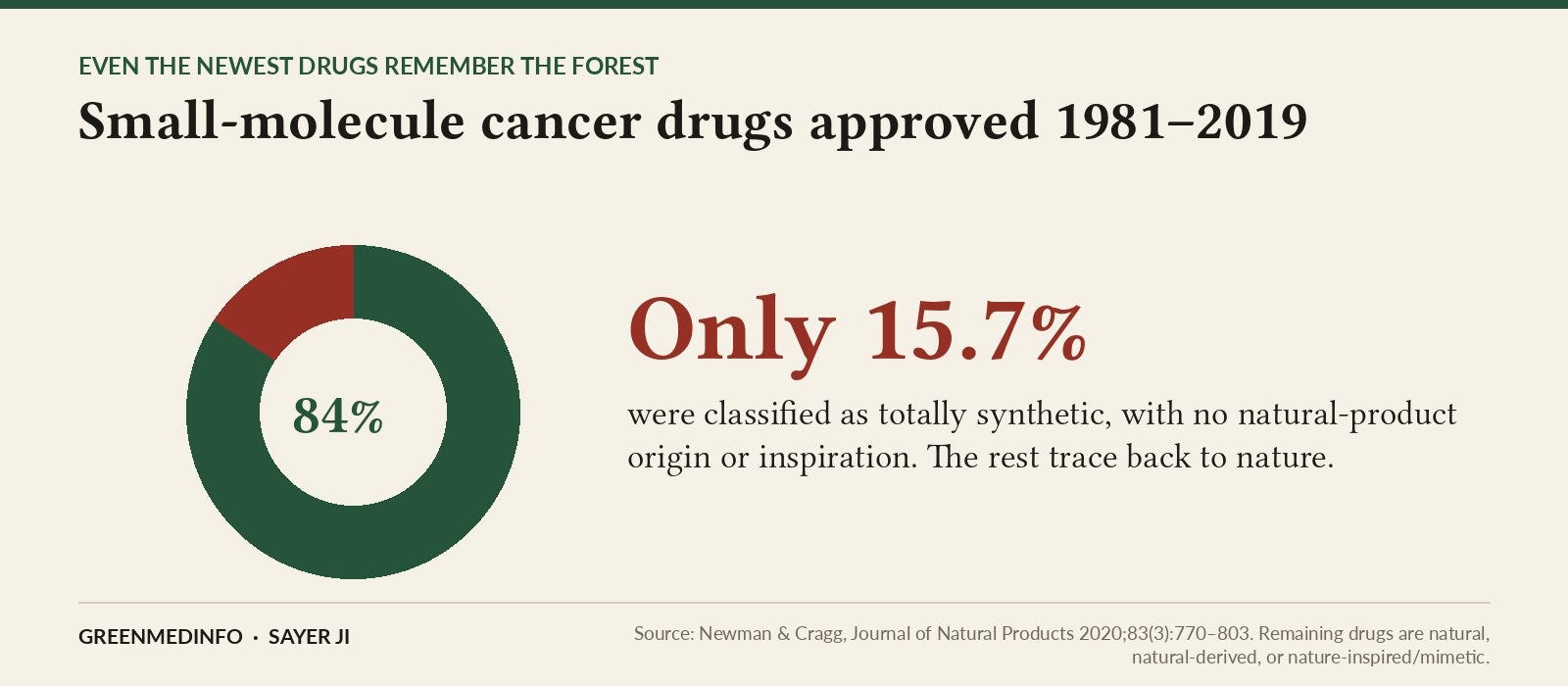
Technical note. Newman and Cragg sort drugs into categories: unaltered natural products (N), botanical drugs (NB), natural-product derivatives (ND), synthetic drugs with a natural-product pharmacophore (S*), and natural-product mimics (/NM). The “totally synthetic” category (S) excludes all of these. Across all disease areas and drug types, the natural-product share is lower than in oncology. The oncology figure is the most striking, and it is precise.
Nature is not the rival of pharmaceutical medicine. It is the supplier. Calling the supplier “alternative” while calling the reseller “conventional” is a remarkable inversion.
What Pharmaceutical Medicine Does Brilliantly
An argument that cannot face its strongest objection does not deserve to win, so let me state the objection plainly.
Pharmaceutical and surgical medicine does things nothing else can. Anesthesia makes surgery humane. Antibiotics turn a death sentence from sepsis into a recovery. Insulin keeps people with type 1 diabetes alive. Emergency obstetrics, trauma surgery and intensive care rescue millions who would otherwise die. No honest advocate of natural medicine should want any of this gone.
Notice where these triumphs cluster: acute crises, emergencies, the moments when the body’s own systems are overwhelmed. That is exactly what an alternative is for. You reach for it when the primary system has failed or is outmatched.
The trouble comes when the emergency tool becomes the default for everything, including the chronic, lifestyle-driven and diet-driven conditions that now dominate the global disease burden. A rescue technology works well for rescue. It works poorly as a way of life.
So the strongest version of this argument is not “drugs bad, plants good.” It is this: pharmaceutical medicine is a powerful, specialized and relatively recent alternative to the original foundations of health, and it should be described that way. Accurate naming honors its power and limits its overreach. It also restores the original medicine to its rightful place as the first line, not the last resort.
Your Kitchen Is the Oldest Pharmacy
If the original medicine has a home, it is the kitchen. Food is not merely calories and cofactors. As I argued in Regenerate, it is biological information. It regulates genes, instructs the microbiome and carries a cross-kingdom conversation refined over millions of years of co-evolution.
When a family simmers bone broth with garlic and ginger, or folds turmeric into a stew the way it has been done for a hundred generations, it is running a clinical trial of a kind. It is not randomized or blinded, but it spans millennia, with survival as the endpoint. That is what traditional medicine is: the accumulated observations of human beings, tested across generations and refined by results.
The pharmaceutical era taught us to see the kitchen as the place where health is lost and the pharmacy as the place where it is bought back. The original arrangement was the reverse.
The Revolution Is Already Here
The question of what counts as “alternative” is not being settled in journals. It is being settled in billions of daily decisions, and the direction is unmistakable.
The market has already moved. According to the Global Wellness Institute, the global wellness economy reached $6.8 trillion in 2024 and is forecast to reach $9.8 trillion by 2029. The same analysis reports that it is now almost four times larger than the pharmaceutical industry, at $1.8 trillion.
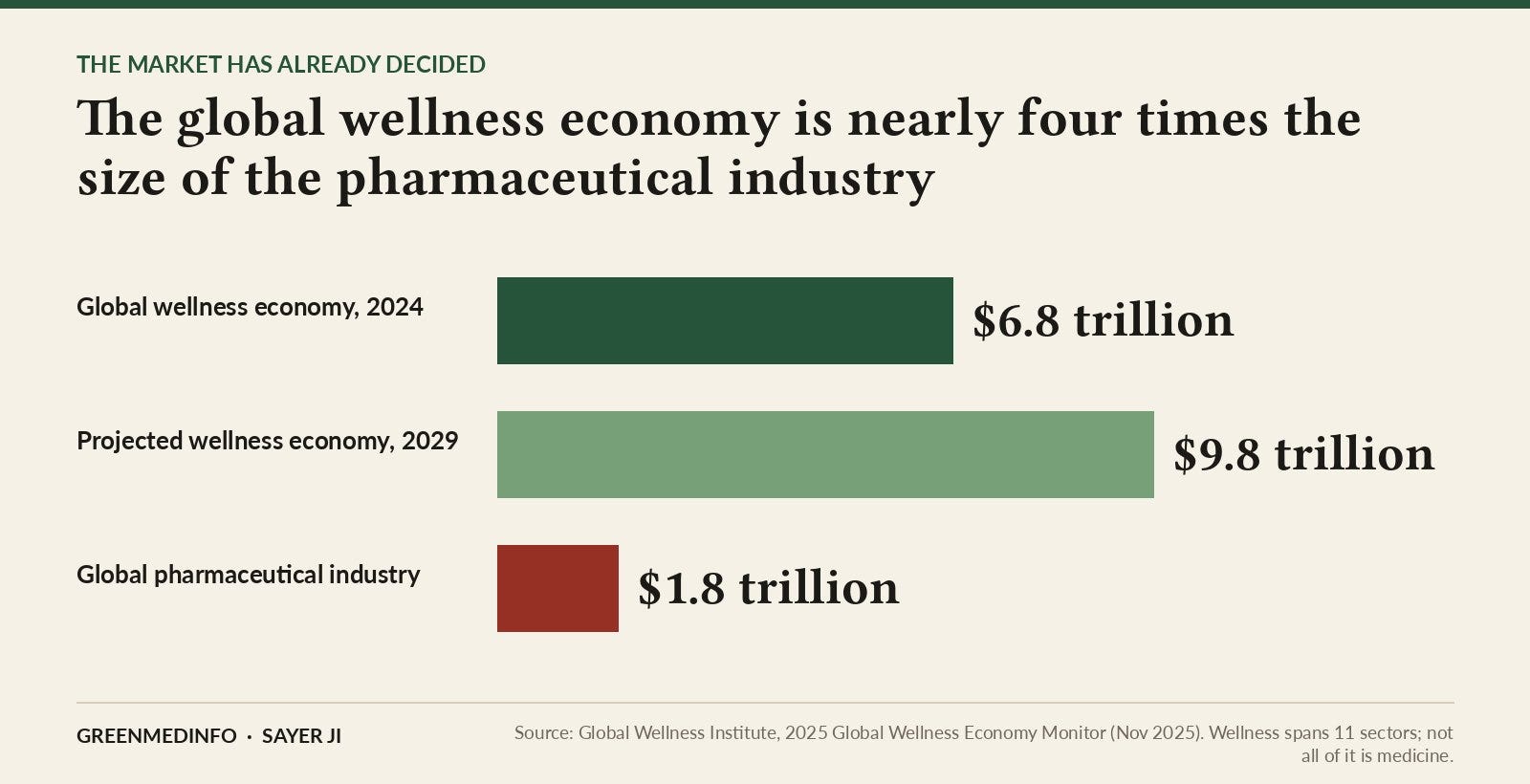
Technical note. The Global Wellness Institute’s “wellness economy” spans sectors including healthy eating and nutrition, physical activity, personal care, mental wellness, traditional and complementary medicine, public health and prevention, and wellness tourism. Much of it is not medicine in the clinical sense. The comparison is not like-for-like. It shows where people choose to spend on their health, not a head-to-head contest between two treatments.
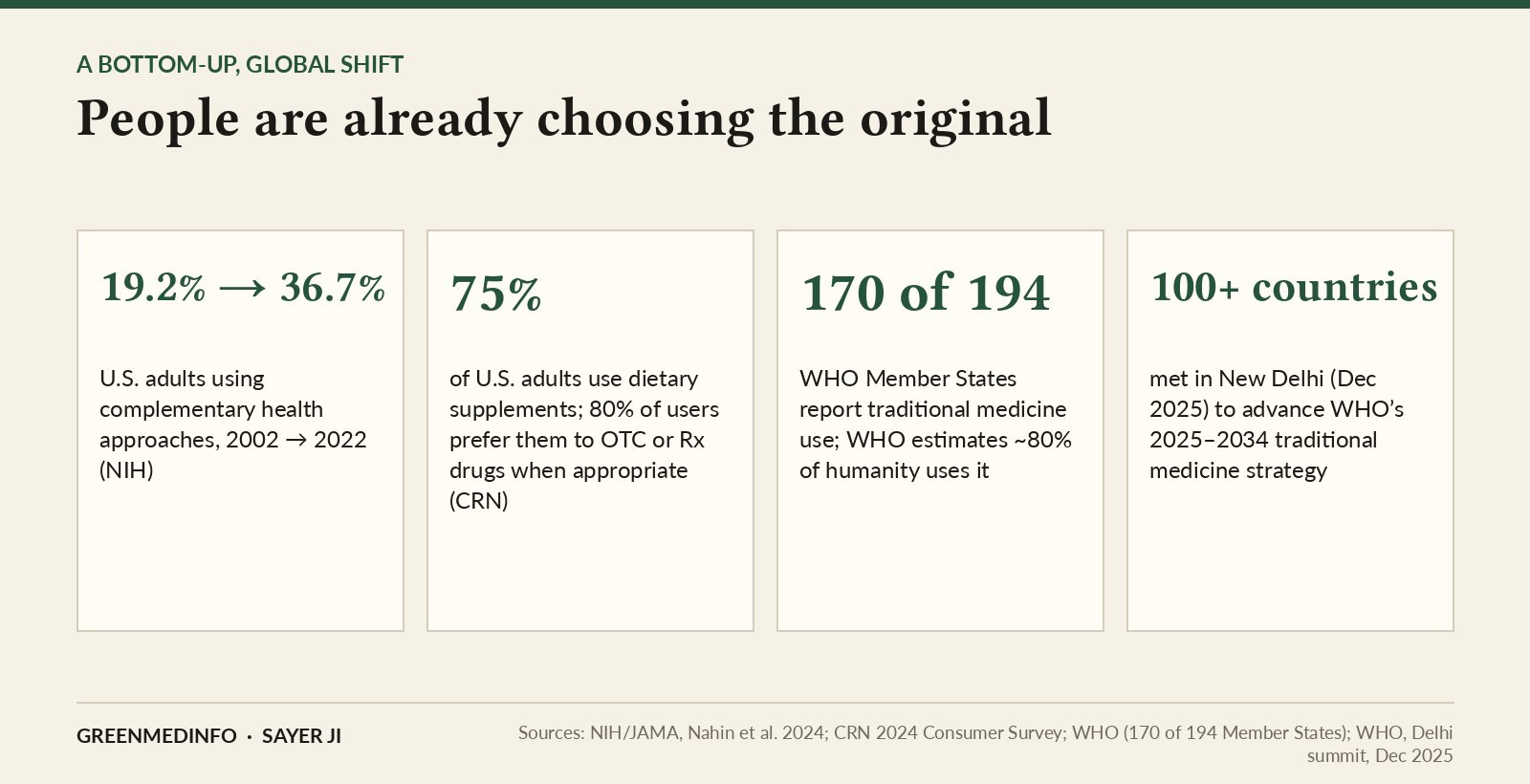
People are changing how they care for themselves. An NIH analysis published in JAMA found that the share of U.S. adults using at least one of several complementary health approaches rose from 19.2% in 2002 to 36.7% in 2022. The Council for Responsible Nutrition’s 2024 survey found that 75% of American adults use dietary supplements. Nearly 80% of those users prefer supplements to over-the-counter or prescription drugs whenever appropriate.
The world’s governments are catching up. WHO estimates that around 80% of the world’s population uses traditional medicine, and 170 of 194 Member States report its use. In 2022, WHO established its Global Centre for Traditional Medicine in India. In May 2025, the World Health Assembly adopted the Global Traditional Medicine Strategy 2025–2034. In December 2025, the Second WHO Global Summit on Traditional Medicine in New Delhi brought together delegates from more than 100 countries and produced the Delhi Declaration. And in September 2026, WHO launched global research priorities for traditional, complementary and integrative medicine, noting that 27 Member States had made formal, time-bound research commitments.
This is a revolution of the ordinary. It is led by people who noticed that a lifetime of prescriptions was not making them well, and who went looking for what their grandparents knew.
It is not without risks. A booming market attracts adulterated products, inflated claims and opportunists. The answer is not to retreat to the old hierarchy. The answer is to bring to the original medicine the same rigor, transparency and evidence-grading we demand of everything else. Which brings us to the evidence.
From 100,000 to 28 Million: The Evidence Was Always There
The most common objection to natural medicine is that “there is no evidence.” For nearly two decades, GreenMedInfo has existed to answer that objection the only way it can honestly be answered: by indexing the peer-reviewed literature itself, study by study, and making it searchable.
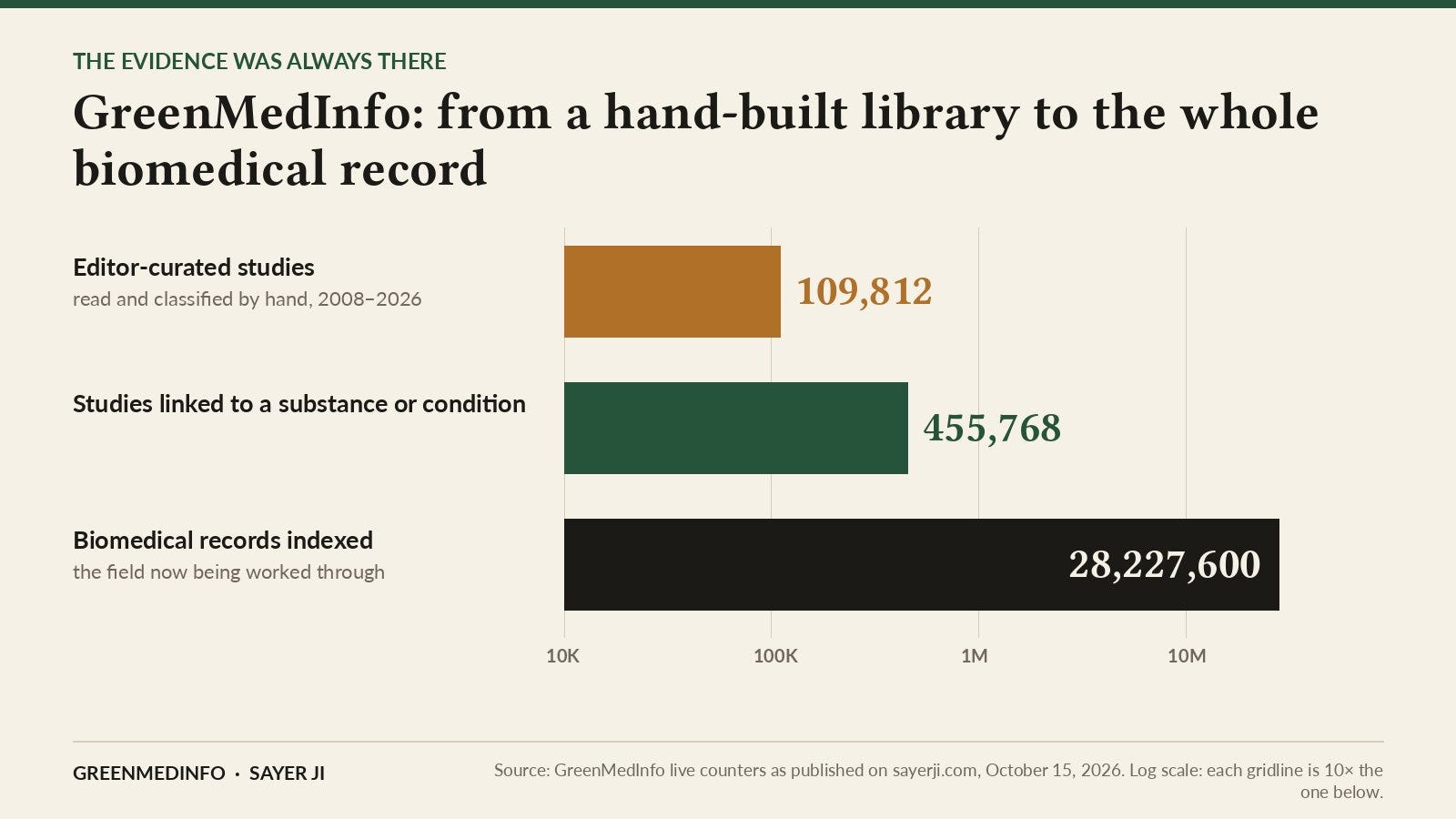
The work began by hand. Over nearly two decades, editors read and classified studies one at a time, linking each to the natural substances, conditions and biological actions it addresses. That curated layer now holds 109,812 editor-curated studies. A second layer connects 455,768 studies to a specific substance or health condition. And today, GreenMedInfo indexes 28,227,600 biomedical records, effectively the full published biomedical literature, across 10,244 health topics. These are the live figures published on sayerji.com as of October 15, 2026.
It helps to be precise about what these numbers mean, because precision is the point.
The curated layer is what human editors could read and classify, one study at a time. It is the deepest layer and the slowest to build.
The linked layer is the set of studies already connected to a substance or condition. It is more than four times larger than the curated core.
The indexed layer is the whole field: more than 28 million records, roughly 250 times the curated core. This is the raw material, not the finished product. The work ahead is to go through it systematically. That means identifying what the world’s research says about foods, plants, nutrients, light, movement, environmental exposures and drug-induced harms, then classifying it, grading it and linking it, so that anyone, anywhere, can see what the literature actually contains.
How to read the database honestly. An index is not a verdict. A study’s presence in GreenMedInfo means it exists in the published literature and addresses a given topic. It does not mean the question is settled. Studies vary enormously in strength: cell cultures, animal models, observational cohorts, randomized human trials. Every record traces to its original publication, so readers can judge for themselves. The goal is not to tell people what to believe. It is to make the evidence impossible to ignore.
When the original medicine is called “unproven,” the frequent truth is that it was never proven or disproven. It was left unfunded, and the evidence that does exist was scattered across millions of papers no single clinician could read. That is the gap GreenMedInfo was built to close. With more than 28 million records now under index, the claim that “there is no evidence” becomes a question anyone can check.
A New Vocabulary
Words shape policy. Policy shapes funding. Funding shapes evidence. If we want a medical system that measures every intervention by the same standard, we have to stop starting the race with a handicap built into the language.
Here is a proposal for journalists, editors, regulators, educators, clinicians and translators everywhere:
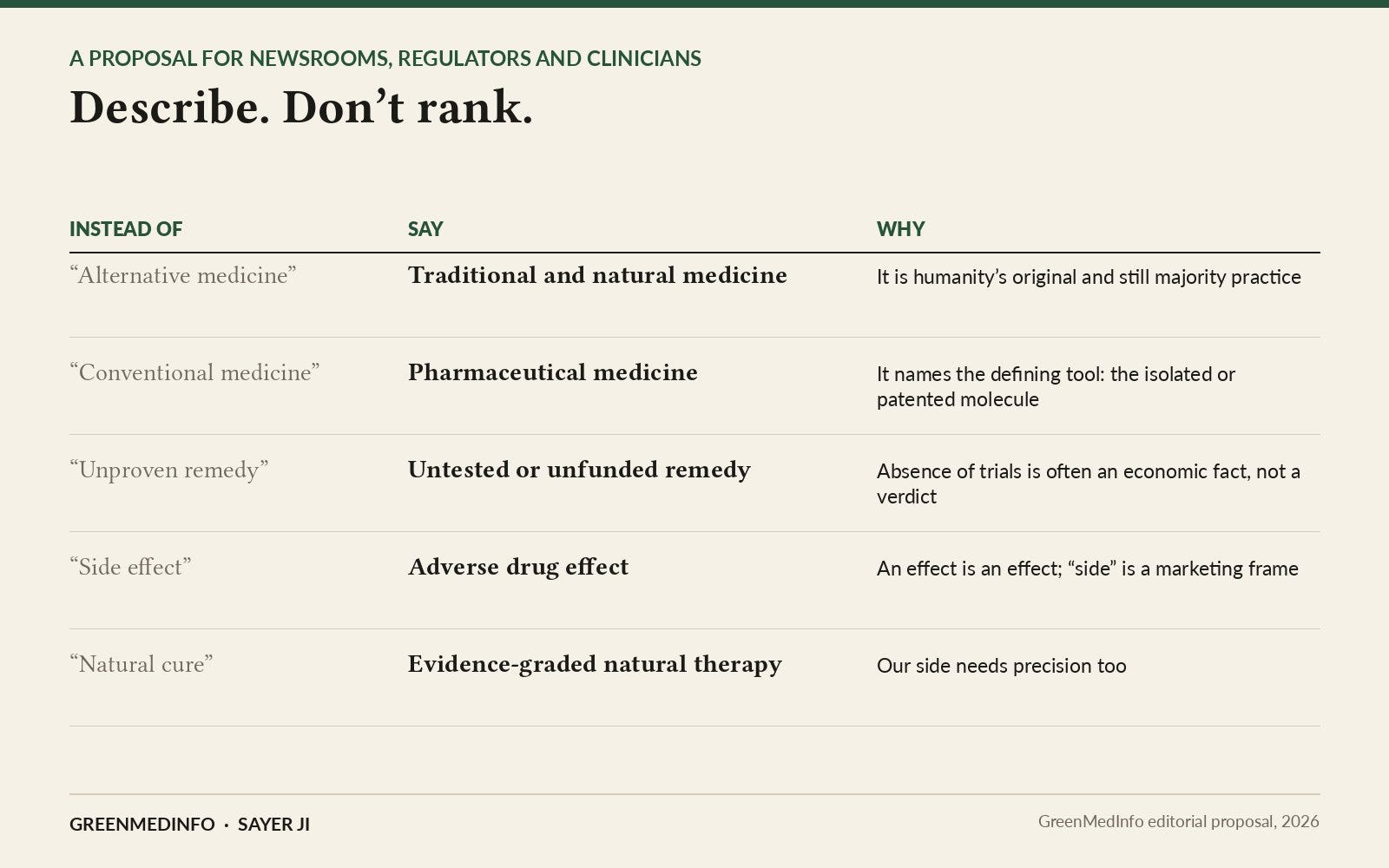
Instead ofSayWhy”Alternative medicine”Traditional and natural medicineIt is humanity’s original, and still majority, practice.”Conventional medicine”Pharmaceutical medicineIt names the defining tool: the isolated or patented molecule. Where surgery is meant, say so.”Unproven remedy”Untested or unfunded remedySeparate “disproven” from “never studied.” Absence of trials is often an economic fact, not a verdict.”Side effect”Adverse drug effectAn effect is an effect. “Side” is a framing choice.”Natural cure”Evidence-graded natural therapyOur side needs precision too.
None of this requires anyone to abandon a single drug or a single surgery. It asks only that we describe each approach by what it is, not by its rank in a hierarchy built by people who profit from it.
The Original Never Left
Return to that kitchen in Kerala, the pot of chamomile in Oaxaca and the elderberry syrup outside Kraków. The people standing over them are not practicing an alternative to anything. They are carrying forward the oldest continuous practice of medicine on Earth, one that predates every patent, regulator and pharmaceutical company by thousands of years, and that still supplies the raw material for many of the drugs those companies sell.
The word “alternative” was never a scientific category. It was a market position, and it succeeded only as long as people accepted it.
They are no longer accepting it. Trillions of dollars, a near-doubling of complementary health use in two decades, a WHO strategy adopted by the world’s governments, and a public evidence base now spanning more than 28 million records all point the same way.
The original medicine never left. It was renamed. It is time to give it back its name.
Why You Have Never Heard Most of This
Every study above is published in a peer-reviewed journal and sits in the National Library of Medicine. None of it is hidden. It is simply unfindable — buried in a haystack of tens of millions of papers, with no one paid to surface it, and, since 2021, no longer even filterable under PubMed’s complementary-and-alternative-medicine category, which was quietly removed.
That is why GreenMedInfo exists. We have spent seventeen years indexing this research — 1.4 million studies and counting, hand-mapped to over 16,000 substances, conditions and mechanisms — and keeping it free to search. In 2020 they tried to take it offline. It’s still here. It’s still yours.
If any of this was new to you, that is the whole problem — and the whole reason to search the archive, share this piece, and bring one of these studies to your next doctor’s appointment.
Help us grow our project to encompass the totality of the world’s literature supporting natural and integrative health approaches by becoming a member of GreenMedInfo here.
Why You Have Never Heard Most of This
There are hundreds of thousands studies supporting the science of natural healing in peer-reviewed journals freely searchable through the National Library of Medicine. None of it is hidden. It is simply unfindable for the everyday person— buried in a haystack of tens of millions of papers, with no one paid to surface it, and, since 2021, no longer even filterable under PubMed’s complementary-and-alternative-medicine category, which was quietly removed.
That is why GreenMedInfo exists. We have spent seventeen years indexing this research — 1.4 million studies and counting, hand-mapped to over 16,000 substances, conditions and mechanisms — and keeping it free to search. In 2020 they tried to take it offline. It’s still here. It’s still yours.
If any of this was new to you, that is the whole problem — and the whole reason to search the archive, share this piece, and bring one of these studies to your next doctor’s appointment.
Help us grow our project to encompass the totality of the world’s literature supporting natural and integrative health approaches by becoming a member of GreenMedInfo here.

Sources
Ebers Papyrus and Charaka Samhita. U.S. National Library of Medicine, “Doctors, Doctrines, and Drugs.” https://www.ncbi.nlm.nih.gov/pmc/articles/PMC197819/pdf/mlab00191-0102.pdf
Dioscorides as forerunner of pharmacopoeias. “Early human studies of investigational agents,” PMC2675037. https://pmc.ncbi.nlm.nih.gov/articles/PMC2675037/
Cardenas D. “Let not thy food be confused with thy medicine.” e-SPEN Journal, 2013. http://dx.doi.org/10.1016/j.clnme.2013.10.002
De alimento and pharmakeiē. Hektoen International, 2018. https://hekint.org/2018/10/12/hearkening-back-to-hippocrates-rediscovering-food-as-medicine-in-the-age-of-quinoa-and-kale/
Sertürner and morphine, 1804. “Morphinan Alkaloids and Their Transformations: A Historical Perspective,” PMC11943231. https://pmc.ncbi.nlm.nih.gov/articles/PMC11943231/
Withering and the Shropshire remedy. HistoryofScience.com. https://www.historyofscience.com/articles/jmnorman-william-withering.php
Withering and digitalis. Encyclopaedia Britannica. https://www.britannica.com/biography/William-Withering
Withering’s caution on dosing. Cambridge Library Collection. https://www.cambridge.org/core/series/cambridge-library-collection-botany-and-horticulture/7FFCBED1B554C4CA21C8DA6D2750D64C
WHO, Global Centre for Traditional Medicine announcement (80%, 170 of 194, 40%, aspirin, wild yam, periwinkle), 2022. https://www.who.int/news/item/25-03-2022-who-establishes-the-global-centre-for-traditional-medicine-in-india
Merck’s 1899 Manual of the Materia Medica. Project Gutenberg. https://www.gutenberg.org/ebooks/41697
Ji S. “They Called It ‘Alternative.’ It Was Always the Original.” https://read.sayerji.com/p/they-called-it-alternative-it-was (also at https://greenmedinfo.com/content/they-called-it-alternative-it-was-always-original)
1932 Medicinal Plant Map of the United States. GreenMedInfo TV. https://tv.greenmedinfo.com/map-of-herbal-cures-pharmacist-map-of-herbal-cures/
Ji S. “Pharmakeia: The Oldest Word for Poisoned Medicine.” https://read.sayerji.com/p/pharmakeia-the-oldest-word-for-poisoned
Lazarou J, Pomeranz BH, Corey PN. Incidence of adverse drug reactions in hospitalized patients. JAMA 1998;279:1200–1205. https://jamanetwork.com/journals/jama/fullarticle/187436
Ji S. “Has Drug-Driven Medicine Become a Form of Human Sacrifice?” https://greenmedinfo.com/content/has-drug-driven-medicine-become-form-human-sacrifice
Flexner’s survey of 155 schools. Academic Medicine 85(Suppl 1). https://academic.oup.com/academicmedicine/article/85/Supplement_1/S19/8353651
Medical schools reduced to 96 by 1915 and 76 by 1930. UCSF Archives. https://history.library.ucsf.edu/flexner_report.html
Homeopathic schools, 22 in 1900 to two by 1923. “Rockefeller, the Flexner Report, and the American Medical Association,” PMC12318542. https://pmc.ncbi.nlm.nih.gov/articles/PMC12318542/
Adams KM et al. Nutrition education in U.S. medical schools. Academic Medicine 2010. https://pubmed.ncbi.nlm.nih.gov/20736683/
Ji S. “Your Kitchen Is the Oldest Pharmacy on Earth.” https://read.sayerji.com/p/your-kitchen-is-the-oldest-pharmacy
Definition of “drug,” 21 U.S.C. §321(g). Cornell Legal Information Institute. https://www.law.cornell.edu/uscode/text/21/321
FDA warning letters to cherry companies, 2005. FoodNavigator. https://www.foodnavigator.com/Article/2005/10/25/FDA-crushes-cherry-claims/
Association for Molecular Pathology v. Myriad Genetics, 569 U.S. 576 (2013). https://www.law.cornell.edu/supct/pdf/12-398.pdf
Wouters OJ, McKee M, Luyten J. Estimated R&D investment needed to bring a new medicine to market. JAMA 2020. https://pubmed.ncbi.nlm.nih.gov/32125404/
NCCIH timeline. National Institutes of Health. https://www.nccih.nih.gov/about/nccih-timeline
Hahnemann and “allopathy.” https://en.wikipedia.org/wiki/Allopathic_medicine
Newman DJ, Cragg GM. Natural products as sources of new drugs over the nearly four decades from 01/1981 to 09/2019. J Nat Prod 2020;83:770–803. https://doi.org/10.1021/acs.jnatprod.9b01285
Global Wellness Institute, 2025 Global Wellness Economy Monitor summary. https://globalwellnessinstitute.org/global-wellness-institute-blog/2025/11/25/wellness-market-hits-record-6-8-trillion-will-reach-nearly-10-trillion-by-2029/
NIH, rise in complementary health approaches 2002–2022 (Nahin et al., JAMA 2024). https://www.nih.gov/news-events/news-releases/nih-analysis-reveals-significant-rise-use-complementary-health-approaches-especially-pain-management
Council for Responsible Nutrition, 2024 Consumer Survey. https://crnusa.org/newsroom/crn-survey-shows-consistent-supplement-usage-increase-specialty-product-use-over-time
CRN 2024 survey, preference for supplements. WholeFoods Magazine. https://www.wholefoodsmagazine.com/articles/17435-highlights-from-crns-2024-consumer-survey
WHO, WHA78 adopts Global Traditional Medicine Strategy 2025–2034. https://www.who.int/news/item/02-06-2025-wha78--traditional-medicine-takes-centre-stage
WHO, Second Global Summit on Traditional Medicine, New Delhi, December 2025. https://www.who.int/news/item/22-12-2025-who-global-summit-charts-a-bold-future-for-traditional-medicine
WHO, global research priorities for traditional, complementary and integrative medicine, September 2026. https://www.who.int/news/item/17-09-2026-who-calls-for-more-research-into-traditional-medicine-to-meet-growing-health-needs
GreenMedInfo live counters, as published on sayerji.com, October 15, 2026.
https://sayerji.com/
Images: botanical plates from Franz Eugen Köhler, Köhler’s Medizinal-Pflanzen (1887), and Francisco Manuel Blanco, Flora de Filipinas, via Wikimedia Commons (public domain). 1932 Medicinal Plant Map via GreenMedInfo TV. All charts by GreenMedInfo from the sources above.
This essay is for educational purposes and is not a substitute for individualized medical advice.