

Forty-six years after a Japanese researcher dropped a piece of fermented soybean onto a dish of artificial blood clot, the enzyme he found has 198 studies behind it, a head-to-head win over a statin, and one glaring hole in the evidence that the people who should fill it refuse to touch.
🧵Read and Share the X Thread Dedicated to this Article.
These statements have not been evaluated by the Food and Drug Administration. This content is for educational purposes only and is not intended to diagnose, treat, cure, or prevent any disease.
I have written about nattokinase more than any other single molecule in the past two years. I wrote about the 1,062-patient study that reversed carotid plaque, but only at a high enough dose. I wrote about the randomized trial that put it against simvastatin and watched the enzyme win. I wrote about what the spike-protein evidence actually shows, and about what it means when a journal retracts a case series for the sin of describing a protocol that included it.
Each of those pieces looked at one study, or one fight. This one is different. I went back to the entire nattokinase research library on GreenMedInfo.com, 198 indexed abstracts spanning 43 disease categories and 32 pharmacological actions, pulled the primary papers behind every major claim, and put the whole picture in one place: the discovery, the mechanisms, the human trials, the dose problem, the negative study everyone cites, the brain, the spike, the safety file, and the trials nobody has run. Every number below links to its source. Where the evidence is thin, I say so. Where it is strong, I say that too.
Here is what forty-six years of research actually shows.
A clot dissolved in a petri dish in Chicago
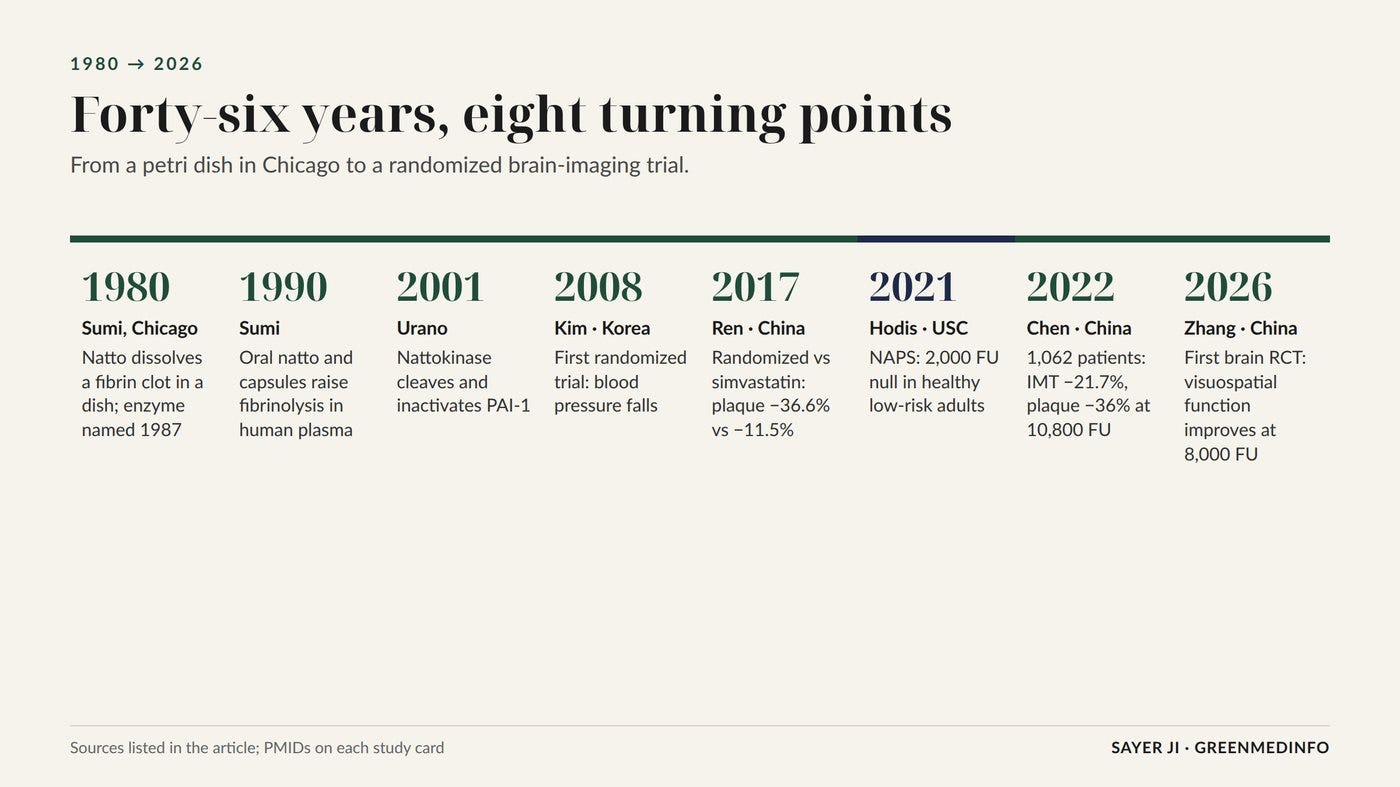
In 1980, a Japanese researcher named Hiroyuki Sumi, working at the University of Chicago Medical School, placed natto, the sticky fermented-soybean food Japan has eaten for roughly a thousand years, onto a plate of artificial fibrin and watched the clot dissolve around it (Weng et al., Int J Mol Sci, 2017; Pais et al., Clin Hemorheol Microcirc, 2006). His 1987 paper reported “a strong fibrinolytic activity” in natto averaging about 40 plasmin units per gram, extracted easily with saline, from an enzyme he named nattokinase (Sumi et al., Experientia, 1987).
The name is slightly misleading. Nattokinase is not a kinase at all. It is a subtilisin-family serine protease, 275 amino acids, molecular weight about 27.7 kilodaltons, secreted by Bacillus subtilis var. natto as it ferments the beans (Pais et al., 2006; Urano et al., J Biol Chem, 2001). It is not in the soybean. It is not in any raw food on earth. It is made by a bacterium, which is a point I have made before about why the fermentation substrate matters and will return to below.
Three years after the discovery paper, Sumi showed that eating natto or swallowing nattokinase capsules produced “a mild and frequent enhancement of the fibrinolytic activity in the plasma” of human volunteers, and that capsules given to dogs with experimentally induced clots dissolved the thrombi on angiography (Sumi et al., Acta Haematol, 1990). That was 1990. The field has been building on it ever since.
What 198 studies look like from above
GreenMedInfo’s nattokinase library is the largest curated index of this enzyme’s research that I know of. As of this writing it holds 198 research abstracts, tagged to 43 diseases and 32 pharmacological actions. The shape of that library tells you something.
Disease categories with the most studies on GreenMedInfo: Thrombosis (8), Cardiovascular Diseases (7), Hyperlipidemia (4), Atherosclerosis (4), Alzheimer’s Disease (4), Hypertension (3), with single or double entries for stroke, deep vein thrombosis, diabetic retinopathy, rhinosinusitis, colitis, dysbiosis, COVID-19, oral mucositis, cataract and more (GreenMedInfo nattokinase database).
Pharmacological actions with the most studies: Anti-Inflammatory (9), Neuroprotective (9), Antioxidant (6), Cardioprotective (6), Hypolipidemic (4), Nrf2 Activation (4), Antihypertensive (3) (GreenMedInfo nattokinase database).
Two things jump out. First, the two largest action categories are not “fibrinolytic.” They are anti-inflammatory and neuroprotective. The clot-dissolving story is the one everyone knows, but the research has moved well past it. Second, a large fraction of the 198 papers are not clinical at all; they are production, engineering, and protein-stability studies from industrial microbiology labs, dozens of them, on how to make more nattokinase, make it survive stomach acid, make it tolerate heat, and express it in everything from E. coli to tobacco leaves (Weng et al., 2017). Nobody invests that kind of effort in an enzyme they think does nothing.
Now to what it does.
Power #1: It dissolves fibrin four different ways
Most anticoagulant drugs do one thing. Warfarin blocks vitamin K recycling. Heparin potentiates antithrombin. Aspirin disables platelet COX-1. Nattokinase, as far as the mechanistic literature can tell, works on at least four fronts simultaneously.
It cuts fibrin directly. This was Sumi’s original observation and it has been replicated for decades: nattokinase “cleaves directly cross-linked fibrin in vitro,” and in a rat carotid-thrombosis model restored 62 percent of arterial blood flow on a molar basis versus 15.8 percent for plasmin, the body’s own clot-dissolving enzyme, roughly a four-fold advantage (Fujita et al., Biol Pharm Bull, 1995).
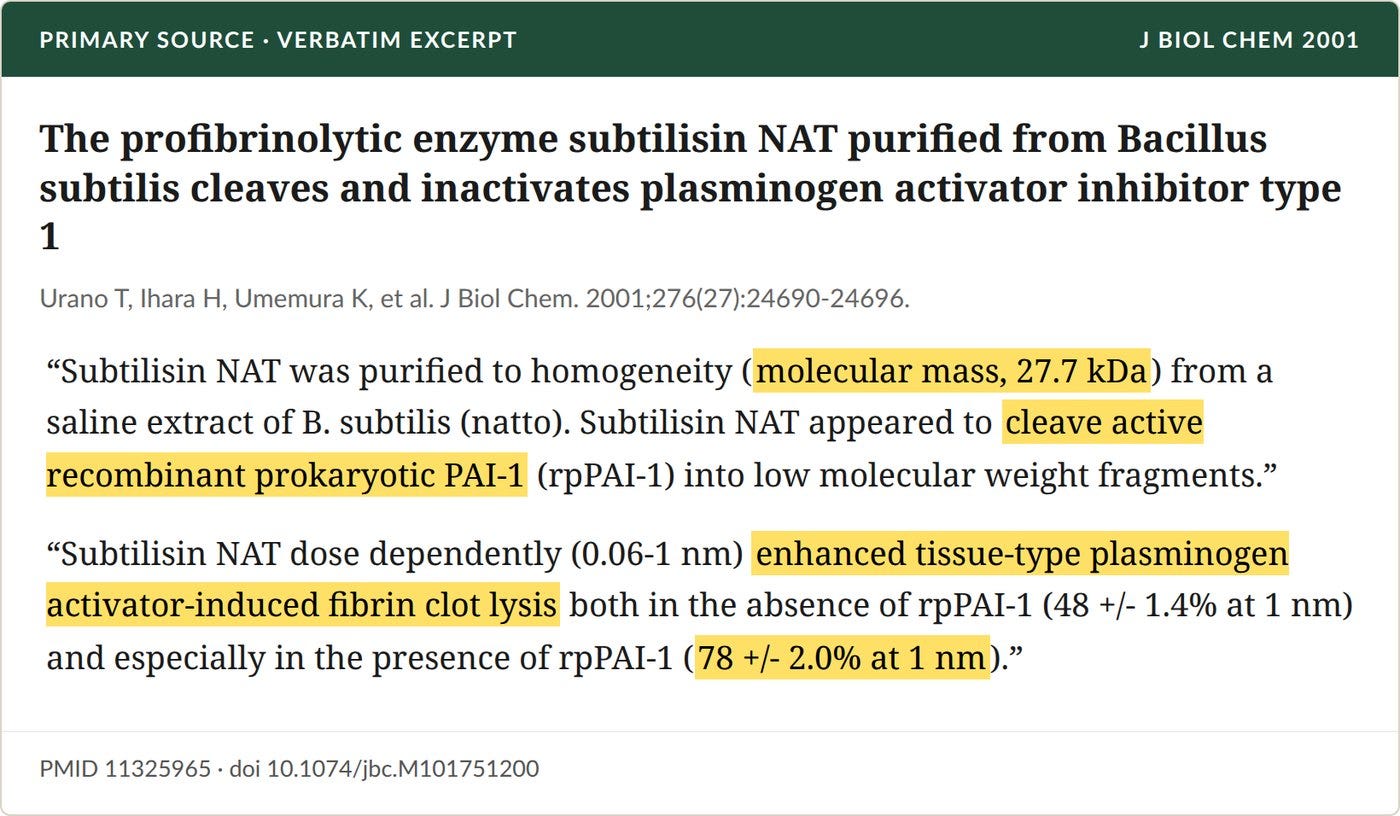
It disables the brake on your own clot-busting system. Plasminogen activator inhibitor-1 (PAI-1) is the molecule that shuts down fibrinolysis, and elevated PAI-1 is a hallmark of metabolic disease. In 2001, Urano and colleagues showed that nattokinase cleaves PAI-1 at its reactive site and inactivates it at sub-nanomolar concentrations, and that in the presence of PAI-1 it enhanced tissue-plasminogen-activator-driven clot lysis to 78 percent (Urano et al., J Biol Chem, 2001).
It makes your cells release more tPA. Even heat-inactivated natto culture raised tissue plasminogen activator output from human cells roughly 20-fold in one cell line and 5-fold in human vascular endothelial cells, suggesting a signaling effect that survives even when the enzyme itself is dead (Yatagai et al., Pathophysiol Haemost Thromb, 2008).
It calms platelets and thins the blood’s texture. Nattokinase inhibited both collagen- and thrombin-induced platelet aggregation, reduced thromboxane B2 formation, and in rats fully prevented ferric-chloride-induced arterial occlusion at high dose, matching what aspirin achieved (Jang et al., Lab Anim Res, 2013). In human blood samples it produced a dose-dependent drop in red-blood-cell aggregation and low-shear viscosity (Pais et al., 2006).
Does any of it survive your stomach?
This is the question skeptics raise first, and it is a fair one. Nattokinase is a protein. Proteins get digested.
The answer from the literature is: some of it gets through, and what gets through does something. Intraduodenal nattokinase in rats degraded plasma fibrinogen and the enzyme itself was detected in plasma three and five hours later by Western blot (Fujita et al., Biol Pharm Bull, 1995). In 11 human volunteers given a single 2,000 FU capsule, nattokinase was detectable in serum by ELISA over the following hours (Ero et al., Altern Ther Health Med, 2013). A 2023 study using rat gut-sac and Caco-2 cell models characterized nattokinase as “a moderately absorbed biomolecule” that crosses enterocytes through energy-dependent endocytosis, via macropinocytosis and both clathrin- and caveolae-mediated pathways (Feng et al., Xenobiotica, 2023).
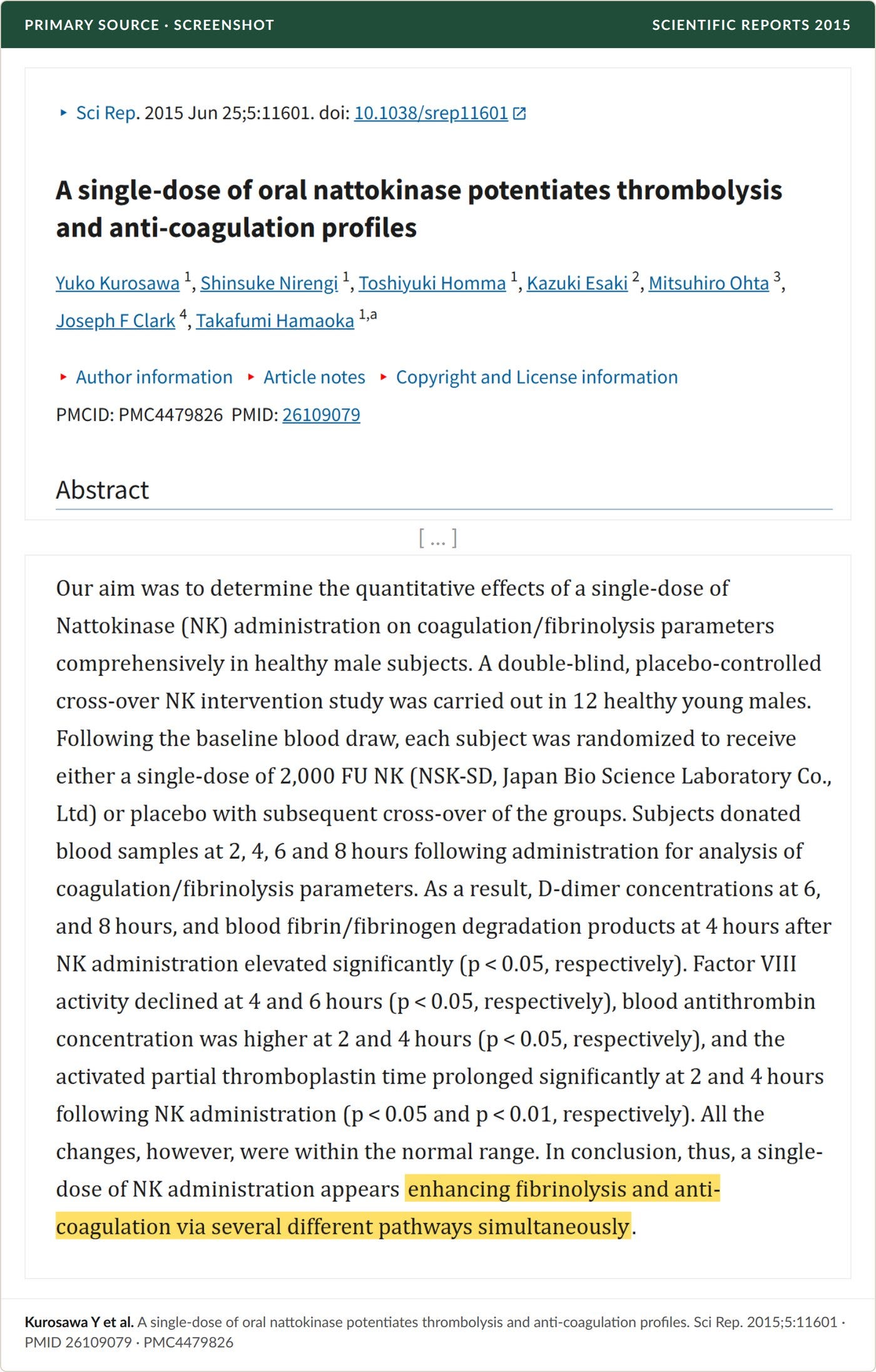
And the functional proof is in the human blood work. In a double-blind, placebo-controlled crossover of 12 healthy men, a single 2,000 FU dose raised D-dimer at 6 and 8 hours and fibrin degradation products at 4 hours, lowered factor VIII activity at 4 and 6 hours, raised antithrombin at 2 and 4 hours, and prolonged aPTT at 2 and 4 hours, all while staying within normal range (Kurosawa et al., Sci Rep, 2015). One capsule. Four pathways. Within hours.
THE HUMAN COAGULATION DATA, IN NUMBERS
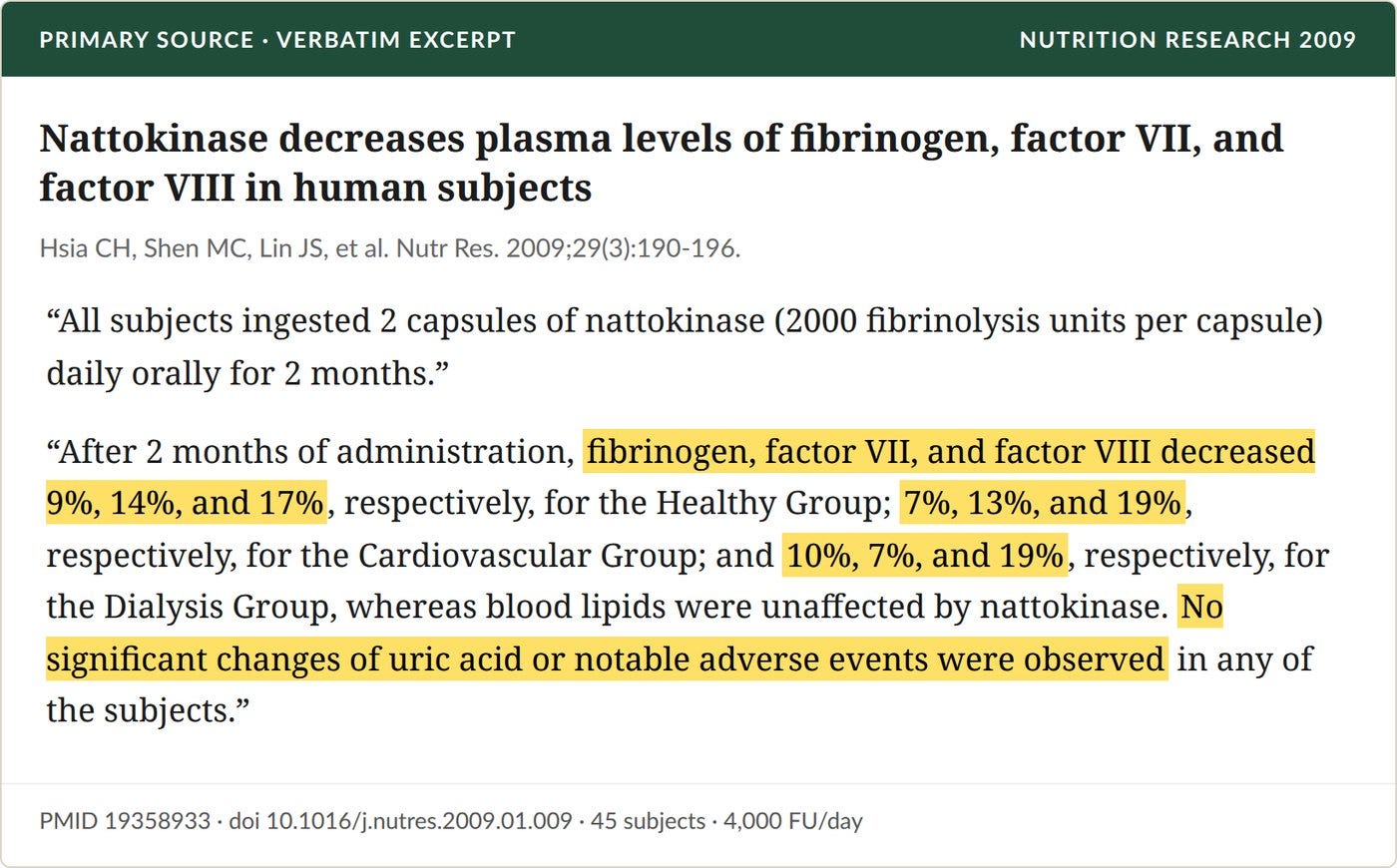
Two months of 4,000 FU/day in 45 subjects (healthy, cardiovascular-risk, and dialysis groups) lowered fibrinogen by 7 to 10 percent, factor VII by 7 to 14 percent, and factor VIII by 17 to 19 percent, with the declines continuing throughout intake and no notable adverse events (Hsia et al., Nutr Res, 2009). Eight weeks in 100 hypercholesterolemic adults significantly prolonged collagen-epinephrine closure time (a platelet-function measure) and aPTT versus placebo (Yoo et al., Food Funct, 2019).
The one real-world thrombosis-prevention trial deserves a careful description. In the LONFLIT-FLITE study, 204 high-risk passengers on 7-to-8-hour flights were randomized to placebo or a combination product of nattokinase and pine-bark extract. Among those completing the study, zero deep vein thromboses occurred in the treated group versus 5 DVTs and 2 superficial thromboses among 92 controls, and leg edema fell 15 percent in the treated group while rising 12 percent in controls (Cesarone et al., Angiology, 2003). It is a combination product, so the result cannot be credited to nattokinase alone. But it is the only randomized clinical-event trial in the literature, and it went the right direction.
Subscribe to follow GreenMedInfo Research Dossier.
Power #2: It shrinks arterial plaque, if you take enough
This is the claim that put nattokinase on the map, and it is the one where the evidence is strongest, most contested, and most misunderstood. I have covered the two central studies in depth before, so I will summarize them here and then do what I have not done previously: lay the entire human plaque literature out by dose.
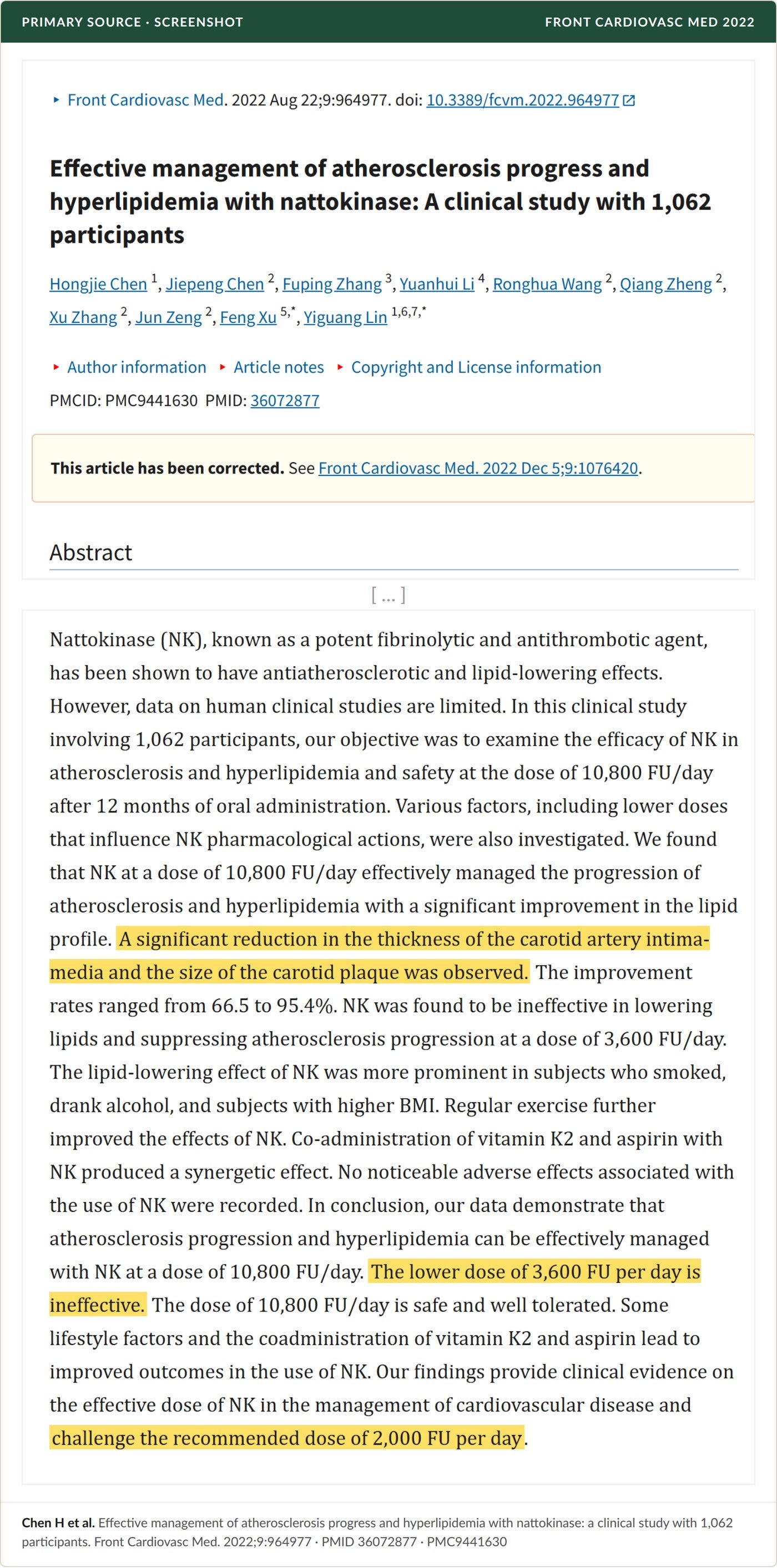
The 1,062-patient study. Between 2016 and 2020, researchers at Sun Yat-sen University and ten other clinics in China followed 1,062 patients who took oral nattokinase for 12 months, most of them at 10,800 FU/day. In the 683 with carotid imaging, common carotid intima-media thickness fell from 1.33 to 1.04 mm, a 21.7 percent reduction, and carotid plaque size fell from 24.9 to 15.94 mm², a 36 percent reduction (Chen et al., Front Cardiovasc Med, 2022). Total cholesterol dropped 15.9 percent, LDL 18.1 percent, triglycerides 15.7 percent, and HDL rose 15.8 percent (Chen et al., 2022). The 61 patients given 3,600 FU/day saw none of it: the authors state flatly that “the lower dose of 3,600 FU per day is ineffective” (Chen et al., 2022).
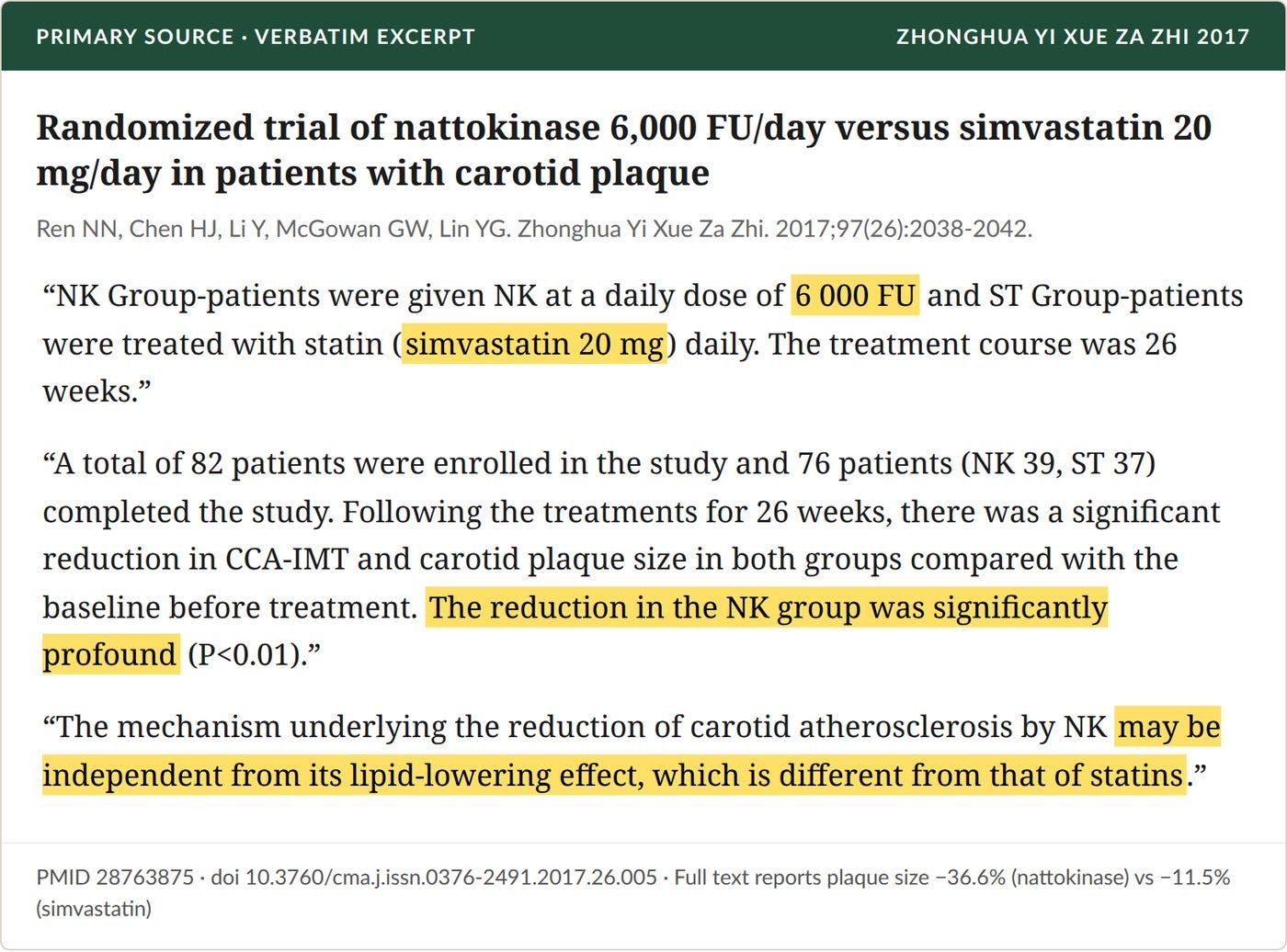
The statin head-to-head. In 2017 the same Sun Yat-sen group randomized 82 patients with carotid plaque and high cholesterol to either simvastatin 20 mg/day or nattokinase 6,000 FU/day for 26 weeks. Plaque size fell 36.6 percent in the nattokinase group versus 11.5 percent in the statin group (P < 0.01). The statin lowered total cholesterol, LDL, and triglycerides more; nattokinase alone raised HDL. And the plaque regression in the nattokinase group did not correlate with its lipid-lowering (r = 0.35, P = 0.09), leading the authors to conclude the mechanism “may be independent from its lipid-lowering effect, which is different from that of statins” (Ren et al., Zhonghua Yi Xue Za Zhi, 2017).
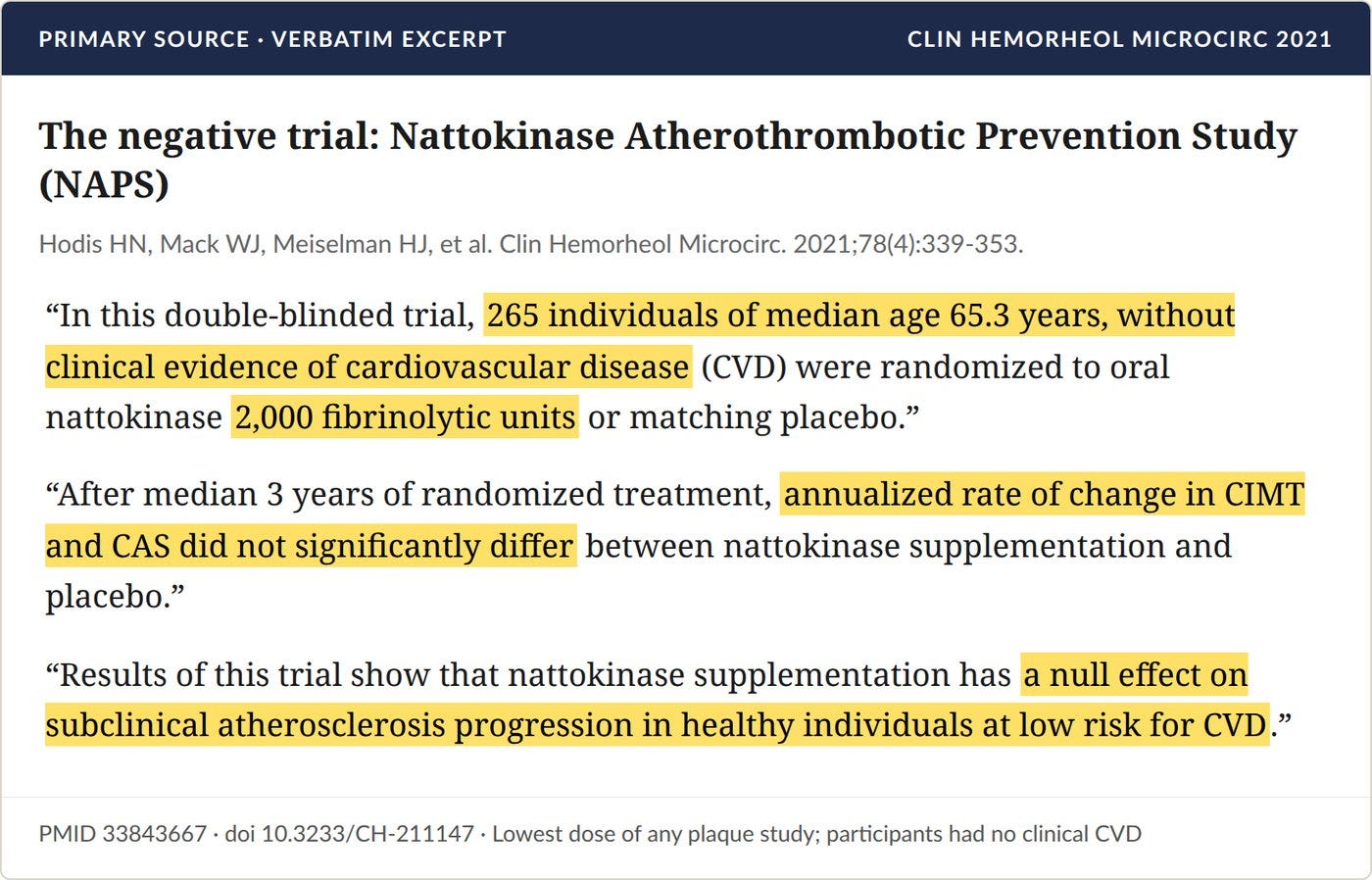
The negative trial. The Nattokinase Atherothrombotic Prevention Study at USC randomized 265 adults with a median age of 65 and no clinical cardiovascular disease to 2,000 FU/day or placebo. After a median of 3 years, there was no difference in the rate of change of carotid intima-media thickness or arterial stiffness, and no effect on blood pressure or any laboratory measure. The authors described “a null effect on subclinical atherosclerosis progression in healthy individuals at low risk for CVD” (Hodis et al., Clin Hemorheol Microcirc, 2021).
Now put them on the same axis.
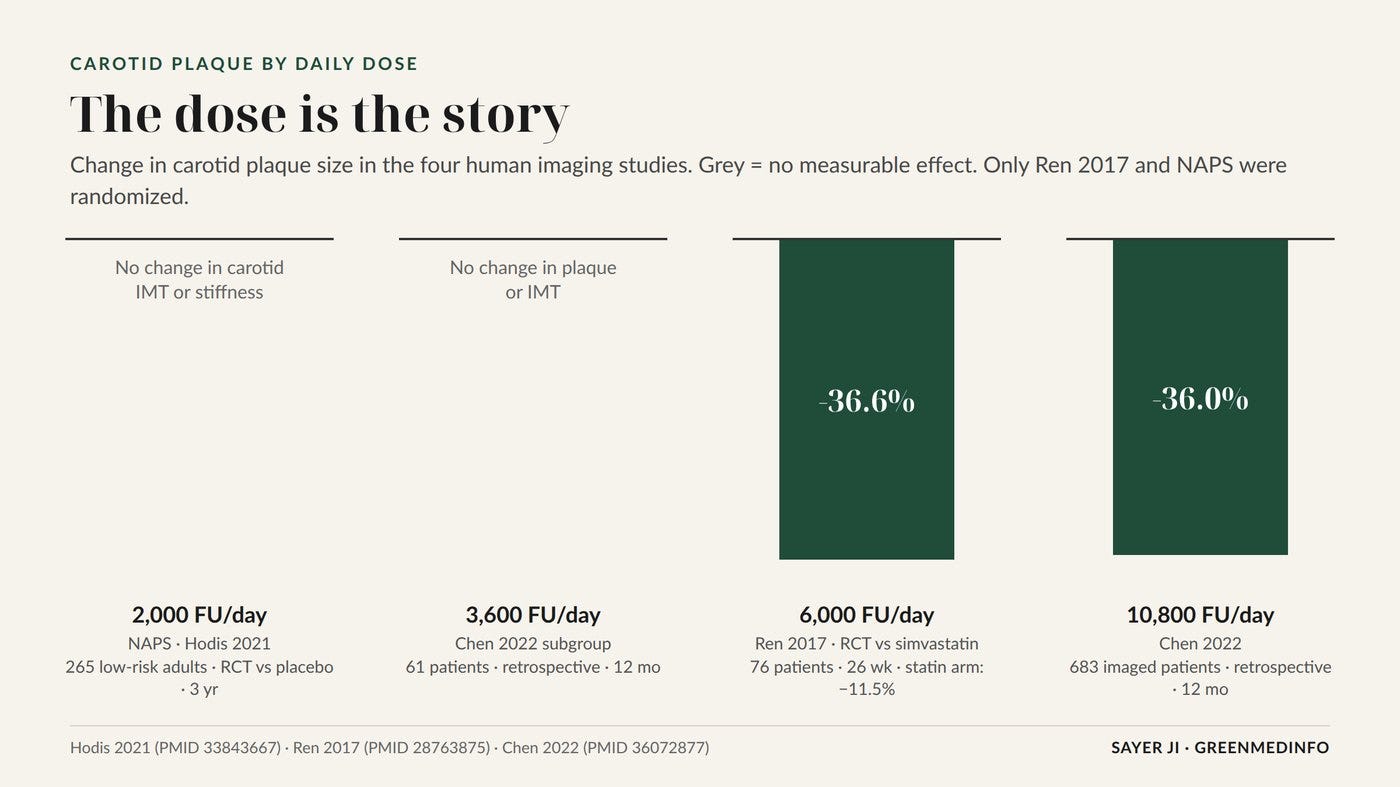
At 2,000 FU/day: nothing. At 3,600 FU/day: nothing. At 6,000 FU/day: a 36.6 percent plaque reduction in a randomized trial, more than three times what simvastatin achieved. At 10,800 FU/day: a 36 percent plaque reduction and a 21.7 percent IMT reduction in nearly 700 imaged patients. These studies are not contradicting each other. They are drawing a dose-response curve, and the “definitive” negative trial sits at the bottom of it, at the dose most supplement bottles recommend.
THE CAVEATS, STATED PLAINLY
The 1,062-patient study was retrospective, not randomized, and five of its ten authors were affiliated with Sungen Bioscience, a nattokinase manufacturer; a corrigendum later corrected its baseline-characteristics table (Chen et al., 2022; Corrigendum, 2022). Ren 2017 had no placebo arm and 76 completers. NAPS was the best-designed trial and it was null, though it enrolled healthy people with little plaque to regress, at a dose the other studies say is too low. No trial has counted heart attacks or deaths. That is the state of the evidence. It is also far more than exists for most things sold in a health-food store.
The mechanistic literature supports the plaque story independently. Dietary natto extract suppressed intimal thickening after endothelial injury in rat femoral arteries, with intima/media ratios of 0.09 in supplemented animals versus controls (Suzuki et al., Life Sci, 2003). And in 2024, RNA sequencing of endothelial cells showed nattokinase upregulates SRF and THBS1, induces autophagy, and inhibits the NLRP3 inflammasome and necroptosis, reducing vascular inflammation in mice (Chiu et al., Int J Biol Macromol, 2024). The enzyme is not just dissolving fibrin inside plaque. It appears to be quieting the inflammatory machinery that builds plaque in the first place.
Power #3: It lowers blood pressure, consistently, in randomized trials
If plaque regression is the contested claim, blood pressure is the settled one.
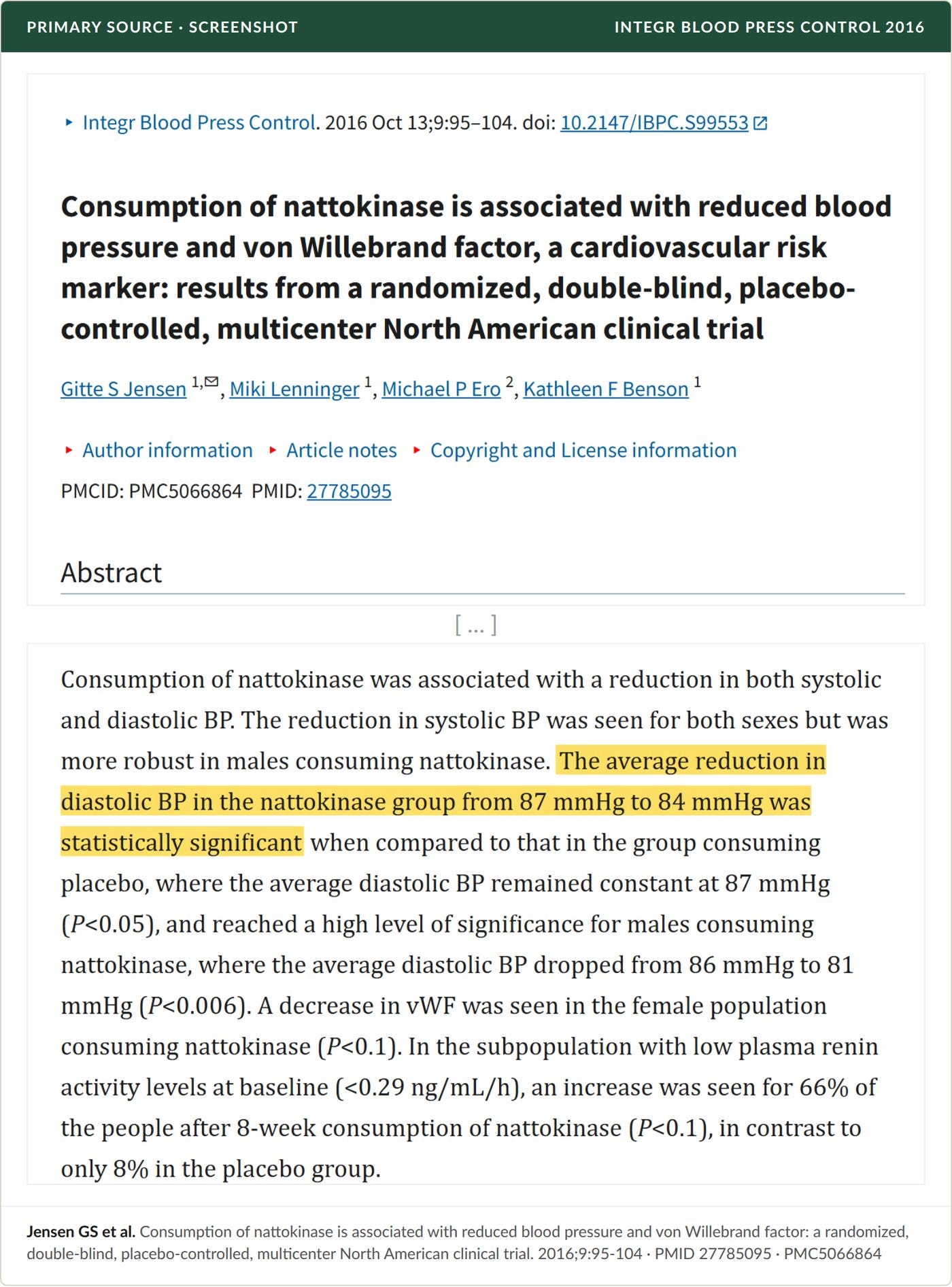
In a Korean randomized, double-blind, placebo-controlled trial, 86 adults with pre-hypertension or stage 1 hypertension took 2,000 FU/day or placebo for 8 weeks. Net systolic pressure fell 5.55 mmHg and diastolic fell 2.84 mmHg versus placebo, and plasma renin activity dropped significantly (Kim et al., Hypertens Res, 2008). Skeptics said it was an Asian-population finding. So a North American multicenter trial repeated it in 79 hypertensive adults: diastolic pressure fell from 87 to 84 mmHg in the nattokinase group while staying flat at 87 in placebo, and in men it fell from 86 to 81 (P < 0.006), with a reduction in von Willebrand factor in women (Jensen et al., Integr Blood Press Control, 2016).
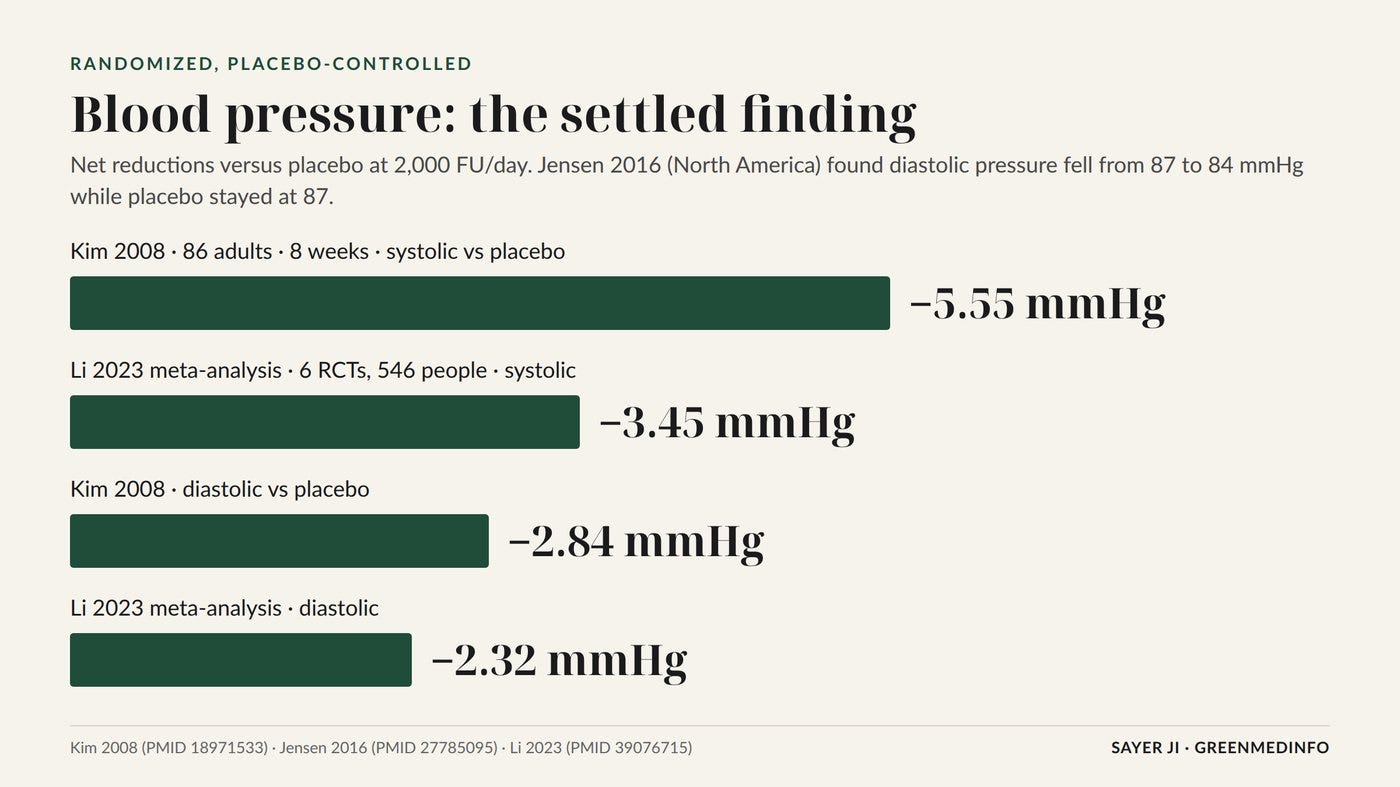
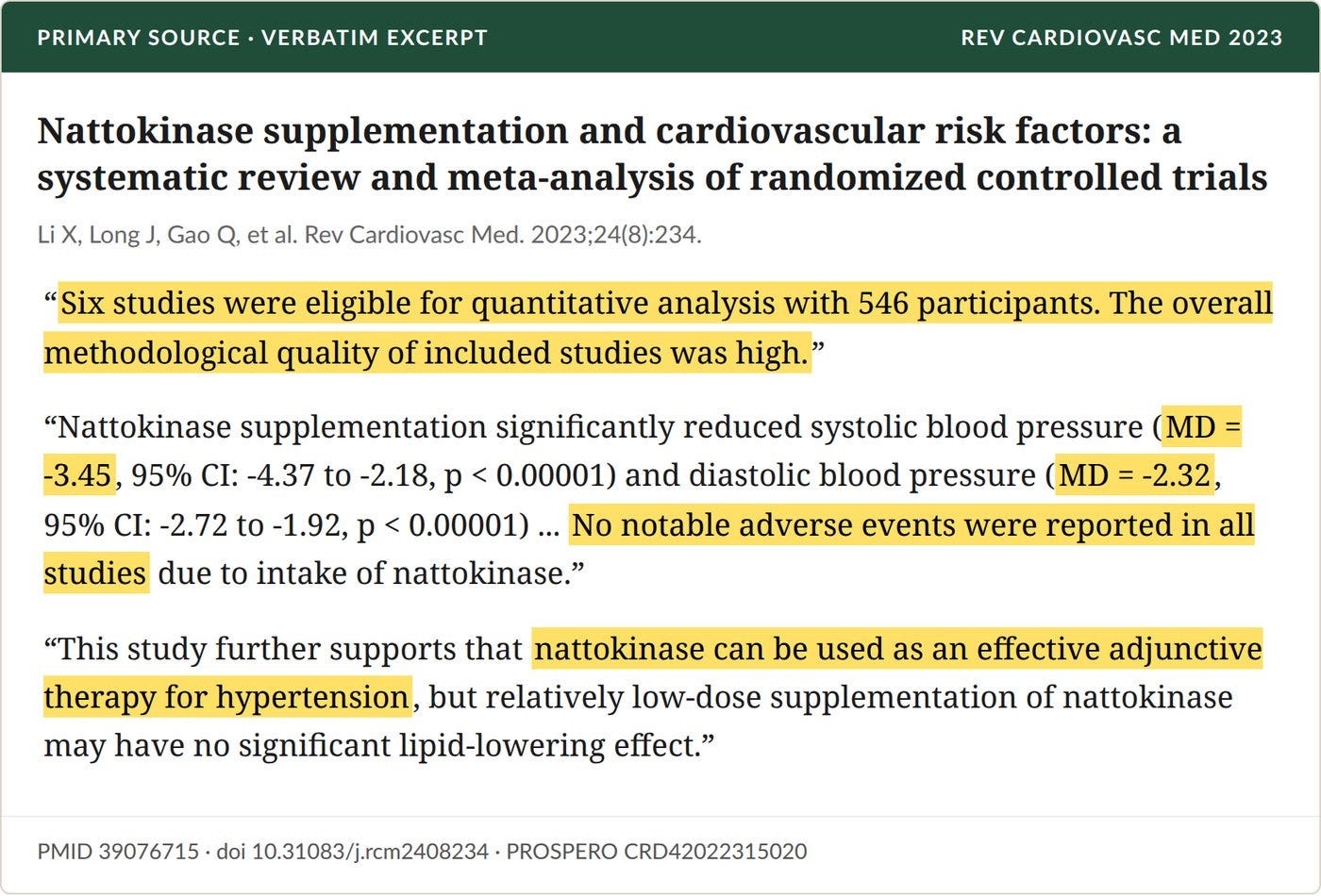
A 2023 systematic review and meta-analysis of six randomized controlled trials with 546 participants, rated as high methodological quality, found nattokinase reduced systolic pressure by 3.45 mmHg and diastolic by 2.32 mmHg versus placebo (both P < 0.00001), with no notable adverse events in any trial, and concluded it “can be used as an effective adjunctive therapy for hypertension” (Li et al., Rev Cardiovasc Med, 2023).
Three to five millimeters of mercury may not sound dramatic. For population-level cardiovascular risk, it is the range where blood pressure drugs earn their approval.
The mechanism is unexpectedly elegant. Nattokinase itself inhibits angiotensin-converting enzyme, and when the enzyme is heat-fragmented, the inhibition gets stronger, because the peptide sequences LY and FY embedded in nattokinase’s own structure are potent ACE inhibitors (Murakami et al., Food Funct, 2012). A 2026 study identified and mechanistically characterized additional novel ACE-inhibitory peptides derived from nattokinase (Peng et al., Food Chem, 2026). In other words, even the digested pieces of this protein lower blood pressure. In spontaneously hypertensive rats, intact high-dose nattokinase lowered systolic and diastolic pressure and plasma fibrinogen (Fujita et al., Biol Pharm Bull, 2011).
Power #4: Lipids, where I have to be honest with you
Here is where the nattokinase story gets complicated, and where a lot of marketing gets ahead of the data.
At the standard low dose, nattokinase alone does not lower cholesterol. In a six-month randomized trial, nattokinase mono-formula “showed no effects on blood lipids until month six,” while nattokinase combined with red yeast rice dropped LDL 41 percent and total cholesterol 25 percent from month one (Yang et al., Asia Pac J Clin Nutr, 2009). The 2023 meta-analysis went further: at relatively low total dosage, nattokinase groups actually had slightly higher total cholesterol and LDL than controls (Li et al., 2023).
But at high dose, both plaque studies showed lipid improvement: Chen 2022 at 10,800 FU reported LDL down 18.1 percent and HDL up 15.8 percent, and Ren 2017 at 6,000 FU showed significant reductions in total cholesterol, LDL and triglycerides, plus an HDL rise the statin could not produce (Chen et al., 2022; Ren et al., 2017). A 2025 review in Nutrients lays out plausible mechanisms: activation of hormone-sensitive lipase, inhibition of HMG-CoA reductase (the statin target), and enhanced lipoprotein lipase activity (Research progress of nattokinase in reducing blood lipid, Nutrients, 2025).
The combination data are strong. In a 90-day randomized, double-blind, placebo-controlled trial of 178 patients with stable coronary artery disease already on multiple heart medications, nattokinase plus red yeast rice produced the largest reductions in triglycerides, total cholesterol (−0.66 mmol/L) and diastolic pressure (−7.39 mmHg) and the largest HDL increase of any arm, with no adverse effects (Liu et al., Front Nutr, 2024). A four-month trial of 113 dyslipidemic patients found a nattokinase-monascus supplement lowered LDL by 0.43 mmol/L (Liu et al., Nutrients, 2023).
My read: if you want nattokinase for cholesterol, the dose matters more than for anything else, and the honest framing is that lipid-lowering is a secondary effect, dose-dependent and inconsistent, not the reason to take it. The reason to take it is what it does to the artery wall and the blood inside it, which, as Ren 2017 showed, is a different thing from what it does to a lab value.
A note on cholesterol: the notion that lower cholesterol is unequivocally beneficial, has been challenged for decades. I would consult my previous article on the topic to dive deeper: The Cholesterol Conspiracy: How Big Pharma’s $200 Billion Lie Is Killing Us.
The Cholesterol Conspiracy: How Big Pharma's $200 Billion Lie Is Killing Us

Read, comment and share this article on X: https://x.com/sayerjigmi/status/1958232219996065910
Power #5: The brain, where the research is moving fastest
Nine neuroprotection studies in the GreenMedInfo database, four in Alzheimer’s disease, and a 2026 human trial that most people have not heard of yet.
The foundation is a 2009 finding that nattokinase degrades amyloid fibrils, the protein aggregates behind Alzheimer’s, prion disease and systemic amyloidosis, an ability shared by proteinase K and subtilisin Carlsberg but not by trypsin or plasmin (Hsu et al., J Agric Food Chem, 2009). In an aluminum-chloride rat model of Alzheimer’s, nattokinase and serrapeptase modulated brain acetylcholinesterase, TGF-β, IL-6, BDNF and IGF-1 toward normal (Fadl et al., Hum Exp Toxicol, 2013). In mice injected with the Aβ1-42 peptide, chronic nattokinase prevented depression-like behavior, anxiety, memory impairment, neuroinflammation and BDNF-signaling disruption (Naik et al., Eur J Pharmacol, 2023).
The stroke literature is even more active. Nattokinase raised cAMP, activated JAK1/STAT1, inhibited platelet calcium mobilization, and increased tPA while lowering PAI-1 in endothelial cells in a cerebral-ischemia model (Ji et al., Eur J Pharmacol, 2014). Oral nattokinase at 5,000 to 20,000 FU/kg for seven days before middle-cerebral-artery occlusion in rats dose-dependently shrank infarct volume, improved neurological scores, and reduced inflammatory cytokines, coagulation markers and reactive oxygen species in the infarct (Yang et al., Antioxid Redox Signal, 2025). A 2026 study from the same Japanese group that did the spike-protein work confirmed oral nattokinase “confers early neuroprotection after experimental cerebral ischemia” through Nrf2 activation (Tanikawa et al., In Vivo, 2026). Perhaps most striking, nattokinase promoted post-stroke neurogenesis and cognitive recovery in rats by raising circulating irisin, the exercise hormone (Wu et al., J Agric Food Chem, 2023). A 2024 review in Brain Research concluded there is “enough evidence in preclinical studies” that nattokinase can alleviate blood-brain-barrier dysfunction, reduce brain inflammation and improve cognition (Brain Res, 2024).
THE FIRST HUMAN BRAIN TRIAL
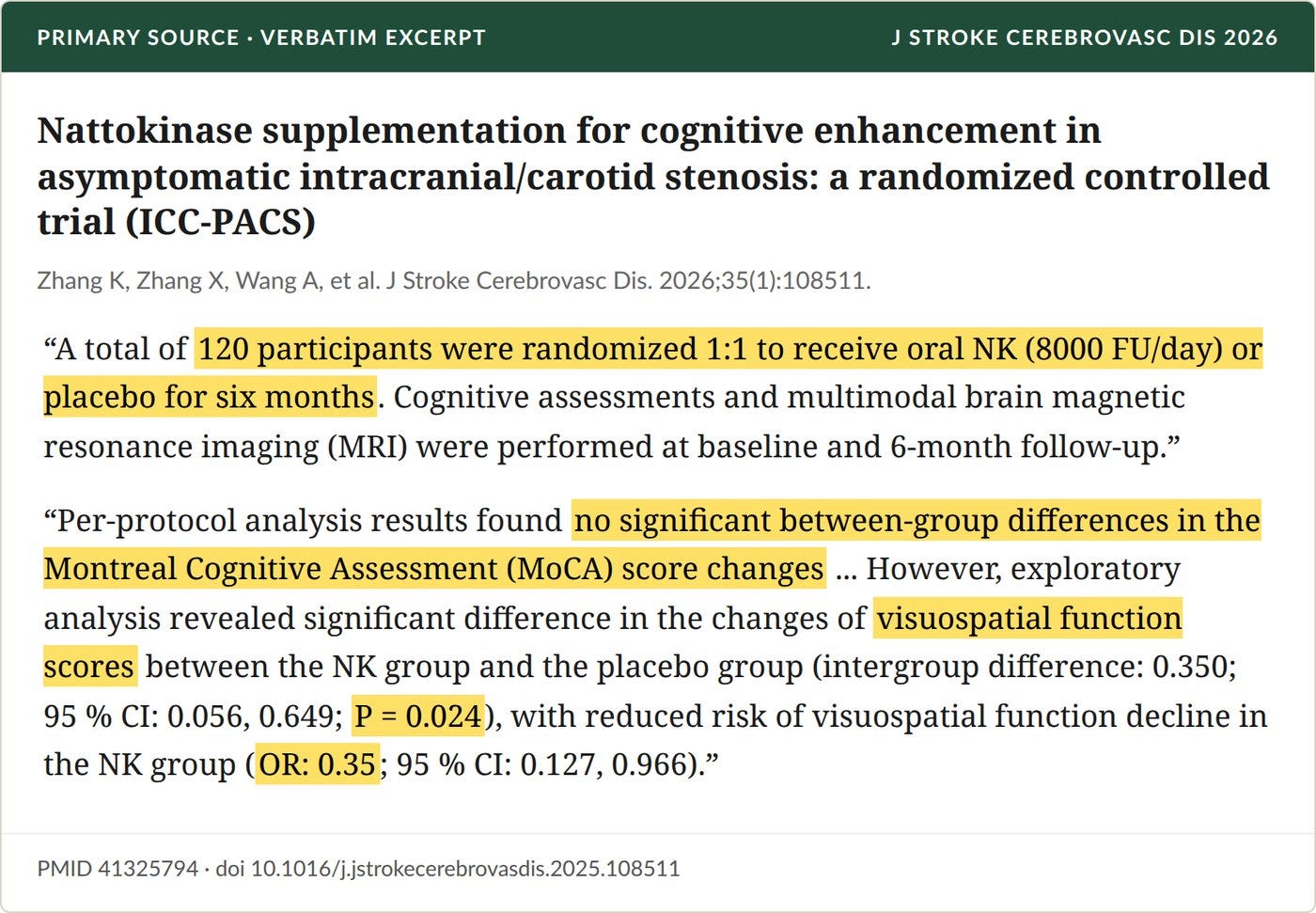
The ICC-PACS trial randomized 120 patients with asymptomatic intracranial or carotid stenosis to 8,000 FU/day of nattokinase or placebo for six months, with cognitive testing and multimodal brain MRI at baseline and follow-up. Global cognition (MoCA) did not differ between groups. But in an exploratory analysis, visuospatial function improved in the nattokinase group (P = 0.024), with a 65 percent lower odds of visuospatial decline (OR 0.35), and the results held in intention-to-treat analysis (Zhang et al., J Stroke Cerebrovasc Dis, 2026).
That is a modest result and I will not oversell it. A domain-specific signal in a secondary analysis is a hypothesis, not a proof. But it is a randomized, double-blind, placebo-controlled human trial of high-dose nattokinase with brain imaging, and it found something. Ten years ago that sentence could not have been written.
Power #6: The spike protein, and the trial that has not been done
I have written three full articles on this and will not repeat them. The short version:
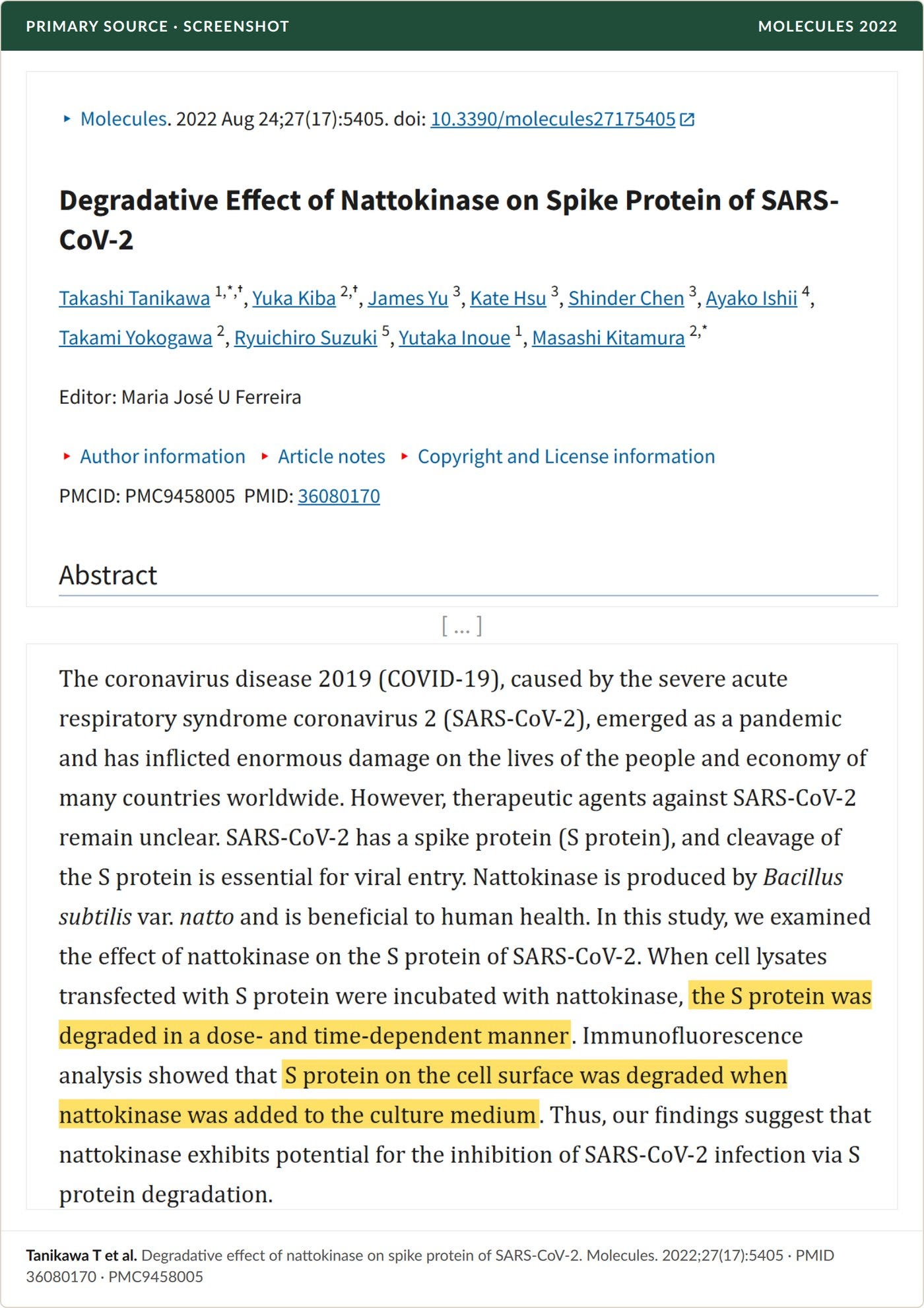
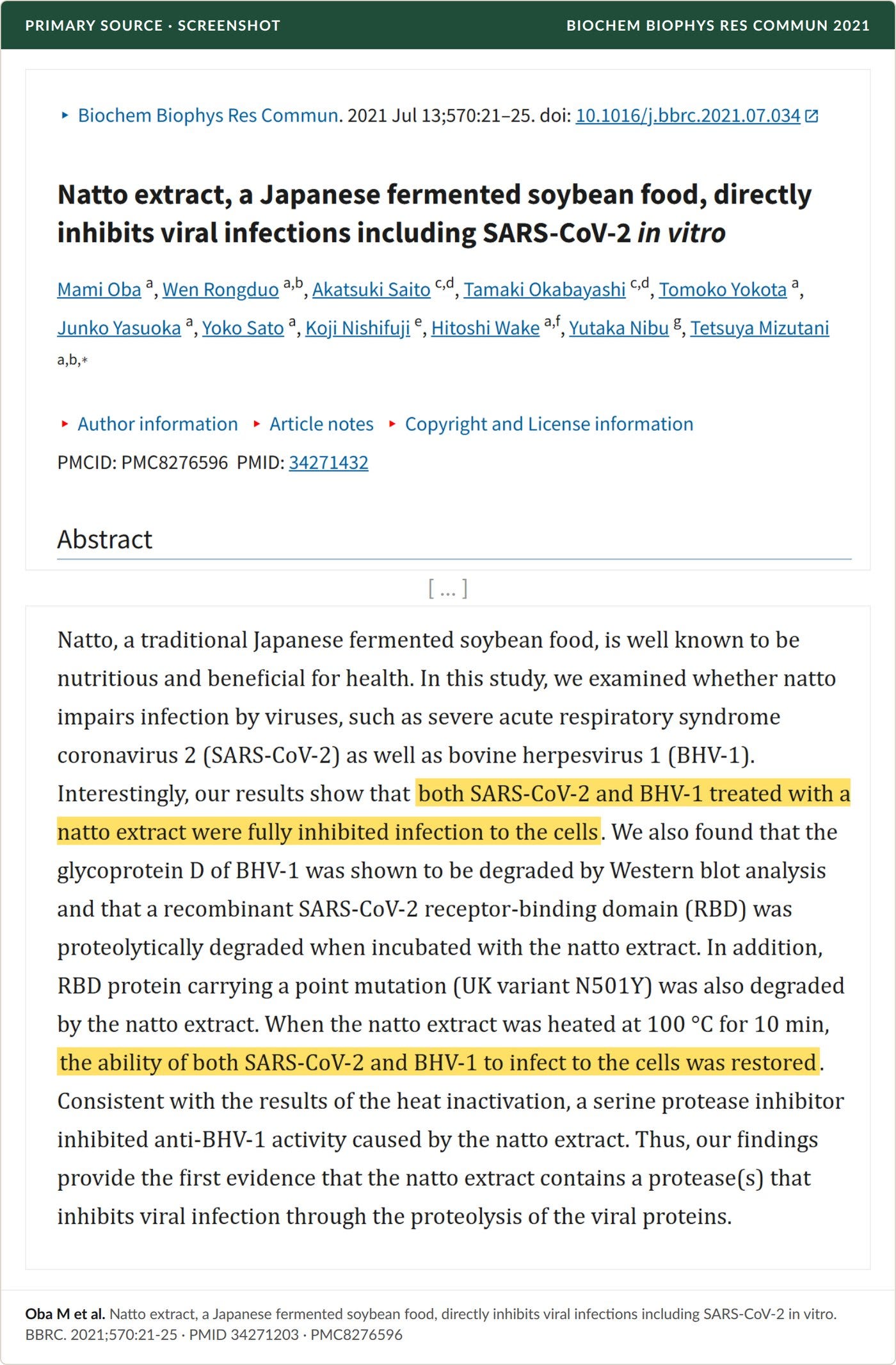
In 2022, a Josai University pharmacology group showed that purified nattokinase degraded the SARS-CoV-2 spike protein “in a dose- and time-dependent manner” in transfected cell lysates and on the surface of live cells, and that heat or serine-protease inhibitors abolished the effect, the correct controls for a genuine enzymatic mechanism (Tanikawa et al., Molecules, 2022). A year earlier, a Tokyo group had shown that natto extract fully inhibited infection of cells by both SARS-CoV-2 and bovine herpesvirus 1, degraded the spike receptor-binding domain including the N501Y variant, and lost all activity when heated to 100 °C or exposed to a serine-protease inhibitor (Oba et al., Biochem Biophys Res Commun, 2021).
That is real, peer-reviewed, unretracted biochemistry. What does not exist is a controlled human trial showing that oral nattokinase clears spike protein from human tissue or improves post-COVID or post-vaccination syndromes. Fact-checkers have been quick to say so (Lead Stories, 2023), and on that narrow point they are correct. What they do not say is why the trial has not been done, or what it means that when a Brazilian clinical team published a five-patient case series describing a protocol that included nattokinase, the journal retracted it on the grounds that describing the protocol “could promote the premature adoption of unvalidated treatment protocols” (Zeballos et al., IDCases, 2025; my analysis of the retraction).
An enzyme with a forty-year safety record, documented fibrinolytic action in humans, and documented spike-degrading action in vitro is exactly the kind of candidate a functioning research system would test in the millions of people with persistent post-spike symptoms and elevated clotting markers. Instead, the question has been declared unaskable. I laid out the full case in The Post-Spike Blind Spot.
Power #7: Everywhere fibrin and inflammation meet
Once you understand that nattokinase degrades fibrin, quiets NLRP3 and NF-κB signaling, and activates the Nrf2 antioxidant pathway, the breadth of the preclinical literature stops being surprising. These are animal and tissue studies, and I label them as such. But they map the territory.
Sinuses and lungs. Nasal polyps from chronic rhinosinusitis patients shrank when incubated with nattokinase through fibrin degradation, and the viscosity of nasal discharge and asthmatic sputum fell significantly, leading the authors to propose it as a therapy for polyps and comorbid asthma (Takabayashi et al., Allergol Int, 2017; my earlier article).
Eyes. Nattokinase attenuated retinal neovascularization in an oxygen-induced retinopathy model via Nrf2/HO-1 (Huang et al., Invest Ophthalmol Vis Sci, 2021) and restored blood-retinal-barrier function and rescued pericyte loss in diabetic mouse retinas while suppressing HMGB1 signaling (Huang et al., J Diabetes, 2023).
Metabolism and the microbiome. In mice on a high-fat diet with chemically induced tail thrombosis, nattokinase cut thrombus length 42.3 percent, raised fibrin degradation products 66.7 percent, lowered blood lipids and inflammation, and restored the Firmicutes-to-Bacteroidetes ratio toward normal while increasing Lactobacillus, Bacteroides and Parabacteroides and upregulating AMPK, FFAR2 and FFAR3 (Chen et al., J Sci Food Agric, 2025). In diabetic rats, high-dose nattokinase inhibited renal glycogen deposition and the rise in circulating advanced glycation end products (Yamaguchi et al., Heliyon, 2024).
Toxic injury. Nattokinase attenuated liver and brain damage from bisphenol A or gamma irradiation in rats by activating Nrf2 and suppressing inflammatory mediators (Elbakry et al., Environ Sci Pollut Res, 2022), and protected against LPS-induced acute kidney injury by “breaking the vicious loop between inflammation, oxidative stress and coagulation” (Wu et al., Redox Biol, 2020).
Cancer therapy, as an adjunct. Injected into solid tumors, nattokinase degraded fibronectin in the extracellular matrix, reduced tumor stiffness, improved perfusion and relieved hypoxia, enhancing chemotherapy, radiotherapy and CAR-T delivery in mice (Zhang et al., ACS Nano, 2023). A 2025 study extended this to mesothelin-targeted CAR-T cells (Zhao et al., Cancer Immunol Immunother, 2025).
Wound healing. Crude nattokinase extract accelerated healing of acetic-acid-induced oral mucositis in mice (Zhang et al., BMC Oral Health, 2021).
Cold hands. In a double-blind crossover of nine men, a single 2,000 FU dose accelerated skin-temperature recovery in the fingers, palm and back of the hand after one-minute immersion in 10 °C water (Nara et al., Heliyon, 2023). It is a small study, but it is a direct human demonstration of improved peripheral blood flow from one capsule.
The food, not just the enzyme
Everything above concerns the isolated enzyme. The food it comes from has its own evidence, and it is epidemiological evidence of the kind that no supplement trial can produce: decades of follow-up on tens of thousands of people.
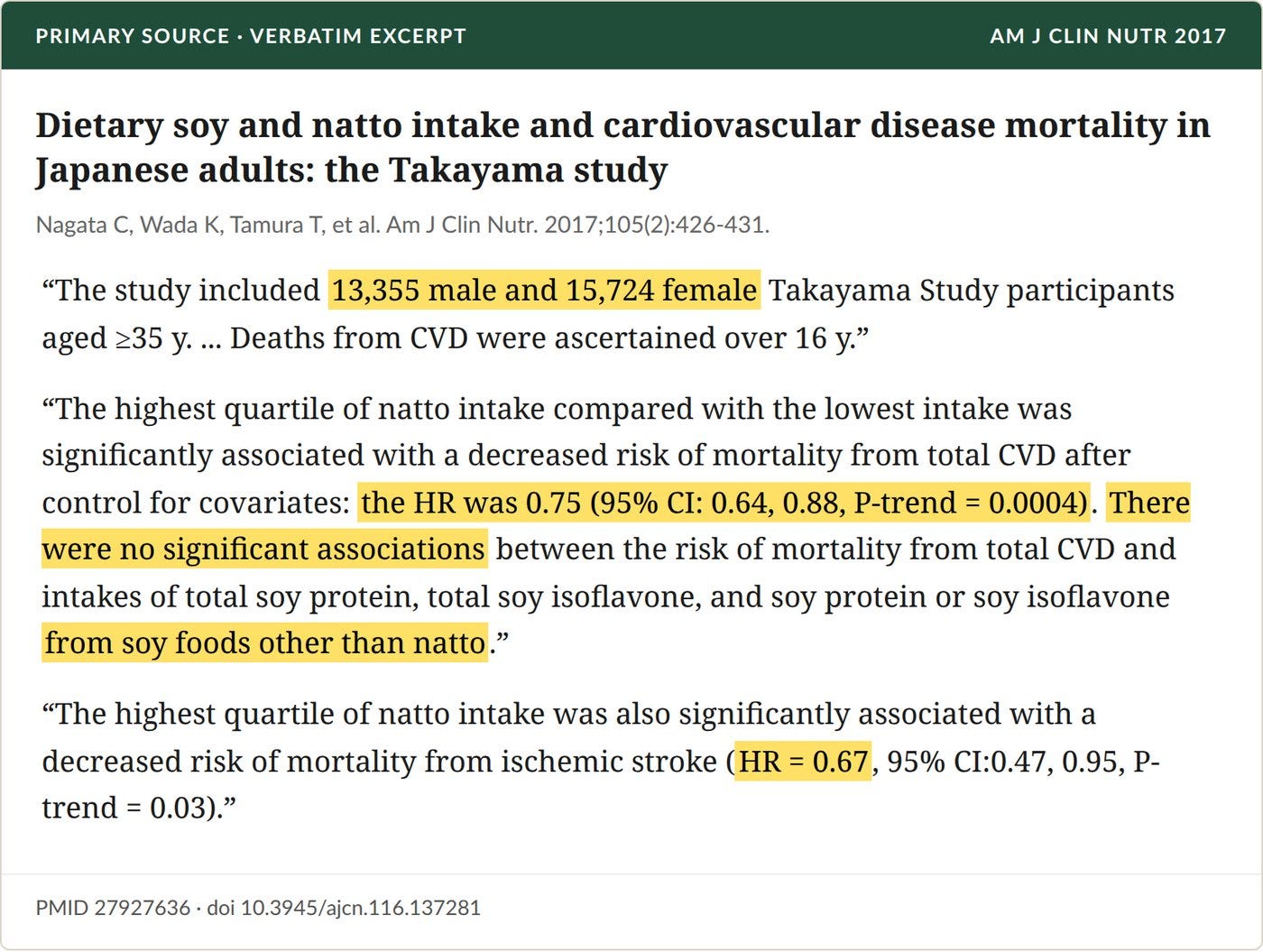
In the Takayama Study, 29,079 Japanese adults were followed for 16 years. Those in the highest quartile of natto intake had a 25 percent lower risk of dying from cardiovascular disease (HR 0.75, 95% CI 0.64–0.88), a 32 percent lower risk of dying from stroke (HR 0.68), and a 33 percent lower risk of dying from ischemic stroke (HR 0.67). Critically, total soy protein and soy isoflavones from foods other than natto showed no such association. The authors explicitly noted that natto “contains a potent fibrinolytic enzyme” (Nagata et al., Am J Clin Nutr, 2017).
The Japan Public Health Center study followed 92,915 adults for nearly 15 years. Fermented soy (natto and miso) in the highest fifth of intake was associated with roughly 10 percent lower all-cause mortality in both sexes, while total soy and tofu were not. Natto specifically was associated with 24 percent lower cardiovascular mortality in men (HR 0.76) and 21 percent lower in women (HR 0.79), 29 percent lower heart-disease mortality in men (HR 0.71), and 33 percent lower cerebrovascular mortality in women (HR 0.67) (Katagiri et al., BMJ, 2020).
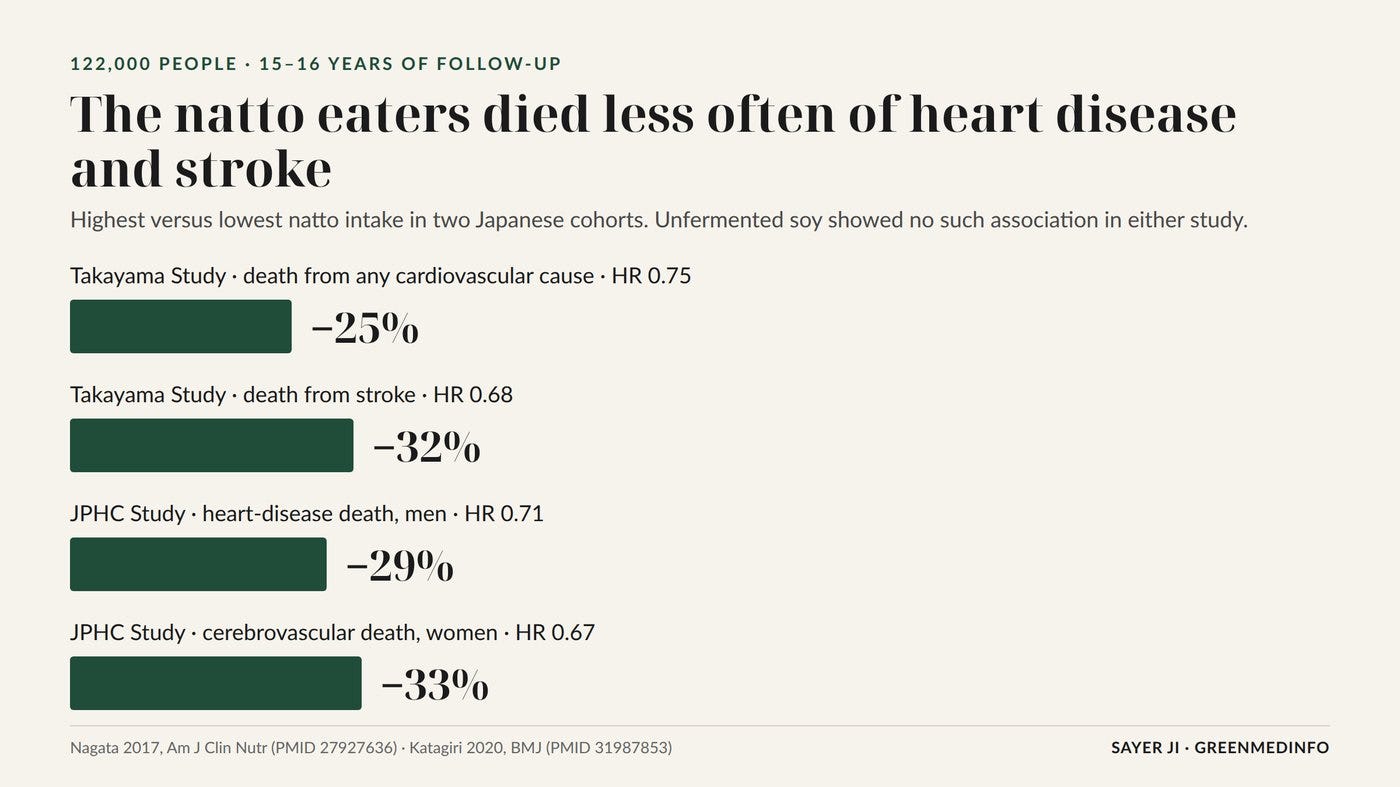
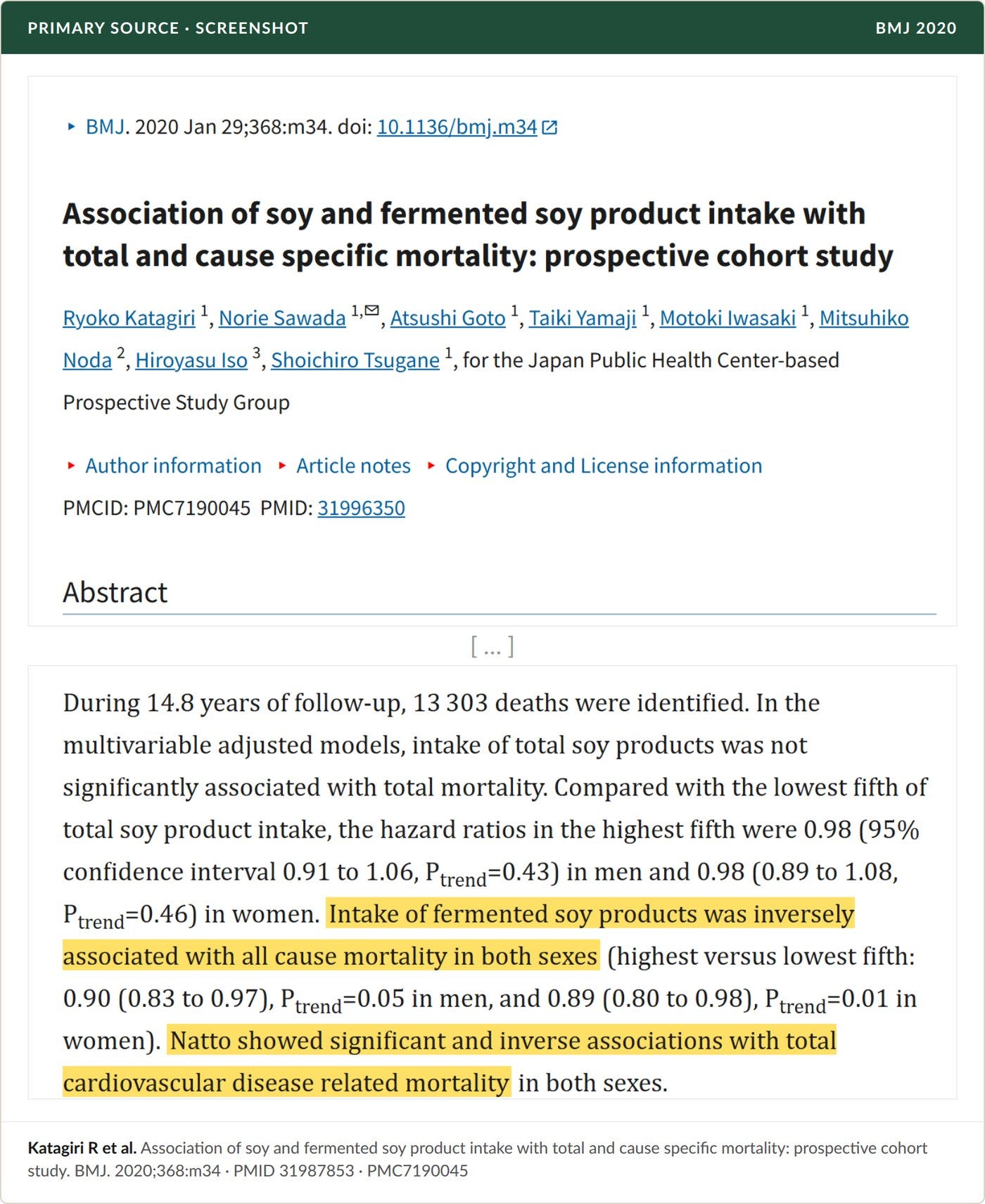
Two large cohorts, 120,000 people, the same pattern: fermented soy protects, unfermented soy does not. The difference is the bacterium and what it makes, nattokinase, vitamin K2 as MK-7, and the live spores themselves. I have argued before that the substrate the bacterium ferments is not a side note. These cohorts are the reason I take that argument seriously.
The safety file, including the parts that should worry you
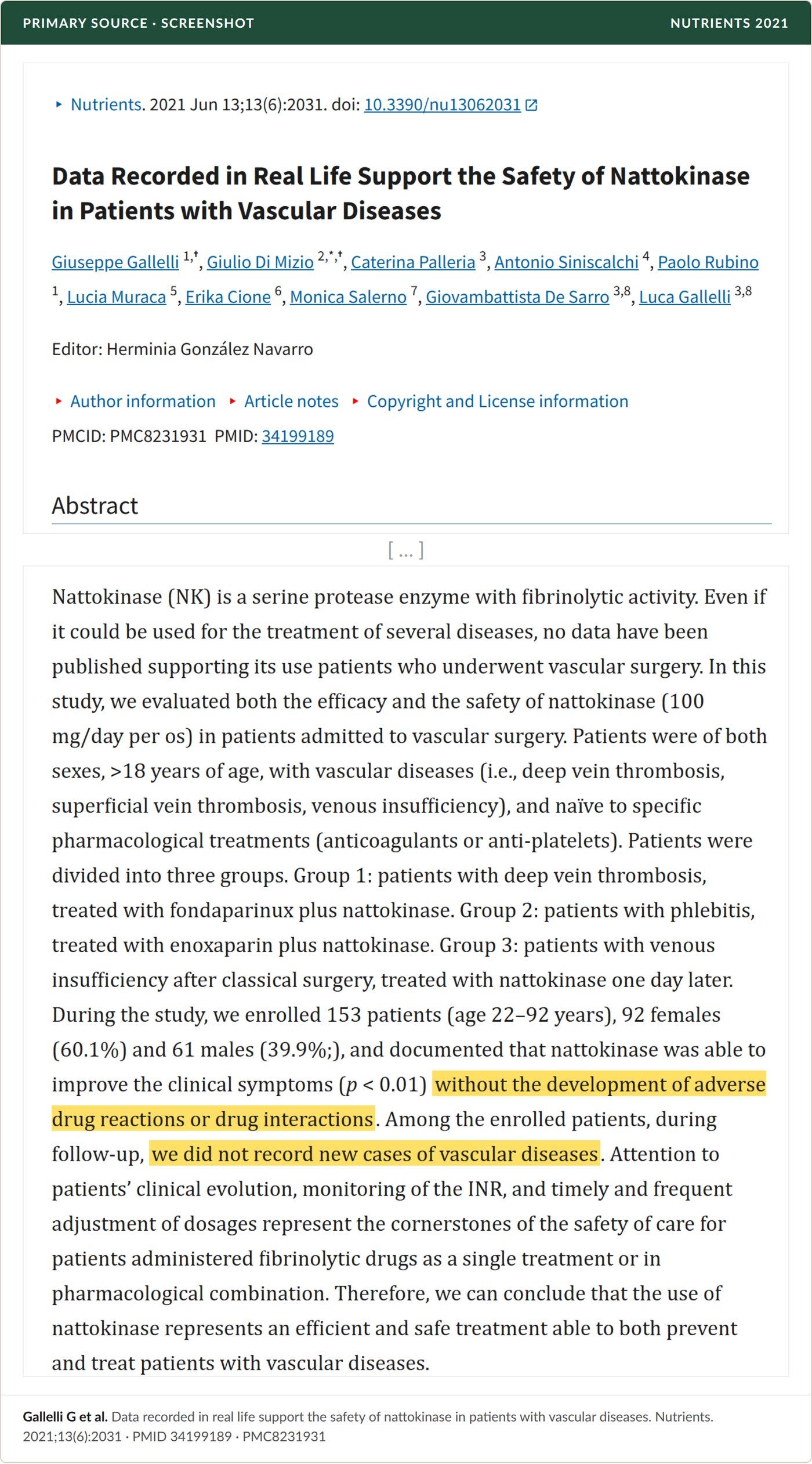
Nattokinase’s toxicology is as clean as any food-derived compound I have reviewed. GLP-compliant studies found it non-mutagenic and non-clastogenic in vitro, with no adverse effects in 28-day and 90-day rat studies at doses up to 1,000 mg/kg/day (Lampe and English, Food Chem Toxicol, 2016). A 2019 evaluation found no mortality or toxic signs at the maximum feasible oral dose in mice, 480,000 FU/kg, which the authors describe as roughly 1,000 times the recommended human dose, with negative Ames, micronucleus and chromosome-aberration tests (Wu et al., Regul Toxicol Pharmacol, 2019). In 153 vascular-surgery patients aged 22 to 92 treated with nattokinase alongside fondaparinux or enoxaparin or after surgery, there were no adverse drug reactions or interactions and no new vascular events during follow-up (Gallelli et al., Nutrients, 2021). The six-trial meta-analysis found no notable adverse events in any study (Li et al., 2023), and the 1,062-patient study recorded none at 10,800 FU/day for a year (Chen et al., 2022).
Now the other side, because a fibrinolytic enzyme that works is a fibrinolytic enzyme that can make you bleed.
THREE CASE REPORTS EVERY NATTOKINASE USER SHOULD KNOW
A stroke patient on aspirin for secondary prevention, with cerebral microbleeds on MRI, developed an acute cerebellar hemorrhage after seven days of nattokinase at 400 mg/day (Chang et al., Intern Med, 2008). An elderly woman taking nattokinase developed hemoperitoneum and died (Ramachandran et al., Cureus, 2021). A patient with a mechanical aortic valve who substituted nattokinase for warfarin on his own developed thrombus on the valve within a year and required repeat valve replacement; the surgeons “strongly discourage its use for this purpose” (Elahi et al., Proc Bayl Univ Med Cent, 2015). Nattokinase is also a confirmed allergen, designated Bac s 1, in some people with natto allergy (Suzuki et al., Allergol Int, 2023).
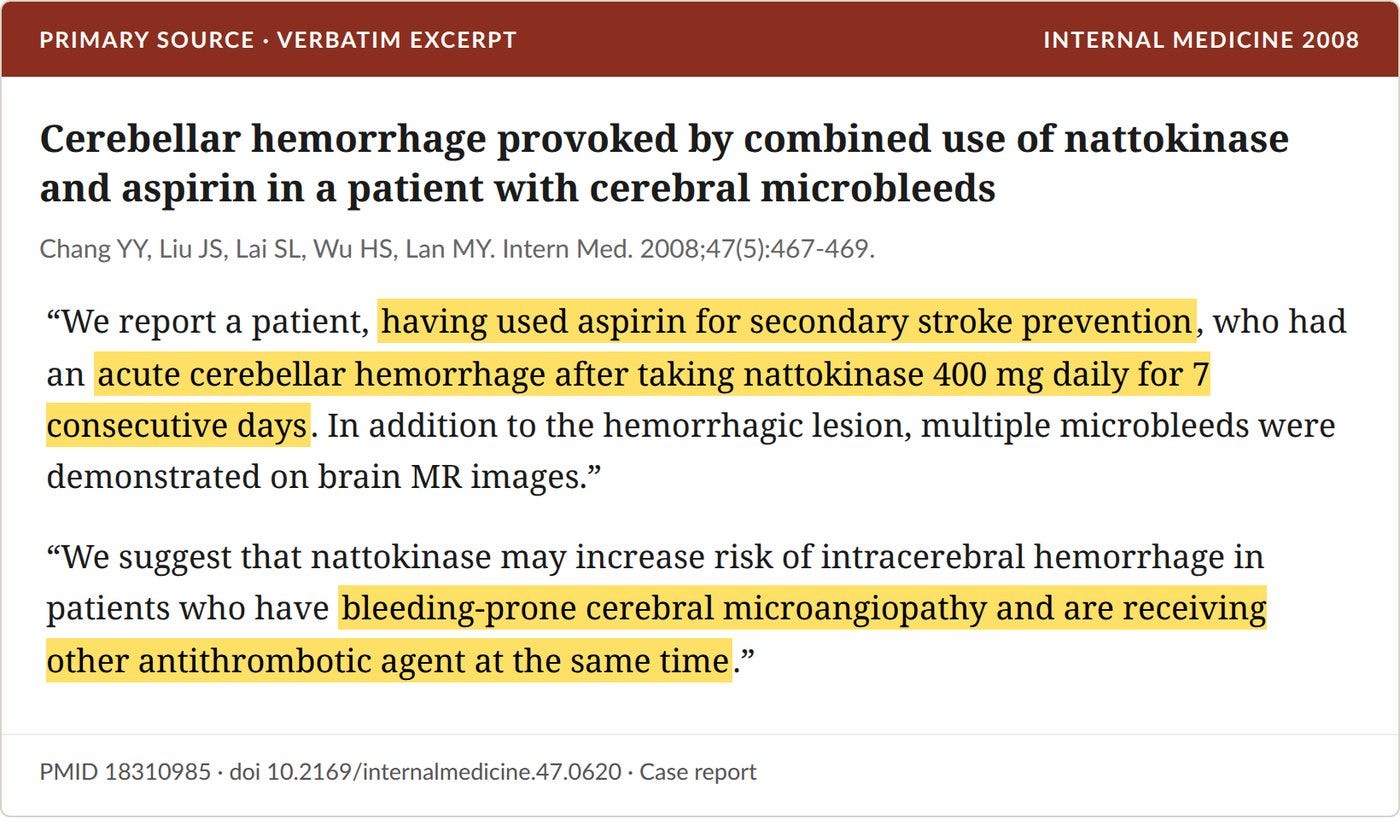
The pattern in those cases is consistent: nattokinase stacked on another antithrombotic in someone with a bleeding-prone brain, nattokinase in a frail elderly patient, and nattokinase used as a replacement for a drug that a mechanical valve absolutely requires. If you take anticoagulants or antiplatelet drugs, have a bleeding disorder, have had a hemorrhagic stroke, have surgery scheduled, or are pregnant, do not take this without a physician who understands fibrinolytics. And never, under any circumstances, swap it for a prescribed anticoagulant on your own.
A note on units, because the whole dose argument depends on them: nattokinase is measured in fibrinolytic units (FU), and a typical 100 mg capsule contains about 2,000 FU (Ero et al., 2013). The human studies above span 2,000 FU (NAPS, the blood-pressure trials), 4,000 FU (the coagulation-factor study), 6,000 FU (the statin head-to-head), 8,000 FU (the brain trial), and 10,800 FU (the 1,062-patient study). Read your label.
With Power Comes Responsibility
An enzyme that measurably changes clotting factors within hours of a single capsule deserves the same respect you would give a drug that did the same thing. That is not a reason to fear it. It is a reason to understand exactly where the risk lives, and, just as importantly, to measure that risk against the interventions it is usually compared to. Here is the honest version of both.
Polypharmacy: the risk is in the stacking
Every one of the serious adverse events in the nattokinase literature involved a second variable: aspirin in a brain with microbleeds, a frail elderly patient, a mechanical heart valve that required warfarin. The enzyme on its own, in 46 years, has produced a toxicology file that is almost boring. The danger appears when it is added to a body already running on multiple drugs, and that describes most of the people who would reach for it.
The share of American adults taking five or more prescription drugs nearly doubled from 8.2 percent in 1999–2000 to 15 percent in 2011–2012 (Kantor et al., JAMA, 2015). Among adults 62 to 85, more than a third, 35.8 percent, take five or more prescriptions concurrently, 63.7 percent also take dietary supplements, and about 15.1 percent are at risk of a potentially major drug-drug interaction, a figure that nearly doubled in five years (Qato et al., JAMA Intern Med, 2016). Nattokinase enters that picture as a fibrinolytic, an antiplatelet, a PAI-1 inactivator and a mild antihypertensive at once. Added to aspirin, clopidogrel, warfarin, a DOAC, a fish-oil megadose, or a blood-pressure drug, it does not replace what those agents do. It adds to it.
There is also a food-specific interaction that trips people up. Natto the food is one of the richest dietary sources of vitamin K2, which directly antagonizes warfarin, which is why standardized nattokinase extracts like the one used in the North American trial have the vitamin K2 removed (Jensen et al., 2016). Someone on warfarin eating natto daily and someone on warfarin taking a K2-free nattokinase capsule face two completely different interactions, and neither should be attempted without the prescriber knowing.
WHAT THE 1,062-PATIENT STUDY DOES AND DOES NOT LICENSE
Chen and colleagues reported that co-administration of aspirin and vitamin K2 with nattokinase “produced a synergetic effect” on outcomes, with no adverse effects recorded (Chen et al., 2022). That was in a monitored clinical cohort with a year of follow-up and physician oversight. It is evidence that the combination can be managed. It is not evidence that it can be self-managed, and the Chang case report is the reason (Chang et al., 2008).
Hemodynamics: the blood-pressure effect cuts both ways
The same property that makes nattokinase useful for hypertension makes it something to watch in people who are already medicated for it. The randomized trials show a net 3 to 5.5 mmHg drop in systolic pressure and a measurable fall in plasma renin activity (Kim et al., 2008; Li et al., 2023). In a healthy, unmedicated adult that is a benefit. In an 80-year-old on two antihypertensives and a diuretic, an additional unplanned 5 mmHg is the margin between standing up and falling down. The single-dose data showing faster peripheral blood-flow recovery after cold exposure confirm that this is a real circulatory effect, not a laboratory artifact (Nara et al., 2023).
The dialysis patients in the Hsia trial tolerated 4,000 FU for two months without adverse events, which is reassuring (Hsia et al., 2009), but the fatal hemoperitoneum case was an elderly woman, and frailty, low body weight, renal impairment and anticoagulant co-prescription all push in the same direction: slower clearance, thinner margins, less reserve (Ramachandran et al., 2021). Add any scheduled surgery, dental extraction, or endoscopy to the list of reasons to stop and talk to the prescriber first.
The honest comparison: what the alternatives actually do
Now the other half of informed consent, the half rarely offered. Nattokinase is almost always evaluated against an implicit standard of care that is assumed to be safe. For the most common interventions, that assumption no longer survives contact with the trials.
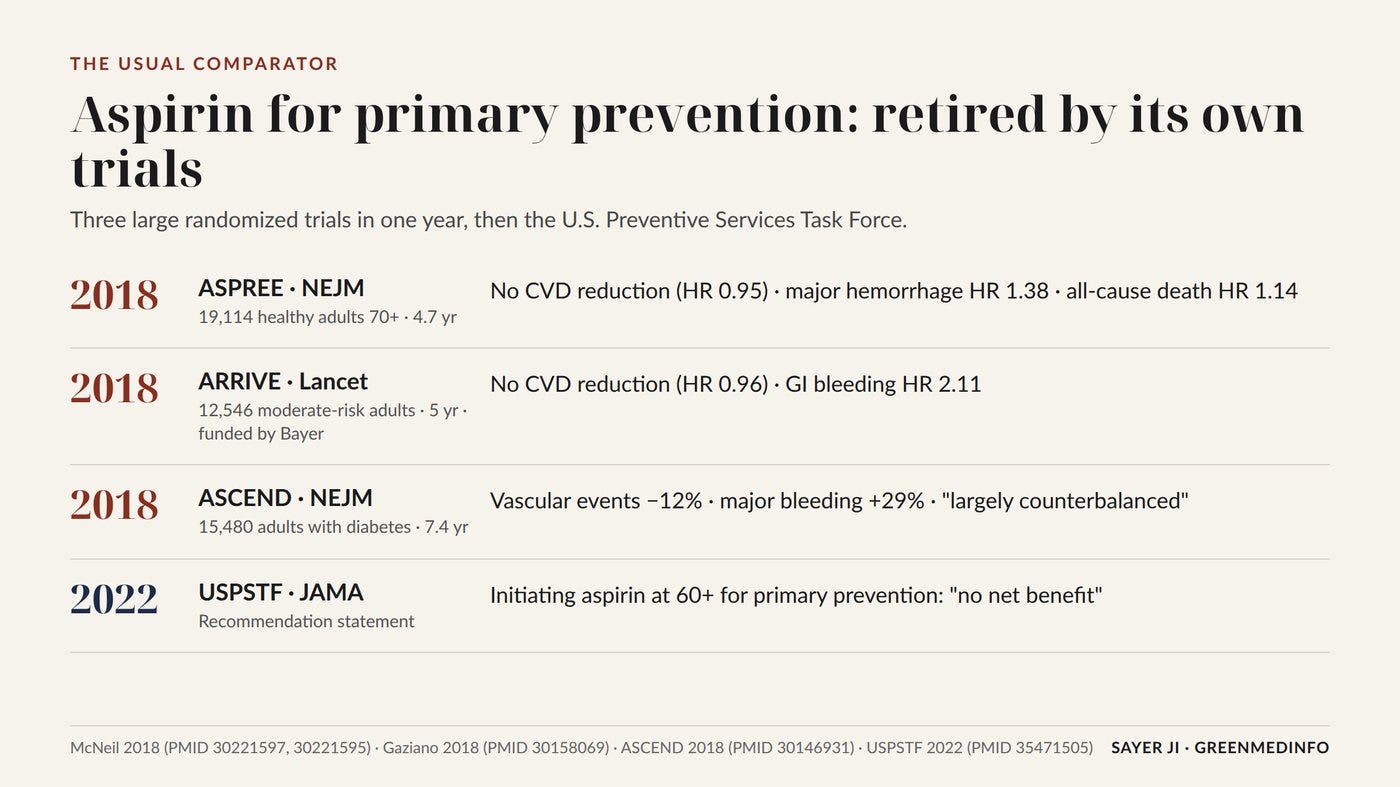
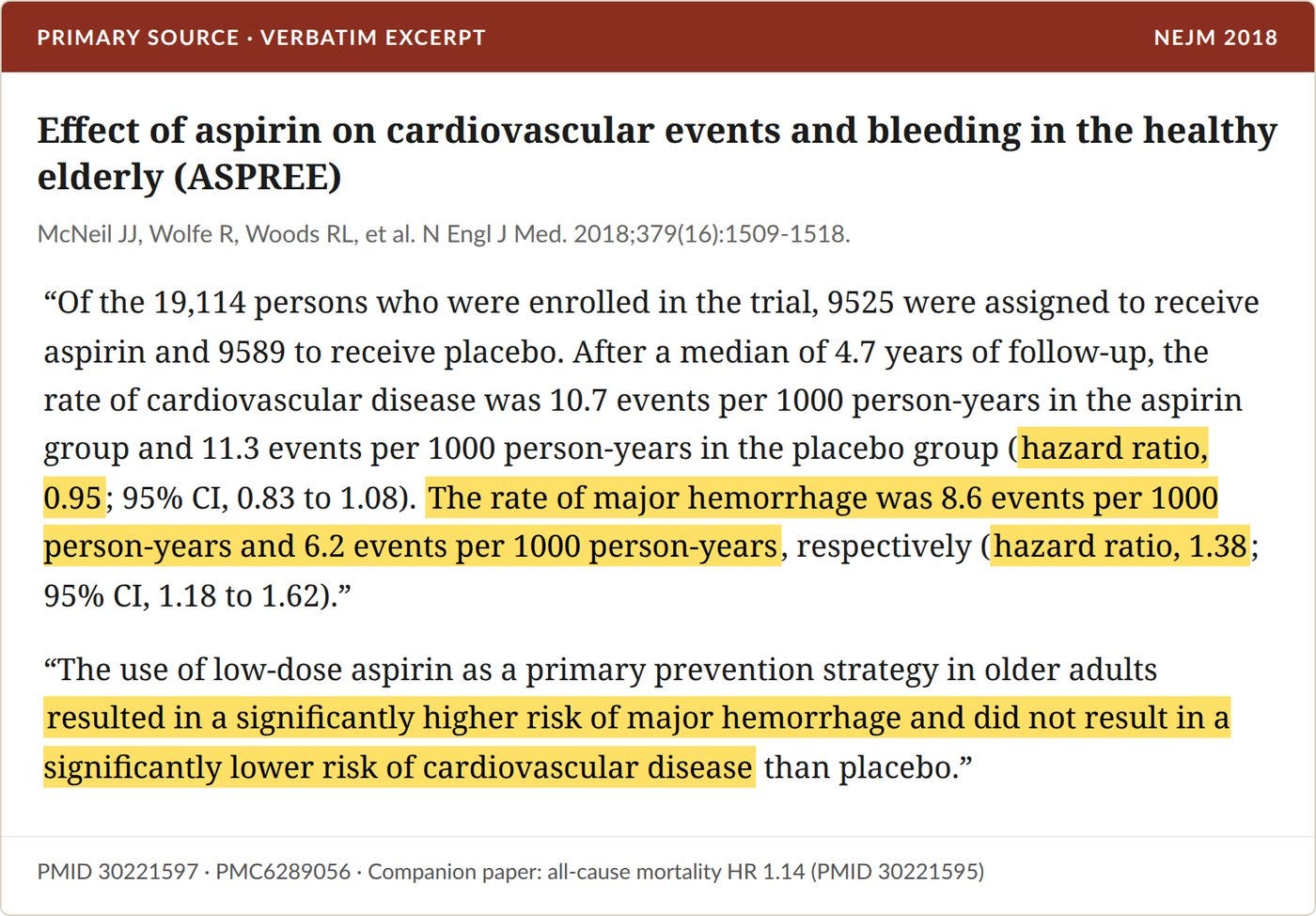
Aspirin for primary prevention. For decades, daily low-dose aspirin was the default recommendation for anyone worried about their heart. In 2018, three large randomized trials ended that era. ASPREE randomized 19,114 healthy adults 70 and older to aspirin or placebo: there was no reduction in cardiovascular disease, major hemorrhage rose from 6.2 to 8.6 events per 1,000 person-years (HR 1.38), and all-cause mortality was higher on aspirin (12.7 versus 11.1 per 1,000 person-years, HR 1.14), driven largely by cancer deaths (McNeil et al., NEJM, 2018a; McNeil et al., NEJM, 2018b). ARRIVE, funded by Bayer, randomized 12,546 moderate-risk adults and found no reduction in cardiovascular events while gastrointestinal bleeding more than doubled (HR 2.11) (Gaziano et al., Lancet, 2018). ASCEND, in 15,480 diabetics, found a 12 percent reduction in serious vascular events purchased with a 29 percent increase in major bleeding, with the authors concluding that the benefits “were largely counterbalanced by the bleeding hazard” (ASCEND Study Collaborative Group, NEJM, 2018). In 2022, the U.S. Preventive Services Task Force concluded “with moderate certainty that initiating aspirin use for the primary prevention of CVD events in adults 60 years or older has no net benefit” (USPSTF, JAMA, 2022). The intervention nattokinase is most often compared to is one the evidence has already retired for the people most likely to be taking it.
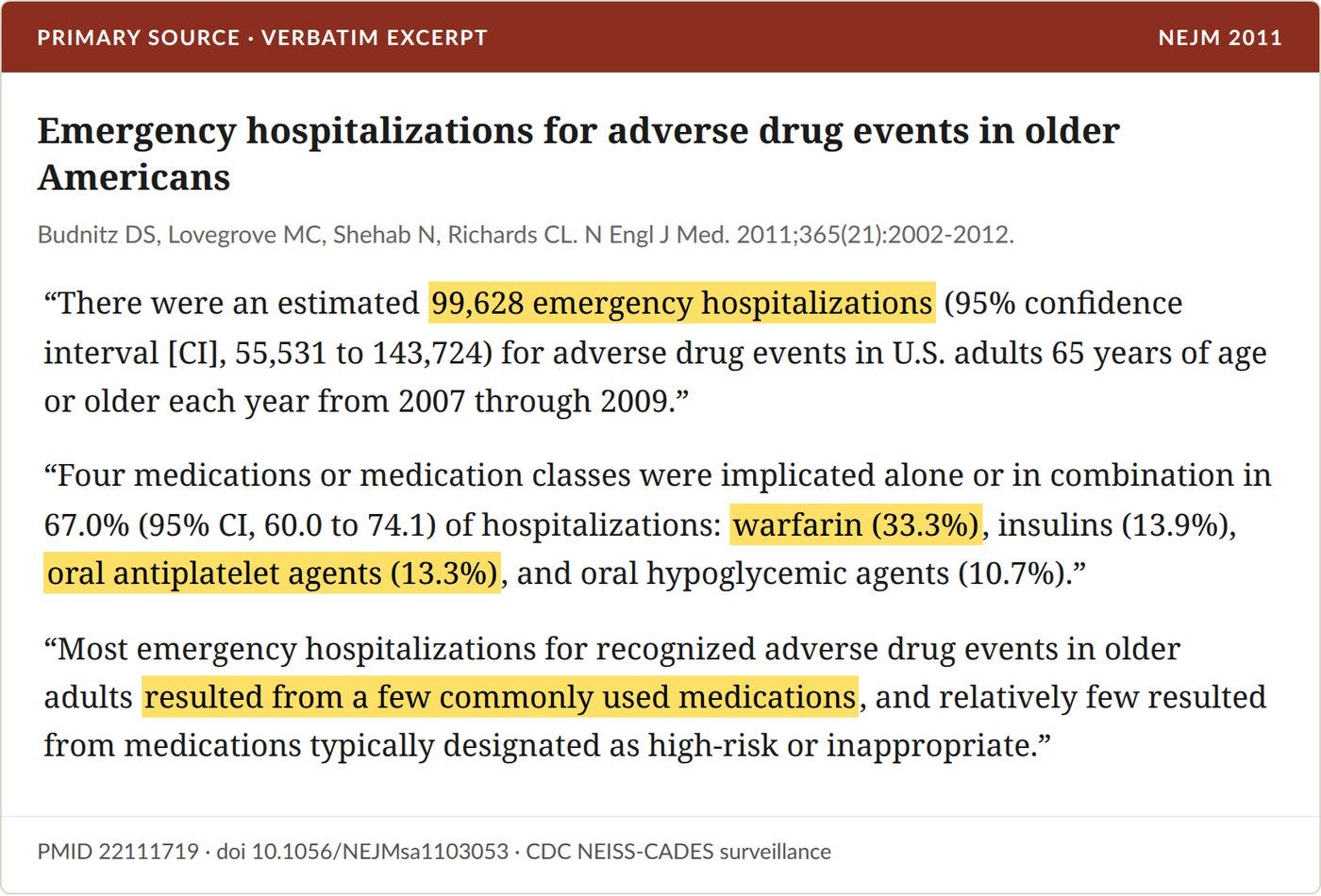
Anticoagulants. Warfarin and its successors save lives in atrial fibrillation and after mechanical valve replacement; nothing here argues otherwise. But their cost is not theoretical. A nationally representative CDC analysis found that warfarin alone accounted for 33.3 percent of all emergency hospitalizations for adverse drug events among Americans 65 and older, and warfarin plus oral antiplatelet drugs together accounted for nearly half (Budnitz et al., NEJM, 2011). A 2016 update found four adverse-drug-event emergency visits per 1,000 Americans every year, with anticoagulants, antibiotics and diabetes drugs implicated in 46.9 percent of them, and anticoagulants among the three classes behind 59.9 percent of such visits in older adults (Shehab et al., JAMA, 2016). The newer direct oral anticoagulants improved on warfarin, cutting intracranial hemorrhage by half and mortality by 10 percent, but at the price of 25 percent more gastrointestinal bleeding (Ruff et al., Lancet, 2014).
And warfarin carries a harm that bleeding statistics never capture. By blocking vitamin K recycling, it prevents activation of matrix Gla protein, the vessel wall’s own inhibitor of calcification. Patients under 55 with no other cardiovascular risk factors who had taken coumarins for more than ten years had 8.5 times the odds of femoral artery calcification compared with matched controls (Rennenberg et al., Blood, 2010). A review in Blood Reviews called vascular calcification “the price to pay for anticoagulation therapy with vitamin K-antagonists” (Chatrou et al., 2012). The drug that prevents clots stiffens the arteries it is protecting. Nattokinase, by contrast, comes from a food whose principal co-nutrient is the very vitamin K2 that warfarin depletes.
Supplements as a class. For perspective: the same CDC surveillance system estimated 23,005 emergency visits per year for adverse events from all dietary supplements combined, with weight-loss and energy products and unsupervised children accounting for most of them (Geller et al., NEJM, 2015). Against four visits per 1,000 Americans for prescription drugs, that is a different order of magnitude. Nattokinase specifically has produced a handful of published case reports in four decades. I will not pretend that is a controlled comparison: there is no national surveillance for nattokinase, passive case reporting undercounts, and far fewer people take it than take aspirin. But the direction is not in doubt.
RELATIVE HARM, IN NUMBERS
Aspirin, primary prevention, ages 70+: major hemorrhage HR 1.38, all-cause death HR 1.14, no cardiovascular benefit (ASPREE). Warfarin: 33.3 percent of emergency hospitalizations for adverse drug events in older Americans (Budnitz 2011); 8.5-fold odds of arterial calcification after ten years (Rennenberg 2010). DOACs: GI bleeding RR 1.25 versus warfarin (Ruff 2014). Nattokinase: no adverse events in six RCTs (Li 2023), none in 1,062 patients at 10,800 FU for a year (Chen 2022), none in 153 vascular-surgery patients (Gallelli 2021); three published serious case reports, each involving a co-prescribed drug, a frail patient, or a drug substitution (Chang 2008; Ramachandran 2021; Elahi 2015).
Where that leaves you
Two things are true at once, and the honest position holds both.
First: if you take any prescription drug, and especially any drug that touches clotting or blood pressure, nattokinase belongs under the oversight of a licensed practitioner who understands fibrinolytics and will check your medication list, your bleeding history, your kidney function and your brain imaging if you have had a stroke. Never substitute it for a prescribed anticoagulant. Stop it before surgery. Those are not legal disclaimers; they are the lessons of the three case reports above.
Second: the data say that the pharmaceuticals are, far more often than the natural compounds, the source of the harm. Natto has been eaten daily by millions of Japanese for a thousand years, and the two largest cohorts ever to study it found the heaviest eaters dying less often of heart disease and stroke (Nagata et al., 2017; Katagiri et al., 2020). The enzyme that comes from it is made by a bacterium the human gut has lived alongside for as long as there have been humans. Compounds derived from food and from the microbiome carry a risk profile that patented molecules designed to override a single enzyme simply do not, and the interaction risk that dominates the nattokinase safety file is, almost entirely, a risk created by the drugs. The fewer of them you take, and the more your cardiovascular protection comes from diet, movement, sleep and the fermented foods your ancestors ate, the smaller that risk becomes, while the documented benefits remain.
Informed consent is the one intervention that is always free. But it requires information that is rarely offered: that aspirin for prevention has been retired by the evidence for anyone over 60, that warfarin stiffens arteries while it thins blood, that warfarin alone is the single largest cause of emergency hospitalization for adverse drug events in older Americans, and that polypharmacy itself is a diagnosis. You cannot consent to a comparison you have never been shown. Now you have been.
The trials nobody has run
Here is the list of studies that would settle the major questions, none of which exist:
A placebo-controlled, randomized plaque-regression trial at 6,000 to 10,800 FU/day. NAPS tested 2,000 FU in healthy people and was null. Ren tested 6,000 FU against a statin without placebo. Chen tested 10,800 FU retrospectively. The obvious trial, high dose versus placebo in people who actually have plaque, has not been done.
A hard-outcome trial. No study has counted heart attacks, strokes or deaths. The Takayama and JPHC cohorts suggest what the answer might be, but they measured natto, not nattokinase, and association is not causation.
A post-spike trial. Fibrinolytic activity in humans is established. Spike degradation in vitro is established. Elevated D-dimer and microclots in long COVID are established. Nobody has connected them in a controlled trial, and when a clinical team published five cases, the paper was retracted.
A fatty-liver trial. Nattokinase inactivates PAI-1, and PAI-1 tracks fatty-liver severity, but no trial has tested nattokinase with liver imaging endpoints.
A 2026 review in Life Sciences put the bottlenecks bluntly: “insufficient pH and thermal stability, limited clinical evidence, and a lack of standardization hinder its translation into clinical practice” (Ma et al., Life Sci, 2026). The stability problem is being solved by the engineering papers that fill a third of the GreenMedInfo library. The clinical-evidence problem is not a scientific problem. It is a funding problem, and an enzyme that costs pennies a day and cannot be patented does not attract the kind of money that runs 10,000-patient outcome trials.
Bottom line
Nattokinase is a bacterial enzyme discovered in a thousand-year-old food, with a 46-year research record that includes direct fibrin degradation, PAI-1 inactivation, tPA release and platelet inhibition demonstrated mechanistically; coagulation-factor reductions and blood-pressure lowering demonstrated in randomized human trials and confirmed by meta-analysis; plaque regression demonstrated in two human imaging studies at doses of 6,000 FU and above, including a randomized head-to-head in which it beat a statin by more than three to one; neuroprotection demonstrated across a growing animal literature and now a first signal in a human brain trial; spike-protein degradation demonstrated in vitro and awaiting the human trial no one will fund; and a safety profile clean enough for 1,000-fold overdoses in animals, marred only by predictable bleeding events in people who stacked it on other blood thinners or used it to replace a drug they needed.
That is not a miracle. It is a well-characterized, under-tested, badly dosed, and systematically under-funded therapeutic enzyme from a food that two cohorts of 120,000 people associate with living longer and dying less often of heart disease and stroke. The research is there. The full library is at GreenMedInfo.com/substance/nattokinase. The rest is up to the people with the money to run the trials, and, until they do, to each of us reading the evidence for ourselves.
The research is there. The dose matters. The trials that would settle it have not been run.
Disclosure. I formulated a fermented-natto supplement sold by Regenerate and have a financial interest in it. Nothing in this article is a claim about that or any other product. This article reports published research on nattokinase and natto; it is not medical advice, and nothing here should be read as a reason to stop or replace any prescribed medication. Talk to a physician who understands fibrinolytic enzymes before taking nattokinase, especially if you use anticoagulant or antiplatelet drugs.
🧵Read and Share the X Thread Dedicated to this Article.


Appendix: the human studies at a glance
Sumi 1990: Open-label human + dog angiography, n = —, Capsules / natto, —. Enhanced plasma fibrinolysis and tPA; thrombi lysed in dogs.
Cesarone 2003: RCT vs placebo (NK + pine bark), n = 204, Combination, 7–8 hr flight. 0 DVT treated vs 5.4% DVT controls.
Kim 2008: RCT vs placebo, n = 86, 2,000 FU/day, 8 wk. SBP −5.55, DBP −2.84 mmHg; renin down.
Hsia 2009: Open-label, self-controlled, n = 45, 4,000 FU/day, 2 mo. Fibrinogen −7–10%, FVII −7–14%, FVIII −17–19%.
Yang 2009: RCT vs placebo, n = 47, NK alone vs NK + red yeast rice, 6 mo. NK alone: no lipid effect until month 6; combo: LDL −41%.
Ero 2013: Pharmacokinetic pilot, n = 11, 2,000 FU single, 48 hr. NK detectable in serum by ELISA.
Kurosawa 2015: Double-blind crossover, n = 12, 2,000 FU single, 8 hr. D-dimer, FDP up; FVIII down; aPTT prolonged; antithrombin up.
Jensen 2016: RCT vs placebo, North America, n = 79, 100 mg (2,000 FU)/day, 8 wk. DBP 87→84 (men 86→81); vWF down in women.
Ren 2017: RCT vs simvastatin 20 mg, n = 82, 6,000 FU/day, 26 wk. Plaque −36.6% vs −11.5%; HDL up; effect independent of lipids.
Yoo 2019: RCT vs placebo, n = 100, —, 8 wk. Closure time and aPTT prolonged vs placebo.
Hodis 2021 (NAPS): RCT vs placebo, n = 265, 2,000 FU/day, 3 yr. Null on CIMT, stiffness, BP, all labs (healthy, low-risk).
Gallelli 2021: Real-world, vascular surgery, n = 153, 100 mg/day, Follow-up. Symptom improvement; no ADRs or interactions.
Chen 2022: Retrospective, n = 1,062 (683 imaged), 10,800 vs 3,600 FU/day, 12 mo. IMT −21.7%, plaque −36% at 10,800; 3,600 ineffective.
Liu 2023: RCT vs placebo (NK-monascus), n = 113, Combination, 4 mo. LDL −0.43 mmol/L.
Nara 2023: Double-blind crossover, n = 9, 2,000 FU single, 2 hr. Faster hand skin-temperature recovery after cold immersion.
Li 2023 meta-analysis: 6 RCTs pooled, n = 546, Various, Various. SBP −3.45, DBP −2.32 mmHg; low-dose lipids not improved; no AEs.
Liu 2024: RCT, 4 arms, stable CAD, n = 178, NK, RYR, both, placebo, 90 days. NK + RYR best on TC, TG, HDL, DBP −7.39 mmHg; no AEs.
Zhang 2026 (ICC-PACS): RCT vs placebo, brain MRI, n = 120, 8,000 FU/day, 6 mo. No global MoCA change; visuospatial function improved (OR of decline 0.35).
Related reading on this Substack
Nattokinase REVERSES Heart Disease, But Only If You Take Enough
Nattokinase and Spike Protein: What the Evidence Actually Shows
When the Retraction of a Spike Protein/Nattokinase Study Itself Becomes the Evidence
Nattokinase for Nasal Polyps and as a Mucolytic (GreenMedInfo)
The full research library: GreenMedInfo.com/substance/nattokinase
[Add X thread link before publishing: “Read the illustrated thread on X”]
Sources
1,062-patient study:

randomized trial that put it against simvastatin:
what the spike-protein evidence actually shows:
a journal retracts a case series:
Weng et al., Int J Mol Sci, 2017: https://pmc.ncbi.nlm.nih.gov/articles/PMC5372539/
Pais et al., Clin Hemorheol Microcirc, 2006: https://pubmed.ncbi.nlm.nih.gov/16899918/
Sumi et al., Experientia, 1987: https://pubmed.ncbi.nlm.nih.gov/3478223/
Urano et al., J Biol Chem, 2001: https://pubmed.ncbi.nlm.nih.gov/11325965/
why the fermentation substrate matters:
Sumi et al., Acta Haematol, 1990: https://pubmed.ncbi.nlm.nih.gov/2123064/
198 research abstracts: https://greenmedinfo.com/substance/nattokinase
Fujita et al., Biol Pharm Bull, 1995: https://pubmed.ncbi.nlm.nih.gov/8593442/
Yatagai et al., Pathophysiol Haemost Thromb, 2008: https://pubmed.ncbi.nlm.nih.gov/19996631/
Jang et al., Lab Anim Res, 2013: https://pmc.ncbi.nlm.nih.gov/articles/PMC3879341/
Fujita et al., Biol Pharm Bull, 1995: https://pubmed.ncbi.nlm.nih.gov/8845803/
Ero et al., Altern Ther Health Med, 2013: https://pubmed.ncbi.nlm.nih.gov/23709455/
Feng et al., Xenobiotica, 2023: https://pubmed.ncbi.nlm.nih.gov/37971898/
Kurosawa et al., Sci Rep, 2015: https://pmc.ncbi.nlm.nih.gov/articles/PMC4479826/
Hsia et al., Nutr Res, 2009: https://pubmed.ncbi.nlm.nih.gov/19358933/
Yoo et al., Food Funct, 2019: https://pubmed.ncbi.nlm.nih.gov/31070609/
Cesarone et al., Angiology, 2003: https://pubmed.ncbi.nlm.nih.gov/14565628/
Chen et al., Front Cardiovasc Med, 2022: https://pmc.ncbi.nlm.nih.gov/articles/PMC9441630/
Ren et al., Zhonghua Yi Xue Za Zhi, 2017: https://pubmed.ncbi.nlm.nih.gov/28763875/
Hodis et al., Clin Hemorheol Microcirc, 2021: https://pubmed.ncbi.nlm.nih.gov/33843667/
Corrigendum, 2022: https://pmc.ncbi.nlm.nih.gov/articles/PMC9761765/
Suzuki et al., Life Sci, 2003: https://pubmed.ncbi.nlm.nih.gov/12850244/
Chiu et al., Int J Biol Macromol, 2024: https://pubmed.ncbi.nlm.nih.gov/38679250/
Kim et al., Hypertens Res, 2008: https://pubmed.ncbi.nlm.nih.gov/18971533/
Jensen et al., Integr Blood Press Control, 2016: https://pmc.ncbi.nlm.nih.gov/articles/PMC5066864/
Li et al., Rev Cardiovasc Med, 2023: https://pmc.ncbi.nlm.nih.gov/articles/PMC11266782/
Murakami et al., Food Funct, 2012: https://pubmed.ncbi.nlm.nih.gov/22453301/
Peng et al., Food Chem, 2026: https://pubmed.ncbi.nlm.nih.gov/41844106/
Fujita et al., Biol Pharm Bull, 2011: https://pubmed.ncbi.nlm.nih.gov/22040882/
Yang et al., Asia Pac J Clin Nutr, 2009: https://pubmed.ncbi.nlm.nih.gov/19786378/
Research progress of nattokinase in reducing blood lipid, Nutrients, 2025: https://pubmed.ncbi.nlm.nih.gov/40507053/
Liu et al., Front Nutr, 2024: https://pmc.ncbi.nlm.nih.gov/articles/PMC11133624/
Liu et al., Nutrients, 2023: https://pmc.ncbi.nlm.nih.gov/articles/PMC10574353/
Hsu et al., J Agric Food Chem, 2009: https://pubmed.ncbi.nlm.nih.gov/19117402/
Fadl et al., Hum Exp Toxicol, 2013: https://pubmed.ncbi.nlm.nih.gov/23821590/
Naik et al., Eur J Pharmacol, 2023: https://pubmed.ncbi.nlm.nih.gov/37263404/
Ji et al., Eur J Pharmacol, 2014: https://pubmed.ncbi.nlm.nih.gov/25446567/
Yang et al., Antioxid Redox Signal, 2025: https://pubmed.ncbi.nlm.nih.gov/39135387/
Tanikawa et al., In Vivo, 2026: https://pmc.ncbi.nlm.nih.gov/articles/PMC12949920/
Wu et al., J Agric Food Chem, 2023: https://pubmed.ncbi.nlm.nih.gov/37466380/
Brain Res, 2024: https://pubmed.ncbi.nlm.nih.gov/39592088/
Zhang et al., J Stroke Cerebrovasc Dis, 2026: https://pubmed.ncbi.nlm.nih.gov/41325794/
Tanikawa et al., Molecules, 2022: https://pmc.ncbi.nlm.nih.gov/articles/PMC9458005/
Oba et al., Biochem Biophys Res Commun, 2021: https://pmc.ncbi.nlm.nih.gov/articles/PMC8276596/
Lead Stories, 2023: https://leadstories.com/hoax-alert/2023/08/fact-check-nattokinase-not-proven-covid19-spike-protein-detox-nor-has-us-even-set-dosages.html
Zeballos et al., IDCases, 2025: https://pubmed.ncbi.nlm.nih.gov/40671933/
The Post-Spike Blind Spot:
Takabayashi et al., Allergol Int, 2017: https://pubmed.ncbi.nlm.nih.gov/28389065/
my earlier article: https://greenmedinfo.com/content/nattokinase-nasal-polyps-and-mucolytic
Huang et al., Invest Ophthalmol Vis Sci, 2021: https://pmc.ncbi.nlm.nih.gov/articles/PMC8164371/
Huang et al., J Diabetes, 2023: https://pmc.ncbi.nlm.nih.gov/articles/PMC10590680/
Chen et al., J Sci Food Agric, 2025: https://pubmed.ncbi.nlm.nih.gov/40637357/
Yamaguchi et al., Heliyon, 2024: https://pmc.ncbi.nlm.nih.gov/articles/PMC10998082/
Elbakry et al., Environ Sci Pollut Res, 2022: https://pmc.ncbi.nlm.nih.gov/articles/PMC9550699/
Wu et al., Redox Biol, 2020: https://pmc.ncbi.nlm.nih.gov/articles/PMC7078552/
Zhang et al., ACS Nano, 2023: https://pubmed.ncbi.nlm.nih.gov/37057972/
Zhao et al., Cancer Immunol Immunother, 2025: https://pmc.ncbi.nlm.nih.gov/articles/PMC12480323/
Zhang et al., BMC Oral Health, 2021: https://pmc.ncbi.nlm.nih.gov/articles/PMC8556967/
Nara et al., Heliyon, 2023: https://pmc.ncbi.nlm.nih.gov/articles/PMC10362143/
Nagata et al., Am J Clin Nutr, 2017: https://pubmed.ncbi.nlm.nih.gov/27927636/
Katagiri et al., BMJ, 2020: https://pmc.ncbi.nlm.nih.gov/articles/PMC7190045/
Lampe and English, Food Chem Toxicol, 2016: https://pubmed.ncbi.nlm.nih.gov/26740078/
Wu et al., Regul Toxicol Pharmacol, 2019: https://pubmed.ncbi.nlm.nih.gov/30742876/
Gallelli et al., Nutrients, 2021: https://pmc.ncbi.nlm.nih.gov/articles/PMC8231931/
Chang et al., Intern Med, 2008: https://pubmed.ncbi.nlm.nih.gov/18310985/
Ramachandran et al., Cureus, 2021: https://pmc.ncbi.nlm.nih.gov/articles/PMC8723721/
Elahi et al., Proc Bayl Univ Med Cent, 2015: https://pmc.ncbi.nlm.nih.gov/articles/PMC4264722/
Suzuki et al., Allergol Int, 2023: https://pubmed.ncbi.nlm.nih.gov/36517353/
Kantor et al., JAMA, 2015: https://pubmed.ncbi.nlm.nih.gov/26529160/
Qato et al., JAMA Intern Med, 2016: https://pmc.ncbi.nlm.nih.gov/articles/PMC5024734/
McNeil et al., NEJM, 2018a: https://pmc.ncbi.nlm.nih.gov/articles/PMC6289056/
McNeil et al., NEJM, 2018b: https://pmc.ncbi.nlm.nih.gov/articles/PMC6433466/
Gaziano et al., Lancet, 2018: https://pmc.ncbi.nlm.nih.gov/articles/PMC7255888/
ASCEND Study Collaborative Group, NEJM, 2018: https://pubmed.ncbi.nlm.nih.gov/30146931/
USPSTF, JAMA, 2022: https://pubmed.ncbi.nlm.nih.gov/35471505/
Budnitz et al., NEJM, 2011: https://pubmed.ncbi.nlm.nih.gov/22111719/
Shehab et al., JAMA, 2016: https://pmc.ncbi.nlm.nih.gov/articles/PMC6490178/
Ruff et al., Lancet, 2014: https://pubmed.ncbi.nlm.nih.gov/24315724/
Rennenberg et al., Blood, 2010: https://pubmed.ncbi.nlm.nih.gov/20354170/
Chatrou et al., 2012: https://pubmed.ncbi.nlm.nih.gov/22520397/
Geller et al., NEJM, 2015: https://pmc.ncbi.nlm.nih.gov/articles/PMC6196363/
Ma et al., Life Sci, 2026: https://pubmed.ncbi.nlm.nih.gov/42097398/
Images: cover photo by Kinchan1 (CC BY 2.0) and natto photo by ノボホショコロトソ (CC BY-SA 4.0), Wikimedia Commons; study screenshots from PubMed Central; verbatim excerpts from PubMed abstracts; charts by Sayer Ji / GreenMedInfo.
Wow, astonishing work, thank you. I’m wondering if my Dupuytrens Contracture might respond to Nattokinase with DMSO? Several rounds of needle procedure (apeurotomy) and one xiaflex injection had some improvement but quickly reverted. Have just decided against more radical surgery.
Great! Now we need some way to make it possible to stomach Natto, so its not like eating someone's nasty phlegm. I cant get Natto here where I am in Mexico so I guess its not a problem for me.