


This year, peptides went mainstream.
This year, peptides went mainstream.
On February 27, 2026, the Secretary of Health and Human Services announced that about 14 of the 19 peptides the FDA had restricted from compounding would be reclassified. The list included BPC-157, thymosin alpha-1, TB-500, GHK-Cu, and MOTS-c (AJMC). In July, an FDA advisory committee narrowly voted to recommend six of them, including BPC-157 and the “longevity peptide” epitalon, for the compounding list. Agency scientists had argued against them (Latham & Watkins; PressAdvantage). Meanwhile, a gray market thrives, and the press says people “are turning themselves into lab rats” (The Guardian).
Testing shows what can end up in those vials. In a 2024 study, three online semaglutide vials claimed 99% purity but measured just 7.7% to 14.4%. All three held more drug than their labels stated, and all contained bacterial endotoxin (Ashraf et al., Journal of Medical Internet Research, 2024). In 2026, an Australian lab reported that only 1 of 18 samples sold as retatrutide matched its label, and one contained none of the peptide at all (ABC News). The FDA keeps sending warning letters to these sellers. It says a “research use only” label does not change the fact that the products are marketed for human use (FDA).
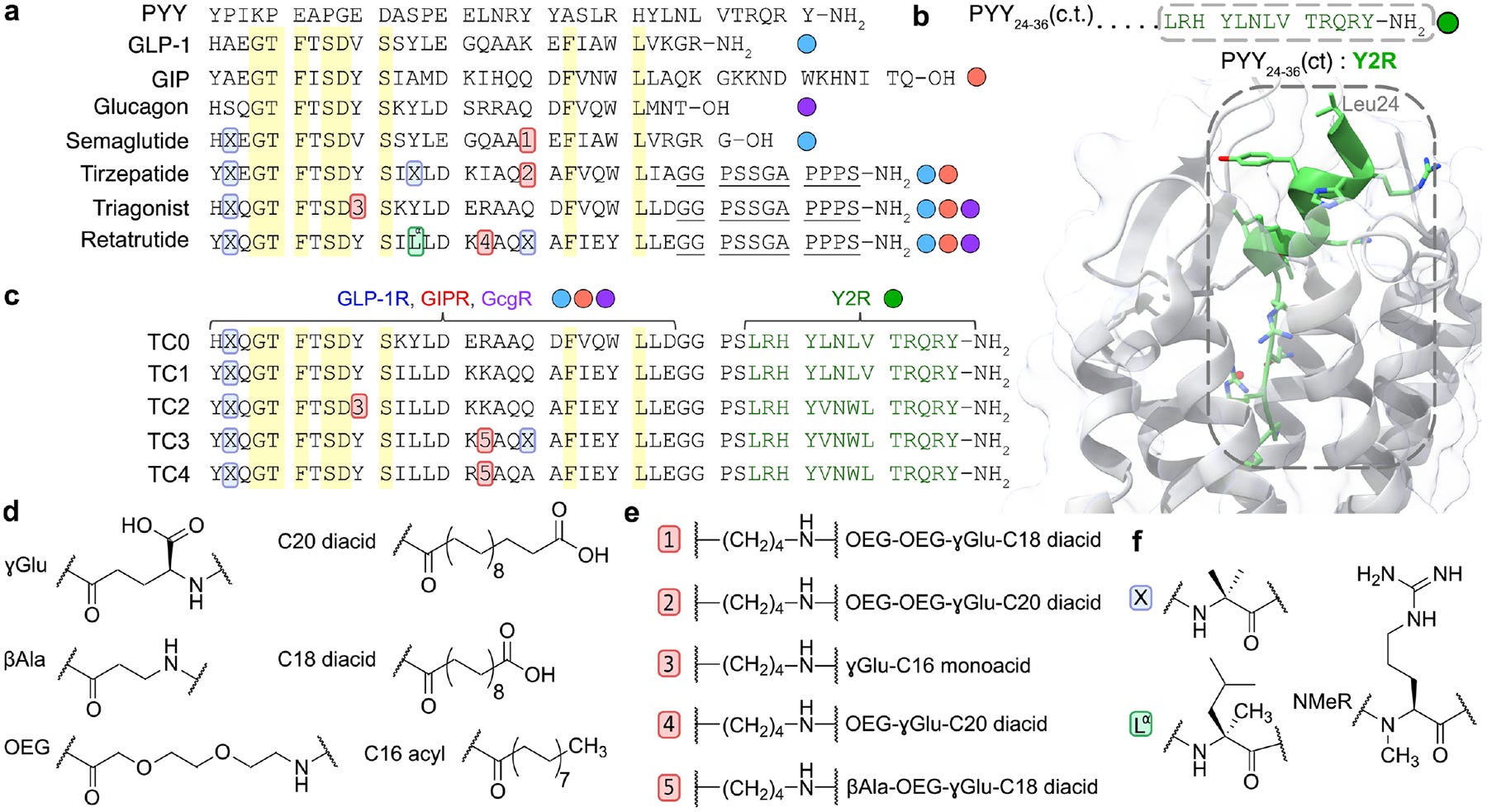
Many of the most sought-after products are not natural signals at all. Retatrutide, which is still in clinical trials and has not been approved (ABC News), is a single lab-designed molecule built to act on three hormone receptors at once. Researchers developing the next generation of these designs call them “chimeric peptides,” or “chimeras” (Molecular Design of Unimolecular Tetra-receptor Agonists). Sellers also mix several peptides into one vial, such as blends of BPC-157, TB-500, and GHK-Cu. These blends have not been clinically validated as combinations (Disclosed Labs).
I support people’s right to make informed choices about their own bodies. But the excitement over vials and syringes has hidden a deeper question.
If short regulatory peptides really are among the body’s master signals for staying young, where did we first get them?
The answer has been growing in fields for 10,000 years, and a group of aging researchers proved it two decades ago.


The Experiment That Asked the Right Question
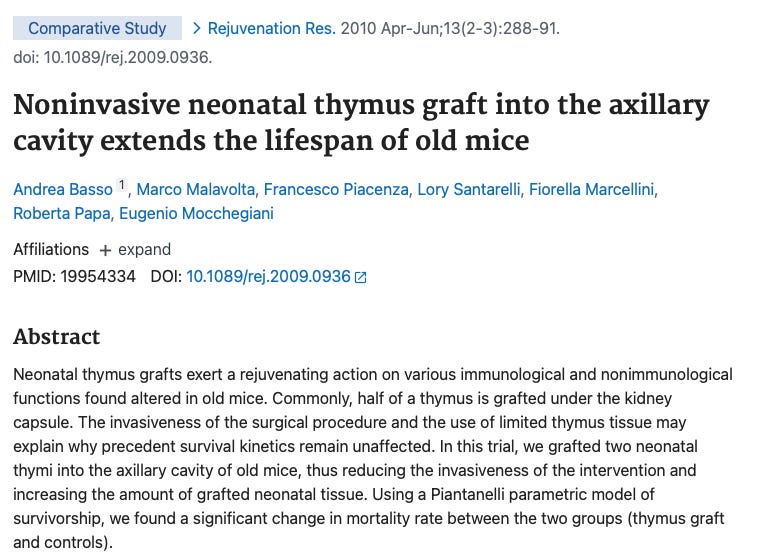
The thymus is the textbook example of early aging. This small gland behind the breastbone trains our immune T-cells, and it begins shrinking long before most other organs. For decades, aging researchers have known that giving old animals young thymus tissue can roll back signs of age. One Italian team showed that grafting neonatal thymus tissue into old mice measurably changed their mortality rate and extended their lifespan (Basso et al., Rejuvenation Research, 2010).
But you cannot give everyone a thymus transplant. So the researchers asked a bolder question:
Could a food do what the thymus does?
In 2005, in the peer-reviewed journal Biogerontology, they published the answer. They tested a wheat sprout extract to see whether it “could mimic the thymus action on recovering age-related alterations,” and whether it could treat “an age-associated pathology, the cataract in dogs” (Basso et al., Biogerontology, 2005).
Here is what they reported:
Aging liver cells moved back toward youth. In old mice, the wheat sprout extract restored the declining DNA synthesis of liver cells, much as calf thymus extract did. It also brought abnormally high DNA and protein content back down “to levels observed in young mice.”
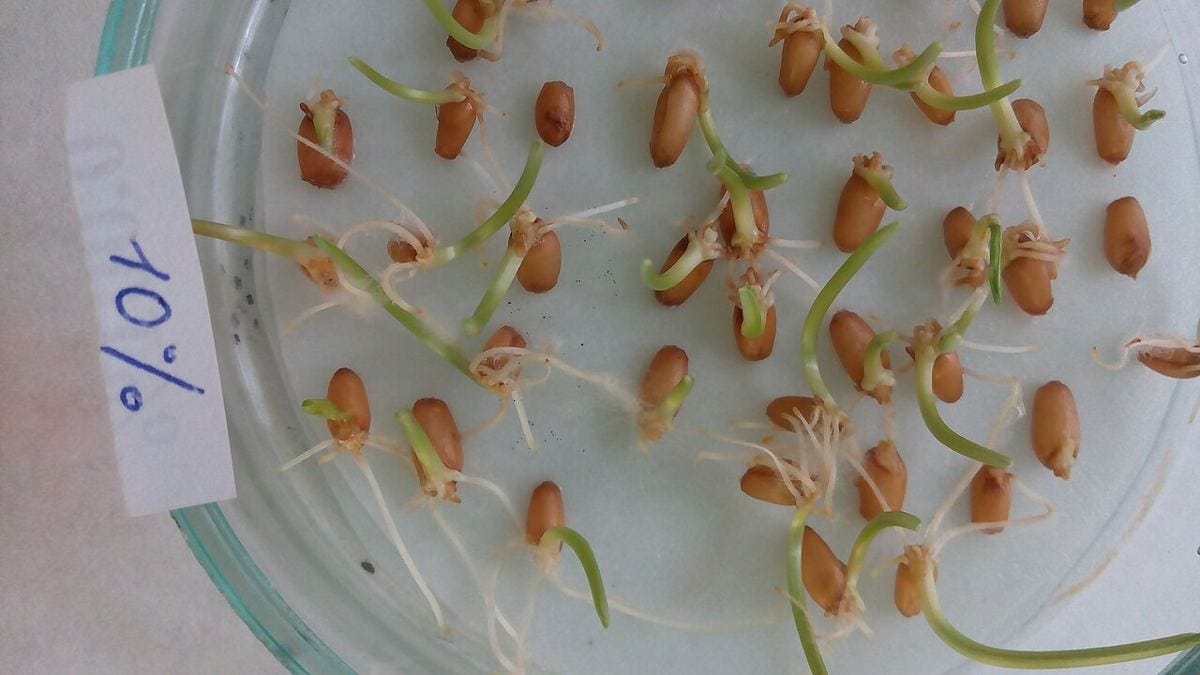
Sprouting multiplied the biological activity. The sprouts showed 10 to 40 times more phosphorylation activity than the seeds they grew from.
Cataracts receded. Old dogs given the extract by mouth for one month showed a 25–40% reduction in lens opacity.
The authors credited the effect to “the contemporary presence of small regulatory acid peptides, a remarkable level of highly energetic phosphoric radicals and antioxidant molecules” (Basso et al., 2005).
Small regulatory peptides, in other words, from a grass.
Why a Cataract Matters More Than You Think
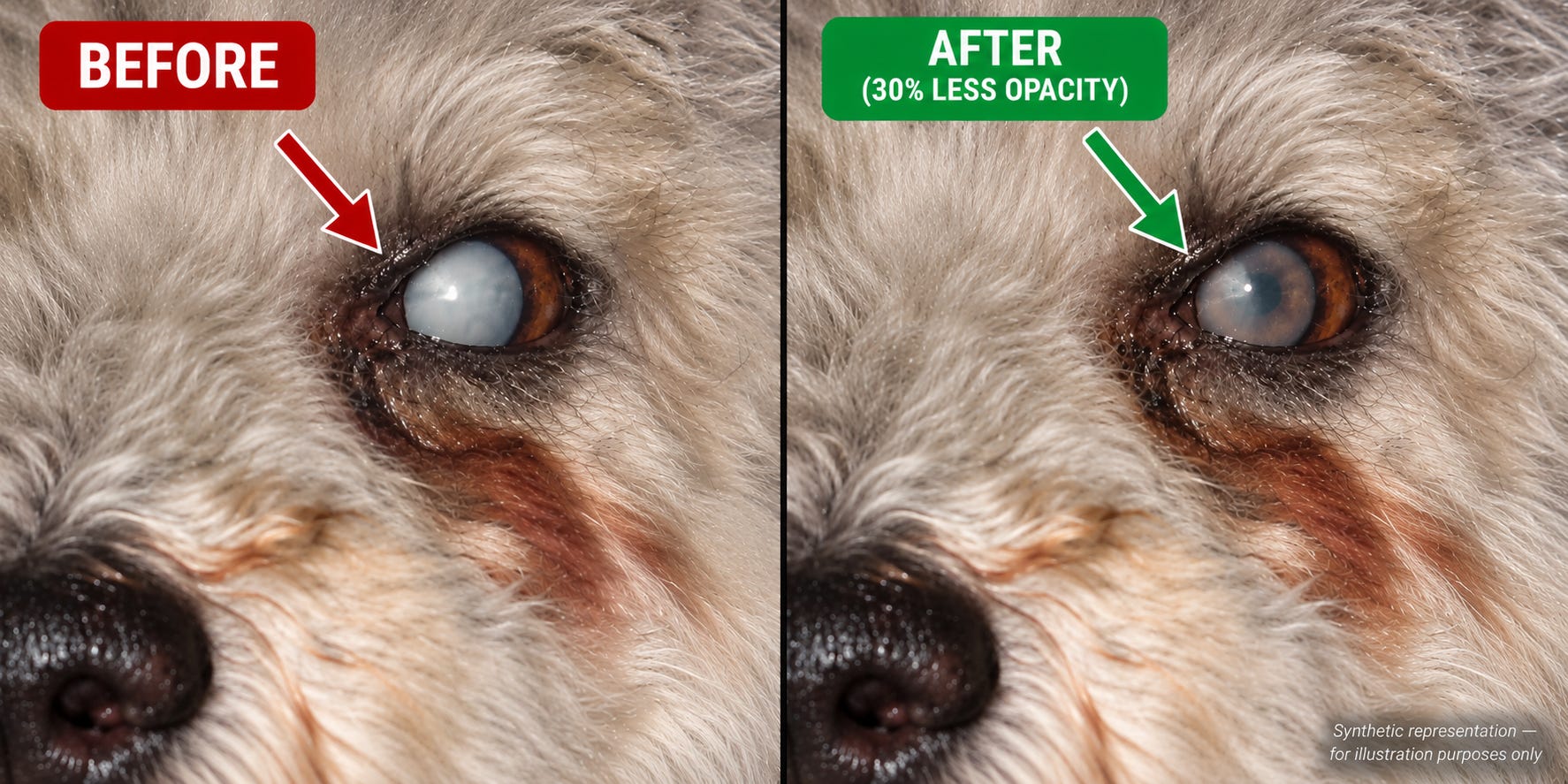
Most tissues in the body renew themselves. The lens of the eye mostly does not. Its proteins are laid down early in life and never replaced, so cataract, the clouding of those proteins, works like a lifetime record of accumulated damage. Conventional medicine treats it as essentially irreversible. Once vision is impaired, the answer is surgery.
That is why a measurable reduction in lens opacity in one month, from an oral, food-derived material, should have made headlines. It challenges one of the deepest assumptions in aging biology: that damage like this only goes one way.
It was also not a one-off. A year earlier, the same research network had reported that plain wheat sprout powder given orally produced “a significant reduction of senile cataract in old dogs,” and that the sprouts’ active substances “can be at least partially absorbed during digestion” (Marsili et al., Journal of Clinical Gastroenterology, 2004).
A 30-Year Trail of Peptide Science
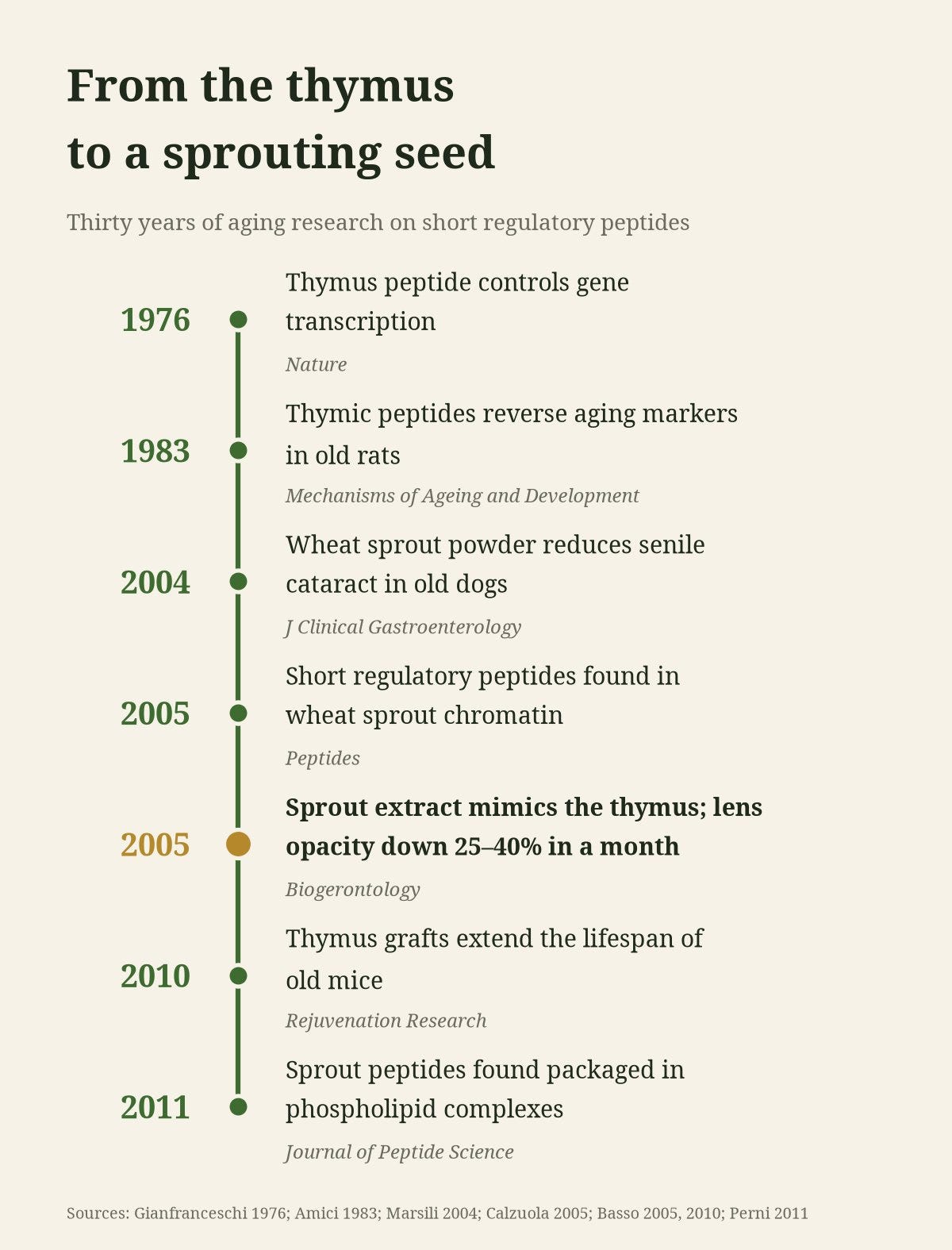
The cataract result is the payoff of a long research arc that most of the longevity world has forgotten.
1976: Researchers isolated a small peptide (under 5,000 daltons) from calf thymus that strongly controlled gene transcription by interacting directly with DNA. They published it in Nature (Gianfranceschi et al., 1976).
1983: Given to old rats, these thymic DNA-binding peptides reversed age-related lipid changes, restored liver glycogen to adult-like levels, and raised blood ATP, the cell’s energy currency, into the range of young animals (Amici et al., Mechanisms of Ageing and Development, 1983).
2002: Wheat sprout extracts were shown to shield DNA from oxidative breaks (Falcioni et al., Journal of Food Science, 2002).
2005: The team isolated short acidic peptides from the chromatin of wheat sprouts, the same class of regulatory molecule they had found in the thymus. Some of the sequences also appeared in other tissues, which supported the idea of “ubiquitous regulatory peptides” shared across life (Calzuola et al., Peptides, 2005).
2011: These sprout peptides were found to travel in phospholipid–peptide complexes, natural packaging the researchers suggested may help explain their bioavailability (Perni et al., Journal of Peptide Science, 2011). The lab summarized its findings as “antioxidant bioavailable peptides,” DNA protection, and “anti-aging activity” (Marsili et al., 2011).

Think about what this means. Thymosin alpha-1, one of the peptides now headed for compounding pharmacies, is a thymic peptide. The original insight behind it, that the thymus speaks to aging tissue through short peptide signals, is the same one that led these researchers to wheat sprouts. Nature built a version of that conversation into a seedling.
The Evidence Keeps Pointing the Same Way
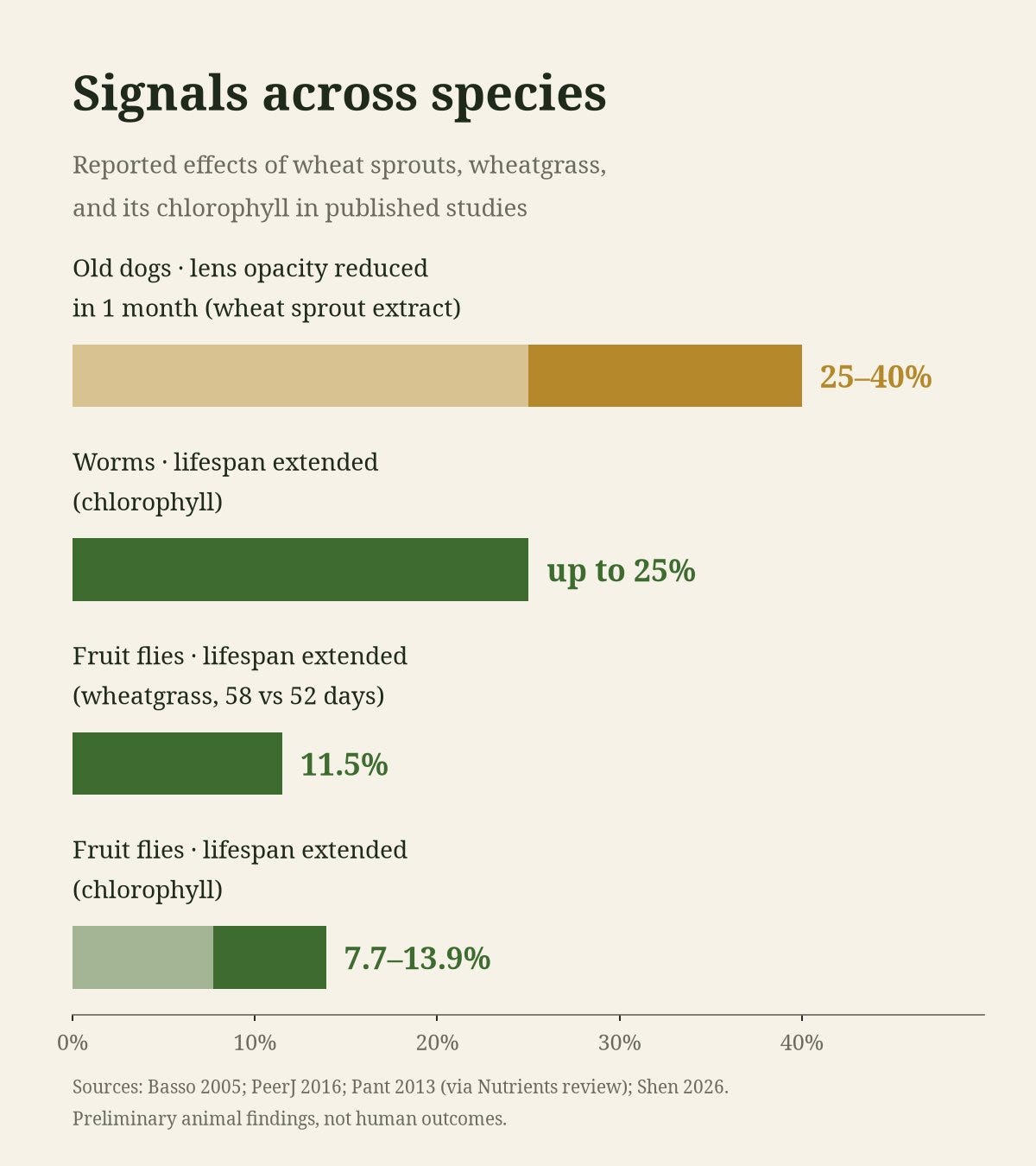
The Italian work does not stand alone. Across species, wheatgrass and its key constituents keep showing signs of slowing or reversing aging:
Longer life in fruit flies. Flies fed wheatgrass lived longer, reaching 58 days compared with 52 in controls (Sprouted Grains review, Nutrients). A 2024 study found that a flavonoid extract from a high-flavonoid wheatgrass variety extended male fruit-fly lifespan in a dose-dependent way (Wang et al., Seed Biology, 2024).
Chlorophyll as a longevity molecule. Chlorophyll, which gives wheatgrass its color, extended the lifespan of C. elegans worms by up to 25% through the DAF-16/FOXO longevity pathway (PeerJ, 2016). It also extended fruit-fly lifespan by 7.7–13.9% in a 2026 study (Shen et al., Nutrients, 2026).
A protected aging brain. In mice with chemically induced memory loss, wheatgrass extract improved cognitive performance, raised brain-protective BDNF, and reduced tau, a protein linked to Alzheimer’s (Katiyar et al., Food & Function, 2022).
Antioxidant defenses rebuilt in older adults. Eighteen adults aged 50–65 drank fresh wheatgrass juice daily for 30 days. Their plasma antioxidant capacity roughly doubled, and vitamin E rose 128%, vitamin A 121%, vitamin C 68%, and hemoglobin 39% (Sharma et al., Journal of Cell and Tissue Research, 2008).
Human trials in real disease. In a randomized, double-blind, placebo-controlled trial, wheatgrass juice significantly reduced disease activity and rectal bleeding in ulcerative colitis (Ben-Arye et al., 2002). In women undergoing chemotherapy for breast cancer, it was associated with fewer blood-toxicity setbacks without reducing the chemotherapy’s effectiveness (Bar-Sela et al., 2007).
GreenMedInfo’s database now indexes 158 study abstracts on wheatgrass across 82 health topics (GreenMedInfo).
So Why Hasn’t Anyone Followed Up?
This is the part that should trouble us.
A peer-reviewed aging study reported that a food could stand in for the thymus and clear lens opacity in a month. In the more than twenty years since, I have found no independent team that has repeated the dog cataract experiment. No one has run a controlled human trial of sprout extracts for early lens changes. No one has put wheatgrass up against a modern biological-age clock.
The reason is not hard to guess. You cannot patent a sprout. Research money flows toward molecules that can be owned. A synthetic peptide can be patented, branded, and argued over at FDA advisory meetings. A tray of wheatgrass on a kitchen windowsill cannot.
I want to be clear about what the science has and has not shown, because honesty is what gives this story its power. The 2005 study reversed specific aging markers: liver-cell DNA patterns and lens opacity. It did not measure whole-body biological age, and its full methods deserve scrutiny and replication. That is not a reason to dismiss the finding. It is the strongest possible argument for funding the follow-up.
What We Are Calling For
Replicate the cataract study. Run randomized, placebo-controlled, masked trials in older dogs with veterinary ophthalmology imaging, as a first step toward human research.
Test wheatgrass against biological-age clocks. Run pilot human trials measuring epigenetic age, inflammation, and functional markers, not just antioxidant levels.
Fund food-based longevity research on equal footing. Public research agencies spend heavily on patentable aging drugs. Unpatentable foods with peer-reviewed signals deserve a fair hearing.
Protect access to whole foods and traditional preparations. As peptide regulation is rewritten in 2026, policymakers should remember that some of the most compelling peptide science began with food.
What You Can Do Today
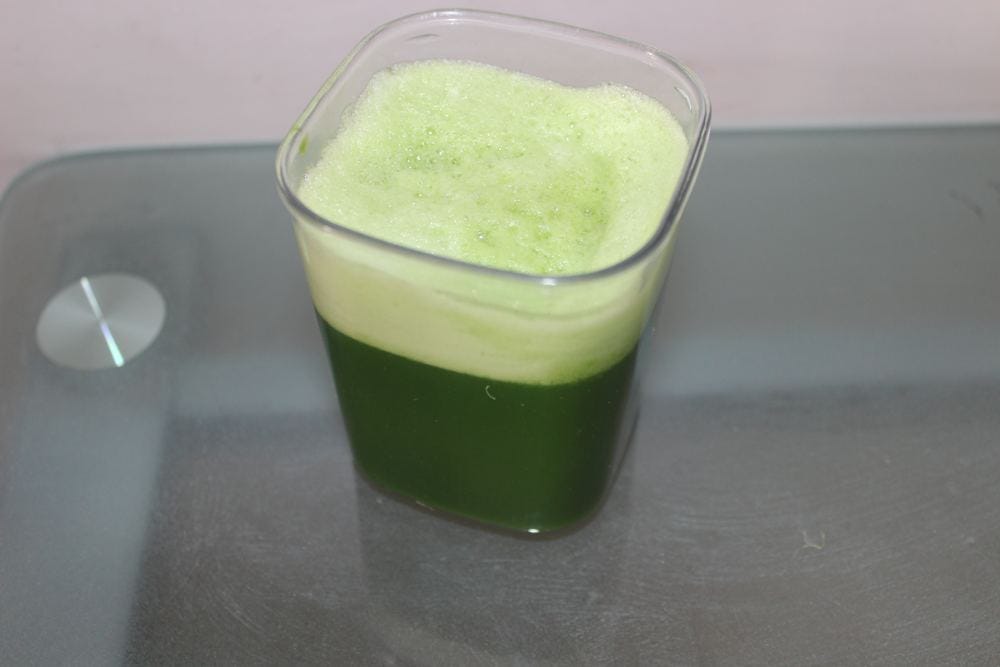

Grow it. Wheatgrass sprouts in 7–10 days from organic wheat berries, soil, and a sunny window. Fresh juice is how the human studies used it: 30 g of grass blended in 100 ml of water in the older-adult study (Sharma et al.), and 60–100 ml daily in the clinical trials (Ben-Arye et al.; Bar-Sela et al.).
Start low. Some people get nausea at first. That was the main side effect reported in the chemotherapy study (Bar-Sela et al.).
Know your sensitivities. Young wheatgrass, harvested before it forms seed, is generally considered gluten-free, but cross-contamination is possible. People with celiac disease should be cautious.
Partner with your eye doctor. Cataracts affect driving, falls, and quality of life. Use food as an ally, and keep up with regular eye exams.
Explore the research yourself on GreenMedInfo’s Wheat Grass page.
The Bigger Lesson
The peptide boom is not wrong that small signaling molecules matter. It is wrong about where to look first.
Life has been encoding regulatory information into food since long before there were laboratories. A sprouting seed is a burst of growth signals: peptides, phosphates, antioxidants, and chlorophyll, all working together to tell a living system to grow and renew. When aging researchers asked whether that signal could stand in for the thymus, the answer they published was yes, at least for the markers they measured.
This is what I mean when I say food is information. The most important longevity peptide may not come from a vial. It may come from the soil.
Love this type of reporting on natural, science-based solutions? GreenMedInfo.com’s free newsletter has been serving the world with natural solutions for the past 17 years. Subscribe for free here today.

Learn about the ways we have put this wisdom into living products you can use for yourself and your family at REGENERATE COMPANY, a product line I launched this year.
This article is for educational purposes and is not medical advice. Consult a qualified healthcare provider before making changes to your health regimen, especially if you have an eye condition, are pregnant, or take medication.
Another example of how God gave us everything we need. 💙
I came across the wheat grass story regarding cataracts earlier this year. And stories of people who attested that their vision improved after taking wheat grass powder.
Six months ago I began taking 1 gram in water daily. After 3 month I could see mid range distances clearer. I had a 6 month check up w/ my eye Dr to see if I was a canadate for cataract surgery. My vision had improved some and still not needing surgery.
So now after 6 months of wheat grass powder daily I do not need my glasses to drive, distances and road signs are clear. But are fuzzy with glasses. I am able ro read the print crawlers on the TV from where I am sitting. Where as before I would need stand in front of the TV to read them.
I jnow this anecdotal, in 6 weeks I have another eye exam and I am looking forward to find out my results.
I whole heartedly agree with your recommendations.