



We reduced sunlight to a vitamin. New research reveals a much bigger story: a fascinating array of chemical messengers and biological signals set in motion when light touches living skin.
For twenty years we have been sold a simple trade. Stay out of the sun, take a capsule, and you will get the same exact thing.
That trade was never actually true. And the newest research on what a single slice of sunlight does in your skin shows just how untrue it is.
Here is the cleanest example I know. In 2024, a team at the Mayo Clinic gave nursing mothers 5,000 IU of vitamin D3 every day for four weeks. Their blood vitamin D3 rose about eightfold. Their standard vitamin D test rose too. But the sulfated form of vitamin D, which carries a wide range of benefits not found in semi-synthetic or shelf-stable forms, namely, the water-soluble form Stephanie Seneff has been writing about for more than a decade, did not move at all.
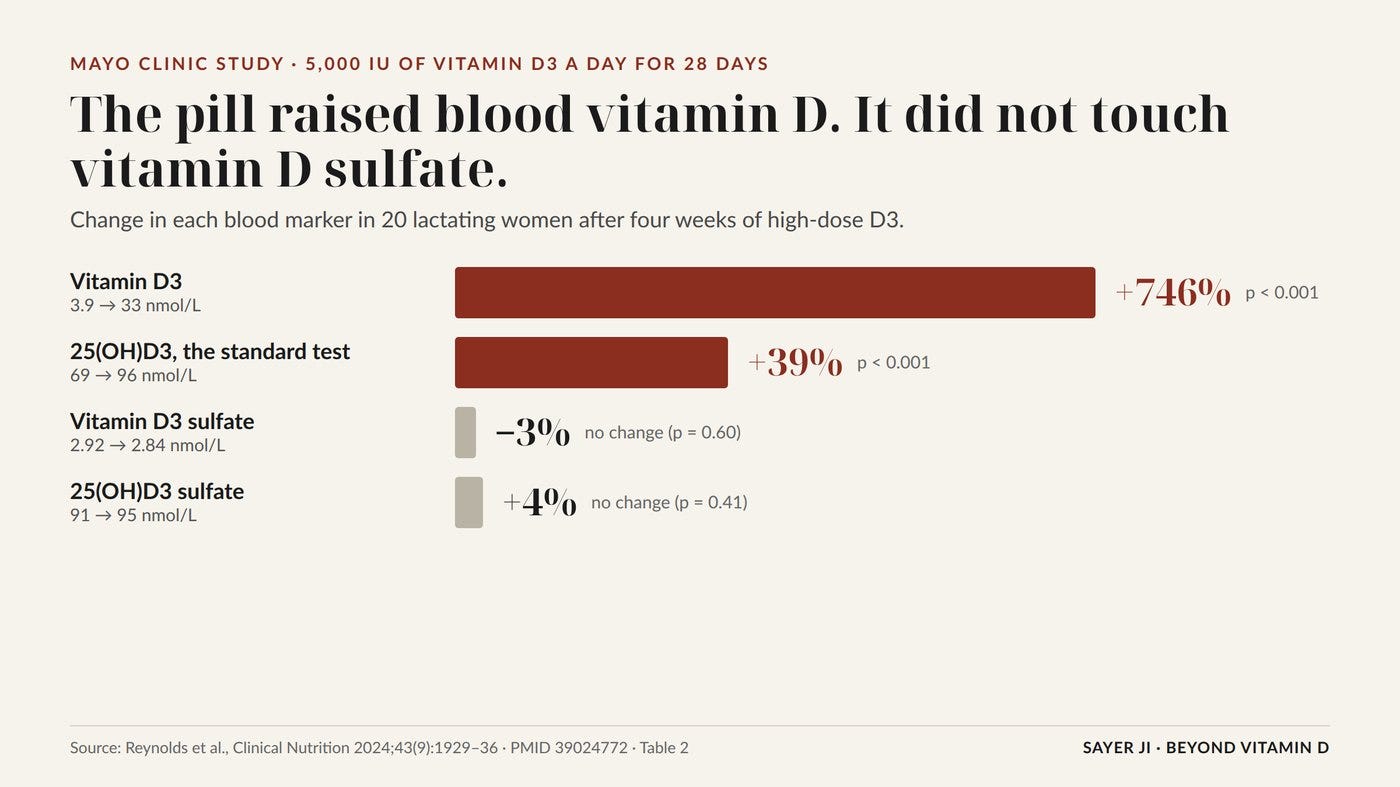
A higher vitamin D number in a blood test does not tell the whole story.
In this study, the familiar markers rose while two less familiar forms showed no significant change. That opens a bigger question: how much do we miss when we reduce our relationship with sunlight to a single number on a lab report?
If you thought taking vitamin D had the sunlight question covered, this is where the story gets interesting.
A pill gives you one molecule. A specific band of sunlight gives your skin the raw material to build a whole family of them. This article is about that family, the wavelength that starts it, and why I now think of vitamin D as one visible branch of a much larger light-driven system, the likes of which conventional and holistic practitioners alike are only beginning to comprehend.
The 295 nanometer window
Your skin carries a cholesterol-like molecule called 7-dehydrocholesterol, or 7-DHC. When ultraviolet B light hits it, the molecule’s ring snaps open and becomes previtamin D3. Body heat then slowly turns that into vitamin D3.
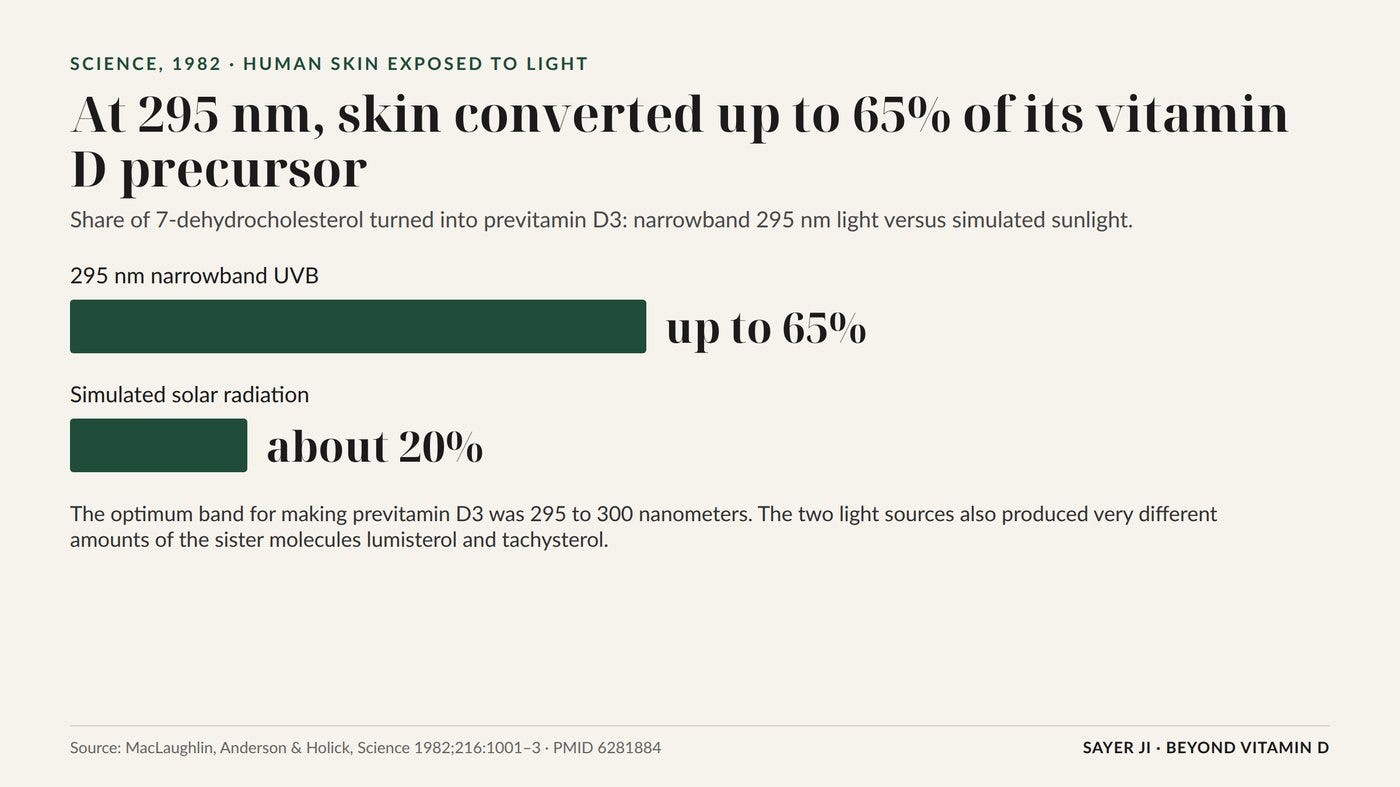
Not every wavelength does this equally well. In a landmark 1982 paper in Science, Michael Holick’s group found that the optimum wavelengths for making previtamin D3 in human skin were between 295 and 300 nanometers. At 295 nm, skin converted up to 65 percent of its 7-DHC. Under simulated sunlight, the maximum was about 20 percent.
That window matters for anyone trying to bring sunlight indoors. In 2017, Holick’s lab tested UVB LEDs tuned to 293, 295, 298 and 305 nm. They found the best range for vitamin D was 293 to 298 nm, and a 293 nm LED made 2.4 times more vitamin D3 in human skin samples than the same energy of sunlight, in a fraction of the time (1/60th of the time).
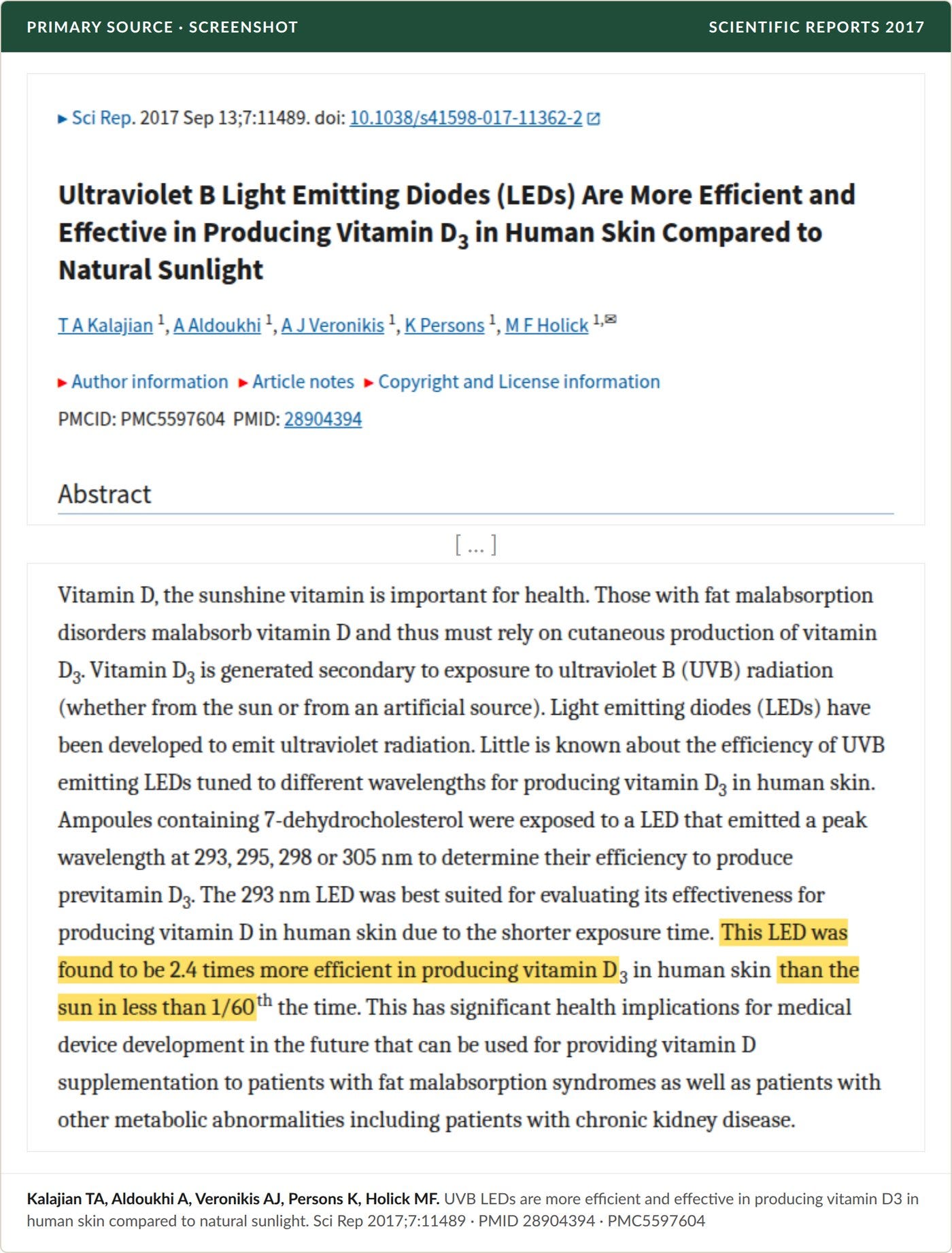
Before you buy a light, ask what light it actually gives you.
“Light therapy” can mean very different things. A lamp’s brightness does not tell you whether it delivers the wavelengths being discussed here.
That is why 293-298 nanometers range matters. It gives you something specific to look for when you move from reading about light to evaluating a device for your home.
The molecules they called inert
Here is where the story turns. When previtamin D3 keeps absorbing UVB, it doesn’t just pile up. It reshapes into two sister molecules, lumisterol and tachysterol.
This is the skin’s built-in safety valve. Holick showed in 1981 that previtamin D3 production plateaus at about 10 to 15 percent of the original 7-DHC under prolonged exposure, with the excess diverted into lumisterol and tachysterol. That is why sunlight cannot give you vitamin D toxicity. A bottle can. In fact, my colleague Gary Null got terribly sick back in 2009 when a manufacturer accidentally used 1,000 times the labeled and recommended amount in his product (around 1 million to 2 million international units [IUs] per daily serving instead of the intended 1,000 to 2,000 IUs). Sunlight has a natural ‘cut off’ range, which is why your skin starts to get inflamed and you can burn when you have too much.
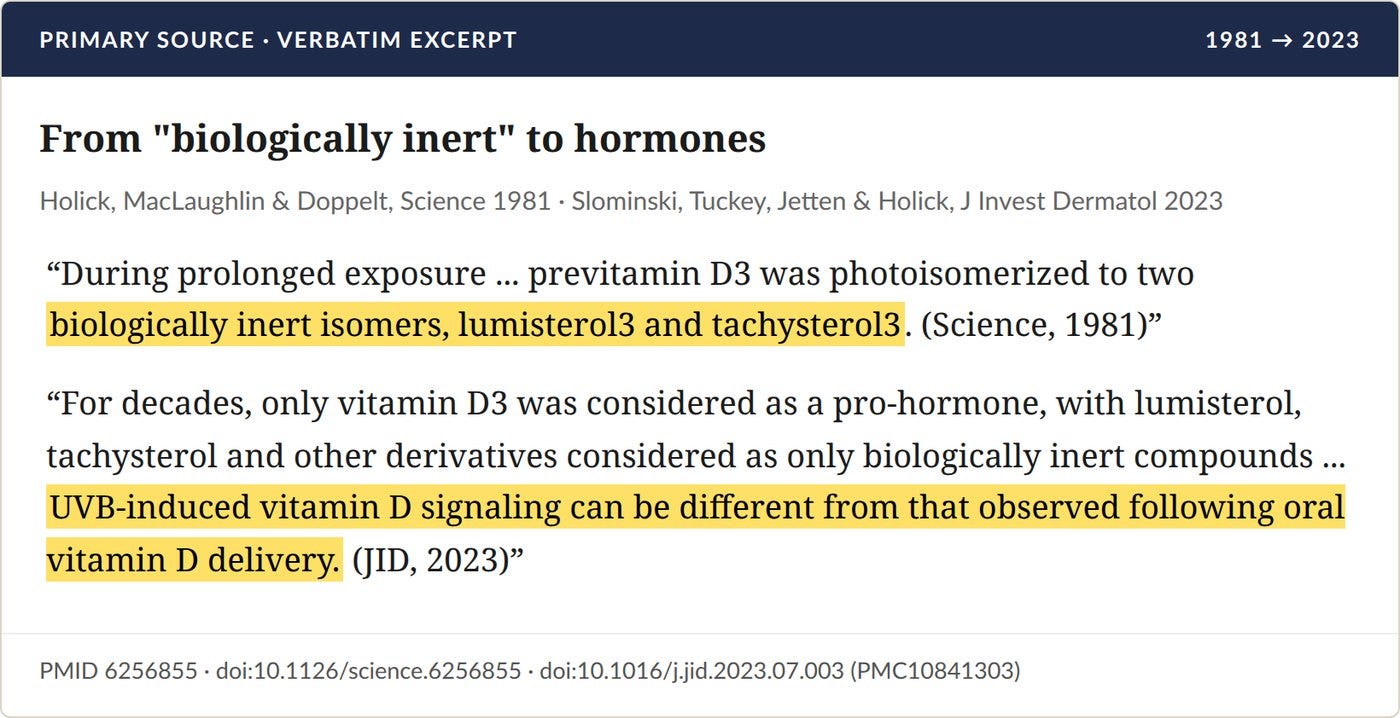
For decades, those two sister molecules were written off. The 1981 paper called them “biologically inert isomers.” Medicine treated them as exhaust.
They are not ‘waste products.’ Over the past fifteen years, Andrzej Slominski and Robert Tuckey’s groups have shown that an enzyme in your skin, CYP11A1, converts vitamin D3, lumisterol and tachysterol into a whole series of active hydroxylated compounds. In 2023, Slominski, Tuckey, Anton Jetten and Holick himself wrote that “for decades, only vitamin D3 was considered as a pro-hormone,” with lumisterol and tachysterol dismissed as inert, and that these new metabolites act on the vitamin D receptor and on six alternative nuclear receptors.
These are not test-tube curiosities. In 2015, Slominski’s team found more than ten of these CYP11A1 products in human skin and human blood. The lead compound, 20-hydroxyvitamin D3, circulated at levels only about 30-fold lower than the 25-hydroxyvitamin D your doctor measures, and above the levels shown to be biologically active in the lab. The authors concluded that these molecules likely act as hormones. And hormones have myriad effects on a wide range of our tissues. If nature designed us that way, we better pay attention.

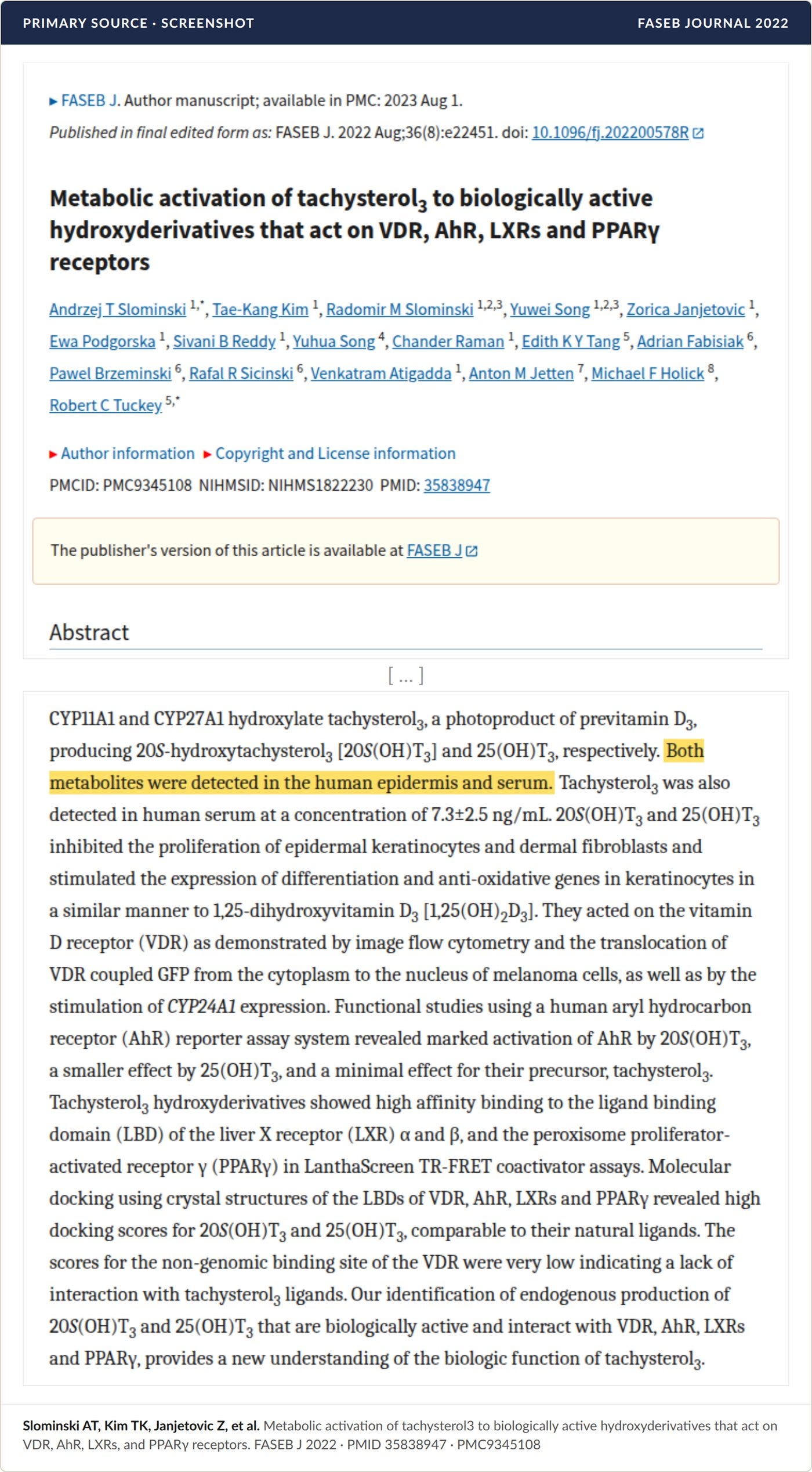
Lumisterol followed. In 2017 the team detected lumisterol and seven of its derivatives in human serum and epidermis, and showed they act on the RORα and RORγ receptors, which help govern immunity, inflammation and circadian rhythm. Then tachysterol. In 2022 they found tachysterol itself in human blood at about 7.3 ng/mL, and showed its two hydroxylated forms act on VDR, AhR, LXRs and PPARγ.
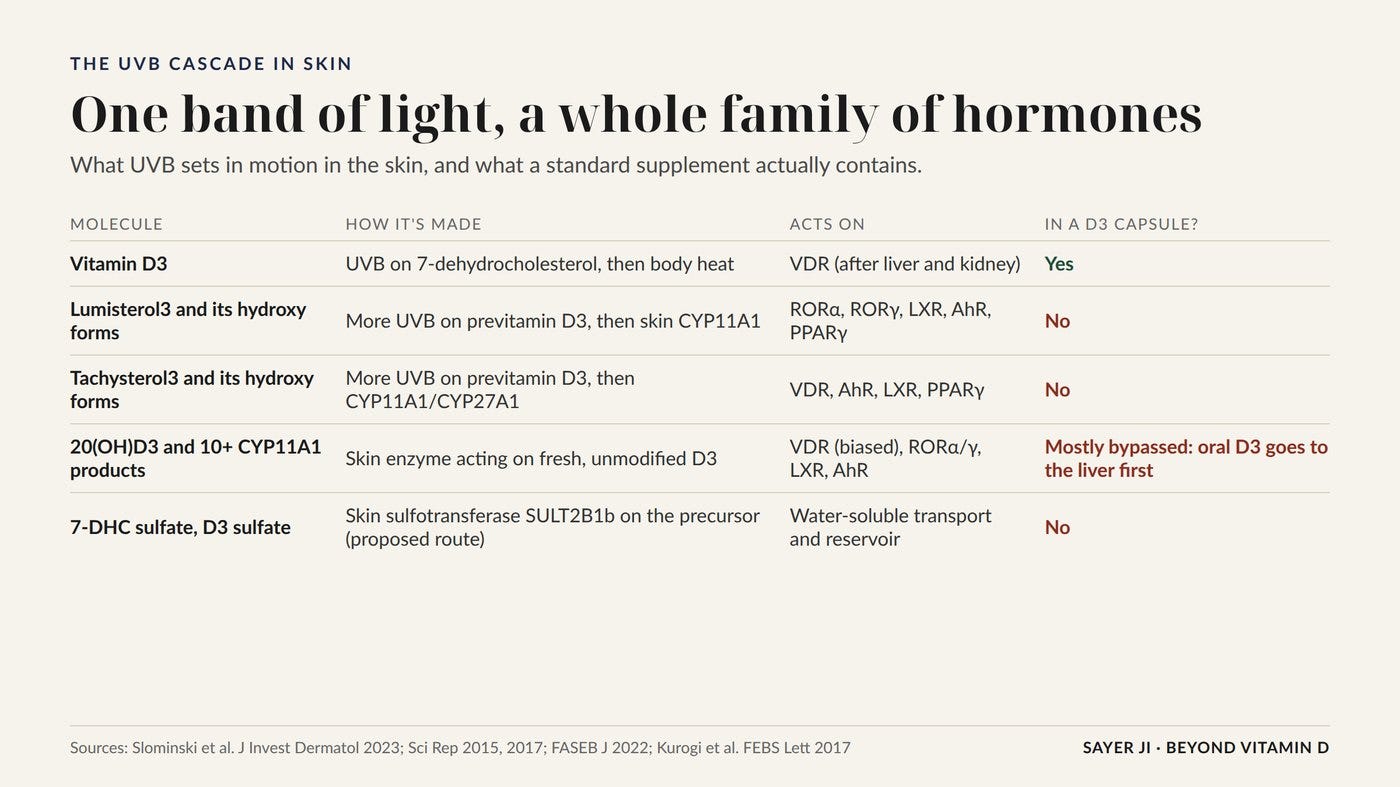
Now the key point. Your supplement contains vitamin D3. It does not contain lumisterol. It does not contain tachysterol. Those are made only by ultraviolet light acting on previtamin D3 in skin.
And even the vitamin D3 in your capsule takes a different road. The 2023 paper explains that the non-canonical CYP11A1 pathway requires unmodified vitamin D3, while oral D3 is mostly converted to 25-hydroxyvitamin D in the liver first. In their words, “UVB-induced vitamin D signaling can be different from that observed following oral vitamin D delivery.” Skin-made D3 is born right next to the enzyme that turns it into these other hormones.
Your skin is a living laboratory.
When UVB reaches it, vitamin D is one part of a larger chain of chemical reactions. Some of the resulting compounds were dismissed for decades. Researchers are now investigating what they do.
You do not need to memorize their names to understand the discovery: sunlight is doing more than helping your body make a single vitamin. It could be argued that sunlight deficiency (not vitamin D3 per se) is the most consequential deficiency of our time, exacerbated by UVB-filtering glass in our homes, offices and cars, and the fact that geoengineering pollution further filters out the extremely hard to obtain UVB wavelengths further, and on a planetary scale. If you don’t know about this connection, watch the the film below:
D1, D2, D4: a family written in light
You may have wondered why we only hear about D2 and D3. The “vitamin D” name actually covers several molecules, and every one of them is a photoproduct: light acting on a sterol.
Vitamin D1 was the first name given, a 1:1 mixture of ergocalciferol and lumisterol. The label was later retired, but it is telling that lumisterol was in the very first “vitamin D.”
Vitamin D2, ergocalciferol, forms when UV light hits ergosterol in fungi. Skin CYP11A1 can hydroxylate D2 as well as D3.
Vitamin D4, 22-dihydroergocalciferol, was identified in edible mushrooms, highest in samples with known UV exposure. In one composite of oyster mushrooms it exceeded D2 more than twofold.
Vitamin D5, sitocalciferol, comes from a plant sterol, 7-dehydrositosterol.
Your skin does not make D1, D2 or D4. Human skin runs the D3 branch, plus the lumisterol and tachysterol branches beside it. But the pattern across kingdoms is the point. Fungi, plants and animals all use sunlight to turn sterols into signaling molecules. “Vitamin D” was never one compound. It is a family that only light writes.
Thousands of switches
Even the classic hormone alone is huge. When researchers mapped where the vitamin D receptor binds across the human genome, they found 2,776 binding sites, enriched near genes tied to autoimmune disease and cancer. A small 2013 trial found that raising vitamin D status changed the expression of at least 291 genes in white blood cells. This is an astounding fact, which speaks to how without adequate sunlight our entire genetic and epigenetic infrastructure will not function as designed.
Supplements can reach that receptor. I won’t pretend otherwise. But the receptor is only one switchboard. The light-made family also reaches RORα, RORγ, AhR, LXR and PPARγ, which sit over inflammation, metabolism, barrier repair, detoxification and the body clock. Sunlight plays the whole instrument. The capsule plays one key.
Vitamin D sulfate: Seneff’s missing form
This brings us back to the molecule the supplement didn’t move.
For more than a decade, MIT senior research scientist Stephanie Seneff has argued that the skin makes vitamin D3 sulfate upon exposure to the sun, a water-soluble form that can travel freely in the blood instead of riding inside LDL particles. Supplements, she points out, are unsulfated. She goes further, calling sulfate deficiency “the most common nutritional deficiency you’ve never heard of” and describing the skin as “a solar powered battery” that uses sunlight to make sulfate. In her words, published on GreenMedInfo, sunlight exposure produces cholesterol sulfate as well as vitamin D sulfate.
Critics have long brushed this aside. So I went to the primary literature to see what holds up. More than I expected.
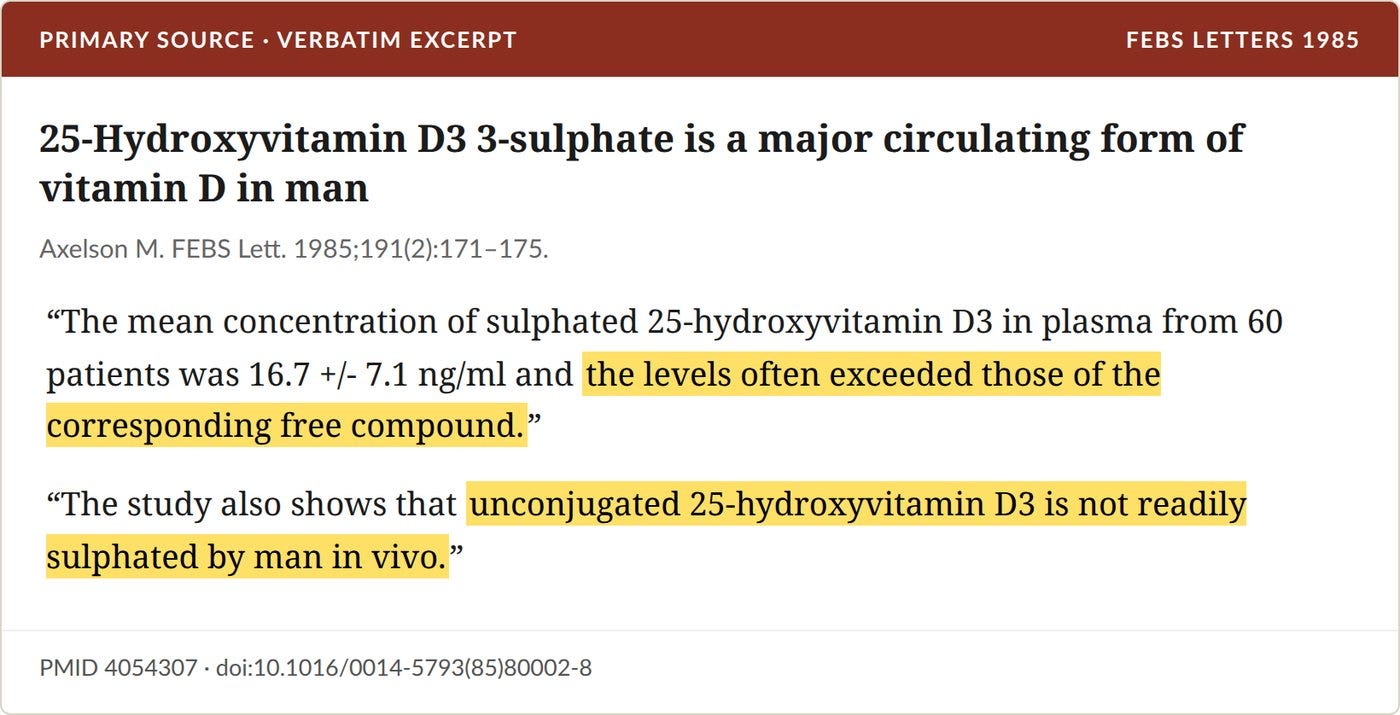
Sulfated vitamin D is not rare. It is a major form. In 1985, a Swedish study identified 25-hydroxyvitamin D3 sulfate as “a major circulating form of vitamin D in man,” with levels that often exceeded the unsulfated form your doctor tests. In the 2024 Mayo study, baseline sulfated 25-hydroxyvitamin D was significantly higher than the standard form, 91 versus 69 nmol/L. Your lab report does not measure it.
It really is water-soluble. When Mayo researchers measured breast milk properly, over 90 percent of the sulfated vitamin D sat in the watery phase, not the fat. Earlier methods that only looked at milk fat missed it. In milk, vitamin D3 sulfate was 200 percent greater than in serum, which suggests the body actively routes it to the infant.
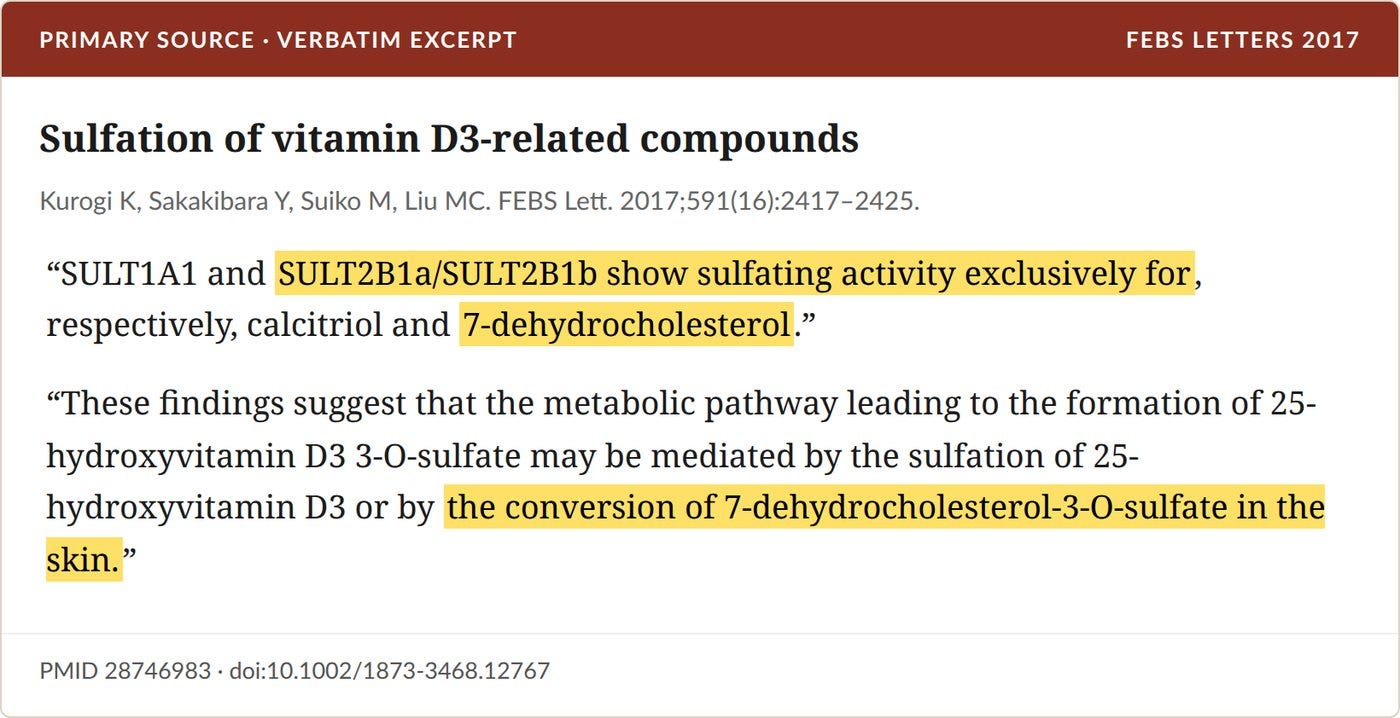
The skin has the machinery. Your epidermis makes cholesterol sulfate with an enzyme called SULT2B1b, part of a “cholesterol sulfate cycle” that regulates the skin barrier. A 2017 study of all 13 human sulfotransferases found that SULT2B1b sulfates 7-dehydrocholesterol, the very molecule UVB acts on. The authors proposed that circulating sulfated vitamin D may come partly from “the conversion of 7-dehydrocholesterol-3-O-sulfate in the skin.” That is Seneff’s route, written by enzymologists.
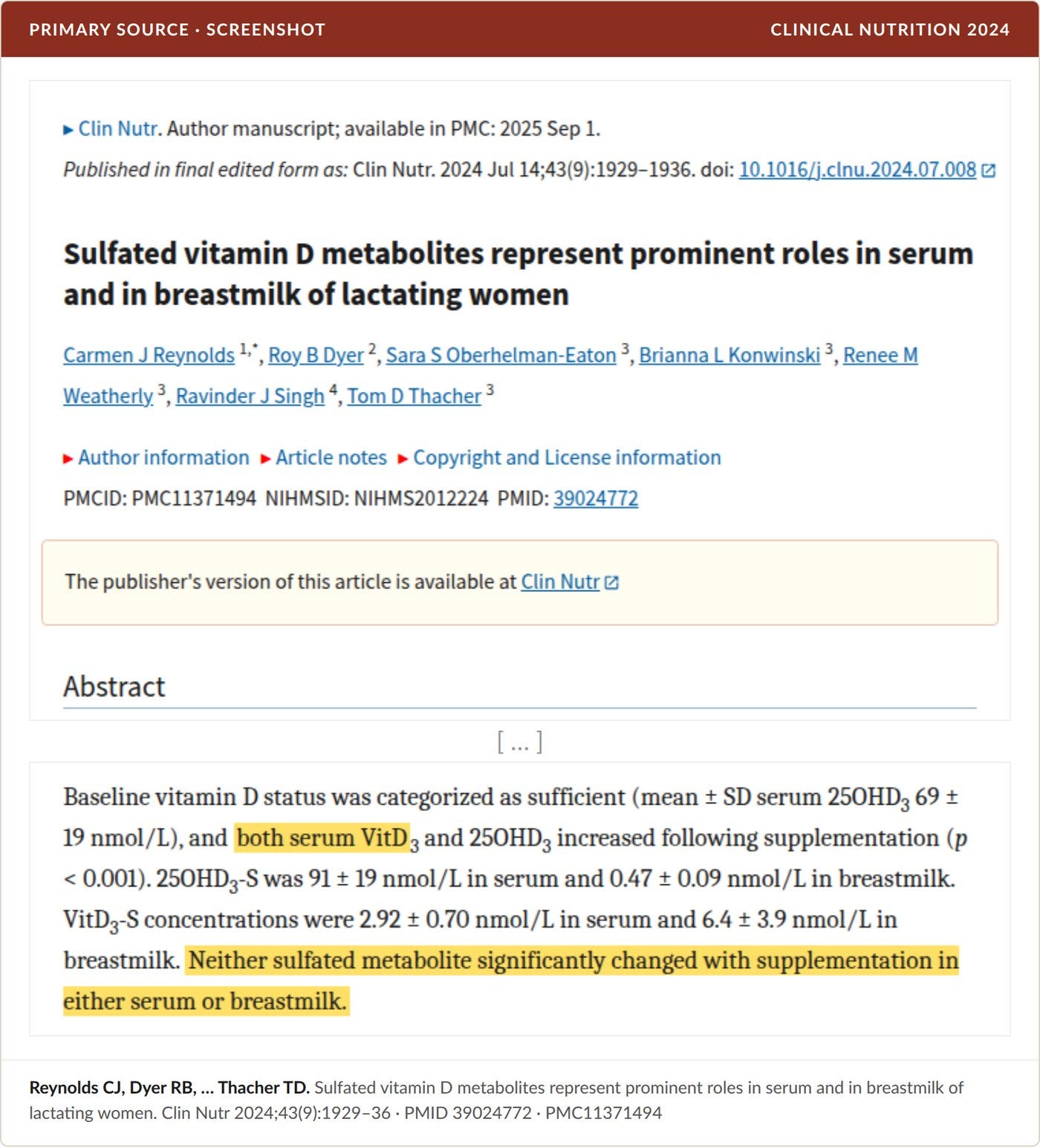
And the pill doesn’t touch it. That is the Mayo result at the top of this article. Five thousand IU a day raised serum D3 and 25-hydroxyvitamin D, yet neither sulfated metabolite changed in blood or milk.
WHAT IS PROVEN, AND WHAT ISN’T YET
Proven: 25(OH)D3-sulfate is a major circulating vitamin D form (Axelson 1985); sulfated forms are water-soluble (Reynolds 2023); 28 days of 5,000 IU/day D3 did not change serum or milk vitamin D sulfates in 20 already-sufficient women (Reynolds 2024).
Not settled: the liver can also make 25(OH)D3-sulfate from ordinary 25(OH)D3 using the enzyme SULT2A1 (Wong 2018), so supplements may feed some of this pool over longer periods. The Mayo study did not measure sun exposure, and serum sulfate levels showed no seasonal variation in that cohort. No study has yet irradiated people with UVB and measured vitamin D sulfate before and after. Seneff’s proposal that the skin uses sunlight energy to make sulfate itself remains a hypothesis.
Biological activity: in vitamin D-deficient rats, D3 sulfate had less than 5% of D3’s ability to mobilize bone calcium (Reeve 1981). That shows it is not a calcium hormone. Researchers now describe the sulfated forms as a possible protected reservoir of vitamin D (Foster and Mueller 2018).
So here is the honest version of Seneff’s insight. The body keeps a large, water-soluble, sulfated vitamin D pool that standard tests ignore. The skin has the enzyme to sulfate the precursor before light ever touches it. And a high-dose pill did not budge that pool in a month. The one experiment that would settle it, measuring vitamin D sulfate before and after controlled UVB on skin, has not been done. It should be.
Sunlight does things vitamin D can’t
Even if you set the whole vitamin D family aside, sunlight keeps acting.
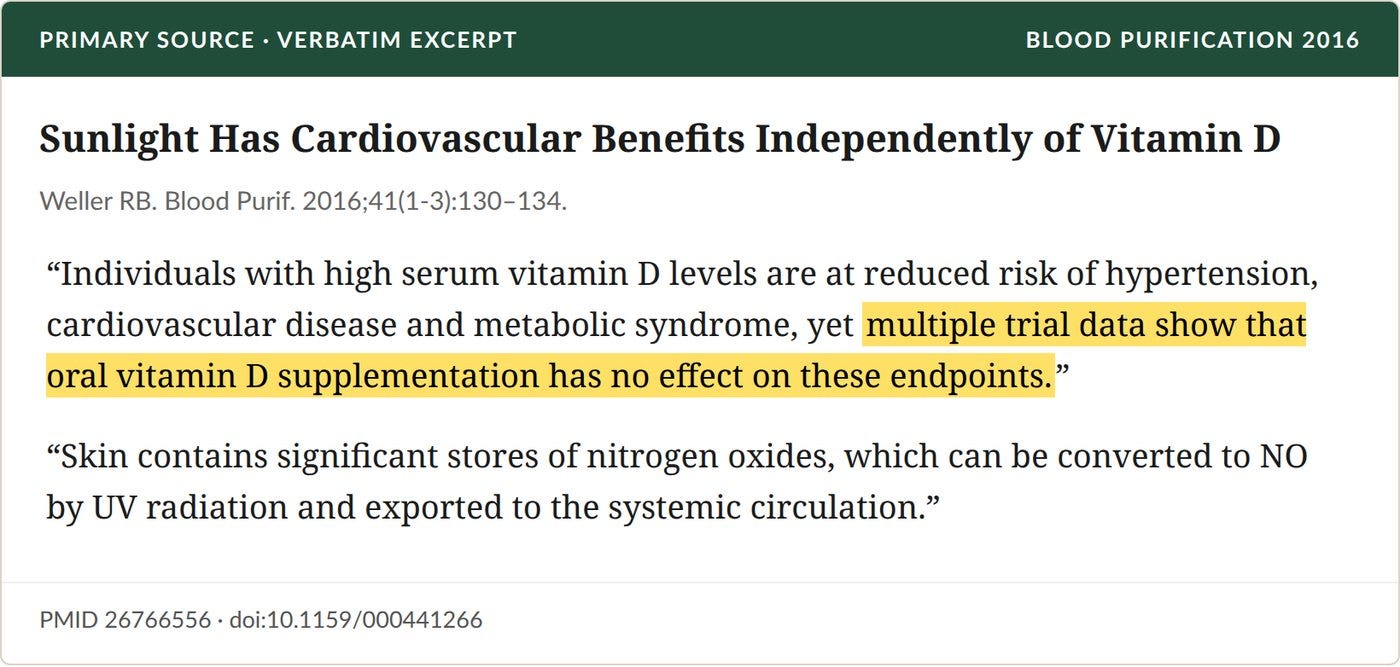
Dermatologist Richard Weller and colleagues have shown that skin stores nitric oxide compounds, and that UVA light releases them. In 24 volunteers, UVA on the skin lowered blood pressure, independent of vitamin D. Weller’s summary is blunt: people with high vitamin D have less hypertension and heart disease, “yet multiple trial data show that oral vitamin D supplementation has no effect on these endpoints.”
The list keeps growing. In mice, moderate UV raised blood urocanic acid, which crossed into the brain and became glutamate in neurons, improving learning and memory. In mice again, low-dose UV triggered skin to make beta-endorphin, the body’s own opioid. And near-infrared light, which arrives at dawn before UV builds, protected human skin cells against UV damage for at least 24 hours. The authors proposed this as a natural defense “acquired and preserved through evolutional selection.”

Physicians once knew this. Auguste Rollier opened his Institute of Heliotherapy in Leysin in 1903 and became known for treating skeletal tuberculosis with sunbathing. We forgot what they knew and replaced it with a capsule.
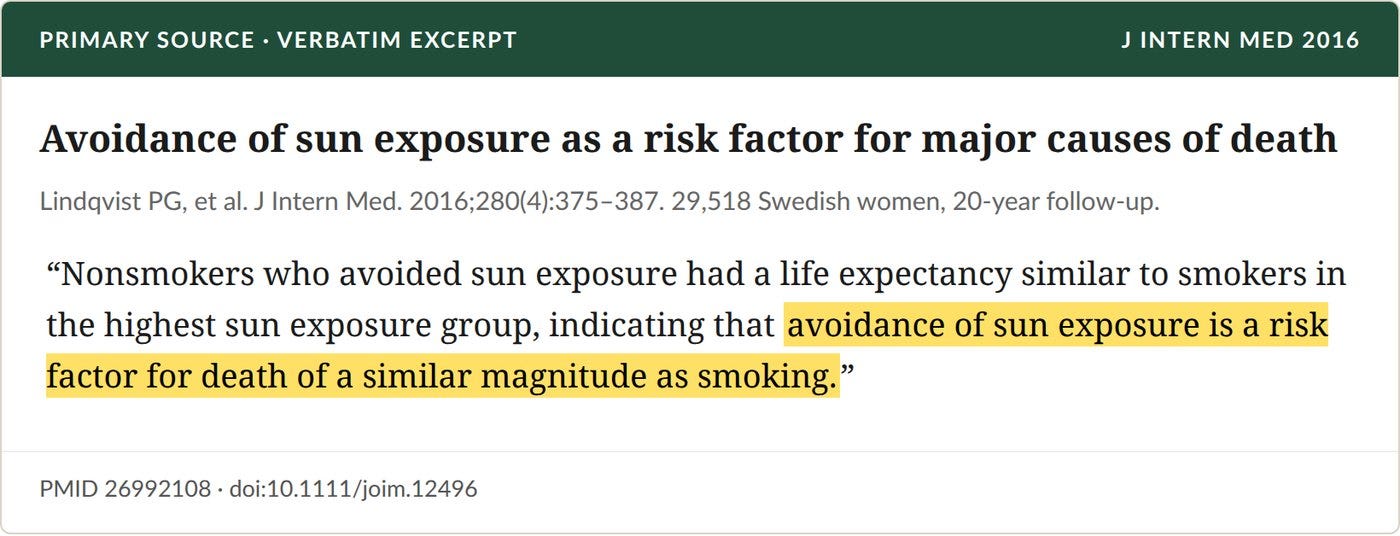
The cost of that forgetting shows up in the mortality data. In a 20-year study of 29,518 Swedish women, which I’ve written about before, nonsmokers who avoided the sun had a life expectancy similar to smokers with the most sun. The authors concluded that sun avoidance is a risk factor for death “of a similar magnitude as smoking.”
What the pill trials found
If vitamin D3 in a capsule fully stood in for sunlight, the largest trials should show it. They mostly haven’t.
VITAL randomized 25,871 American adults to 2,000 IU of D3 a day or placebo for a median of 5.3 years. Supplementation did not lower invasive cancer or major cardiovascular events. To be fair, a separate VITAL analysis found 22 percent fewer confirmed autoimmune diagnoses in the vitamin D group, a borderline but real signal.
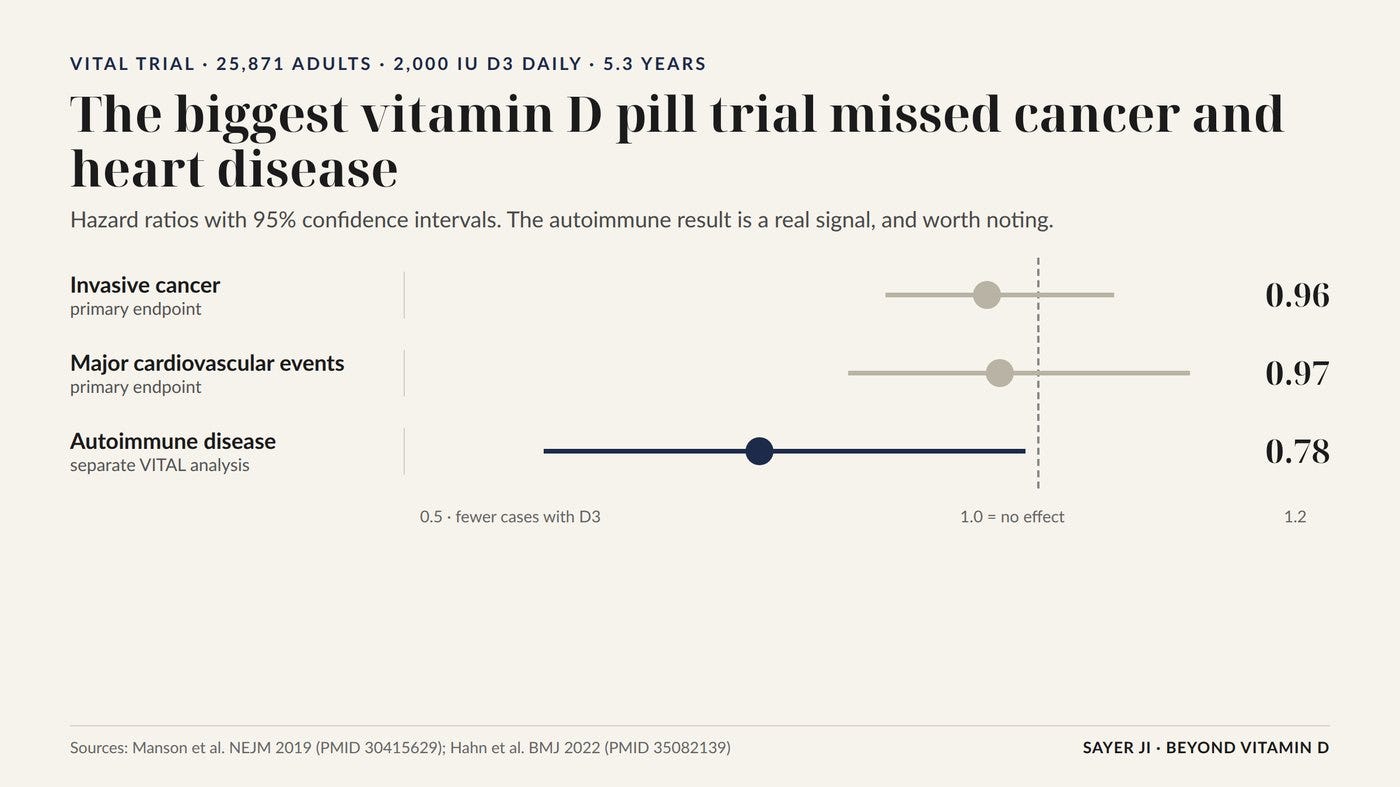
So the pill is not nothing. If you live in Boston in February and cannot get UVB, a supplement guided by blood testing still makes sense. But the gap between the strong benefits seen with sun exposure and the modest results of the pill trials is exactly what you would expect if the pill delivers one molecule out of a family.
Your schedule does not follow the sun.
You can understand this research and still face the same problem tomorrow: an indoor workday, winter weather, and darkness before you get home.
The practical question is how to make room for light in the life you actually live. That is what led me to explore devices like Mitolux that bring selected wavelengths into the home.
At 53, this became personal.
My interest in light goes beyond the research papers. After turning 53, I began exploring targeted UVB, red and near-infrared light in my own routine, especially its role in restoring hormone levels (melatonin and testosterone, primarily). The improvements I noticed in my sleep, energy, strength and mood made this a deeply personal subject.
In a separate video, I share the approach I chose, what I experienced, and why I continued.
Watch my personal account: Light, testosterone and performance →
Bringing the waveform indoors
Most of us cannot live outdoors, and for months of the year, at northern latitudes, the sun is too low to deliver much UVB at all. That is why I’ve been testing a device built around this science. I introduced it last year in “The Most Powerful ‘Supplement’ on Earth.”
The Mitolux BTS2 combines narrowband 295 nm UVB with red (630 nm) and near-infrared (850 nm) light in one panel, without UVA. The larger Solar X adds 310 nm UVB, two UVA bands, violet, blue, amber and a second near-infrared band, ten wavelengths in all. Its 295 nm peak sits right in the window Holick’s group identified in 1982 and again in 2017. The red and near-infrared wrap around the UVB the way dawn and dusk light wrap around midday sun in nature.
What I like about this design is that it treats light as a spectrum, not a single molecule. What I want you to know, too, is where the evidence stops.

DISCLOSURE, EVIDENCE AND SAFETY
Disclosure: Mitolux has extended a discount to the GreenMedInfo community, described in my earlier post. [I receive a commission on the product when you purchase, which supports my work, virtually all of which is outside a paywall]
Evidence: I am not aware of a published clinical trial testing the Mitolux device itself. The wavelength science above comes from skin samples and studies of other UVB sources. One independent reviewer, who uses affiliate links, reported his vitamin D rose only 1.5 ng/mL over 30 days with the lamp, versus 16.2 ng/mL with a broadband DIY lamp. Mitolux itself states its devices are consumer wellness devices not marketed to raise vitamin D levels, and that a blood test is the only way to know your levels. Individual response varies with skin type, area exposed and dose.
Safety: UVB can burn skin and damage eyes. Always wear the supplied eye protection, follow the skin-type protocol, start conservatively and never exceed the recommended time. Talk to your clinician first if you have a history of skin cancer, a light-sensitive condition, or take photosensitizing drugs. The BTS2 has no UVA, so it does not reproduce the nitric oxide effect Weller studied.
Light is the nutrient
For most of human history, no one took vitamin D. They lived under the sun, and their skin wrote the whole family of molecules in real time: D3, lumisterol, tachysterol, their hydroxylated hormones, the sulfated reservoir, nitric oxide, endorphins. As I wrote in “Race, Skin and Converting Sunlight into Metabolic Energy,” our very skin color is a record of how tightly human biology is tuned to the sun.
A capsule can supply an important nutrient. It cannot tell us everything about our relationship with the sun. The research invites a wider question: what place does light have in the way we live, and how thoughtfully are we making room for it?
“You can take vitamin D. You cannot swallow daylight.”
Explore the light technology discussed here

The MITOLUX BTS2 combines 295 nm UVB with red and near-infrared light in one panel. It is the device I have been testing as I explore this research.
If you are considering adding these wavelengths to your own routine, you can review the device, its usage guidance, and the current GreenMedInfo community offer here:
See the MITOLUX BTS2 and community offer →
UVB use requires the supplied protective eyewear and adherence to the manufacturer’s instructions. Review the evidence and safety considerations above before deciding.
This article is for education only and is not medical advice. Talk to a qualified clinician before changing your sun exposure, using a UV device or changing any supplement, especially if you have a skin condition, a history of skin cancer or take medications that increase light sensitivity.
Sources
did not move at all: https://pmc.ncbi.nlm.nih.gov/articles/PMC11371494/
were between 295 and 300 nanometers: https://pubmed.ncbi.nlm.nih.gov/6281884/
the best range for vitamin D was 293 to 298 nm: https://pmc.ncbi.nlm.nih.gov/articles/PMC5597604/
plateaus at about 10 to 15 percent: https://pubmed.ncbi.nlm.nih.gov/6256855/
“for decades, only vitamin D3 was considered as a pro-hormone,”: https://pmc.ncbi.nlm.nih.gov/articles/PMC10841303/
in human skin and human blood: https://pmc.ncbi.nlm.nih.gov/articles/PMC4597207/
in human serum and epidermis: https://pmc.ncbi.nlm.nih.gov/articles/PMC5595834/
act on VDR, AhR, LXRs and PPARγ: https://pmc.ncbi.nlm.nih.gov/articles/PMC9345108/
1:1 mixture of ergocalciferol and lumisterol: https://en.wikipedia.org/wiki/Vitamin_D
hydroxylate D2 as well as D3: https://pmc.ncbi.nlm.nih.gov/articles/PMC8205265/
in samples with known UV exposure: https://pmc.ncbi.nlm.nih.gov/articles/PMC3411670/
2,776 binding sites: https://pmc.ncbi.nlm.nih.gov/articles/PMC2945184/
at least 291 genes: https://pmc.ncbi.nlm.nih.gov/articles/PMC3604145/
vitamin D3 sulfate upon exposure to the sun: https://people.csail.mit.edu/seneff/sulfur_obesity_alzheimers_muscle_wasting.html
“the most common nutritional deficiency you’ve never heard of”: https://holisticprimarycare.net/topics/nutrition-a-lifestyle/sulfate-the-most-common-nutritional-deficiency-you-ve-never-heard-of/
sunlight exposure produces cholesterol sulfate as well as vitamin D sulfate: https://greenmedinfo.com/content/sunlight-and-vitamin-d-they-re-not-same-thing
“a major circulating form of vitamin D in man,”: https://pubmed.ncbi.nlm.nih.gov/4054307/
over 90 percent of the sulfated vitamin D: https://pmc.ncbi.nlm.nih.gov/articles/PMC10872384/
“cholesterol sulfate cycle”: https://pmc.ncbi.nlm.nih.gov/articles/PMC3966299/
7-dehydrocholesterol: https://pubmed.ncbi.nlm.nih.gov/28746983/
Wong 2018: https://pmc.ncbi.nlm.nih.gov/articles/PMC5829543/
Reeve 1981: https://pubmed.ncbi.nlm.nih.gov/6256368/
Foster and Mueller 2018: https://jme.bioscientifica.com/view/journals/jme/61/2/JME-18-0086.xml
lowered blood pressure: https://pubmed.ncbi.nlm.nih.gov/24445737/
“yet multiple trial data show that oral vitamin D supplementation has no effect on these endpoints.”: https://pubmed.ncbi.nlm.nih.gov/26766556/
became glutamate in neurons: https://pubmed.ncbi.nlm.nih.gov/29779945/
beta-endorphin: https://pmc.ncbi.nlm.nih.gov/articles/PMC4117380/
protected human skin cells against UV damage: https://pubmed.ncbi.nlm.nih.gov/9764844/
treating skeletal tuberculosis with sunbathing: https://en.wikipedia.org/wiki/Auguste_Rollier
written about before: https://greenmedinfo.com/content/why-sunlight-deficiency-deadly-smoking-1
had a life expectancy similar to smokers: https://pubmed.ncbi.nlm.nih.gov/26992108/
did not lower invasive cancer or major cardiovascular events: https://pmc.ncbi.nlm.nih.gov/articles/PMC6425757/
22 percent fewer confirmed autoimmune diagnoses: https://pmc.ncbi.nlm.nih.gov/articles/PMC8791065/
“The Most Powerful ‘Supplement’ on Earth.”: https://read.sayerji.com/p/the-most-powerful-supplement-on-earth
narrowband 295 nm UVB with red (630 nm) and near-infrared (850 nm): https://mitolux.com/products/bts2-vitamin-d-sunlamp
310 nm UVB, two UVA bands, violet, blue, amber and a second near-infrared band: https://mitolux.com/products/mitolux-solar-x
1.5 ng/mL over 30 days: https://optimizeyourbiology.com/mitolux-review
consumer wellness devices not marketed to raise vitamin D levels: https://mitolux.com/pages/mitolux
“Race, Skin and Converting Sunlight into Metabolic Energy,”: https://greenmedinfo.com/content/race-skin-converting-sunlight-metabolic-energy