


GreenMedInfo Research Group
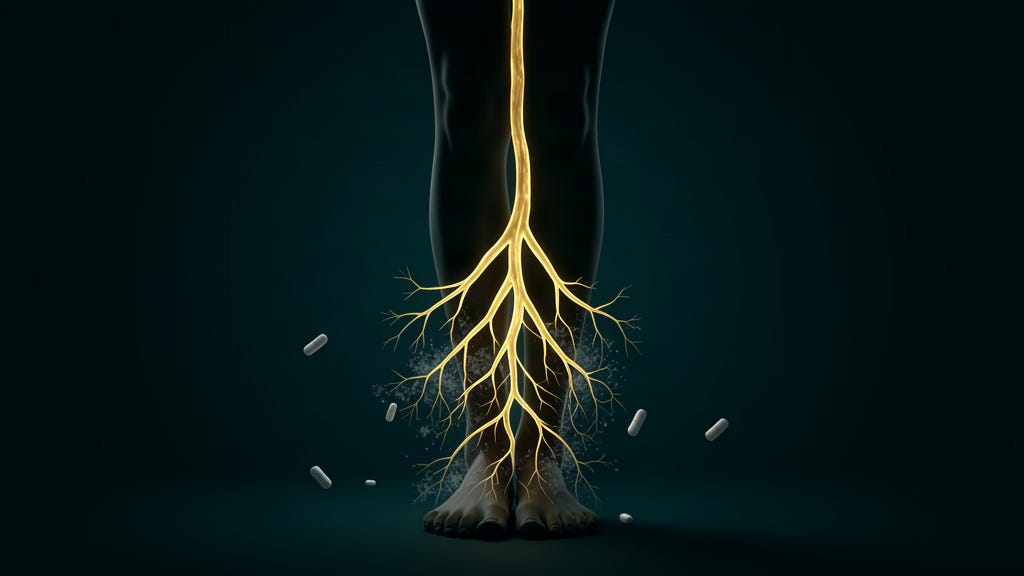
Statins are among the most prescribed drugs on Earth. A body of research going back to 1995 suggests that, for some people, they come with a cost the standard prescribing conversation rarely mentions – damage to the peripheral nerves that can build quietly for years with no symptoms at all.
A Damage You Cannot Feel
In 2011, Czech neurologists published something unusual in Neuro Endocrinology Letters. Rather than waiting for patients to complain, they measured nerve function directly.
They followed 42 patients with combined hyperlipidemia – people with no diabetes, no alcohol abuse, and none of the other usual causes of neuropathy – and put them on a modest dose of simvastatin, 20 mg daily. They then ran electromyography on the nerves of the lower legs at baseline, 24 months and 36 months.[1]
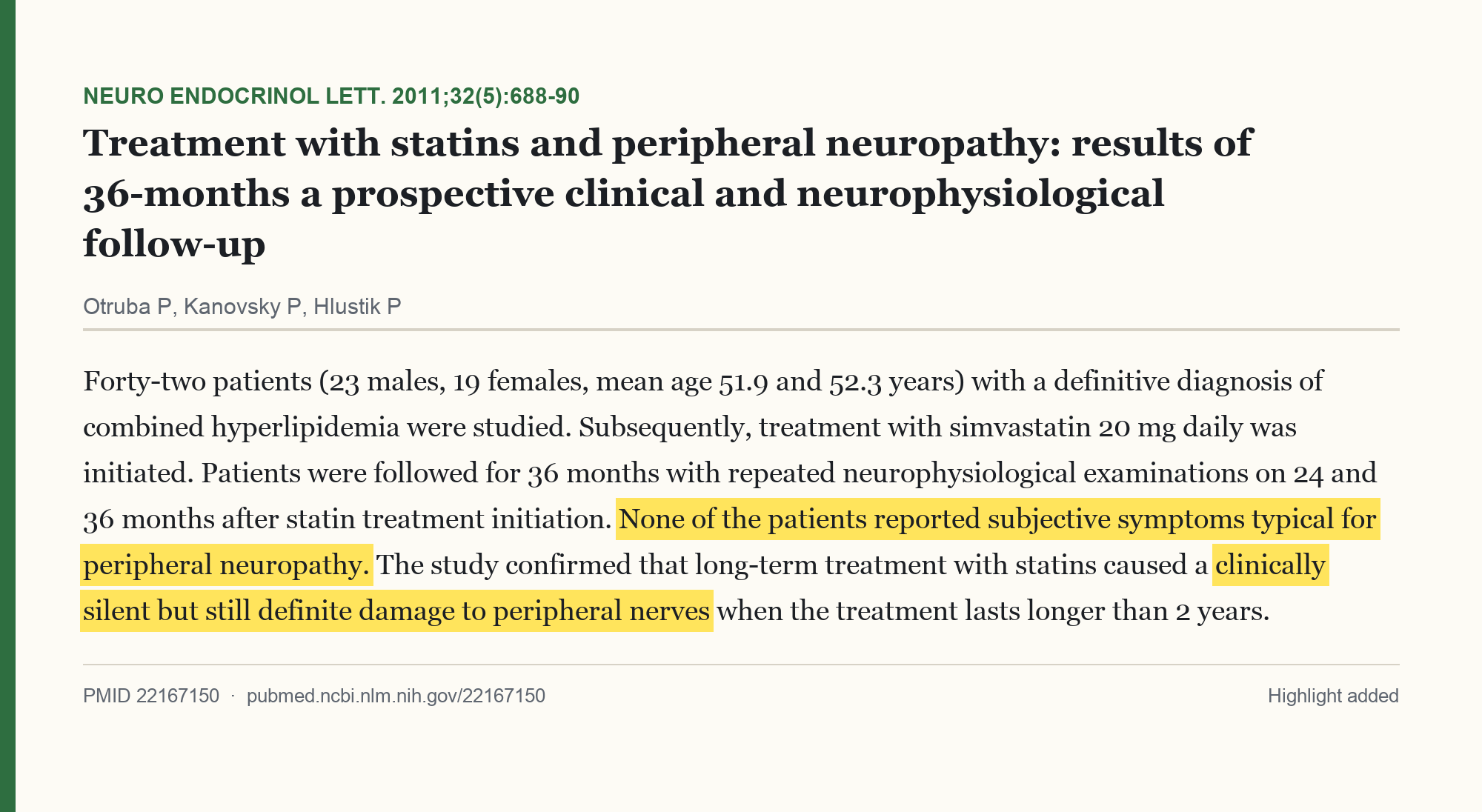
The finding is worth sitting with. Not one patient reported symptoms of peripheral neuropathy. Yet the instruments showed a statistically significant slowing of nerve signaling – prolonged F-wave latency on the peroneal and tibial nerves – with p < 0.0001.[1]
The authors concluded, in their own words:
“The study confirmed that long-term treatment with statins caused a clinically silent but still definite damage to peripheral nerves when the treatment lasts longer than 2 years.”[1]
Clinically silent is the phrase that matters. A side effect nobody reports is a side effect nobody counts. If the damage is happening below the threshold of symptoms, it is also happening below the threshold of most post-marketing surveillance.
The Population Signal
A single 42-person study is a signal, not a verdict – and it had no untreated comparison group. So the next question is whether the pattern shows up across a large population.
It does. Researchers working from the CDC’s National Health and Nutrition Examination Survey – the 1999–2004 lower-extremity exam data – looked at Americans aged 40 and over. Published in the Journal of Diabetes, their analysis found:
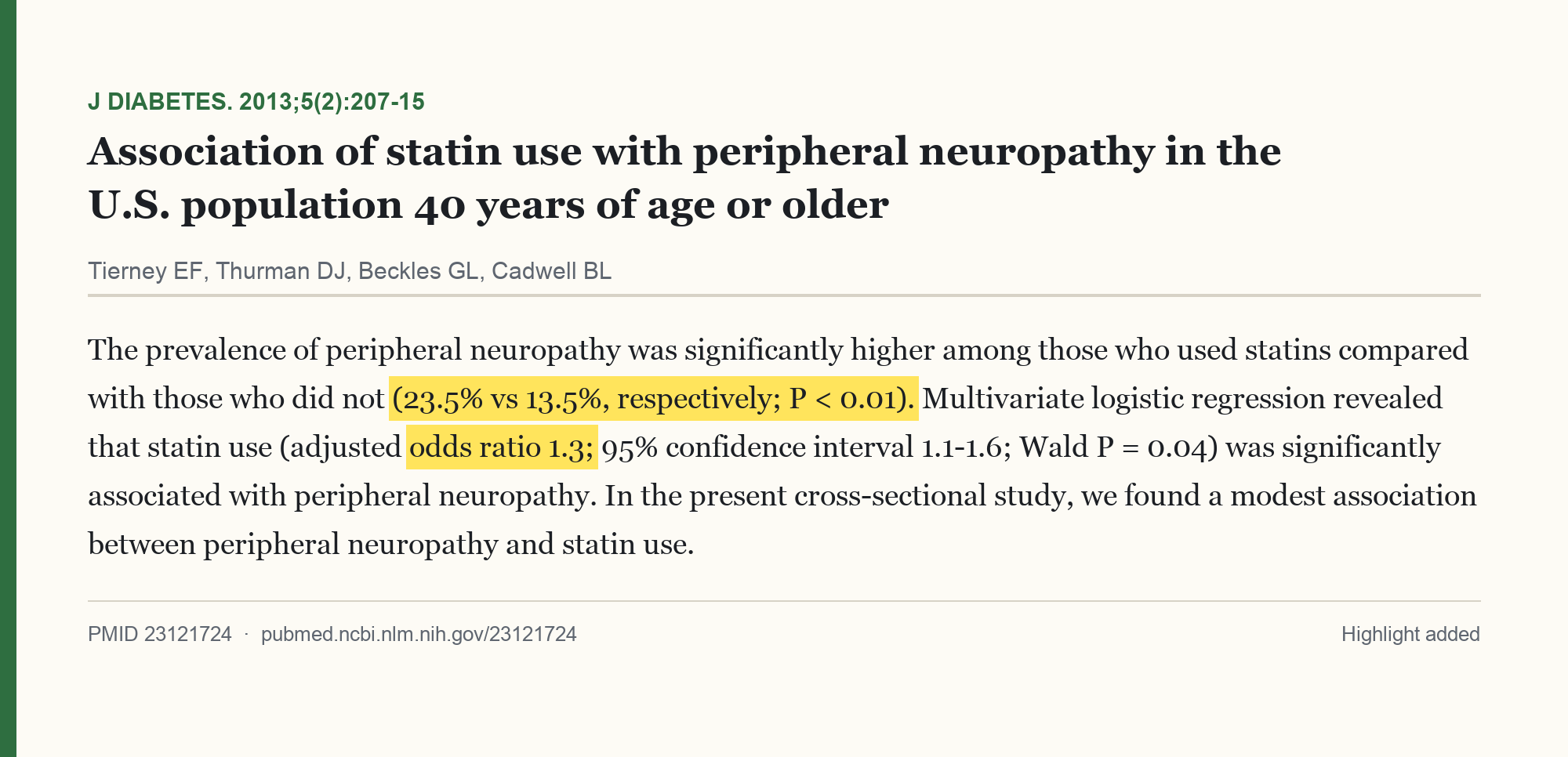
“The prevalence of peripheral neuropathy was significantly higher among those who used statins compared with those who did not (23.5% vs 13.5%, respectively; P < 0.01).”[2]
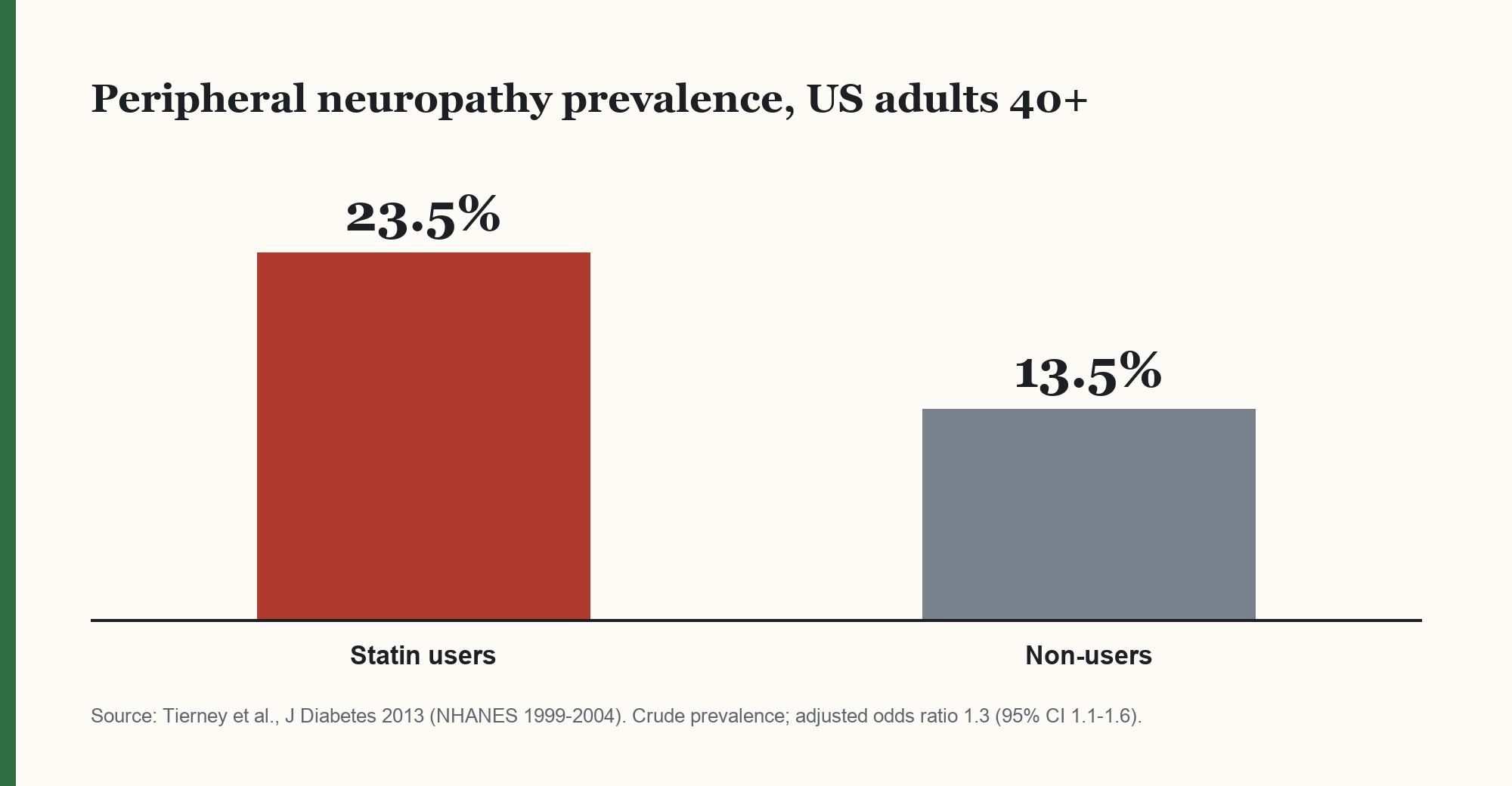
The raw gap is striking. But here is where honesty matters more than headlines: once the researchers controlled for diabetes, age, weight, blood lead, poverty, blood sugar, B12 use, alcohol and blood pressure, the association shrank to an adjusted odds ratio of 1.3 – roughly a 30% higher odds – and remained statistically significant.[2] The authors themselves called it “a modest association” and noted that a cross-sectional design cannot establish causal direction.[2]
That is the accurate reading. And it is still a meaningful one, because the case-report literature had already shown that this was biologically plausible.
Not New – Just Underreported
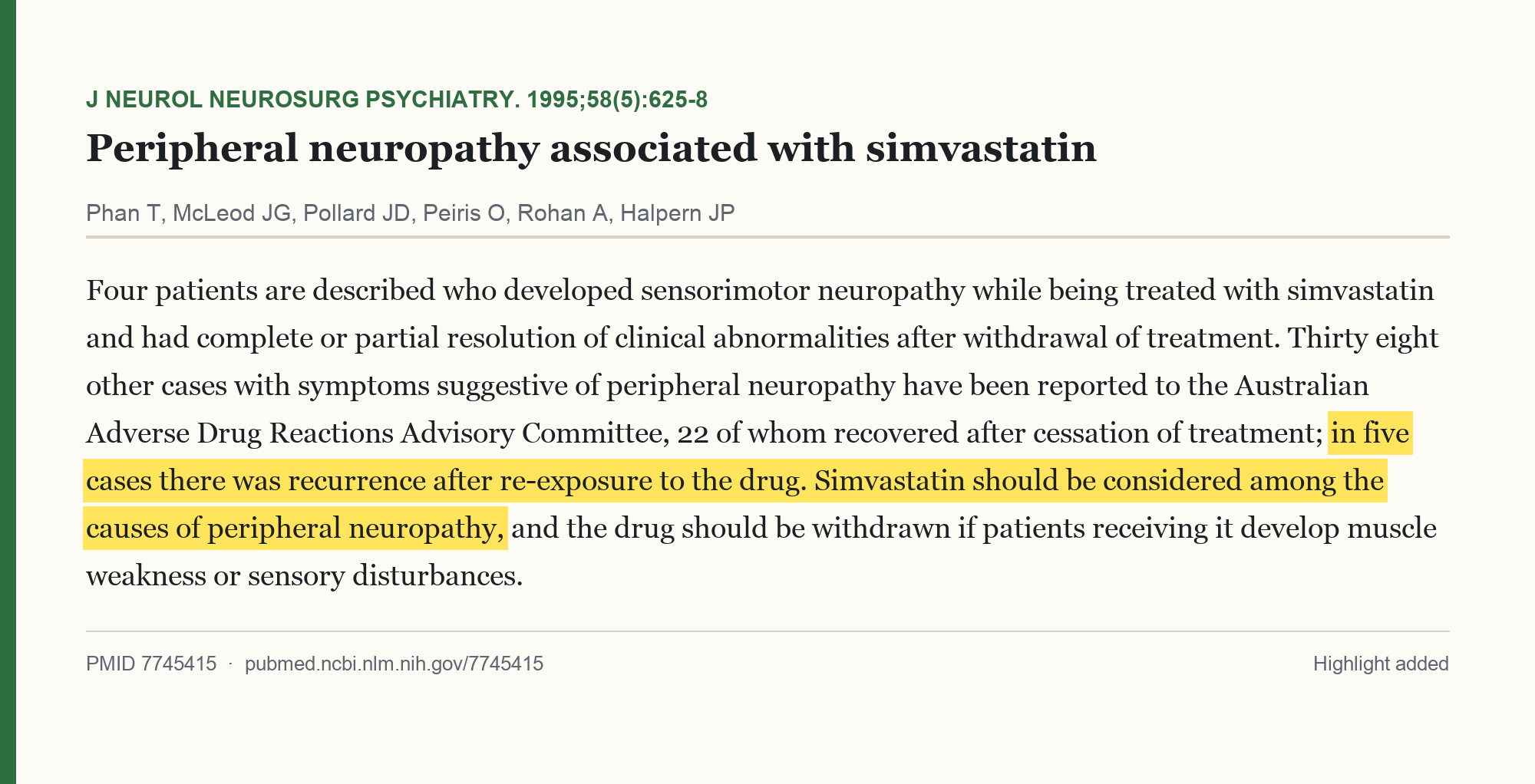
In 1995, the Journal of Neurology, Neurosurgery & Psychiatry published four case reports of patients who developed clinically and electrophysiologically confirmed peripheral neuropathy after starting simvastatin.[3] One was a 52-year-old man on just 10 mg a day who developed progressive weakness, then numbness in both feet. In all four cases, symptoms improved after the drug was withdrawn.[3]
The same paper noted that 38 other suspected cases had been reported to Australia’s Adverse Drug Reactions Advisory Committee: “22 of whom recovered after cessation of treatment; in five cases there was recurrence after re-exposure to the drug.”[3] In two of the four detailed cases, symptoms “did not develop for two years.”[3]
Notice the pattern – onset after exposure, improvement after removal, and in some cases recurrence on re-exposure. In pharmacovigilance, dechallenge and rechallenge responses are among the strongest forms of individual-level evidence there is. The authors’ verdict was blunt: “Simvastatin should be considered among the causes of peripheral neuropathy.”[3]
Regulators have been slower to move on the nervous system than the evidence might suggest. In February 2012, the FDA added warnings to statin labels – not for neuropathy, but for cognitive effects and blood sugar:
“Information about the potential for generally non-serious and reversible cognitive side effects (memory loss, confusion, etc.) and reports of increased blood sugar and glycosylated hemoglobin (HbA1c) levels has been added to the statin labels.”[4]
The agency added that it “continues to believe that the cardiovascular benefits of statins outweigh these small increased risks.”[4] Whether that calculus holds for every patient – particularly low-risk people taking statins for primary prevention for decades – is precisely the question that clinically silent harms make difficult to answer.
The Mechanism: What Statins Block Besides Cholesterol
Why would a cholesterol drug touch the nerves at all? The answer lies upstream.
Statins work by inhibiting HMG-CoA reductase, the rate-limiting enzyme of the mevalonate pathway. That pathway does not only make cholesterol. It also produces coenzyme Q10 (ubiquinone) – the electron carrier at the heart of mitochondrial ATP production. As a 2020 meta-analysis in Atherosclerosis puts it:
“Ubiquinone is a product of the mevalonate pathway which statins inhibit upstream. Statins thus reduce ubiquinone levels and potentially affect mitochondrial function in skeletal muscle.”[5]
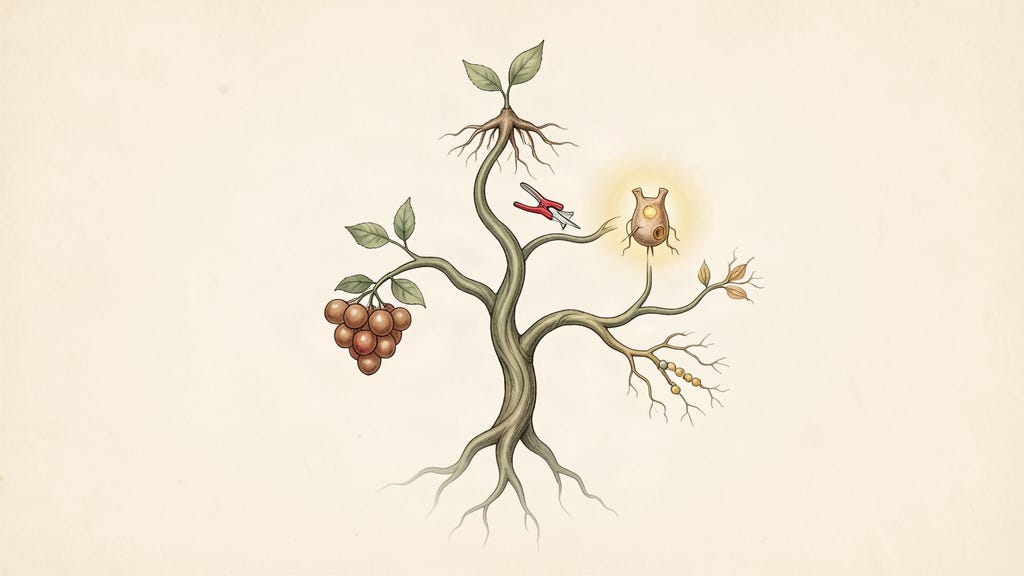
The depletion is well documented. A systematic review in the Journal of the American College of Cardiology found that statins have been known to lower circulating CoQ10 since at least 1990, with at least 9 observational studies and 6 randomized trials showing reductions of 16% to 54%.[6] The largest trial, in 1,049 patients, recorded drops of 38% on atorvastatin and 27% on lovastatin.[6]
There is an important caveat: the same review notes that much of this drop tracks the fall in LDL particles that carry CoQ10, and that it “is nullified by normalizing CoQ10 concentrations for the reduction in LDL cholesterol.”[6] What happens inside nerve and muscle tissue remains less clear.
Still, the neurologists who first documented statin neuropathy pointed directly to this pathway. Simvastatin, they wrote, “not only blocks the synthesis of cholesterol but also that of dolichol and ubiquinone,” and “an intracellular deficiency of ubiquinone has the potential to disturb energy utilisation of the neuron.”[3] Peripheral nerves are among the longest cells in the body, and the damage they found was axonal degeneration – consistent with an energy-supply problem.[3] It remains a hypothesis, not a proven mechanism. But it is a coherent one, and it fits the slow, silent timeline seen in the 36-month study.
What About CoQ10?
If statins drain CoQ10, does replacing it help? The evidence here is genuinely mixed, and we will not pretend otherwise.
Most of the clinical research concerns statin-associated muscle symptoms, not nerves – and the trials disagree. Some randomized trials report that CoQ10 reduces statin-related muscle pain; others find no benefit.[5] A 2018 meta-analysis concluded CoQ10 eased muscle pain, weakness and cramps.[7] But a 2020 meta-analysis of seven placebo-controlled trials “did not demonstrate that CoQ10 supplementation was beneficial for patients with statin-associated muscle pain.”[5] Doses, endpoints and comparators vary widely across these studies.[5]
What can be said with confidence is that the depletion is real and measurable. For anyone on long-term statin therapy, asking whether CoQ10 status is worth discussing with a practitioner is a reasonable, evidence-informed question.
The Takeaway
None of this means statins are wrong for everyone. It means the risk-benefit conversation is incomplete when it leaves out harms that patients cannot feel and that routine care does not measure.
If you take a statin:
Do not stop on your own. Talk to your prescriber first – especially if you have established heart disease.
Report early signs – numbness, tingling, burning or weakness in the feet or hands – even if they seem minor.
Ask about baseline nerve testing if you are starting long-term therapy, or have been on it for more than two years.
Ask about CoQ10 – both your levels and whether supplementation makes sense for you.
The deeper lesson extends well beyond statins. Your body keeps a record that is far more sensitive than a symptom checklist. When we only count what patients complain about, we systematically miss what the drug is doing quietly in the background.
Explore the original GreenMedInfo report and the research it draws on: Cholesterol-Lowering Statins Found to Damage Peripheral Nerves – and the abstracts indexed in our research database on the 36-month nerve study and the NHANES population analysis.
This article is for educational purposes and is not medical advice. Consult a qualified practitioner before changing any medication.
Sources
Otruba P, Kanovsky P, Hlustik P. Treatment with statins and peripheral neuropathy: results of 36-months a prospective clinical and neurophysiological follow-up. Neuro Endocrinol Lett. 2011;32(5):688-90. PMID: 22167150 – https://pubmed.ncbi.nlm.nih.gov/22167150/
Tierney EF, Thurman DJ, Beckles GL, Cadwell BL. Association of statin use with peripheral neuropathy in the U.S. population 40 years of age or older. J Diabetes. 2013;5(2):207-15. PMID: 23121724 – https://pubmed.ncbi.nlm.nih.gov/23121724/
Phan T, McLeod JG, Pollard JD, Peiris O, Rohan A, Halpern JP. Peripheral neuropathy associated with simvastatin. J Neurol Neurosurg Psychiatry. 1995;58(5):625-8. PMID: 7745415 – https://pubmed.ncbi.nlm.nih.gov/7745415/
U.S. FDA. Drug Safety Communication: Important safety label changes to cholesterol-lowering statin drugs. 28 Feb 2012 – https://www.fda.gov/drugs/drug-safety-and-availability/fda-drug-safety-communication-important-safety-label-changes-cholesterol-lowering-statin-drugs
Kennedy C, Köller Y, Surkova E. Effect of Coenzyme Q10 on statin-associated myalgia and adherence to statin therapy: A systematic review and meta-analysis. Atherosclerosis. 2020;299:1-8. PMID: 32179207 – https://pubmed.ncbi.nlm.nih.gov/32179207/
Marcoff L, Thompson PD. The role of coenzyme Q10 in statin-associated myopathy: a systematic review. J Am Coll Cardiol. 2007;49(23):2231-7. PMID: 17560286 – https://pubmed.ncbi.nlm.nih.gov/17560286/
Qu H, et al. Effects of Coenzyme Q10 on Statin-Induced Myopathy: An Updated Meta-Analysis of Randomized Controlled Trials. J Am Heart Assoc. 2018. PMID: 30371340 – https://pubmed.ncbi.nlm.nih.gov/30371340/
Exceptional reporting, thank you.