


From Alzheimer’s to Parkinson’s, the human studies show that the simplest movement we have may be one of the most protective things we can do for the aging brain
🧵Read and share the X thread dedicated to this article.
The Headline Findings
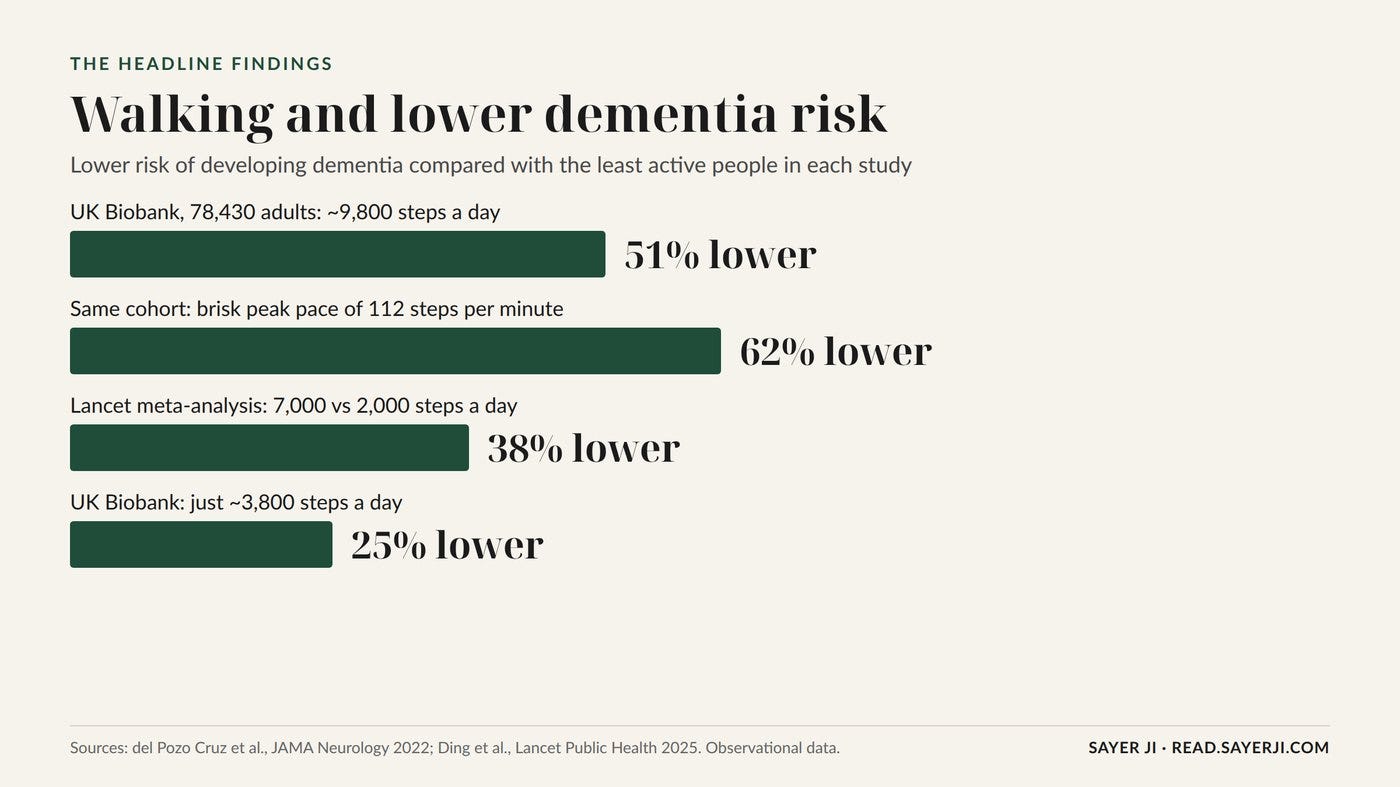
51% lower dementia risk at about 9,800 steps a day, in a study of 78,430 UK adults followed for nearly seven years. Even about 3,800 steps a day was linked to 25% lower risk. (JAMA Neurology, 2022)
Pace matters too. People whose best 30 minutes of the day averaged 112 steps per minute, a brisk walk, had 62% lower risk. (JAMA Neurology, 2022)
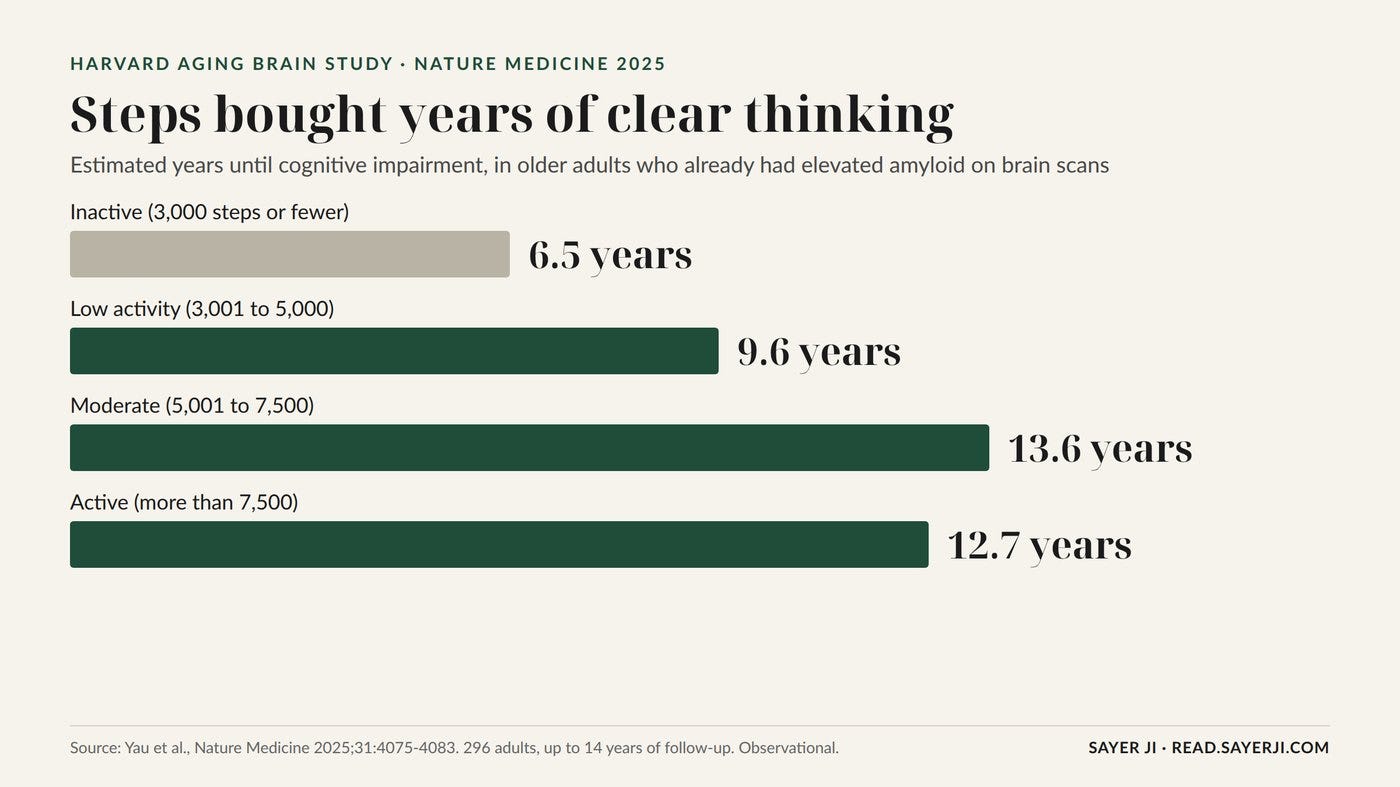
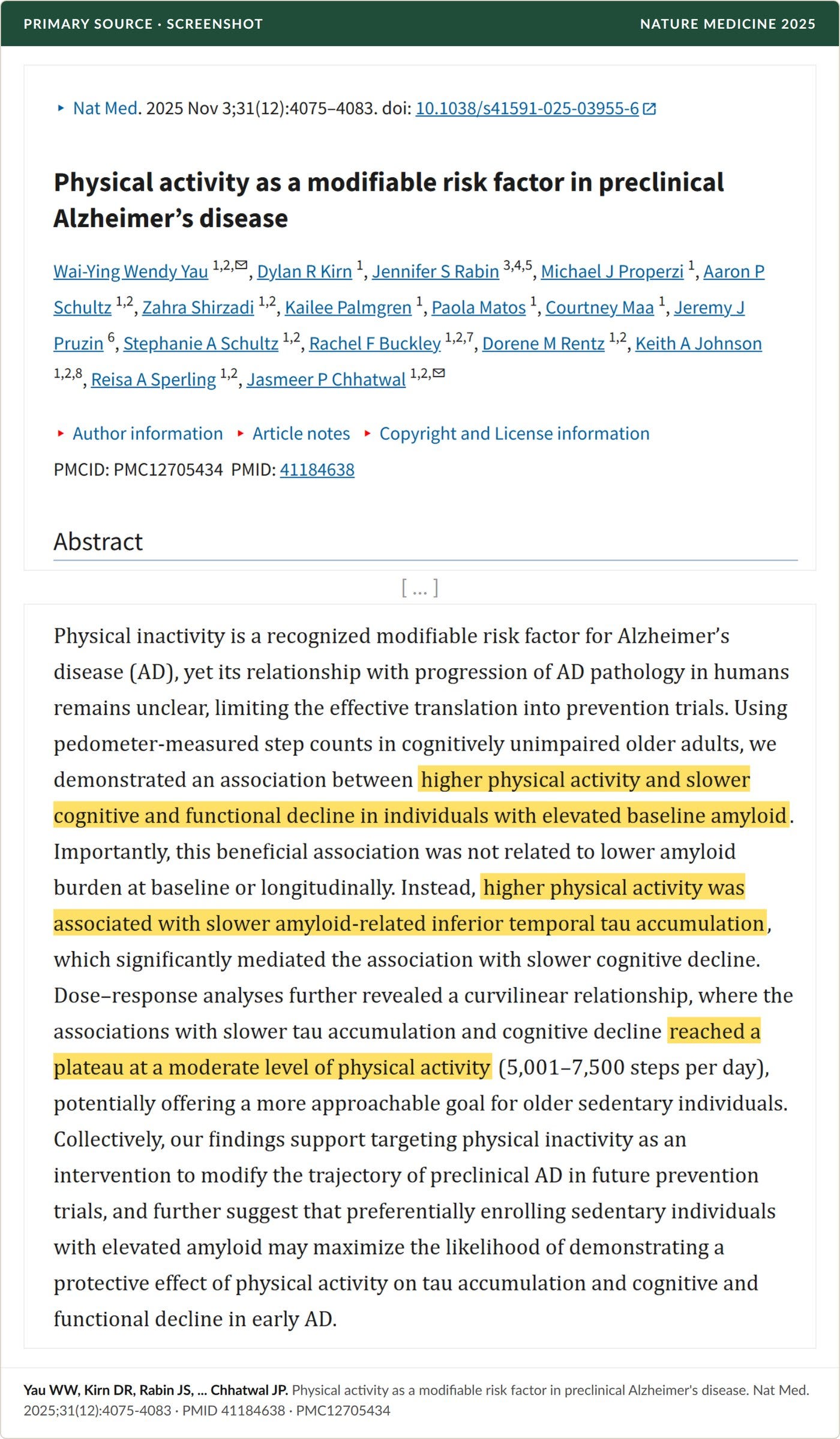
Years of clear thinking, even with Alzheimer’s changes already present. In older adults whose brain scans already showed amyloid, those walking 5,001 to 7,500 steps a day were estimated to reach cognitive impairment after 13.6 years, versus 6.5 years for the inactive, with slower buildup of the tau protein that tracks with memory loss. (Nature Medicine, 2025)
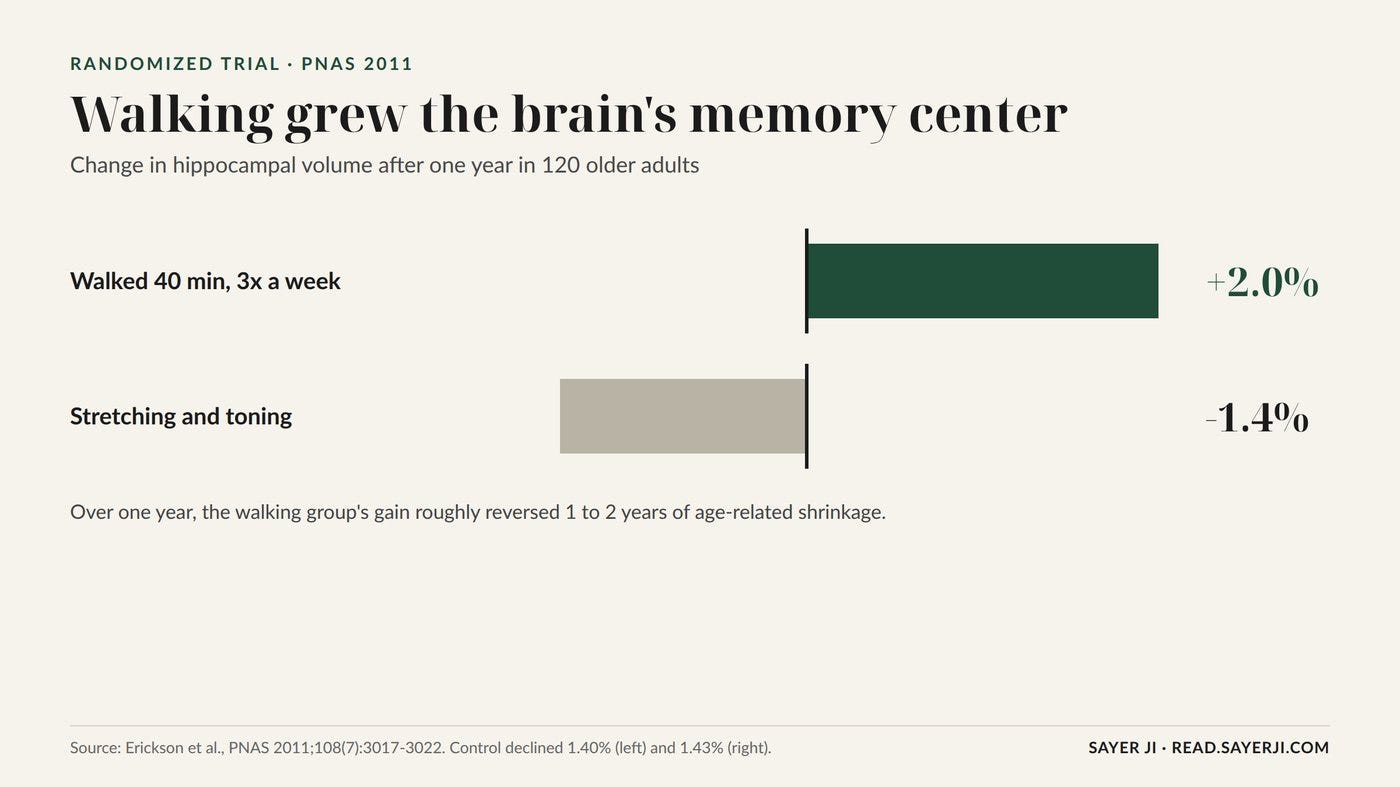
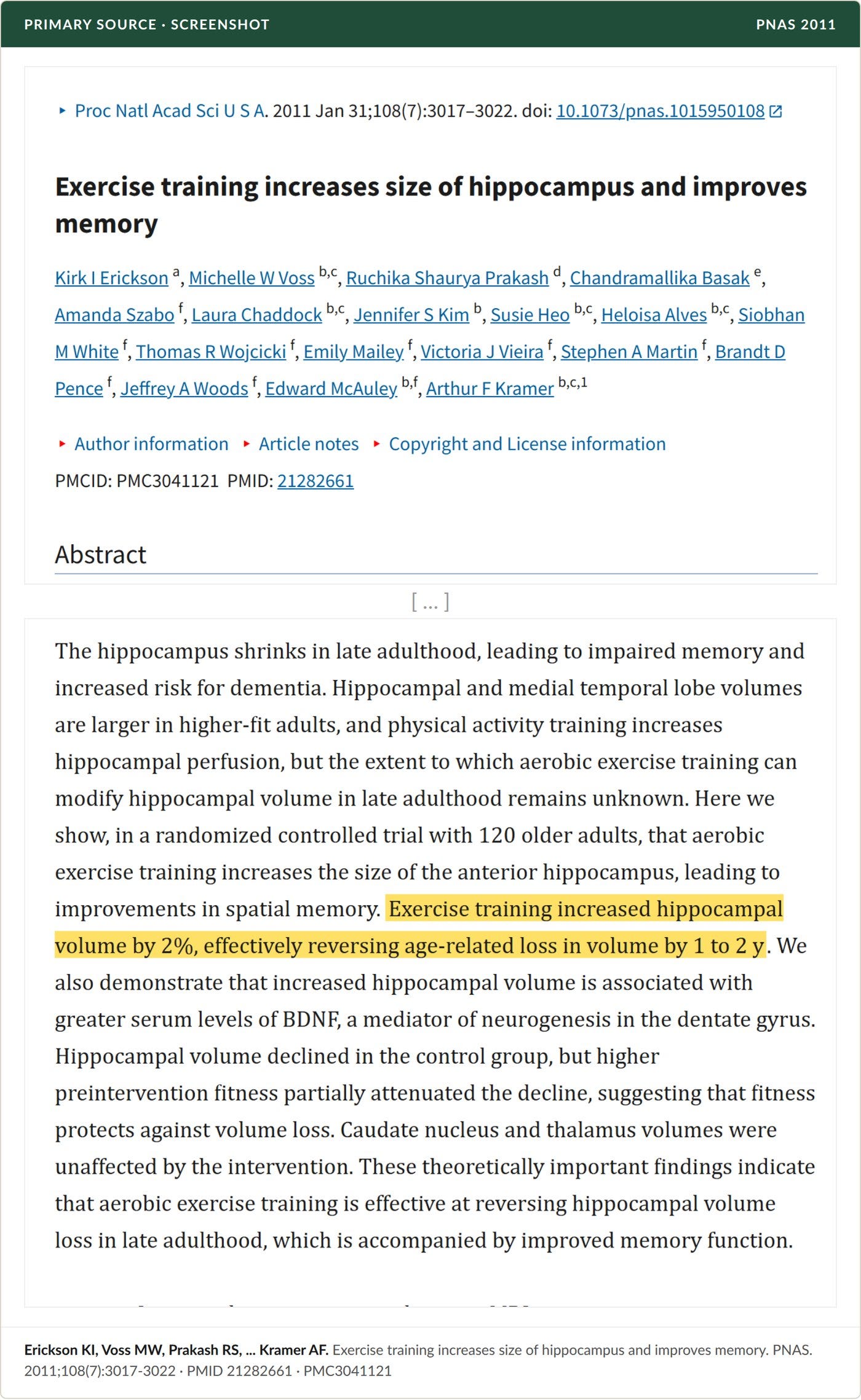
Walking grew the brain’s memory center. In a randomized trial, one year of walking 40 minutes, three days a week, enlarged the hippocampus by 2%, roughly reversing one to two years of age-related shrinkage. (PNAS, 2011)
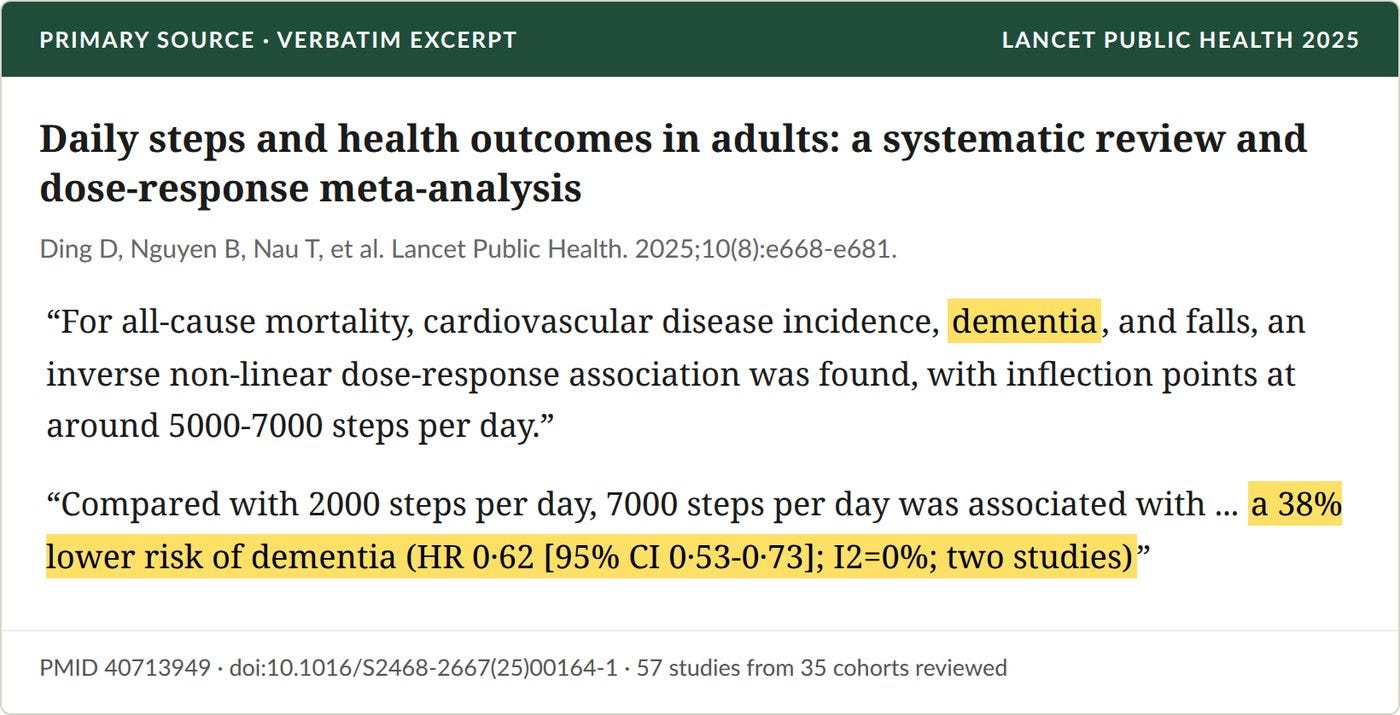
38% lower dementia risk at 7,000 steps a day versus 2,000, in the largest step-count meta-analysis to date. (Lancet Public Health, 2025)
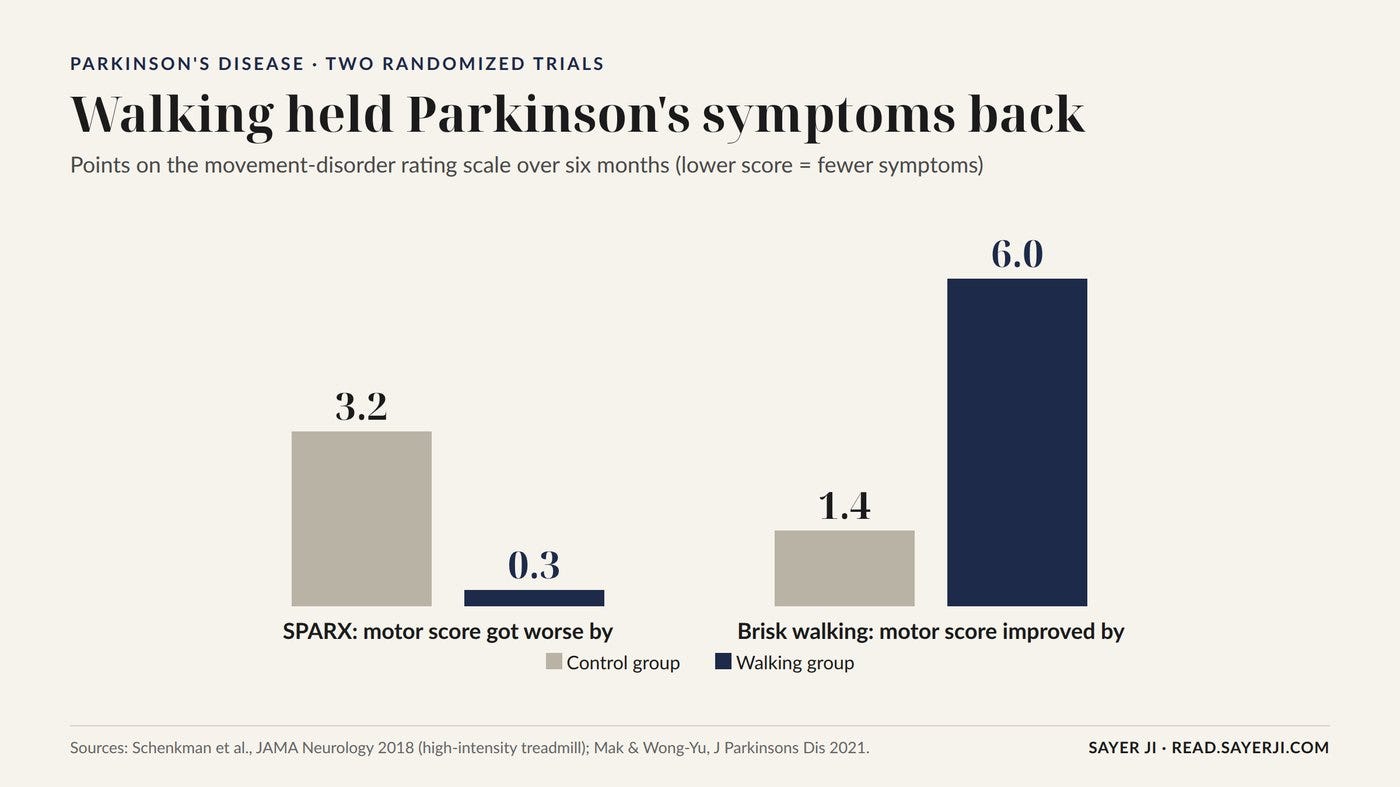
Parkinson’s symptoms held back. In two randomized trials, treadmill walking kept motor symptoms nearly flat over six months, and a brisk-walking program cut motor scores by 6 points versus 1.4 in controls. (JAMA Neurology, 2018; Journal of Parkinson’s Disease, 2021)
Over the past year I have written about walking from two directions. First came the soleus, the deep calf muscle I called the second heart you never knew you had, which pumps blood back toward the heart every time we take a step. Then came the step-count research showing that about 7,000 steps a day was linked to 47% lower risk of death. That second-heart piece has become my most-read article by a wide margin.
This piece asks a narrower and, for many families, more urgent question: what does walking do for the brain as it ages? What does it do for Alzheimer’s disease, other dementias and Parkinson’s disease, the conditions people fear most as they get older?
The answer from the human studies is remarkable. It is also more honest than most headlines allow. Some of the strongest numbers come from observational studies, and a few large trials came up empty. I will show you both.
The Step Count That Changed the Dementia Conversation
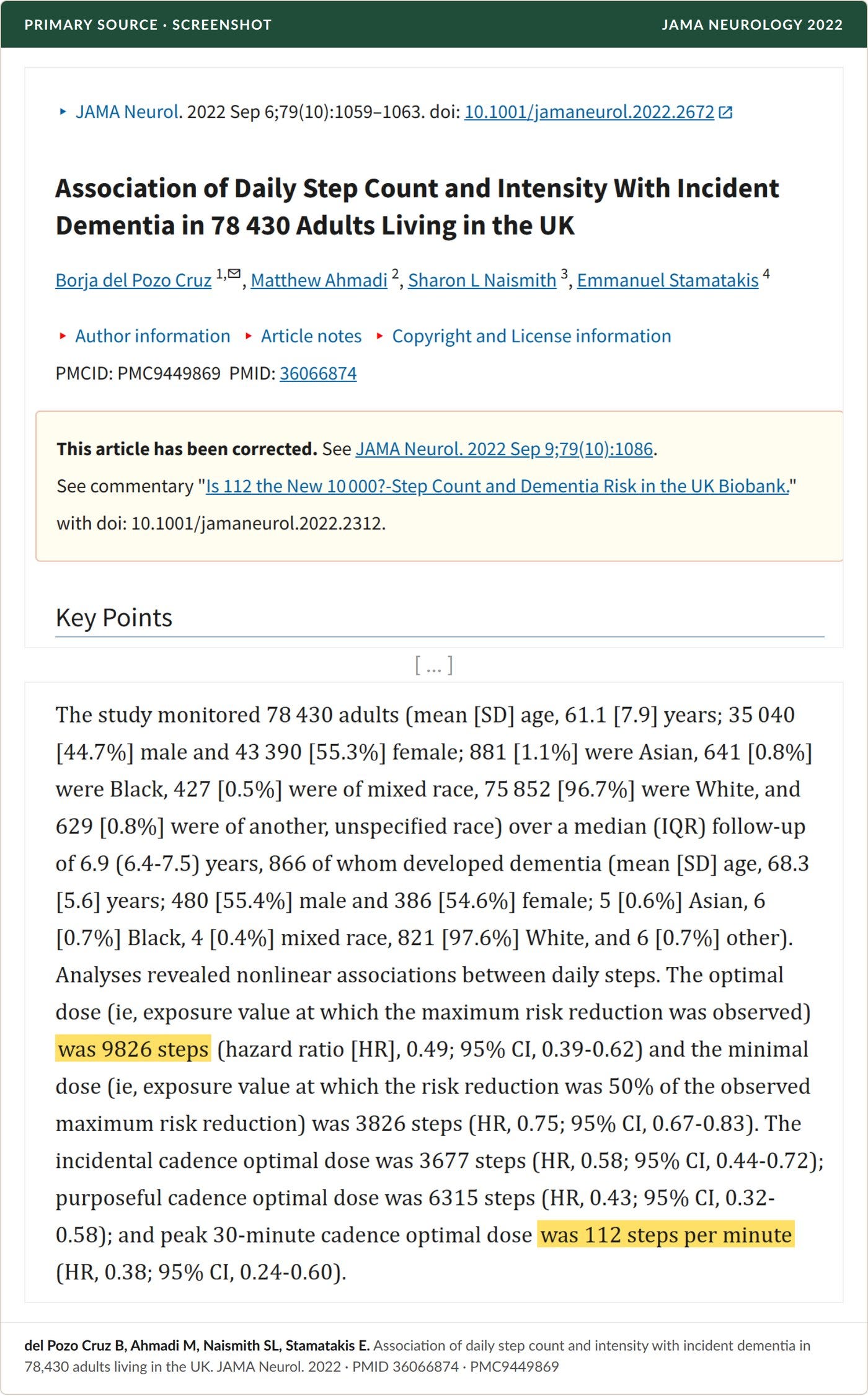
In 2022, researchers in Australia and Denmark analyzed wrist-worn activity trackers from 78,430 adults in the UK Biobank, aged 40 to 79. They followed them for a median of 6.9 years and counted who developed dementia. The result, published in JAMA Neurology, was a clean dose-response curve. The more people walked, the lower their risk, up to just under 10,000 steps a day.
Two details stand out. First, the benefit starts early: about 3,800 steps a day, a level many sedentary people can reach, was already linked to a 25% lower risk. Second, intensity mattered on top of volume. People whose best 30 minutes of walking averaged 112 steps per minute had the lowest risk of all.
THE TECHNICAL RECORD
UK Biobank prospective cohort, 78,430 adults with valid wrist accelerometer data, median follow-up 6.9 years, 866 incident dementia cases. Optimal dose 9,826 steps per day (HR 0.49; 95% CI 0.39-0.62). Minimal dose 3,826 steps (HR 0.75; 0.67-0.83). Purposeful steps (40 or more per minute) optimal dose 6,315 (HR 0.43; 0.32-0.58). Peak 30-minute cadence of 112 steps per minute (HR 0.38; 0.24-0.60). Observational: it shows association, not proof of cause. A published correction concerned only the open-access status. (del Pozo Cruz et al., JAMA Neurology 2022)
Walking When Alzheimer’s Has Already Begun
The most important new study is about people who are already on the road toward Alzheimer’s but don’t know it yet.
Alzheimer’s begins quietly, often a decade or more before symptoms. A sticky protein called amyloid builds up first. Later a second protein, tau, spreads through memory regions of the brain, and that is when thinking starts to slip. The question that matters is whether anything can slow that sequence once it has started.
In November 2025, a Mass General Brigham team reported in Nature Medicine on 296 older adults from the Harvard Aging Brain Study. All had normal thinking at the start. They wore pedometers, had brain scans for amyloid and tau, and were tested on memory and thinking each year for up to 14 years.
Among people who already had elevated amyloid, walking made a striking difference. The inactive group, at 3,000 steps a day or fewer, was estimated to reach cognitive impairment in about 6.5 years. People walking 5,001 to 7,500 steps a day were estimated to get there in about 13.6 years. That is roughly seven more years of clear thinking.
The mechanism was just as interesting as the headline. Walking did not lower amyloid. Instead, more steps went with slower buildup of tau, and that slower tau accounted for much of the protection. In plain language, walking did not remove the first domino of Alzheimer’s, but it appeared to slow the second one, the one that drives symptoms.
The benefit also leveled off at a moderate amount. You did not need to be an athlete. The protection reached a plateau at around 5,000 to 7,500 steps a day, which the authors describe as a more approachable goal for sedentary older adults.
THE TECHNICAL RECORD
296 cognitively unimpaired adults; median 9.2 years of cognitive follow-up (range 0.9-14.2). Step groups: inactive (3,000 or fewer per day), low (3,001-5,000), moderate (5,001-7,500), active (more than 7,500). In elevated-amyloid participants, estimated years to a PACC5 score of -1.5: 6.5, 9.6, 13.6 and 12.7. Cognitive decline was lower by 40%, 54% and 51% across rising activity levels versus inactive. Higher activity was not associated with lower amyloid but was associated with slower inferior temporal tau accumulation, which significantly mediated slower cognitive decline. The authors state the study is observational, cannot fully rule out reverse causation, measured steps only at baseline, and drew on a highly educated, predominantly white cohort. (Yau et al., Nature Medicine 2025)
Subscribe to follow Sayer Ji’s Substack.
Walking That Grows the Brain
Observational studies always face one question: does walking protect the brain, or do people with healthier brains simply walk more? The best way to answer that is a randomized trial, and one of the most cited trials in the field points in walking’s favor.
In 2011, researchers at the University of Illinois and the University of Pittsburgh randomly assigned 120 older adults either to a walking program or to stretching and toning. The walkers started with 10 minutes and built up to 40 minutes, three days a week, for a year.
The hippocampus, the seahorse-shaped structure at the center of memory, normally shrinks with age. That is exactly what happened in the stretching group. In the walking group, it grew by about 2%, which the authors said effectively reversed one to two years of age-related loss. Memory improved along with it, and the growth tracked with higher blood levels of BDNF, a growth factor that helps new brain cells form and connect.
THE TECHNICAL RECORD
Randomized controlled trial, 120 older adults, one year. Intervention: moderate-intensity walking 3 days per week, building from 10 to 40 minutes per session by week 7. Control: stretching and toning. Hippocampal volume rose about 2% with walking; the control group declined 1.40% (left) and 1.43% (right). Volume gains were associated with higher serum BDNF and improved spatial memory. Caudate and thalamus volumes were unaffected. (Erickson et al., PNAS 2011)
Two Decades of the Same Signal
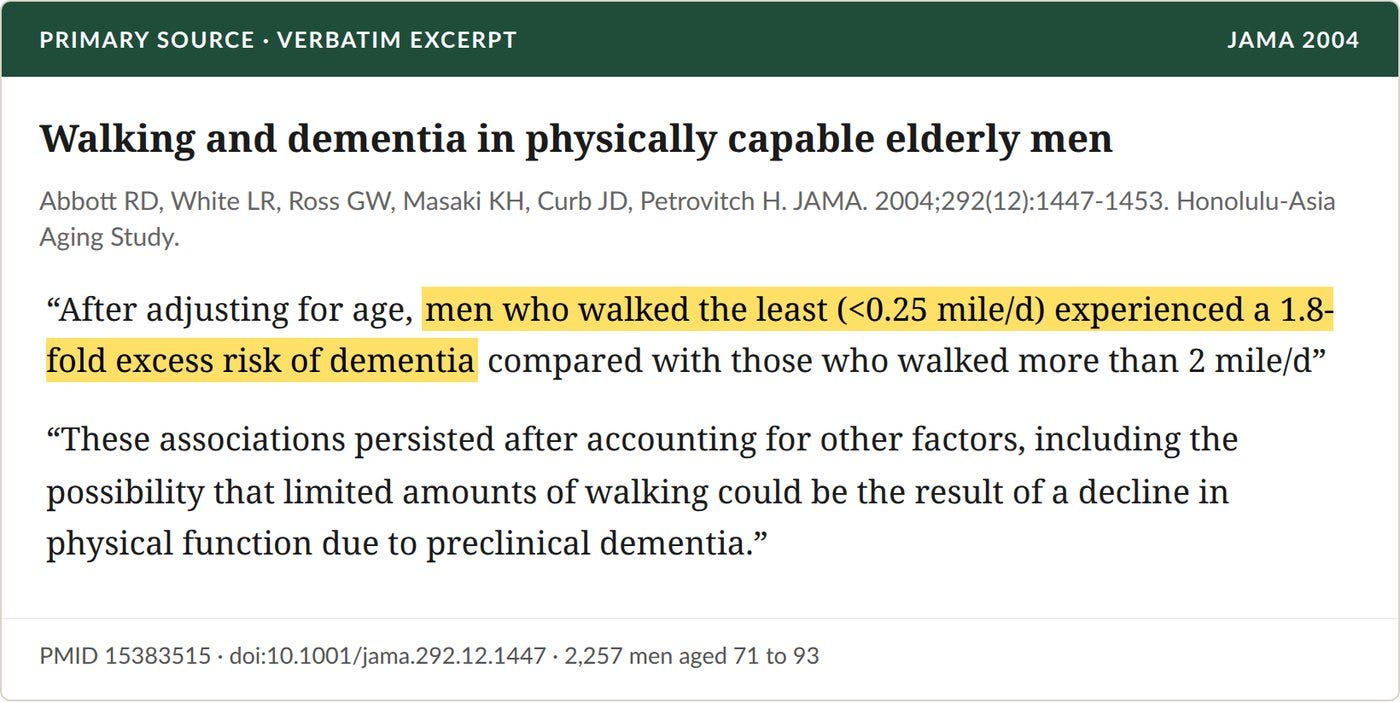
Long before activity trackers, the same pattern showed up with simple questions about how far people walked. In the Honolulu-Asia Aging Study, researchers followed 2,257 men aged 71 to 93. Men who walked less than a quarter mile a day had about 1.8 times the risk of dementia of those who walked more than two miles a day. The link held even after the researchers accounted for the possibility that early dementia was making men walk less.
Twenty-one years later, the Lancet Public Health meta-analysis I wrote about last year pooled device-measured step data. Compared with 2,000 steps a day, 7,000 steps was linked to a 38% lower risk of dementia. Across the studies, the dementia curve bent most sharply between about 5,000 and 7,000 steps.
Parkinson’s Disease: Walking as Therapy
Parkinson’s is a different disease, driven by the loss of dopamine-producing cells, but walking shows up here too. In this case the strongest evidence comes from trials in people who already have the disease.
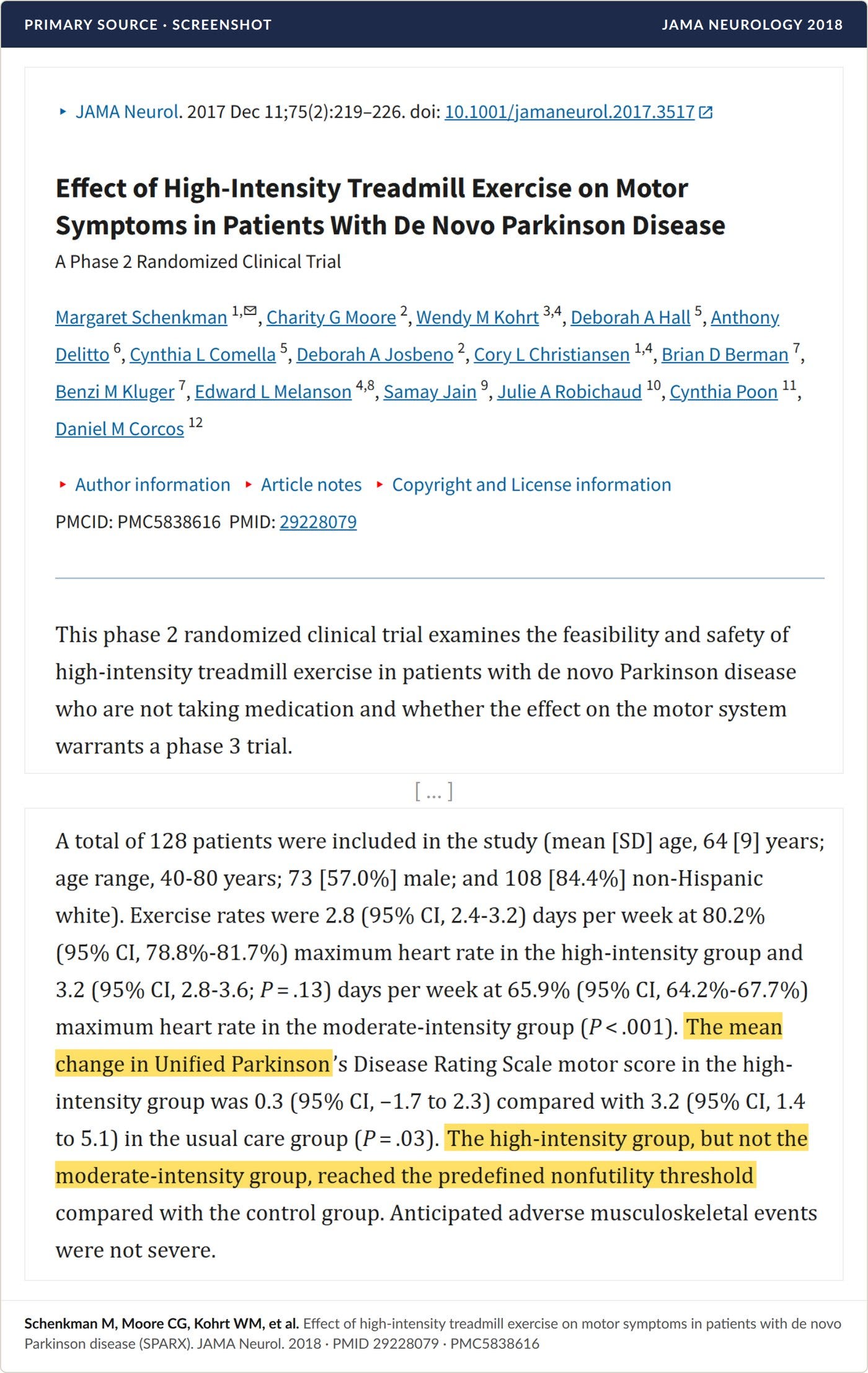
The SPARX trial, published in JAMA Neurology, randomized 128 people with newly diagnosed Parkinson’s who were not yet on medication. Over six months, the group doing high-intensity treadmill walking four days a week stayed almost flat on the standard motor-symptom scale, worsening by just 0.3 points. The control group worsened by 3.2 points. Moderate-intensity walking did not clear the trial’s bar, which suggests effort level matters in Parkinson’s.
Ordinary brisk walking helped as well. In a six-month randomized trial in Hong Kong, 70 people with mild to moderate Parkinson’s were assigned either to brisk walking with balance training or to upper-body exercise. The walkers’ motor scores improved by 6.0 points, compared with 1.4 points in the control group. They also walked faster, farther and with better balance.
THE TECHNICAL RECORD
SPARX: phase 2 randomized trial, 128 patients with de novo Parkinson’s (Hoehn and Yahr 1-2), not on dopaminergic medication. High-intensity treadmill (80-85% max heart rate, 4 days/week), moderate-intensity (60-65%), or wait-list control for 6 months. Mean UPDRS motor change: 0.3 (95% CI -1.7 to 2.3) high-intensity vs 3.2 (1.4 to 5.1) control, P = .03. Only the high-intensity group met the predefined nonfutility threshold. (Schenkman et al., JAMA Neurology 2018) A 370-person phase 3 follow-up, SPARX3, is testing treadmill walking four times a week for 12 months. (Journal of Parkinson’s Disease trial review) Hong Kong trial: 70 randomized, 64 completed; MDS-UPDRS motor change -6.0 vs -1.4 at 6 months, P < 0.001; improvements also in timed-up-and-go, gait speed, 6-minute walk and balance. (Mak and Wong-Yu, J Parkinsons Dis 2021)
Prevention is less clear for Parkinson’s than for dementia. A 2025 UK Biobank analysis of 94,696 adults found that every additional 1,000 daily steps was linked to 8% lower Parkinson’s risk. But the link faded once the researchers excluded the years closest to diagnosis. Their conclusion: low step counts may be an early warning sign of Parkinson’s rather than a cause of it.
Why Walking Works on the Brain
No single mechanism explains all of this, and the studies above point to several at once.
Growth signals. In the Illinois trial, hippocampal growth tracked with BDNF, a protein that supports the birth and wiring of new neurons. (PNAS 2011)
Slowing tau. In the Harvard cohort, walking’s link to slower decline ran largely through slower tau buildup rather than less amyloid. (Nature Medicine 2025)
Circulation, starting in the calf. This is my own working thesis. The brain is the body’s most blood-hungry organ, and the soleus, the second heart in the calf, helps return blood to the heart with every step. I have argued that keeping that pump active helps keep blood flowing to the brain. (The Second Heart You Never Knew You Had) The step studies are consistent with this idea, but none of them tested it directly.
That is what makes walking different from a drug. It does not act on one target. It acts on blood flow, growth factors, metabolism and the disease proteins themselves, all at the same time. Across nearly two decades of curating research at GreenMedInfo, I have seen that same many-systems pattern in the exercise research database again and again.
What the Evidence Does Not Show
A fair accounting has to include the results that did not go walking’s way.
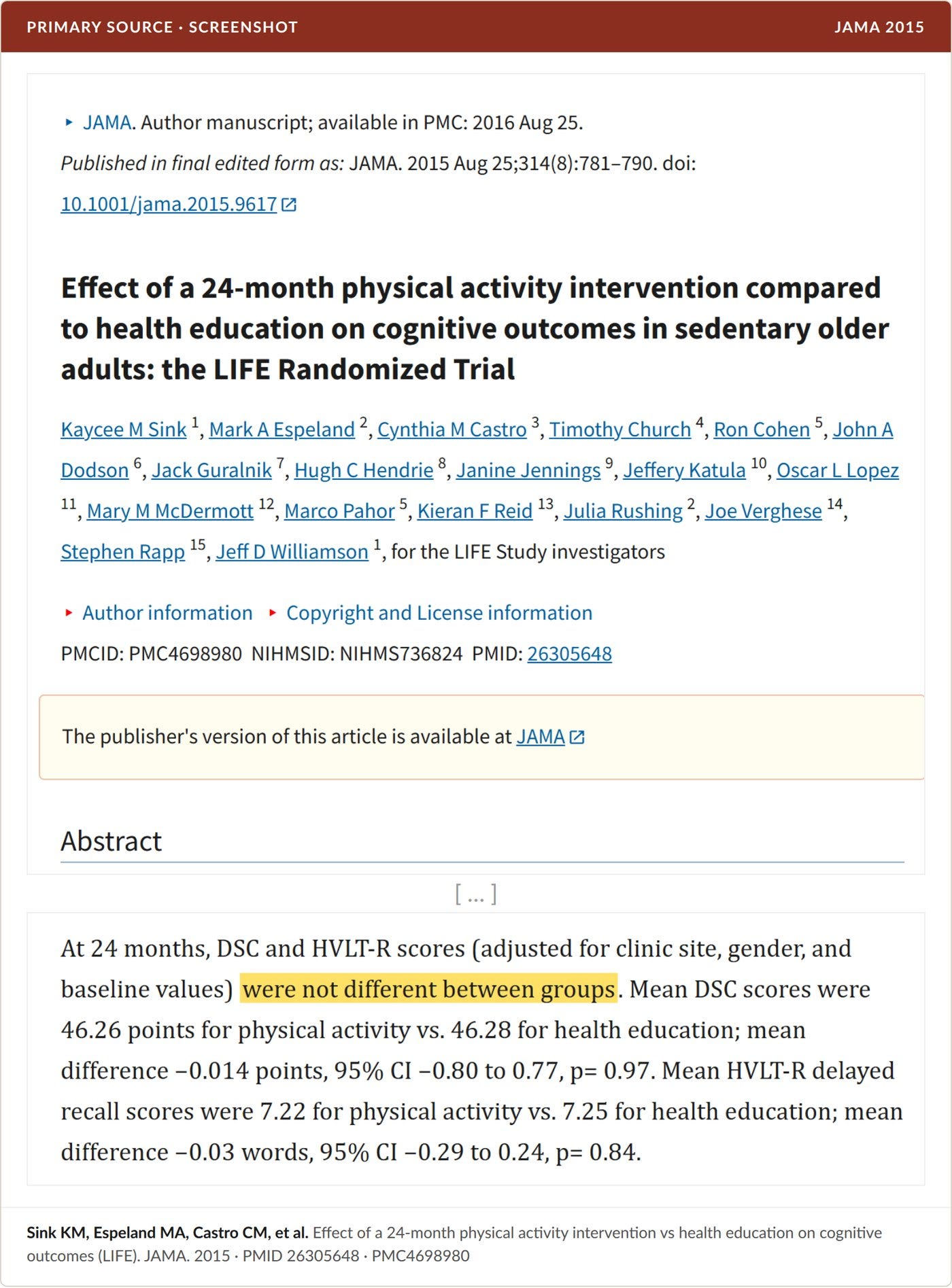
The largest test was the LIFE trial, published in JAMA in 2015. It assigned 1,635 sedentary adults aged 70 to 89 either to a two-year program built around walking or to health-education workshops. At two years, cognitive scores were the same in both groups, and rates of mild cognitive impairment or dementia were similar (13.2% versus 12.1%). There was one bright spot: participants aged 80 and older, and those in the poorest physical shape, showed better executive function with the activity program.
The EXERT trial, reported in 2025, studied 296 sedentary older adults with mild memory problems. It found no difference between aerobic training and gentle stretching. What surprised researchers was that neither group declined over 12 months, which is unusual in mild cognitive impairment. That result could mean that any regular, supported movement helps. But because EXERT had no true do-nothing group, it cannot prove that.
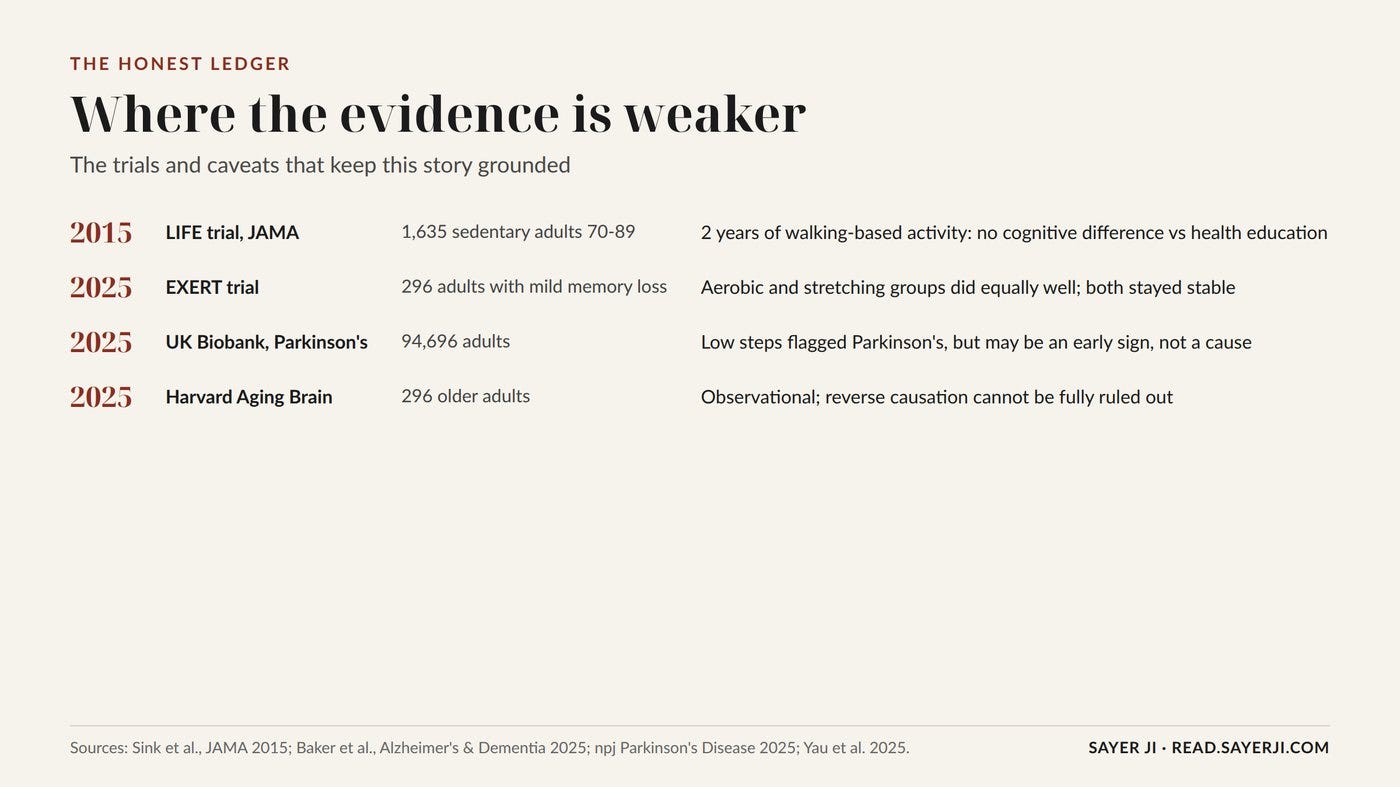
And the observational studies, including the Harvard cohort, cannot fully rule out reverse causation, the possibility that early brain disease makes people walk less. The authors of the Nature Medicine paper say so plainly and call for randomized trials. (Nature Medicine 2025)
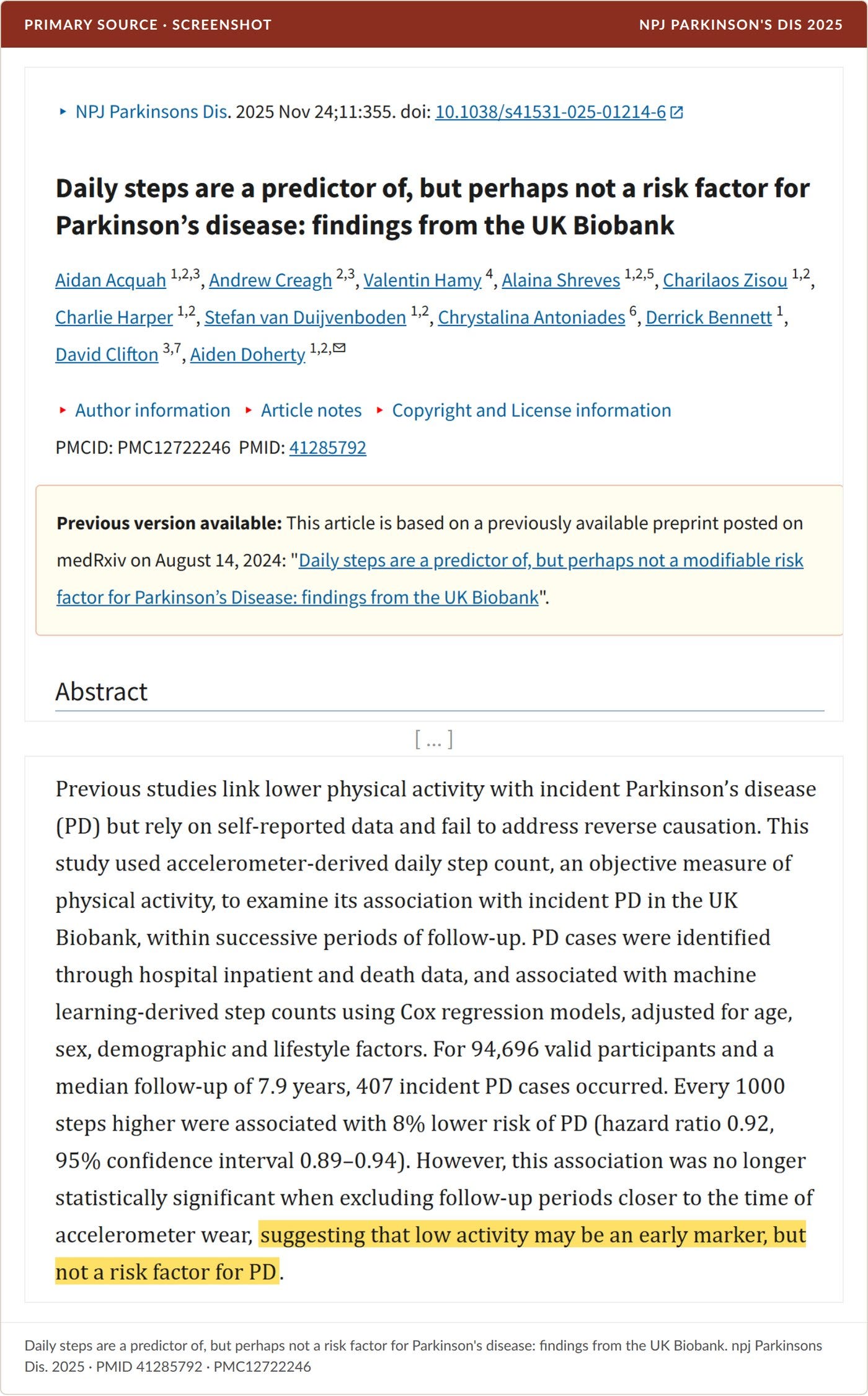
My reading is this. The evidence that walking is linked to a healthier aging brain is consistent, large and goes back decades. The evidence that it grows the hippocampus and slows Parkinson’s symptoms comes from randomized trials. The evidence that it prevents dementia outright is not yet settled by trials, and some trials that tried to show it fell short. None of that is a reason to stay seated. Walking is free, it carries little risk for most people, and it benefits nearly every system the brain depends on.
How to Walk for Your Brain
If you are mostly sedentary, start where you are and add steps. About 3,800 a day was already linked to meaningful protection, and the Alzheimer’s benefit leveled off at 5,000 to 7,500. (JAMA Neurology 2022; Nature Medicine 2025)
If you are already active, the dementia curve kept improving toward about 9,800 steps a day. (JAMA Neurology 2022)
Add a brisk stretch. Aim for some of your walking to feel purposeful. The lowest risk came at a peak pace of about 112 steps per minute, the pace of walking with somewhere to be.
Copy the brain-growth protocol. Forty minutes, three days a week, built up gradually from 10 minutes. (PNAS 2011)
On days you can’t walk, keep the second heart working with seated soleus push-ups: heels up, toes down, steady rhythm. (The Second Heart, in video)
SAFETY
People with Parkinson’s disease, balance problems, heart disease or a history of falls should plan any new or higher-intensity walking program with their clinician. The Parkinson’s trials used supervised settings, and SPARX screened participants before high-intensity treadmill work. A walking partner, good footwear, level routes and poles or other support can lower fall risk.
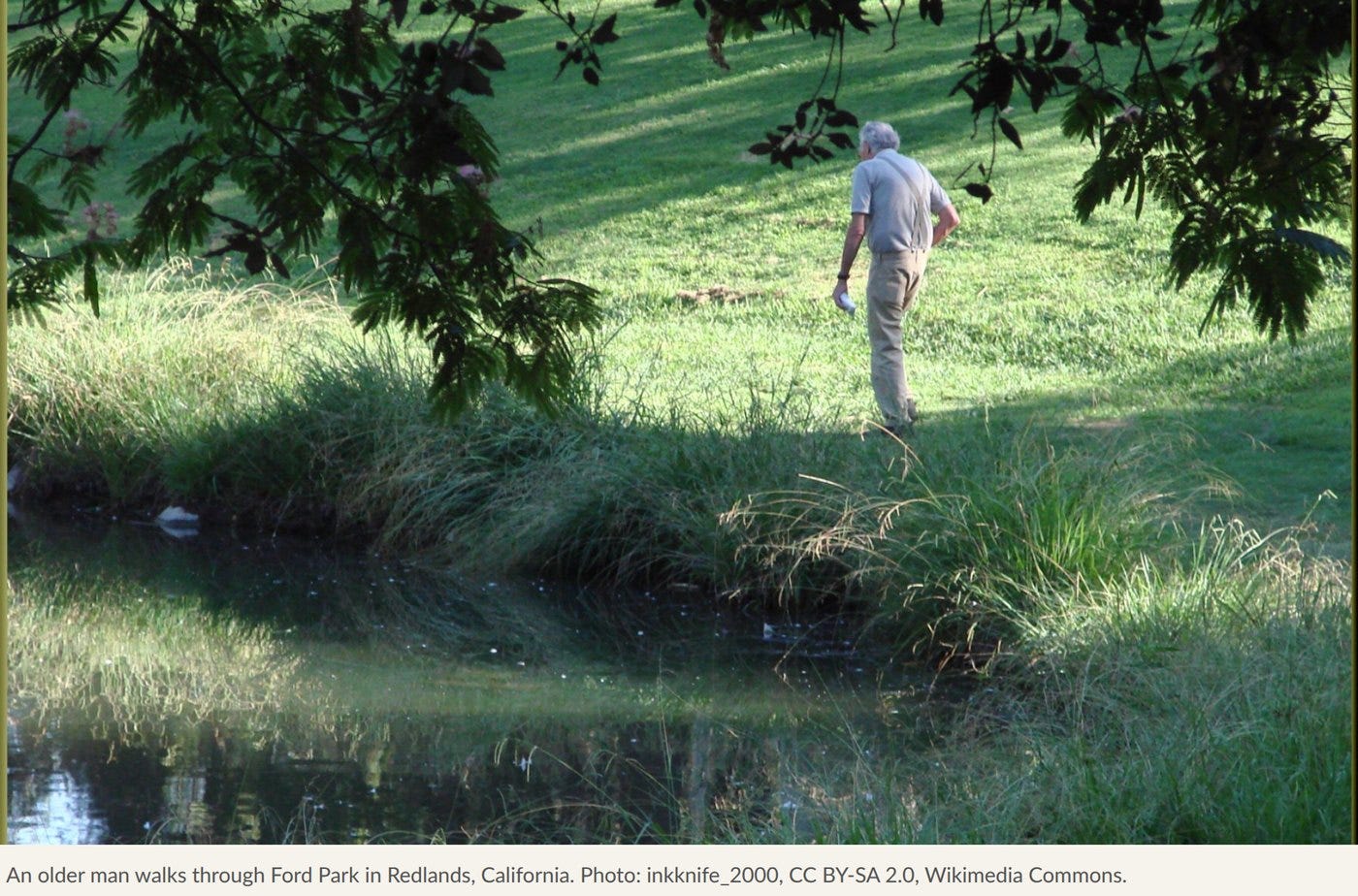
The most protective thing you can do for your brain today may be to put on your shoes and walk out the door.
If this was useful, share it with someone you love who is worried about their memory. Then take them for a walk.
🧵Read and share the X thread dedicated to this article.


Sources
JAMA Neurology, 2022: https://pmc.ncbi.nlm.nih.gov/articles/PMC9449869/
Nature Medicine, 2025: https://pmc.ncbi.nlm.nih.gov/articles/PMC12705434/
PNAS, 2011: https://pmc.ncbi.nlm.nih.gov/articles/PMC3041121/
Lancet Public Health, 2025: https://pubmed.ncbi.nlm.nih.gov/40713949/
JAMA Neurology, 2018: https://pmc.ncbi.nlm.nih.gov/articles/PMC5838616/
Journal of Parkinson’s Disease, 2021: https://pubmed.ncbi.nlm.nih.gov/33967056/
the second heart you never knew you had: https://read.sayerji.com/p/the-second-heart-you-never-knew-you
about 7,000 steps a day was linked to 47% lower risk of death: https://read.sayerji.com/p/how-walking-saves-lives-47-less-likely
my most-read article by a wide margin: https://read.sayerji.com/p/the-second-heart-my-most-read-article
researchers followed 2,257 men aged 71 to 93: https://pubmed.ncbi.nlm.nih.gov/15383515/
Journal of Parkinson’s Disease trial review: https://pmc.ncbi.nlm.nih.gov/articles/PMC9837678/
2025 UK Biobank analysis of 94,696 adults: https://pmc.ncbi.nlm.nih.gov/articles/PMC12722246/
exercise research database: https://greenmedinfo.com/therapeutic-action/exercise
LIFE trial, published in JAMA in 2015: https://pmc.ncbi.nlm.nih.gov/articles/PMC4698980/
EXERT trial, reported in 2025: https://pmc.ncbi.nlm.nih.gov/articles/PMC12019696/
Images: cover photo Hannah Donze (Unsplash), CC0; walking photo inkknife_2000, CC BY-SA 2.0, both via Wikimedia Commons. Study screenshots from PubMed Central. Charts by Sayer Ji from the cited papers.
Walking is one of the most under-rated exercises there is. And all you need is a pair of good shoes!
Hello Sayer, thank you for sharing such interesting information. Walking undoubtedly offers enormous benefits, which become especially evident as we age.
I think this is also where one of the keys lies: the lowest risk occurred at a peak pace of roughly 112 steps per minute, the pace of walking when you have a destination. We could replace "destination" with "project": older people still have projects, even if on a smaller scale, such as attending a grandchild's wedding or going to the shop to buy thread to mend a garment. Keeping that motivation alive, which is usually tied to a stimulating social environment, is essential.