



The official story of heart disease has one molecule. What homocysteine, MTHFR genetics, and the aging brain reveal about the body’s hidden one-carbon economy—and why the future of nutrition is information, not ammunition
You know your cholesterol number.
Perhaps not to the decimal, but you know it exists, you have been told it matters, and you know that somewhere in your medical record it sits as the official arbiter of your cardiovascular fate—at least within the conventional medical system. For nearly seventy years, one molecule has so completely dominated the story of heart disease that “heart-healthy” and “low-cholesterol” function as synonyms. Cholesterol built the dietary guidelines. It built the statin franchise—among the most prescribed drug classes in pharmaceutical history. It built a monoculture of explanation.
I have dissected that monoculture at length—the manufactured consensus, the commercial architecture behind it, and the documented harms of driving this essential molecule ever lower—in The Cholesterol Conspiracy: How Big Pharma’s $200 Billion Lie Is Killing Us. This article tells the other half of that story: what the monoculture crowded out.
The Cholesterol Conspiracy: How Big Pharma's $200 Billion Lie Is Killing Us

Read, comment and share this article on X: https://x.com/sayerjigmi/status/1958232219996065910
Now consider a question that rarely survives contact with a standard checkup:
What if there is another molecule—one most people have never been tested for—whose relationship to your cardiovascular system runs not through saturated fat, but through your genetic inheritance and your B-vitamin consumption and bioavailability? A molecule that, for a substantial fraction of the population, may be a far more determinative factor in cardiovascular risk than the number you already know by heart?
That molecule is homocysteine. And it was very nearly erased from medicine.
In 1969, a Harvard pathologist named Kilmer McCully examined children who had died of rare inherited disorders of homocysteine metabolism and found arteries hardened, thickened, and scarred like those of elderly men—in patients who had barely begun to live. The detail that made his finding a heresy: the damage had developed without elevated cholesterol.
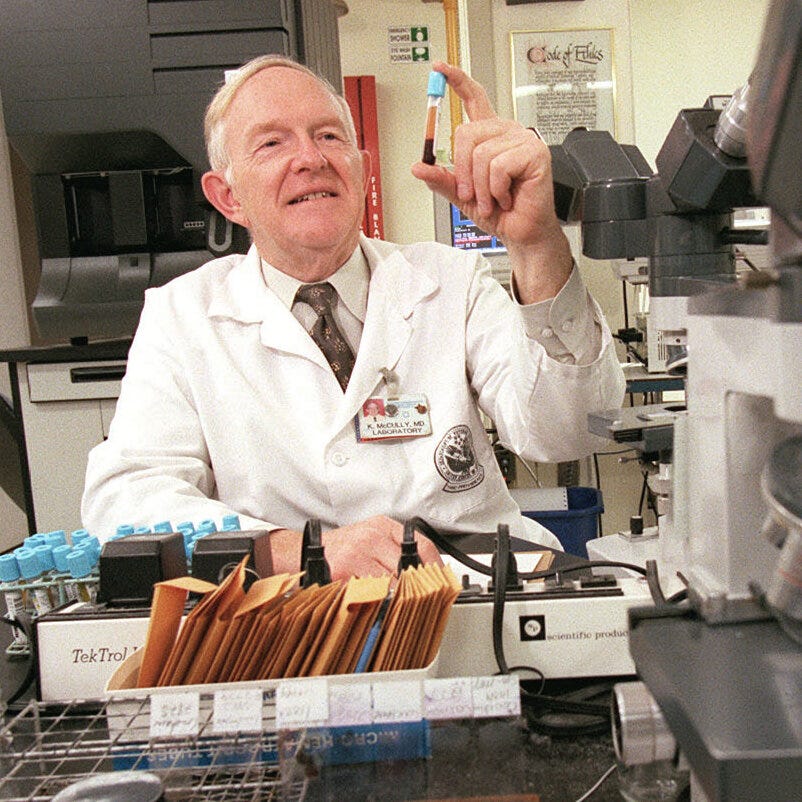
McCully proposed the hypothesis the evidence demanded: if extreme homocysteine elevations destroy arteries in childhood, perhaps moderate elevations, sustained across decades, quietly contribute to the arterial disease of adulthood. And because homocysteine metabolism runs on folate, B12, and B6, the theory carried an almost unforgivable implication—that a meaningful share of the twentieth century’s signature disease might be, at root, a nutritional problem, addressable for pennies a day.
His reward was professional exile. By the end of the 1970s McCully had lost his Harvard position and his funding, and the hypothesis spent a quarter century in the wilderness while the cholesterol paradigm hardened into orthodoxy. Vindication came in stages: observational studies in the 1990s confirmed that elevated homocysteine tracks with vascular disease independently of cholesterol—and when trials that forced the number down across broad populations failed to reliably prevent heart attacks, the skeptics declared the case closed.
They closed the book one chapter too early. Those trials asked the wrong question of the right molecule—and the right question, as we will see, hinges on a single gene variant, a single unglamorous vitamin, and a dose so small it defies modern medicine’s assumptions about what power looks like.
Because here is what makes homocysteine different from cholesterol: it sits at a metabolic junction directly governed by four B vitamins and regulated by a common variant in a gene called MTHFR, carried in double copy by roughly one in ten people in many populations. Your homocysteine level is, quite literally, a conversation between your genome and your dinner plate.
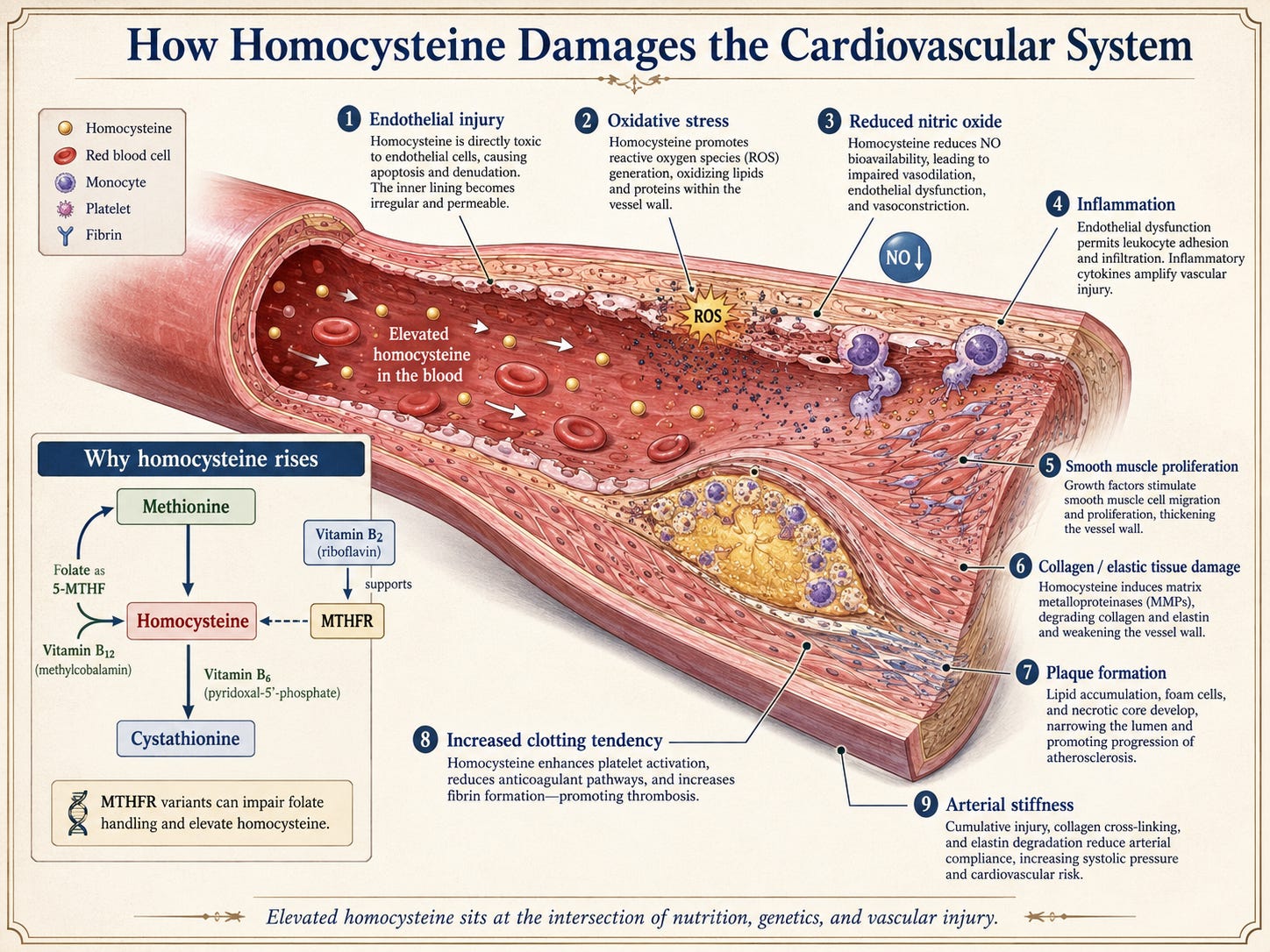
To understand that conversation—and why the answer was never as simple as swallowing more B vitamins—we have to ask a question modern nutrition has never been forced to answer cleanly: what happens when the nutrient is present, but the pathway cannot receive it?
For most of the twentieth century, no one needed to ask. Vitamins were understood as replacement parts for a body-machine: discover a deficiency, insert a molecule, repair the engine. And at the outer edges of nutrition, the model performed brilliantly—vitamin C abolished scurvy, thiamine beriberi, niacin pellagra—and the vending-machine model was enshrined: coin in, outcome out.
But walk inward from those edges, into the subtler terrain of one-carbon metabolism, and the machine begins to fail. Here, no nutrient acts alone. Here, the biological meaning of a dose depends on the enzyme that receives it, the cofactor that powers that enzyme, the gene that encodes it, the microbes that supplement it, and the person in whom all of this is unfolding. Here, a unit as small as a methyl group—one carbon atom bonded to three hydrogens—can alter the fate of a molecule, a cell, and arguably a life.
To understand why, we have to stop thinking of nutrients as fuel and start thinking of them as language.
The Smallest Word in Your Body’s Vocabulary
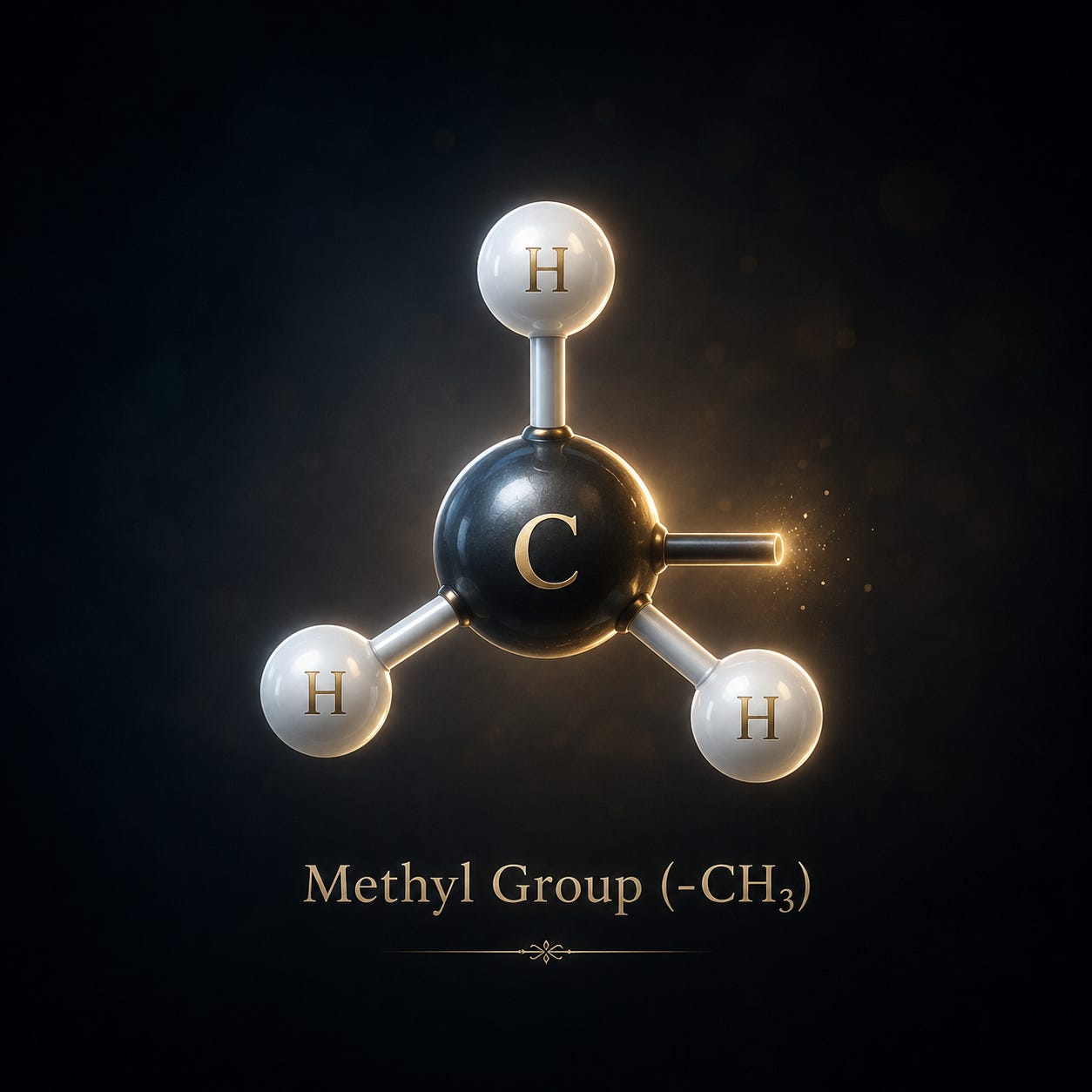
A methyl group is almost nothing. One carbon, three hydrogens. It is lighter than a molecule of water, simpler than the simplest sugar—a biochemical fragment so small it seems beneath notice.
And yet: attach it to the right position on a strand of DNA, and a gene falls silent. Remove it, and the gene speaks again.
If your genome is a library—three billion letters of inherited text—then methylation is the marginalia. It is the system of annotations, underlines, and sticky notes that determines which volumes are pulled from the shelf and read aloud, and which remain closed. The text of the library does not change. What changes is which parts of it get expressed.
This is not a metaphor I use casually. As I wrote in Regenerate, the informational power of food was first demonstrated in the experiments that launched the entire field of nutrigenomics: researchers fed yellow-coated agouti mice a diet rich in methyl donors, and their offspring were born with brown coats. The mothers’ food had not rewritten the pups’ genes. It had re-annotated them—supplying the one-carbon punctuation marks that silenced the gene governing coat color, and with it, the metabolic dysfunction that traveled alongside it.
One generation’s dinner became the next generation’s gene expression

That single experiment quietly demolished the idea that food is merely fuel and building material. Food, as I argued throughout Regenerate, is a vessel for gene-regulatory information. The beet on your plate carries betaine. The kale carries folate. The natto carries vitamin B12. These are not simply “nutrients” in the vending-machine sense. They are methyl donors—couriers delivering the single carbon atoms with which your body punctuates its own genome, moment by moment, meal by meal.
And once you see nutrition this way, the one-carbon pathway stops looking like an obscure corner of biochemistry and starts looking like what it actually is: the postal service of the epigenome. Through it, methyl groups are gathered, carried, handed off, and delivered to an astonishing range of destinations—DNA synthesis and repair, gene regulation, neurotransmitter metabolism, membrane construction, detoxification, cellular energy, and the recycling of a molecule we will meet in a moment called homocysteine.
Four B vitamins run this postal service together. Folate carries the one-carbon parcels. Vitamin B12 receives and transfers them. Vitamin B6 operates an alternate route. Riboflavin—vitamin B2—becomes FAD, the coenzyme that powers one of the system’s most important sorting stations.
These are not four unrelated vitamin stories. They are four movements within one metabolic symphony.
This is where the ordinary language of “taking a B-complex” becomes woefully inadequate. The body is not a vending machine into which we insert vitamins and receive predetermined outcomes. It is a self-organizing, relational system. Nutrients do not fill empty containers; they enter conversations already shaped by genetics, food, microbial activity, medications, age, stress, kidney function, and countless other variables that determine whether a reaction proceeds freely, slows to a trickle, or diverts altogether.
When I revisited the formulation of MethylateBLUE™ through this lens, I found something more interesting than a marketing claim.
Several of its core B-vitamin amounts fall near doses used in published human research on methylation-related physiology.
That does not mean the finished product is equivalent to those clinical interventions. It has not been tested in those trials, and science does not permit us to borrow the outcome of an ingredient study and paste it onto a bottle.
But it does allow us to ask a disciplined and important question:
Was the formula constructed around biologically meaningful relationships—or simply decorated with fashionable ingredients?
The answer begins with a molecule hiding in plain sight.

Homocysteine Is Not the Enemy. It Is the Check-Engine Light.
Homocysteine—the molecule that cost Kilmer McCully his career—is often spoken of as though it were a toxin invading the body from outside.
It is not.
Homocysteine is produced within us, continuously, as part of the normal metabolism of methionine—an essential amino acid found in every protein-rich meal you have ever eaten. It is not an intruder. It is traffic.
And like traffic, its meaning depends entirely on whether it is moving.
Picture a busy highway interchange. Vehicles arriving as homocysteine have two legitimate exits. The first exit loops back the way it came: through remethylation, homocysteine receives a methyl group and is converted back into methionine. This recycling loop depends on folate—specifically its active form, 5-MTHF—and on vitamin B12, which performs the actual handoff.
The second exit leaves the loop entirely: through transsulfuration, homocysteine is directed downward into the body’s sulfur economy, toward cysteine and the raw materials of glutathione and other sulfur-bearing compounds. Vitamin B6 operates this off-ramp.
And one step upstream of the interchange sits the sorting station itself: the enzyme MTHFR, which manufactures the 5-MTHF used in remethylation—and which, crucially, cannot run without FAD, the coenzyme built from riboflavin.
When both exits flow, no traffic accumulates. When either narrows, the interchange backs up—and a blood test registers the congestion as “elevated homocysteine.”
Now think about what the check-engine light on your dashboard actually is. The light is not the problem. The light is the report of a problem somewhere upstream—in the fuel line, the sensors, the exhaust. And the crudest imaginable response to a glowing check-engine light is to unscrew the bulb.
Yet that is precisely what an obsessive fixation on “lowering homocysteine” can become. The meaningful question is never simply:
How do we force this number down?
The meaningful question is:
What is this number attempting to tell us about the pathway through which it moves?
Perhaps folate status is inadequate. Perhaps B12 is low or poorly absorbed. Perhaps B6 is insufficient, or riboflavin status suboptimal. Perhaps kidney function has changed, or thyroid physiology, medication use, age, alcohol intake, or a genetic variant is reshaping the metabolic terrain.
Homocysteine tells us that movement through the system may be impaired. It does not, by itself, tell us why. Honesty requires acknowledging its limits: this is not a perfectly specific “methylation test.” The National Institutes of Health notes that homocysteine can rise when the body cannot adequately convert it toward methionine, but also emphasizes that the value is influenced by vitamin B12 status, kidney function, and other micronutrients.
Even so, in the often-vague world of “methylation support,” homocysteine gives us something unusually valuable:
a measurable biological signal.
The symptom, as I have argued for two decades, is not the enemy. It is the signal. And this signal happens to come with a number attached.
A clinically interesting nutrient combination
In one randomized human study involving adults with elevated homocysteine, researchers used a combination that included:
400 mcg of 5-MTHF
3 mg of vitamin B6
5 mcg of vitamin B12
2.4 mg of vitamin B2
12.5 mg of zinc
250 mg of betaine
The intervention substantially lowered homocysteine over two months.
Now compare several of those amounts with the current daily serving of MethylateBLUE:
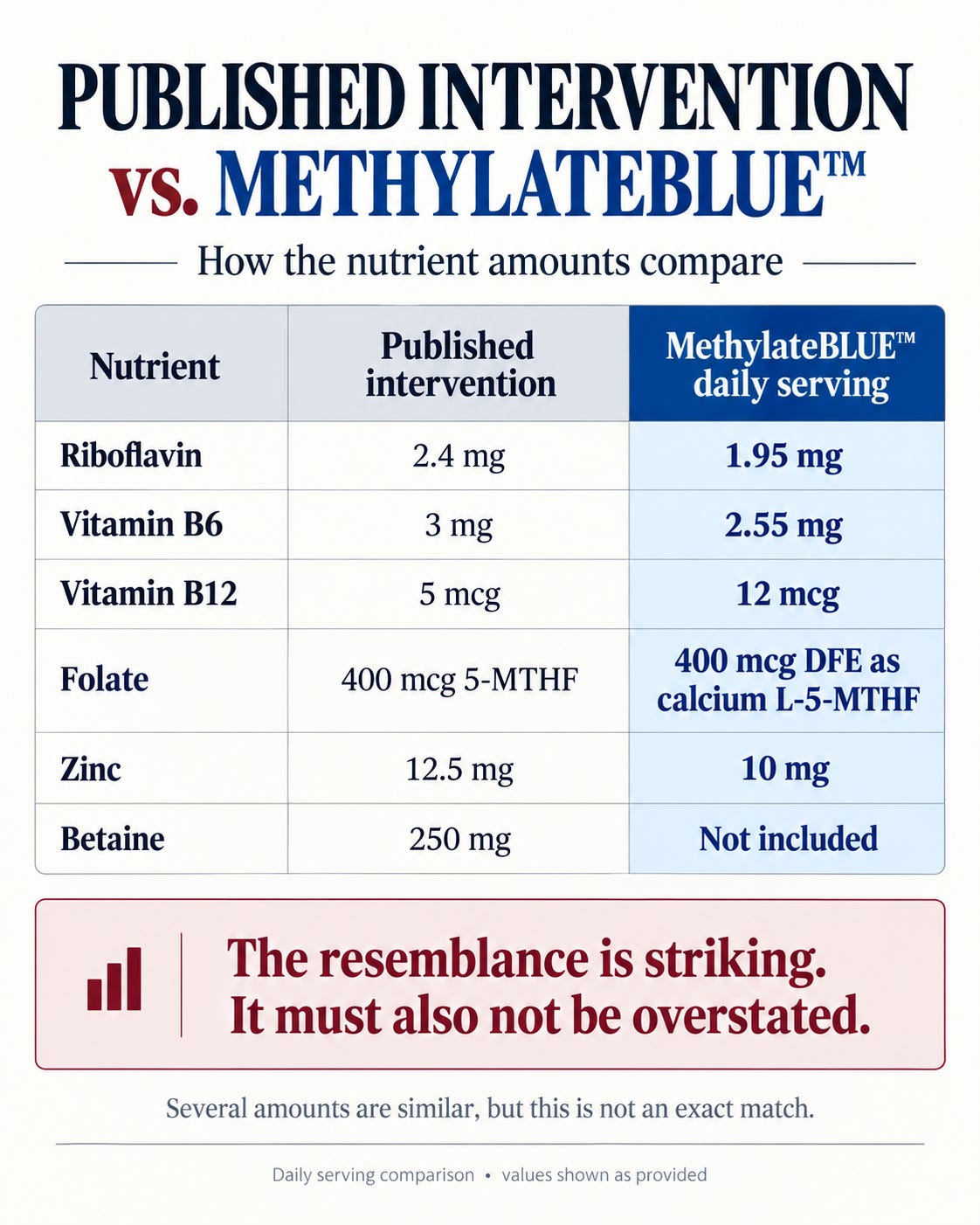
The resemblance is striking. It must also not be overstated.
The clinical intervention included betaine. The total formula was different. The folate amounts are expressed differently: the study reported 400 mcg of 5-MTHF, whereas the MethylateBLUE label declares 400 mcg DFE as calcium L-5-MTHF—and NIH notes that a universally established conversion between supplemental 5-MTHF and DFE does not yet exist.
This is not equivalence. It is dose overlap.
And that is still meaningful. It tells us that the central B vitamins in MethylateBLUE are not present as label decoration. Several occupy the same general nutritional range as amounts used together in human homocysteine research. The finished product has not been clinically demonstrated to treat elevated homocysteine, but the formulation has a legitimate biochemical rationale for supporting normal homocysteine metabolism.*
The distinction may sound subtle. Scientifically and legally, it is the difference between evidence and exaggeration.
And notice what the missing ingredient teaches. Betaine—the one component of that trial absent from the capsule—is precisely the methyl donor I highlighted in Regenerate as abundant in beets. The lesson is not that the formula is incomplete. The lesson is that no formula was ever meant to replace the informational density of food. A supplement can supply cofactors at defined amounts; the plate supplies the rest of the conversation. They are partners in the same one-carbon economy, not competitors for it.MTHFR: A Bottleneck Is Not a Verdict
Few genes have accumulated more cultural mythology than MTHFR.
Some people now speak of “having MTHFR” as though they have been diagnosed with a disease.
But everyone has the MTHFR gene. It encodes methylenetetrahydrofolate reductase—the sorting-station enzyme we met at the interchange, the one that converts 5,10-methylene-THF into 5-MTHF, the form of folate used to remethylate homocysteine.
The meaningful question is whether a person carries a variant that changes how efficiently this enzyme functions. The best known is MTHFR C677T. People who inherit two copies of the T allele—the 677TT genotype—generally have lower MTHFR activity than people with the more common CC genotype. NIH describes the variant as reducing the ability to produce 5-MTHF and notes that homozygosity is relatively common in some populations.
Here is a way to picture it. Imagine a city whose entire methyl-group economy depends on goods crossing a single bridge. The MTHFR enzyme is that bridge. The 677TT genotype does not demolish it—it narrows it. Traffic still crosses. It simply crosses more slowly, and under load, the backups begin.
The supplement industry’s response has been almost reflexive:
Reduced MTHFR activity? Take more methylfolate.
There is real logic here. Supplying 5-MTHF directly is like airlifting goods over the narrowed bridge—delivering folate downstream of the constricted step. It can be a reasonable strategy.
But notice the assumption buried inside it: that the bridge is beyond repair, and the only option is to route around it.
The riboflavin research asks a more interesting question: what if the bridge is not broken—what if it is under-maintained?
Because MTHFR is itself a riboflavin-dependent enzyme. Its working cofactor is FAD, built from vitamin B2. Riboflavin is, quite literally, the maintenance crew that keeps the narrowed bridge open. The MTHFR story was never only about the folate produced after the enzyme does its work. It is equally about the nutritional cofactor the enzyme requires while doing that work.
This opens a radically different possibility. Instead of thinking only about bypassing the enzyme, what if we also support the enzyme itself?
The milligram that changes the equation
In a randomized trial, people homozygous for the MTHFR 677T allele received 1.6 mg of riboflavin per day. Riboflavin lowered homocysteine specifically in the TT group—demonstrating that a common genetic variant can alter the physiological response to an ordinary nutrient. Other randomized work using the same modest riboflavin dose found measurable blood-pressure changes in hypertensive people carrying the 677TT genotype.

Now place that dose beside MethylateBLUE:
Riboflavin used in the MTHFR trials: 1.6 mg
Riboflavin in MethylateBLUE: 1.95 mg as riboflavin-5′-phosphate
That proximity is not proof that MethylateBLUE reproduces the trial outcomes. But it is difficult to dismiss as nutritionally trivial.
The amount is not a pharmacological megadose. It is barely more than a milligram. Yet, under the right genetic conditions, human research found that this modest quantity produced a measurable physiological response.
There is something almost humbling about that.
Modern medicine has trained us to equate power with magnitude. We expect the decisive intervention to arrive in hundreds of milligrams, perhaps grams, bearing the authority of a prescription pad.
But biology does not measure significance by weight.
A key weighs almost nothing. Its importance lies in whether it fits the lock.
MethylateBLUE supplies riboflavin on one side of the MTHFR pathway and L-5-MTHF on the other—maintenance for the bridge, and deliveries beyond it. It also supplies methylcobalamin and pyridoxal-5′-phosphate to support the neighboring reactions of normal homocysteine and amino-acid metabolism. Its current label provides 1.95 mg B2, 2.55 mg B6, 400 mcg DFE folate as calcium L-5-MTHF, and 12 mcg B12 as methylcobalamin per three-capsule serving.
And there is a third character in this story that the genetic determinists rarely mention: your microbiome.
As I documented in Regenerate, the microbiome can compensate for limitations in our genetic material once believed to be inborn and beyond remedy. Lactobacillus helveticus—a humble bacterium found in yogurt and other fermented dairy—can produce the very folate metabolite that a sluggish MTHFR enzyme under-supplies, helping the body maintain normal levels of methylated folate. The single nucleotide polymorphisms given so much fanfare are not the final word on our nutritional fate. Our microbial allies can fill gaps our genes cannot.
The gene, in other words, is one voice. It was never the whole choir.
This is a more coherent philosophy than simply pouring ever-larger amounts of methylfolate into one end of the pathway. Methylation is not a faucet that should always be opened wider. It is regulation. The aim is not maximal acceleration but appropriate flow.
The Disappearing Responder
Nutrition research has a habit of averaging human beings into abstraction—and averages are where responders go to disappear.
Imagine testing reading glasses on a thousand people, nine hundred of whom already have perfect vision. Average everyone’s reading performance, and the glasses will appear to do almost nothing. The hundred people who could suddenly read again vanish into the arithmetic—and the study concludes, with full statistical confidence, that glasses “don’t work.”
This is precisely what happened to the homocysteine story. The large trials of the 2000s handed folate, B6, and B12 to broad, unselected populations. Homocysteine fell; heart attacks did not. This is the moment from our opening story when the skeptics declared the case closed—and NIH reviews rightly conclude that broad B-vitamin supplementation should not be represented as a proven means of preventing cardiovascular disease.
But those trials had asked only one question: does this work for everyone?
The riboflavin researchers asked a better one: does it work for the people whose biology says it should?
They recruited individuals carrying two copies of the MTHFR 677T variant—the genotype whose enzyme loses its grip on FAD—and gave them a modest daily dose of riboflavin. Blood pressure responded in the 677TT group, exactly where the enzyme biology predicted. And this is no rare curiosity: roughly one in ten people in many populations carry the 677TT genotype, and closer to one in four in some, including groups of Mexican and southern Italian ancestry.
The broad trials handed reading glasses to everyone in the room. The riboflavin trials first asked who could not see.
Averaged into the general population, one in ten disappears. Counted, one in ten is hundreds of millions of human beings.
So the two sets of findings do not contradict each other; they answer different questions. One measures population-wide disease prevention. The other measures nutrigenetic responsiveness—whether a specific nutrient changes a specific physiology in people carrying a specific genotype. Precision nutrition begins when we stop asking only does this work? and start asking for whom, under what conditions, and through which pathway?
None of this turns riboflavin into a treatment for hypertension, and none of it proves that any supplement prevents heart attacks, strokes, or cardiovascular death. MethylateBLUE was not formulated or tested as a treatment for anything. Its relevance here is narrower and more defensible: it supplies riboflavin in an amount closely overlapping that used in the MTHFR 677TT research, alongside other nutrients involved in normal methylation, homocysteine metabolism, and cardiovascular physiology.*
That is an evidence-based formulation rationale. It is not a disease claim.

Riboflavin’s everyday sources — and the fermented allies that can help compensate for a sluggish MTHFR gene.
The Aging Brain: Where Methylation Meets Time
The brain is often portrayed as an organ condemned to inevitable decline. Neurons disappear. Memory dims. The once-vivid interior world gradually narrows. And “aging” is offered as the explanation, as though the mere passage of time were itself a biological cause.
But time does not act alone. Time acts through terrain.
With age, vitamin B12 absorption can become less efficient. Medication use increases. Kidney function can change. Dietary patterns may narrow. Homocysteine often rises. Mitochondrial function shifts. Vascular health changes. The biochemical ground upon which the brain stands may become, year by year, less forgiving—not because the brain has forgotten how to maintain itself, but because the conditions it depends upon have quietly eroded.
This is why the relationship among B vitamins, homocysteine, and cognitive aging has attracted such sustained scientific interest.
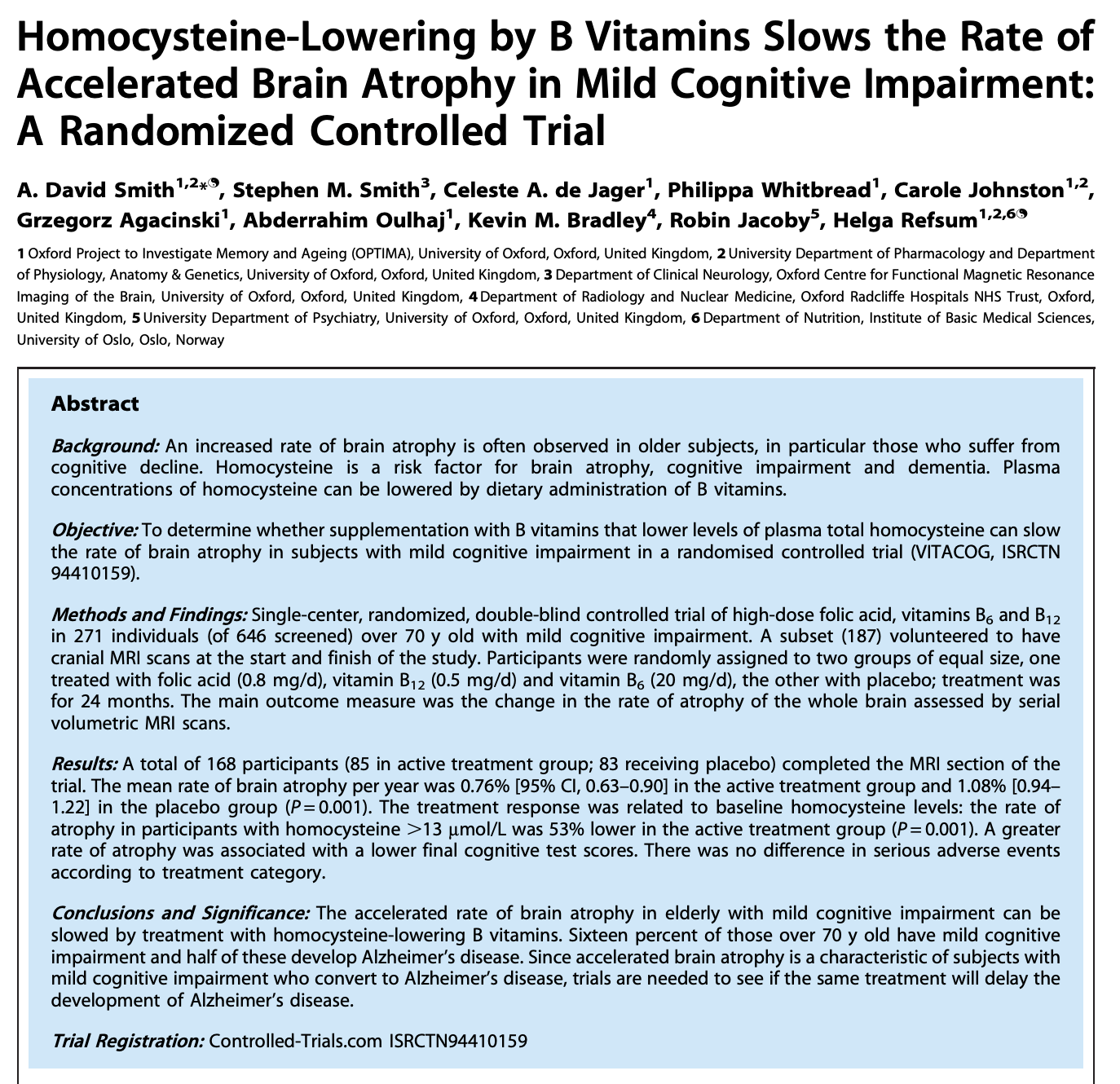
One of the most provocative studies was the Oxford VITACOG trial. Researchers enrolled 271 adults over age 70 with mild cognitive impairment and randomized them to receive placebo or a daily combination of:
800 mcg folic acid
500 mcg vitamin B12
20 mg vitamin B6
The intervention continued for two years.
Among participants who completed the MRI portion of the trial, the average annual rate of whole-brain atrophy was 0.76% in the B-vitamin group, compared with 1.08% in the placebo group. Among participants whose baseline homocysteine exceeded 13 μmol/L, the rate of atrophy was 53% lower in the active-treatment group.
Those numbers deserve attention. They also demand restraint.
MethylateBLUE does not reproduce the VITACOG intervention.
The study used:
20 mg B6
500 mcg B12
800 mcg folic acid
MethylateBLUE provides:
2.55 mg B6
12 mcg B12
400 mcg Dietary Folate Equivalents (DFE) as L-5-MTHF
The doses differ substantially. The vitamin forms differ. The studied population had mild cognitive impairment. The finished MethylateBLUE formula was not administered.
It would therefore be scientifically inappropriate to imply that MethylateBLUE slows brain atrophy or reproduces the VITACOG findings.
Moreover, the broader cognitive literature is mixed. NIH’s review notes that while B-vitamin interventions commonly lower homocysteine, randomized trials have not consistently shown improvements in cognition across unselected older populations.
Yet the VITACOG findings should not be discarded simply because they refuse to justify a sweeping claim. They point toward something subtler—and by now, familiar.
The effect was not uniform. It was markedly stronger among participants who began with higher homocysteine.
Once again, the responder was hiding inside the average. Once again, the check-engine light identified the vehicles most likely to benefit from attention.
The study’s most important implication is therefore less sensational than “B vitamins prevent cognitive decline,” but more scientifically durable:
The state of one-carbon metabolism may help identify a subgroup of aging adults in whom B-vitamin status has greater physiological relevance.
That is not a promise.
It is a clue.
And clues, when measured carefully, are how science advances.
Four Windows Into One Metabolic River
Elevated homocysteine. MTHFR C677T. Cardiovascular physiology. The aging brain.
Filed in separate medical specialties, these subjects appear unrelated. One belongs to laboratory medicine, another to genetics, another to cardiology, another to neurology.
But the body does not recognize departmental boundaries. Beneath them runs the same metabolic river.
Follow a single methyl group and you can watch the whole system cohere, like a relay race run at the molecular scale. Folate carries the one-carbon baton through the folate cycle. MTHFR—powered by riboflavin’s FAD—prepares the handoff. Vitamin B12 receives the baton and passes it to homocysteine, remaking methionine. Methionine becomes S-adenosylmethionine—SAM—the body’s principal methyl donor, which then distributes that single carbon to a vast constellation of destinations: DNA, neurotransmitters, membranes, detoxification reactions. And all the while, vitamin B6 stands at the side gate of transsulfuration, ready to route homocysteine toward the sulfur economy when the recycling loop has what it needs.
Each runner depends on the one before. Each handoff depends on the conditions around it. And no single runner can honestly be crowned the winner of a relay.
This is precisely where reductionism fails us. The old biological model searches for the one defective part, the one causal gene, the one offending biomarker, the one magic-bullet molecule. But living systems do not behave like assembly lines. They are composed of feedback loops, compensatory pathways, redundancies, microbial contributions, environmental inputs, and relationships whose importance changes with context.
There is no solitary “methylation vitamin.”
There is a methylation network.
And the health of that network cannot be inferred from genotype alone. A person can carry the MTHFR 677TT genotype and maintain normal homocysteine—supported by diet, by cofactors, even by microbial allies. Another can carry the “normal” CC genotype and develop elevated homocysteine through B12 deficiency, kidney dysfunction, medication use, or inadequate nutrition.
The gene changes the terrain.
It does not dictate the journey.
Why We Built MethylateBLUE Around a Network, Not a Megadose
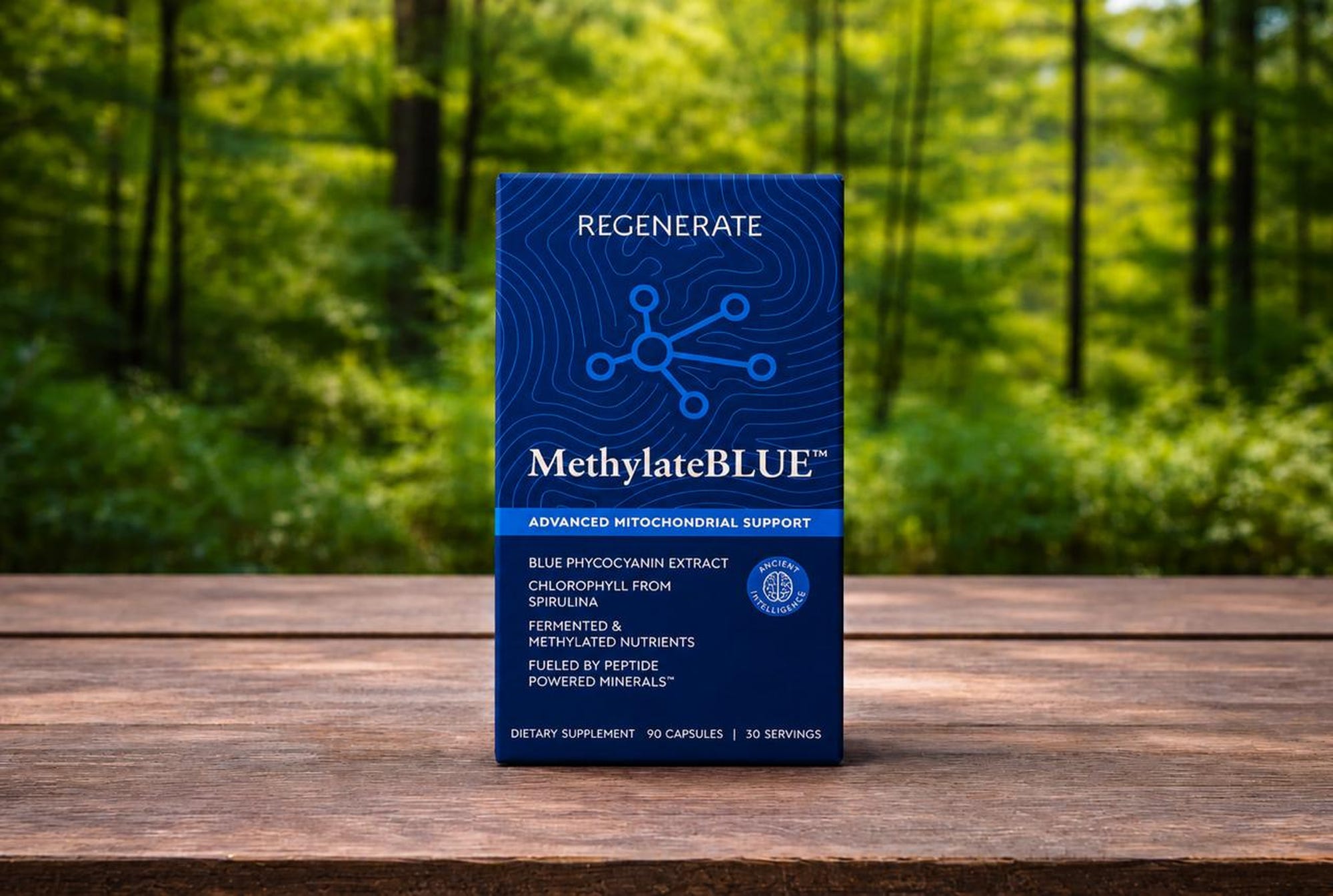
The supplement industry has largely answered the MTHFR conversation with more methylfolate. Sometimes dramatically more.
But “more” is not a biological philosophy. It is a quantity. A megadose is not an idea; it is a volume knob. And turning one instrument to maximum has never yet improved a symphony.
When we formulated MethylateBLUE, the intention was not to bludgeon one methylation reaction into submission. It was to provide nutritional support at several connected points along the relay—the runner, the baton, the handoff, and the side gate all at once.
The formula supplies:
Riboflavin-5′-phosphate, providing vitamin B2 for the FMN- and FAD-dependent enzymatic reactions—including the cofactor upon which MTHFR itself depends.
Calcium L-5-methyltetrahydrofolate, a biologically active folate form involved in one-carbon metabolism—the baton, already in hand.
Methylcobalamin, a coenzyme form of vitamin B12 involved in normal homocysteine and methionine metabolism—the handoff.
Pyridoxal-5′-phosphate, the coenzyme form of vitamin B6 involved in normal amino-acid metabolism and transsulfuration—the side gate.
These nutrients are accompanied by fermented nicotinamide, spirulina peptide bound magnesium, zinc, selenium, and other trace minerals, together with organic blue spirulina extract. The complete current amounts are disclosed on the Supplement Facts panel.
What made me look twice was not that these forms sounded sophisticated. It was the relationship between their amounts and the human literature.
The product’s 1.95 mg of riboflavin lies remarkably close to the 1.6 mg used in genotype-specific MTHFR trials. Its B2, B6, B12, folate, and zinc amounts occupy a range resembling portions of a published homocysteine intervention—although the formulas are not identical and should never be presented as though they are. And unlike the VITACOG protocol, MethylateBLUE is not a high-dose clinical B6/B12 intervention. It is a daily nutritional formula built around pathway support rather than pharmacological force.
That is, in my view, the more interesting story.
Not that a supplement can overpower the body. But that a thoughtfully constructed formula can provide several of the molecular tools through which the body carries out its own normal work.*
The body already knows the pathway. It has been running this relay for billions of years. The nutrients do not invent the intelligence.
They participate in it.
The Gene Is Not the Verdict
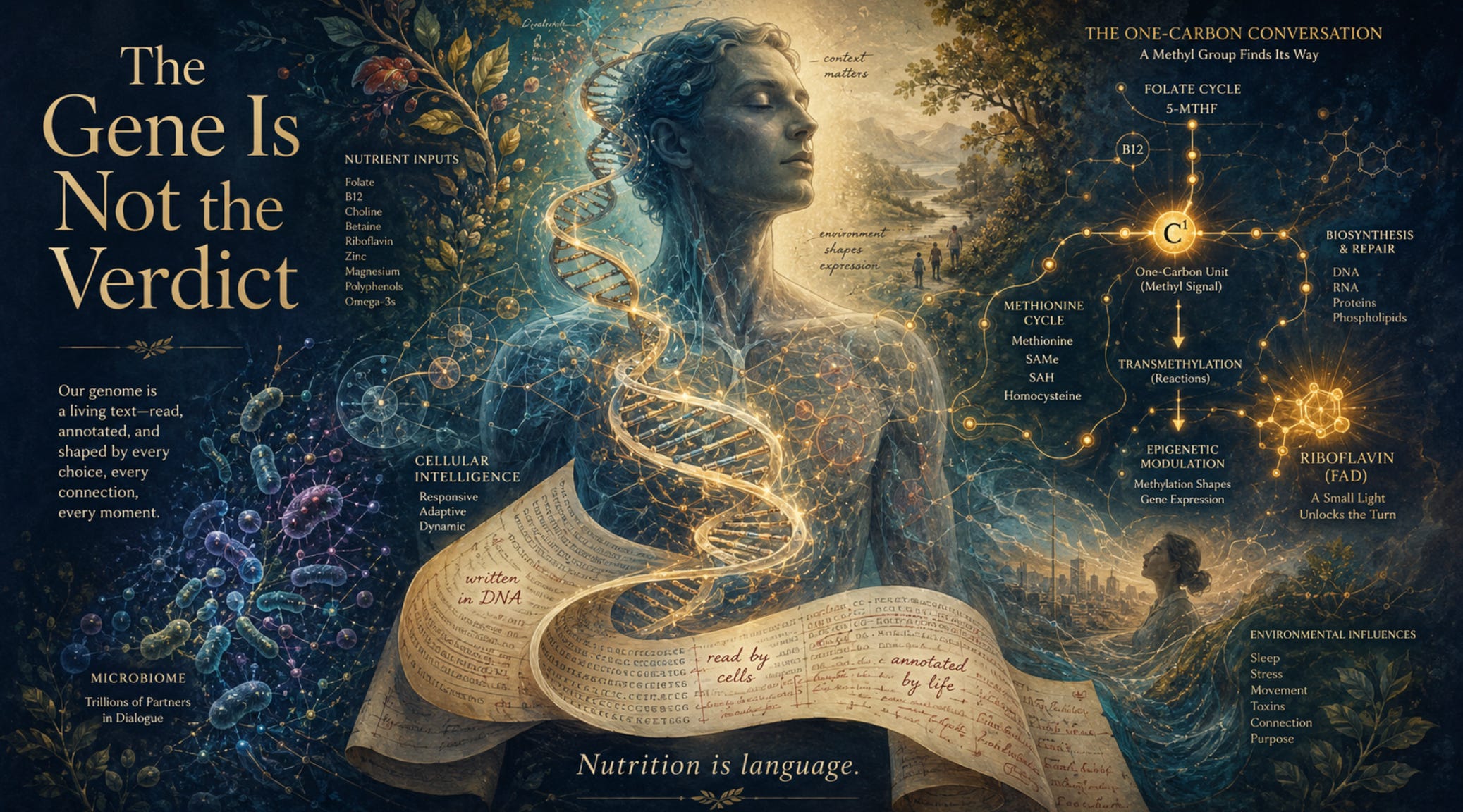
The twentieth-century model of nutrition was built around deficiency prevention. How much vitamin C prevents scurvy? How much folate prevents neural-tube defects? How much niacin prevents pellagra?
These questions saved lives, and they remain essential. But they are not the endpoint of nutritional science.
The deeper question now emerging is:
What does this particular biology require for a pathway to function normally?
Two people can consume the same nutrient and experience different biochemical consequences. Their genes differ. Their microbiomes differ. Their digestive capacities, medications, exposures, ages, and lives differ. The vending machine dispenses one product; the living system composes millions of individualized responses.
The MTHFR-riboflavin relationship captures this beautifully. One nucleotide changes. An enzyme behaves differently. Its relationship with a vitamin-derived cofactor becomes more consequential. And a quantity of riboflavin scarcely heavier than a snowflake produces a measurable response in the genetically relevant group.
That is not magic. It is context.
It is also the heart of what I called, in Regenerate, the New Biology: the recognition that we are not prisoners of our inheritance, because the genome was never a verdict handed down—it is a text under continuous annotation, responsive to food, microbes, environment, and choice. Genes are no more curses than symptoms are life sentences. Your DNA is not merely a ledger of disease risk. It is a personalized resiliency warehouse, waiting on the right inputs.

A gene is not a verdict. A biomarker is not a disease. A vitamin is not a drug. Each is part of a living conversation—one that has been unfolding within biological systems for billions of years and continues, molecule by molecule, in this very moment, in you.
The deepest lesson of methylation is therefore not that we are hostages to a fragile pathway. It is that we are participants in it. The food we consume, the nutrients we absorb, the microbes we harbor, the exposures we endure, and the choices we make all enter the conversation—one carbon atom at a time.
Sometimes the body does not need to be overridden. It does not need to be bullied into submission by a megadose or silenced by a drug.
Sometimes it needs the right cofactor, in the right relationship, at the right metabolic junction.
Not to make the body intelligent, but to remove an obstacle from the intelligence already there.
That is the quiet revolution hiding inside a single carbon atom: the recognition that nutrition, at its deepest level, is not fuel.
It is language. And the body has been fluent all along.
About MethylateBLUE™
MethylateBLUE™ provides riboflavin-5′-phosphate, pyridoxal-5′-phosphate, calcium L-5-methyltetrahydrofolate, and methylcobalamin together with complementary nutrients and organic blue spirulina. It was formulated to provide nutritional support for healthy methylation, normal homocysteine metabolism, cellular energy metabolism, nervous-system function, and normal cardiovascular physiology.*
The clinical studies discussed in this article investigated individual nutrients or specific nutrient combinations. They were not clinical trials of MethylateBLUE™, and their findings should not be interpreted as evidence that MethylateBLUE™ diagnoses, treats, mitigates, cures, or prevents MTHFR-related disorders, elevated homocysteine, hypertension, cognitive impairment, brain atrophy, cardiovascular disease, or any other medical condition.
This article is for educational purposes and is not medical advice. Consult a qualified healthcare provider before beginning any supplement, particularly if you are pregnant, nursing, taking medications, or managing a medical condition.
*These statements have not been evaluated by the Food and Drug Administration. This product is not intended to diagnose, treat, cure, or prevent any disease.
For more information on our formula and it’s application to the ‘energy crisis’ related to caffeine, nicotine, and stimulant addictions, read my article below:
The Energy You Borrow vs. The Energy You Build

For most of my adult life I treated energy the way most people do, as something to summon on demand. A second cup when the morning thinned out. Something sweet at three in the afternoon. I built a lot of work on borrowed energy before I understood that borrowing was exactly what I was doing, and that every loan carried interest my cells were quietly pay…