



How America’s most demonized fat became one of the most researched healing foods on earth — and the 10 health benefits now backed by human evidence
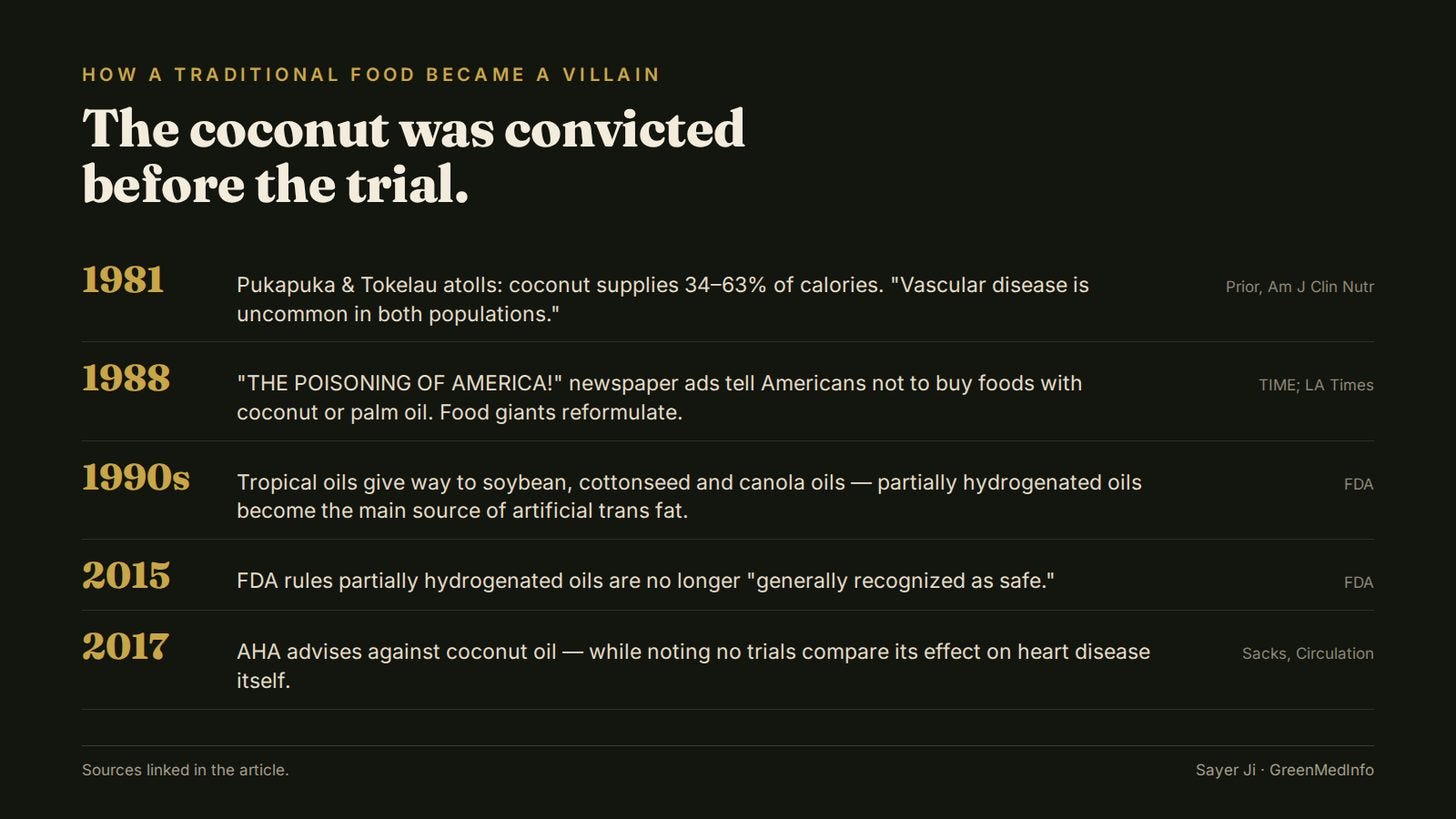
Halfway between Hawaii and New Zealand, on coral atolls so small you can walk across them in minutes, researchers in the 1960s and 70s found something that should have been impossible. The people of Tokelau were getting 63% of their calories from coconut. Their neighbors on Pukapuka got 34%. By the logic that was about to take over Western nutrition, their arteries should have been clogged with saturated fat.
They weren’t. “Vascular disease is uncommon in both populations,” the investigators reported in the American Journal of Clinical Nutrition, “and there is no evidence of the high saturated fat intake having a harmful effect in these populations” (Prior et al., Am J Clin Nutr, 1981).
Seven years later, the coconut was put on trial anyway — not in a laboratory, but in the newspapers.
“The Poisoning of America”
In October 1988, Americans opened their papers to full-page ads headlined THE POISONING OF AMERICA! They were written and paid for by Phil Sokolof, a millionaire industrialist and heart-attack survivor, and they named the “poisoners”: food processors who used tropical oils (TIME). The ads singled out household brands — Kellogg’s Cracklin’ Oat Bran, Pepperidge Farm Goldfish, Nabisco Triscuits — for using coconut and palm oil (Los Angeles Times). Sokolof sank about $500,000 into his first ad alone (CBS News).
It worked. The industry reformulated, switching to soybean, cottonseed and canola oils (Los Angeles Times). To make those liquid oils behave like the stable tropical fats they replaced, much of the food supply leaned on partially hydrogenated oils — the primary source of artificial trans fat.
You know how that ended. In June 2015, the FDA issued its final determination that partially hydrogenated oils are no longer “generally recognized as safe” for use in human food, and gave manufacturers until June 18, 2018 to stop adding them (FDA). The “heart-healthy” replacement had become the thing we had to ban.
The Clock That Came Back
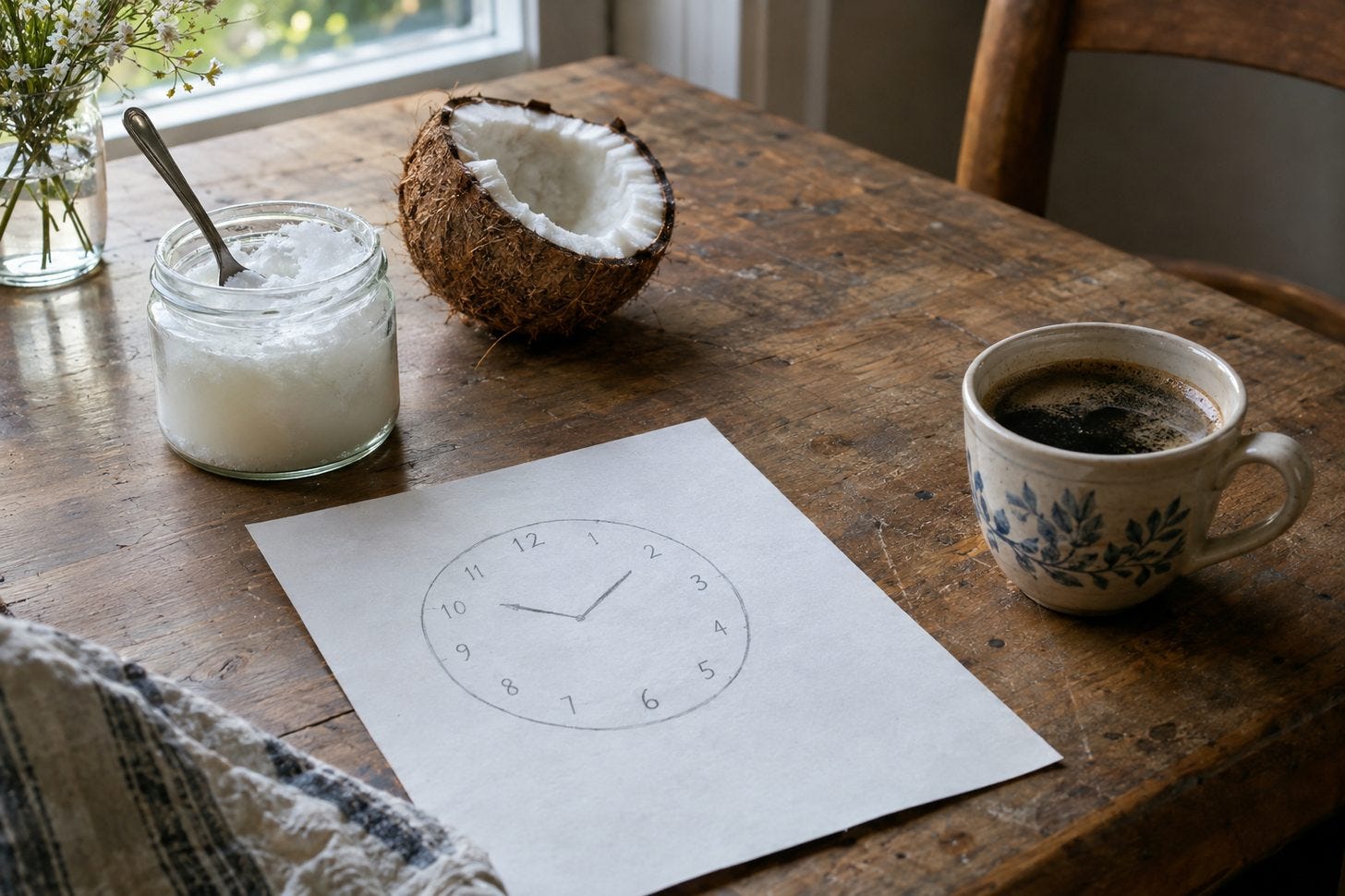
In May 2008, Dr. Mary Newport, a Florida neonatologist, watched her husband Steve, who had been diagnosed with Alzheimer’s, try to draw a clock. He produced a few small circles and scattered numbers. His doctor told her he was “beyond moderate.” After staying up all night reading patent filings for a medium-chain triglyceride drug, she realized its active ingredient was the same class of fat that makes up most of coconut oil. She stirred some into his oatmeal. Two weeks later, he drew the clock again. This time it looked like a clock (GreenMedInfo: The Coconut Cure for Alzheimer’s).
One family’s experience is not a clinical trial. But it captures something the research has since confirmed in pieces, again and again: the coconut was never the villain it was made out to be. As I wrote years ago, it is “not just a ‘good’ fat” — “coconut oil is an exceptional healing agent as well” (GreenMedInfo: 13 Evidence-Based Medicinal Properties of Coconut Oil).
What 763 Studies Show
The GreenMedInfo Coconut Oil page now indexes 763 research abstracts spanning 121 diseases and conditions, 48 pharmacological actions, 6 therapeutic actions and 61 articles (GreenMedInfo).
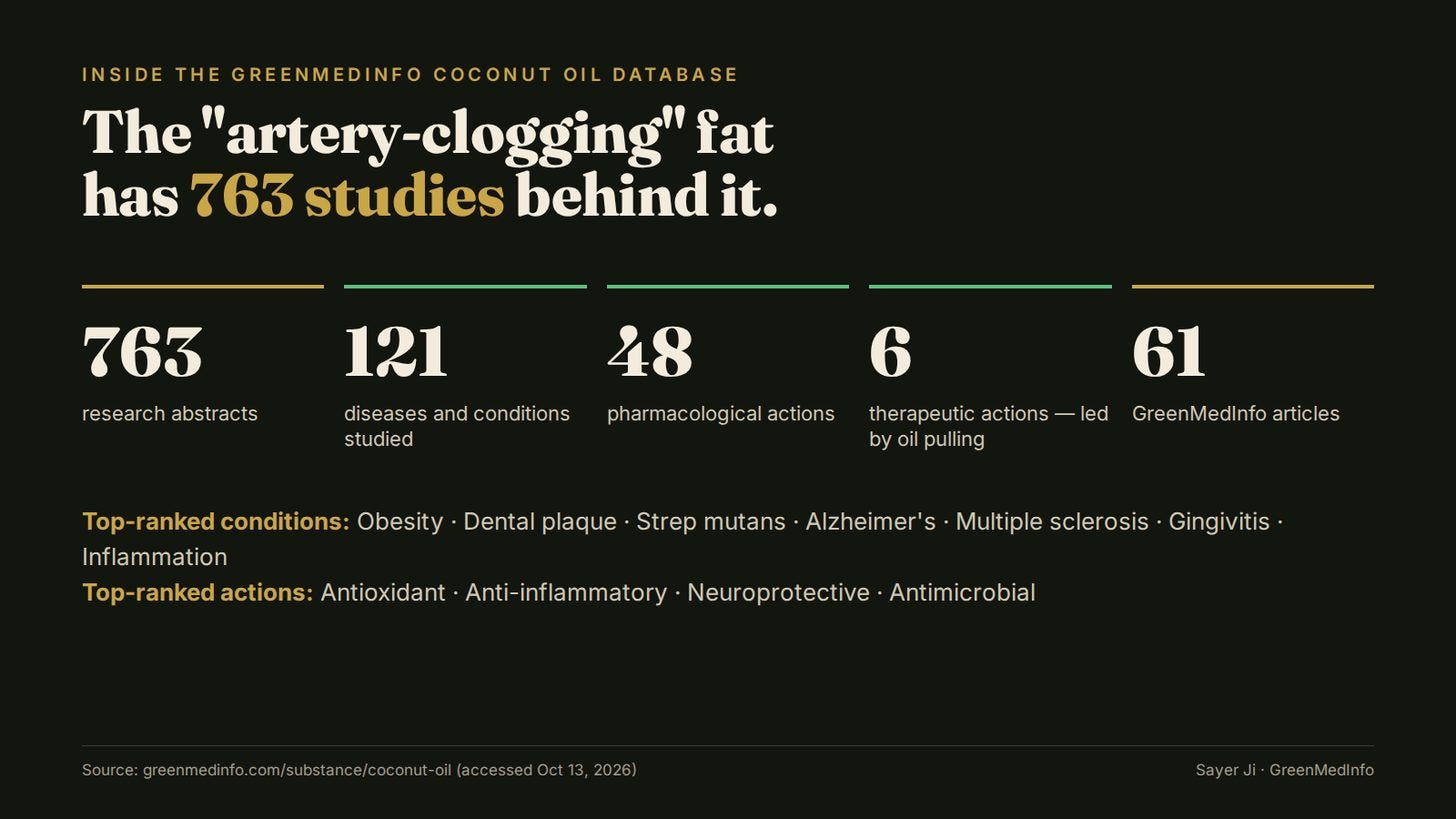
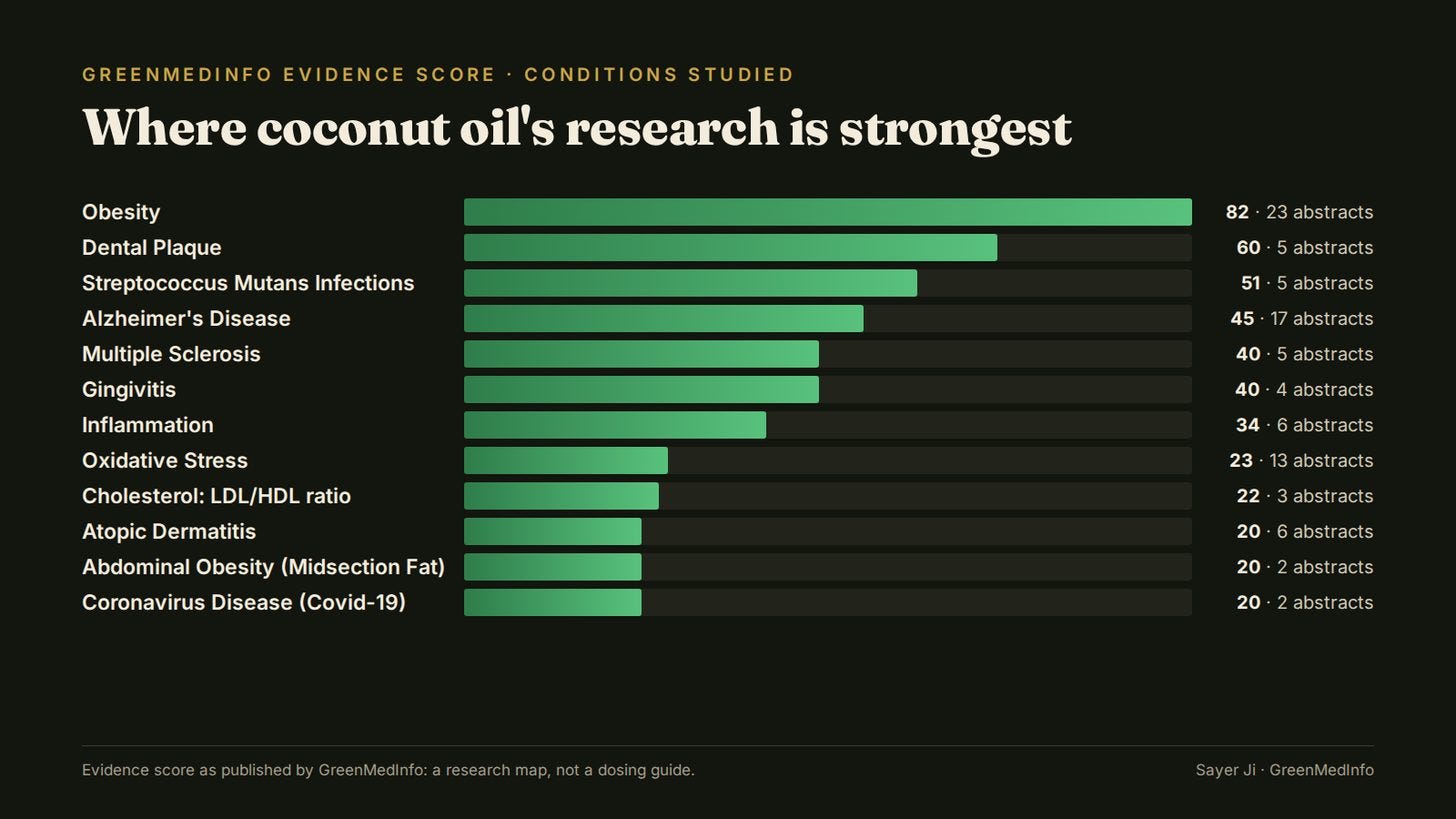
When you sort that research by evidence score, a clear picture emerges. The strongest signals are for obesity, dental plaque, Streptococcus mutans (the main cavity-causing bacterium), Alzheimer’s disease, multiple sclerosis, gingivitis and inflammation, followed by oxidative stress, cholesterol ratios, eczema and abdominal obesity (GreenMedInfo). The leading therapeutic action is oil pulling, and the most-studied pharmacological actions are antioxidant (33 abstracts), anti-inflammatory (25) and neuroprotective (22), with antimicrobial activity also scoring highly (GreenMedInfo).
Why coconut is different
“Saturated fat” is a chemical description, not a biological verdict. About two-thirds of the fat in coconut is made of medium-chain fatty acids — lauric, capric and caprylic acid. Unlike the long-chain fats in most of our diet, these travel straight to the liver, where they are burned for energy or turned into ketones, an alternative fuel for the brain. Lauric acid is also converted in the body to monolaurin, a compound that disrupts the membranes of bacteria, viruses and fungi (GreenMedInfo). Those two properties — fuel and defense — explain most of what follows.
The 10 Evidence-Based Health Benefits
I chose these ten by combining two filters: how strongly each ranks in the GreenMedInfo database, and whether it has been tested in humans. Each section opens with a plain-language summary, then a callout with the exact numbers, then a link to where we go deeper on GreenMedInfo.
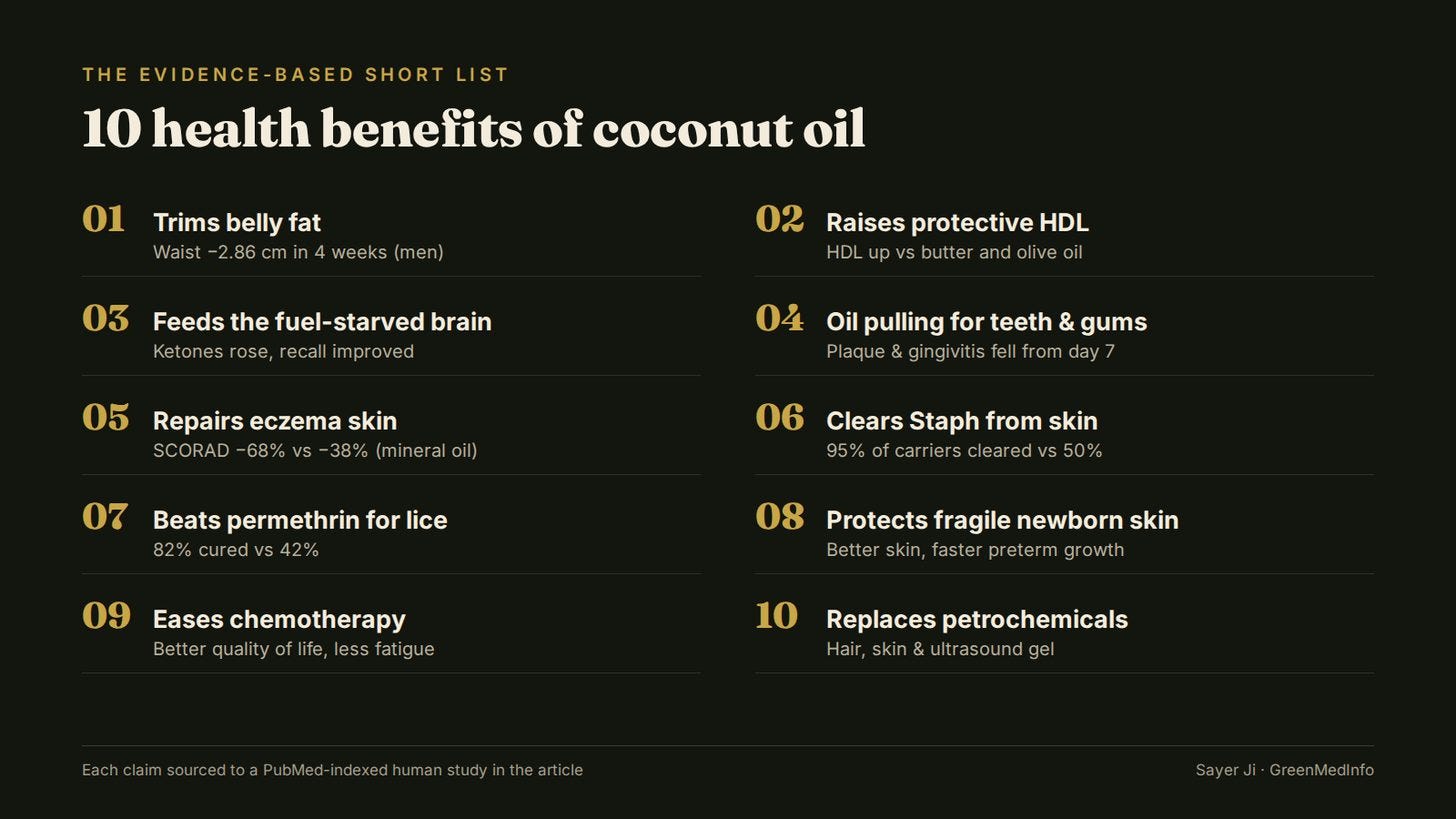
1. It trims belly fat — the most dangerous kind
Ironic, isn’t it? A saturated fat that helps you lose the most metabolically dangerous fat of all — the kind that wraps around your organs. Obesity is the #1 ranked condition in the coconut oil file, and abdominal obesity is in the top 12. Two small human studies found that about two tablespoons a day shrank waistlines within one to three months.
