


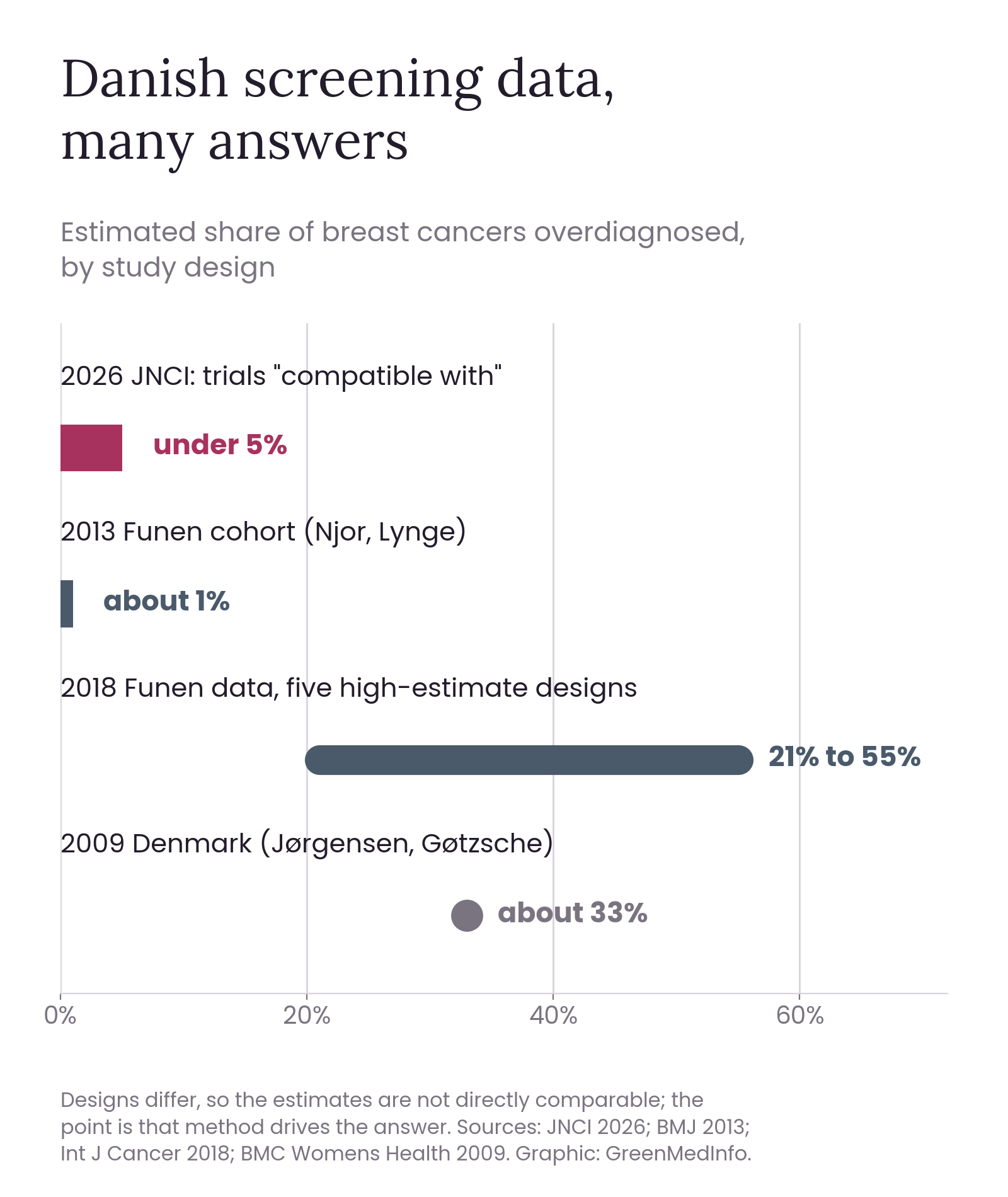
A meta-analysis published on the eve of Breast Cancer Awareness Month declares overdiagnosis “less than 5%.” Its benchmark is its lead author’s own 2013 study, drawn from a dataset the same researchers showed in 2018 can yield anywhere from 1% to 55%.


Story at a Glance
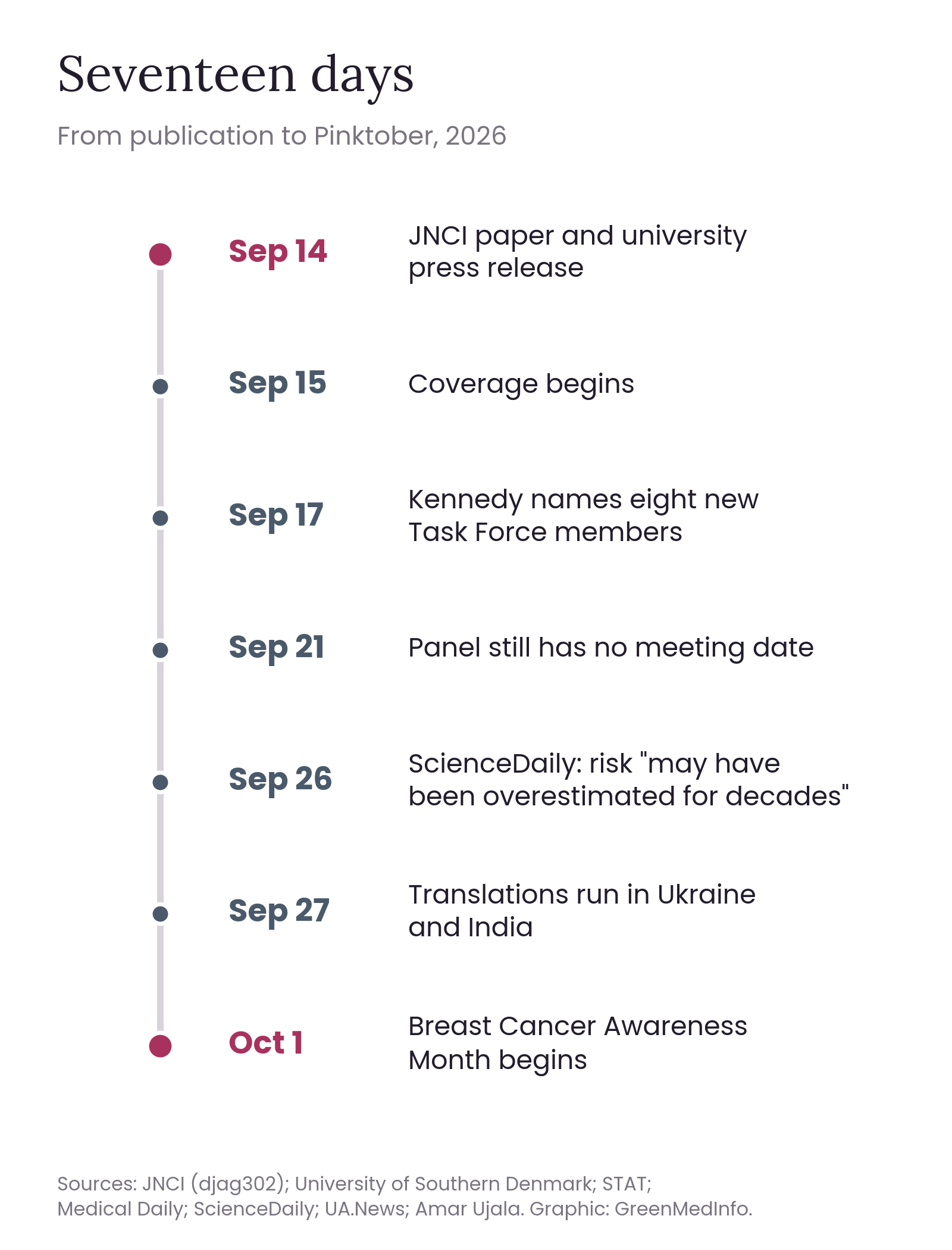
The timing. On September 14, 2026, seventeen days before Pinktober, the Journal of the National Cancer Institute published a reanalysis of the randomized mammography trials concluding that the results are compatible with very low overdiagnosis, under 5%. Prior estimates from the same trials ranged up to roughly 50%.
The conflict. A co-author is Robert A. Smith, PhD, Senior Vice President of Early Cancer Detection Science at the American Cancer Society, who has led the development of ACS cancer screening guidelines for most of his tenure there since 1992. His faculty profile lists an award from the National Breast Cancer Awareness Month Board of Sponsors among his honors.
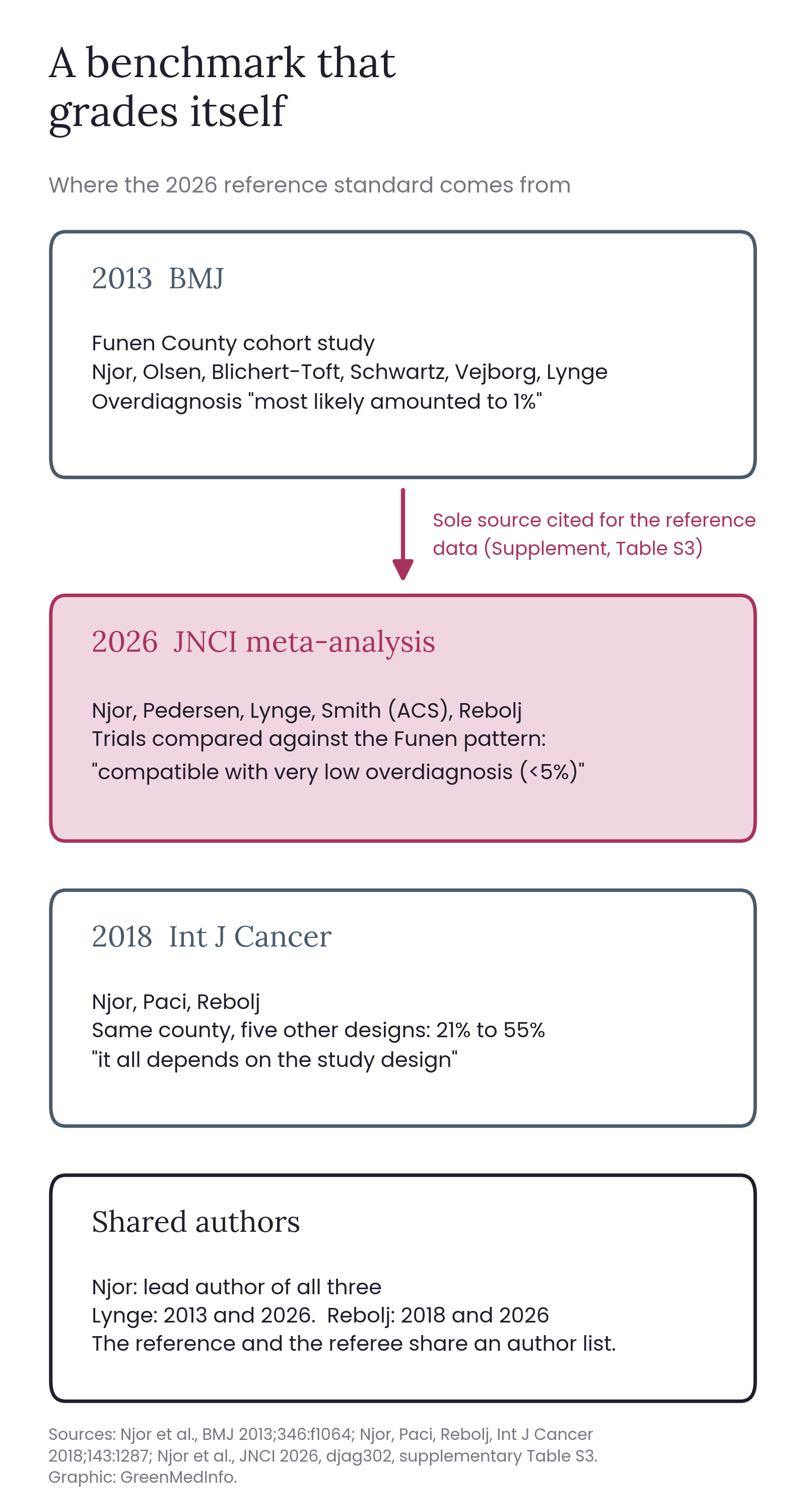
The circularity. The study grades every trial against a single real-world benchmark: Funen County, Denmark. The paper’s own supplementary data sources that benchmark to one study: the 2013 Funen analysis led by the same lead author, Sisse Helle Njor.
The method dependence. In 2018, Njor, Matejka Rebolj, and Eugenio Paci showed that the same Funen data, run through five other published study designs, produces estimates of 21% to 55%. They argued those designs were flawed. But their own conclusion was that the answer depends on the study design, which is exactly why a study built on their preferred design cannot settle the question.
The pattern. Breast Cancer Awareness Month was co-founded in 1985 by the pharmaceutical arm of a chemical conglomerate that also sold the leading breast cancer drug. Forty-one years later, the institutions that promote screening are the institutions grading whether screening harms women.
The Narrative Crack
Every October, I write some version of the same sentence, and every October it remains true: Breast Cancer Awareness Month is not a public health campaign that acquired corporate sponsors. It is a corporate campaign that acquired a public health vocabulary.
I first documented this in 2011 and 2012, in the two-part series “The Dark Side of Breast Cancer (Un)Awareness Month.” I returned to it in 2022 in “Covering Up The Causes of Breast Cancer Since 1985,” in 2024 in “American Cancer Society’s Pink Smokescreen,” and again last October in “Stop Pinkwashing: The Truth Breast Cancer Charities Bury.”
The facts of the campaign’s origin are a matter of public record. National Breast Cancer Awareness Month was founded in October 1985 as a partnership between the American Cancer Society and the pharmaceutical division of Imperial Chemical Industries, the British conglomerate whose chemical businesses produced the herbicide paraquat, the solvent trichloroethylene, and PVC made from vinyl chloride. Trichloroethylene and vinyl chloride are both now classified by the International Agency for Research on Cancer as Group 1 human carcinogens.1 ICI’s pharmaceutical division was spun off as Zeneca in 1993 and merged into AstraZeneca in 1999. It sold tamoxifen, the leading drug prescribed to the women the campaign’s mammograms would find, and later Arimidex.
Tamoxifen is itself classified by IARC in Group 1, carcinogenic to humans, on the basis of sufficient evidence that it causes endometrial cancer.2 A drug that reduces the risk of one cancer while raising the risk of another is not a scandal in itself; oncology is full of such trades. It becomes a scandal when the company selling it also builds the awareness campaign that decides which risks the public hears about.
The campaign’s stated aim from the outset was to promote mammography as the most effective weapon against breast cancer.1 Reducing exposure to carcinogens was not part of that founding mission.
This year something new happened, and it is more interesting than another pink drill bit.
Seventeen days before Pinktober 2026, the scientific literature produced an alibi.
The Alibi
On September 14, 2026, the Journal of the National Cancer Institute published a meta-analysis titled “Breast cancer overdiagnosis in mammography trials: separating signal from noise.”3
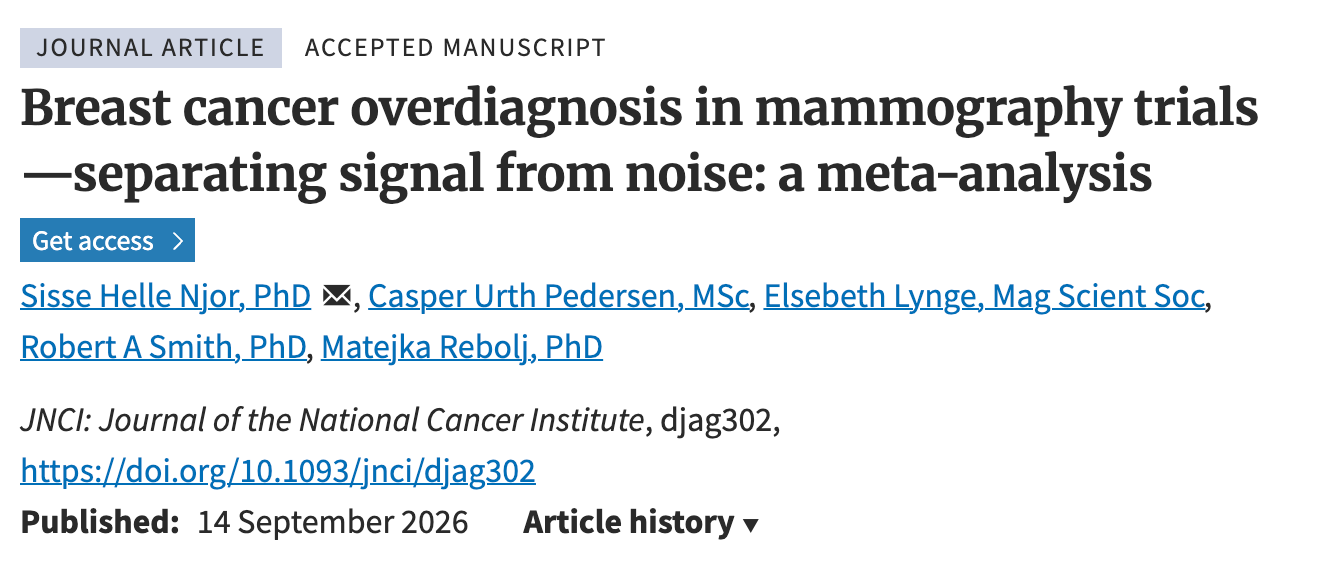
Its conclusion is the most useful sentence the screening establishment has been handed in twenty years. Analyzed within the authors’ framework, the trials are “compatible with very low overdiagnosis (<5%).”3
The press release from the University of Southern Denmark went further. Lead author Sisse Helle Njor told reporters that with this study, women “can now be reassured” that the benefits of early detection outweigh the small risk of unnecessary treatment.4 The senior author, Matejka Rebolj of Queen Mary University of London, said some earlier high estimates had rested on trial evidence that had not yet fully matured.4
Within two weeks the finding had traveled through the global health press as settled fact. ScienceDaily ran it under the headline “A major risk of breast cancer screening may have been overestimated for decades.”5 Outlets from Kyiv to Delhi ran translations.6
Understand what is being retired here. Overdiagnosis is not a technical footnote. It is the principal harm on the mammography ledger. It is the number behind the Cochrane Collaboration’s finding that for every 2,000 women invited to screening over ten years, one avoids a breast cancer death while ten healthy women are treated unnecessarily, a ratio Cochrane explicitly built on an assumed overdiagnosis rate of 30%.7 It is the number the U.S. Preventive Services Task Force’s own evidence review put at 11% to 22% in the randomized trials.8

Behind the statistic are women. An overdiagnosed woman is not spared anything; she is given something. She receives a cancer diagnosis for a lesion that would never have harmed her, and then the full treatment that follows: surgery, often radiation, sometimes years of endocrine drugs. The Task Force's own evidence review found that screening in the trials led to more mastectomies and more radiation therapy. Radiation to the breast carries its own long-term risks, including to the heart. Then comes the life after: the label of "survivor," the insurance record, the surveillance scans, the fear at every follow-up. And she can never know she was overdiagnosed. She will believe, sincerely and for the rest of her life, that the mammogram saved her, and she will urge every woman she loves to get one. That is the cruelest feature of overdiagnosis: each harmed woman becomes living testimony for the program that harmed her. Bleyer and Welch estimated 1.3 million such women in the United States over three decades. Every one of them is what a figure like "under 5%" quietly erases.
Accept the new figure and the Cochrane ratio collapses and the Task Force’s range looks inflated. Notably, the reanalysis cannot touch the best-known American estimate at all: the 2012 New England Journal of Medicine analysis finding that 1.3 million U.S. women were overdiagnosed over three decades was built on national population data, not on the trials.9
That is an extraordinary claim. Extraordinary claims invite you to look at who made them, and how.
Who Certified the Certification
The author list of a paper is a document like any other. This one repays reading.
The fourth author is Robert A. Smith, PhD, listed at the Center for Early Cancer Detection, American Cancer Society, Atlanta.3 His title, per the ACS: Senior Vice President of Early Cancer Detection Science. He has been at the American Cancer Society since 1992, and in the organization’s own words, for most of that tenure he “has led the development of cancer screening guidelines.”10 He was corresponding author on the ACS’s 2015 breast cancer screening guideline in JAMA and lead author of its 2003 update.11
Two further details sharpen the picture. His faculty profile at Emory University’s Rollins School of Public Health lists, among his honors, an award from the National Breast Cancer Awareness Month Board of Sponsors for outstanding advances in breast cancer.12 And his 2024 curriculum vitae lists an honorary professorial fellowship at Queen Mary University of London, held since 2014. Queen Mary is also the institutional home of the paper’s senior author, Rebolj.13
So: the American Cancer Society co-founded Breast Cancer Awareness Month with a chemical manufacturer in 1985 to promote mammography. In 2026, the ACS executive responsible for screening guidelines, a man honored by the campaign’s own sponsor board, co-authored the study finding that mammography’s principal documented harm is smaller than everyone thought, published seventeen days before the campaign’s month began.
This is not a hidden conflict. The university’s release lists individual author support from the Novo Nordisk Foundation and Cancer Research UK, and Smith’s ACS role is disclosed in the affiliation line, and that is what makes it worth writing about. The conflict is not concealed; it is structural. Cancer screening has been evaluated by the institutions that promote cancer screening for so long that the arrangement has become invisible, the way water is invisible to fish.
The Mechanism: A Benchmark That Grades Itself
The conflict of interest is the small story. The methodology is the large one.
Here is what the paper does. Randomized trial data on overdiagnosis is genuinely messy, and the authors are right about that. When screening begins, diagnoses spike, because cancers are found earlier. Later, diagnoses should dip, as those same cancers no longer appear on schedule. Whether the spike net of the dip represents real overdiagnosis depends on follow-up length, on how many screening rounds each arm received, and on whether women in the control group were screened after the trial ended. These are real problems, and I want to credit them precisely.
The authors’ solution was to stop estimating overdiagnosis from the trials directly and instead compare the trials against an external real-world reference. If a trial’s excess-incidence pattern matched the reference pattern, the trial was declared compatible with the reference’s low overdiagnosis rate.3
Everything depends on the reference. The abstract names it: the population screening program in Funen County, Denmark.3
The paper’s supplementary data goes further. Table S3, the Funen incidence data from which every “expected” value in the analysis is calculated, cites a single source: “Overdiagnosis in screening mammography in Denmark: population based cohort study,” published in the BMJ in 2013.14 Its first author was Sisse Helle Njor. Its senior author was Elsebeth Lynge. Its conclusion: overdiagnosis among participating women in Funen “most likely amounted to 1%.”15
Njor is the lead author of the 2026 paper. Lynge is its third author.
The benchmark against which the world’s mammography trials were just certified as low-harm comes from a study by the same researchers doing the certifying. The 2026 paper does not independently validate the Danish figure. Its stated hypothesis is that close agreement with the Funen pattern would indicate compatibility with low overdiagnosis.3 But a match can only show that the trials resemble Funen. It cannot tell you what Funen’s overdiagnosis actually is. That number was supplied in advance, by the authors.
The Authors’ Own Warning
If that were the whole of it, it would be a serious but arguable methodological objection. It is not the whole of it.
In 2018, the International Journal of Cancer published a paper with a knowing title: “As you like it: How the same data can support manifold views of overdiagnosis in breast cancer screening.” Its authors were Sisse Helle Njor, Eugenio Paci, and Matejka Rebolj.16
They took publicly available data from Funen, the same Funen now serving as the 2026 reference, and recreated the designs of five highly cited studies that had reported high overdiagnosis, with original estimates of 25% to 54%. Applied to Funen, those designs returned estimates of 21% to 55%, remarkably close to the originals.16 Across all their analyses, the same data produced answers ranging from 1% to 55%.
Their conclusion on method was blunt: “it all depends on the study design.”16
In fairness, the authors did not treat all designs as equal. They argued that the high-estimate designs rested on unmet assumptions, and that the estimates fell by more than half once changes in background risk were accounted for.16 That is a coherent, long-held position. Njor and Lynge have argued for more than a decade that studies built on individually linked data are more reliable than those built on aggregated statistics, and an independent 2021 review found that no study using individual data exceeded 17% overdiagnosis while aggregated-data studies often exceeded 40%.17
But it is an argument, not a finding. It is one side of a live methodological dispute in which these same researchers are principal combatants. On the other side are their Danish counterparts Karsten Jørgensen and Peter Gøtzsche, who, using the same country’s data, concluded that one in three breast cancers diagnosed in Danish women aged 50 to 69 in the screening era was overdiagnosed.18 One of the five designs Njor’s group recreated and criticized in 2018 was that very study. The dispute runs in both directions, and it has never been resolved.
The 2018 paper also called for careful scrutiny of the assumptions underpinning any overdiagnosis estimate.16 That is the right standard. Apply it to the 2026 study, and the scrutiny lands on the one assumption the whole analysis rests on: that the authors’ own Funen reading is the correct one.
What happened in September 2026 was that one side of an unresolved twenty-year dispute was published as a resolution, with an American Cancer Society executive on the author line, seventeen days before the month whose central product is the procedure in question.
That is not a scientific breakthrough. That is a position paper with excellent timing.
What the Reassurance Leaves Untouched
Set the dispute aside for a moment. Grant the new number. Assume overdiagnosis is under 5%.
Notice how little the reassurance covers.
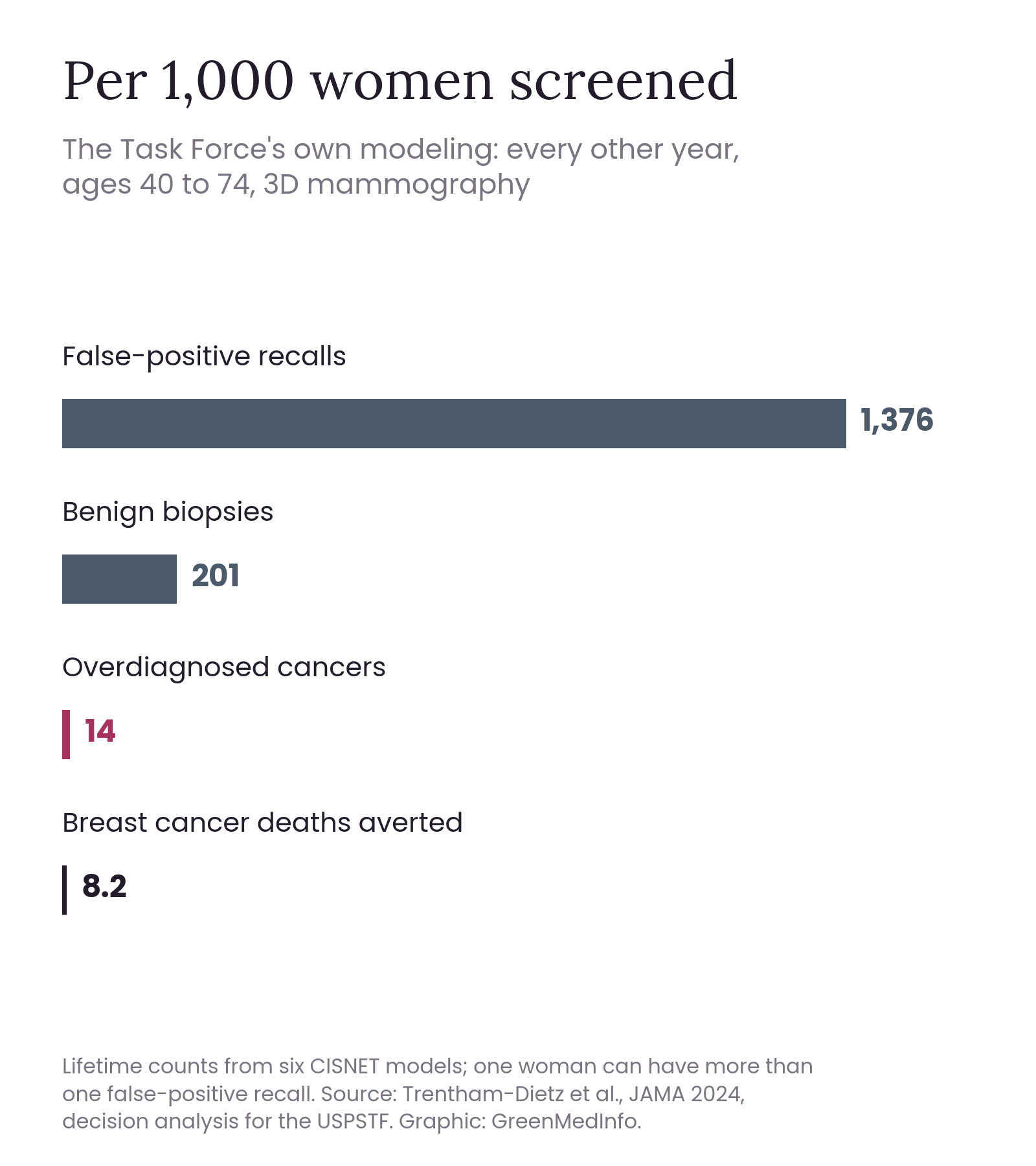
It does not address false positives. The Task Force’s own modeling projects that for every 1,000 women screened every other year from 40 to 74 with 3D mammography (tomosynthesis), there will be 1,376 false-positive recalls, 201 benign biopsies, and 14 overdiagnosed cancers, alongside about 8 breast cancer deaths averted.19 Standard digital mammography produces more false positives, not fewer. The JNCI meta-analysis does not address false positives at all. Yet their consequences are real. As I documented in “The Mammography Deception,” women with false-positive findings show measurable psychosocial harm that can persist for years.20
It does not address DCIS. In 2026, an estimated 60,730 American women will be diagnosed with ductal carcinoma in situ.21 Before mass mammography, DCIS was rarely diagnosed. In the Netherlands, 366 women were diagnosed with it in 1989; by 2014, after the rollout of screening and then digital screening, the figure was 2,406.22 The 2026 reanalysis folds DCIS into aggregate incidence patterns. It says nothing about whether treating it is warranted.
And the evidence on that question has been moving in one direction. The COMET randomized trial, published in JAMA in 2025, found active monitoring of low-risk DCIS noninferior to guideline-concordant surgery for two-year risk of invasive cancer in the same breast.23 The Dutch LORD study, presented at the European Breast Cancer Conference in March 2026, followed 1,423 women with low-risk DCIS. Only the first 73 were randomized; the rest chose their own path, and three in four chose surveillance. At the prespecified interim analysis, invasive cancer had been found in 6% of the active surveillance group and 9% of the standard treatment group, the latter including invasive disease discovered at surgery. The investigators called the results reassuring and found no indication that surveillance leads to worse early outcomes.24 A 2025 Dutch modeling study in The Breast estimated that about one in five DCIS diagnoses is overdiagnosed, with little variation by grade, and that the estimate swings from 18% to 94% depending on how overdiagnosis is defined.25 Because DCIS is almost always treated once found, every overdiagnosis becomes an overtreatment.
I have been making this argument since 2011, when Part II of “The Dark Side of Breast Cancer Awareness Month” laid out the case that DCIS was misnamed from the outset, that an unmoving “carcinoma in situ” is close to a contradiction in terms.26 Fifteen years later the evidence is arriving. I traced that full arc in “What If It Was Never Cancer?”
It does not address radiation. Mammography uses ionizing radiation, an IARC Group 1 carcinogen, delivered to glandular breast tissue repeatedly across decades. The Task Force’s own evidence review estimated 2 to 11 deaths from radiation-induced cancer per 100,000 women screened with digital mammography, depending on age and screening interval.8 Some radiobiology studies suggest the low-energy X-rays used in mammography are more biologically damaging per unit dose than standard risk models assume.27 For women carrying BRCA1 or BRCA2 variants, genes whose job is repairing the double-strand DNA breaks that ionizing radiation causes, the National Cancer Institute notes that certain observations raise concerns these women may be more prone to radiation-induced breast cancer, and high-risk protocols lean on MRI for the youngest carriers. The average-risk woman deciding at 40 rarely hears the question asked at all.20
And it does not address why any of this is happening. In 2026, an estimated 321,910 American women will be diagnosed with invasive breast cancer and about 42,140 will die of it.21 U.S. incidence has risen about 1% a year since 2012, and about 1.4% a year among women under 50. Tellingly, the National Breast Cancer Coalition notes that the recent increases are driven primarily by localized-stage diagnoses while advanced disease has stayed relatively flat.28 Globally, breast cancer cases among women aged 20 to 54 rose 29% between 1990 and 2023, according to the Global Burden of Disease collaboration.29
No screening study explains that. A mammogram is a camera. It has never prevented a single case of breast cancer. It cannot reduce a woman’s burden of endocrine-disrupting chemicals, repair intestinal permeability, change the methylation state of a tumor-suppressor gene, or alter what is in her food, her water, her cosmetics, or her air.
The overdiagnosis debate, however it resolves, is a debate about the accuracy of the camera. It is not a debate about prevention. Forty-one years of Pinktober have trained an entire civilization to mistake the first for the second.
The Referee Problem
There is a final piece, and it is why this October matters more than the last several.
The U.S. Preventive Services Task Force, the body whose grades determine which preventive services most private insurers must cover at no cost, has not met in more than a year.30 A meeting planned for July 2025 was canceled, a November meeting did not happen during the government shutdown, and a March 2026 meeting was postponed. In letters dated May 11, 2026, HHS Secretary Robert F. Kennedy Jr. fired the panel’s two vice chairs. Five other members’ terms expired at the start of the year without replacement.30
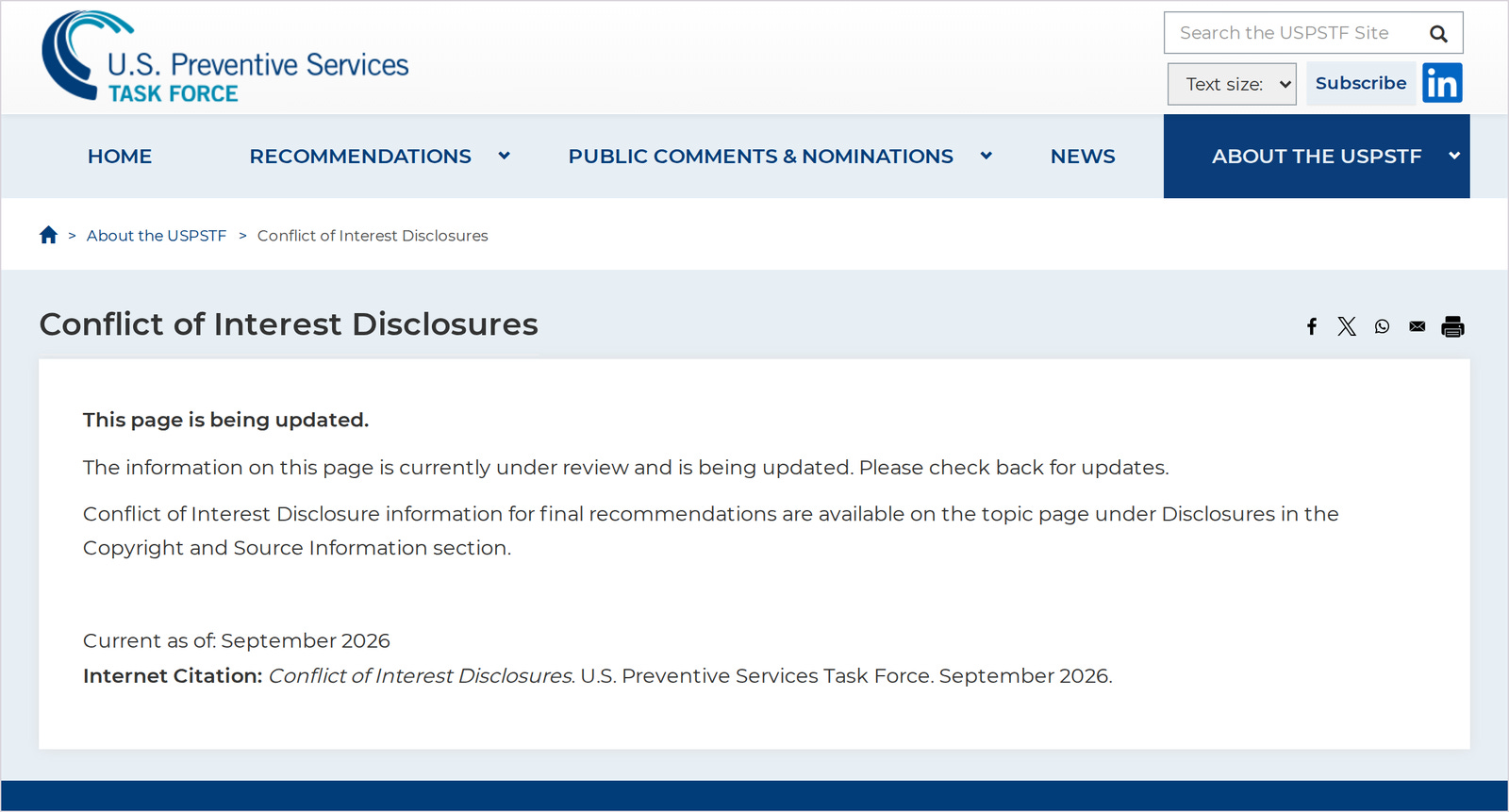
On September 17, 2026, three days after the overdiagnosis paper appeared, Kennedy named eight new members, restoring the panel to sixteen. Five of the eight are specialists rather than primary care generalists, a shift the American Medical Association called “a significant departure.”31 Among the appointees is a diagnostic radiologist.30 No meeting date has been announced. And the Task Force’s conflict-of-interest disclosure page currently tells visitors that its information is “currently under review.”32
So the sequence of the last three weeks reads as follows. The body that independently grades screening is dormant and being reconstituted. A meta-analysis co-authored by the American Cancer Society’s screening-guidelines executive declares the principal screening harm negligible. The global health press reports it as settled. And October 1 arrives.
I have written that I think Kennedy is right that the screening paradigm needs reexamination, and wrong about where the reexamination should aim.20 Nothing in the past three weeks changes that. The most important question in breast cancer policy was never who sits on the Task Force. It is whether anyone independent of the screening establishment is positioned to evaluate it. At this moment, the answer is visibly no.
When the referee is off the field, the scorekeeping goes to whoever is still in the stadium.
What This Is, Beneath the Pink
Strip away four decades of ribbon and what remains is a single unbroken structure.
In 1985, the pharmaceutical arm of a chemical conglomerate partnered with a cancer charity to create a month promoting the screening technology that would find the cancers its drug division treated. The founding mission promoted detection. It did not promote reducing exposure to the carcinogens that cause the disease.
In 2026, the same charity’s screening executive, honored by the campaign’s own sponsor board, co-authors the study that dissolves the strongest evidence of the screening program’s harm, benchmarked against a study his co-authors produced, published seventeen days before the month that charity co-founded, at the precise moment the only independent federal reviewer has stopped meeting.
None of this requires conspiracy. It requires only that everyone involved be sincere and that no one involved be independent. That is a more durable arrangement than conspiracy, and considerably harder to dislodge, because every individual in it can pass a polygraph.
This is what institutional capture looks like when it matures. It stops needing to lie. It simply arranges the room so that the only people qualified to answer the question are the people who need a particular answer.
The Regenerative Turn: What Is Actually Yours
None of this is an argument that women should refuse imaging (thermography is preferred), and I want to say that plainly. It is an argument that women are entitled to the whole ledger before they consent to anything, that informed consent is not a signature on a clipboard but an accurate accounting of benefit and harm, delivered by someone with nothing to sell.
What the pink month structurally cannot tell you is that the majority of breast cancer risk is not written in your genes. Genes load the gun; environment pulls the trigger. And the environment, the terrain, is the one part of this that never required anyone’s permission.
Ask better questions of your clinician. If you are offered screening, ask for absolute numbers, not relative ones: out of 1,000 women like me, how many avoid a breast cancer death, how many get a false positive, how many get treated for something that would never have surfaced? Those numbers exist. The Task Force’s own figures are above. Ask for the version with the denominators.
If you receive a DCIS diagnosis, know that active monitoring is now an evidence-based option for low-risk disease, supported by the COMET randomized trial and interim results from the Dutch LORD study. It is not fringe. It is not refusing care. Ask explicitly about grade, receptor status, and active surveillance protocols.
Reduce the exposures that are actually yours to reduce. Endocrine-disrupting compounds, including phthalates, bisphenols, parabens, and synthetic fragrance, concentrate in personal care products, plastics, and processed food packaging. This is the category of breast cancer risk Pinktober has spent forty-one years not emphasizing, and it is one you can act on this afternoon without a prescription or an appointment.
Eat the actual pink things. Not the pink packaging; the pigment itself is the point. Cruciferous vegetables supply indole-3-carbinol and sulforaphane, which have been studied for their effects on estrogen metabolism. Pomegranate compounds have shown aromatase-inhibiting activity in laboratory studies. The anthocyanins in red cabbage, beets, purple sweet potato, red apple peel, and berries are not decoration; they are defense molecules the plant made under stress, and a growing body of research is examining what they do in human tissue.
Move, sleep, and metabolize. Excess body fat after menopause is a well-established driver of estrogen-dependent breast cancer risk. Night-shift work, which disrupts circadian rhythm, is classified by IARC as probably carcinogenic. Neither remedy is a supplement. Both are free.
And refuse the fear itself. This is not sentimentality. Some studies associate chronic stress physiology and low perceived control with worse cancer outcomes. A month engineered to make women afraid of their own bodies, and then to sell them the resolution of that fear, is not a health campaign. Declining to participate in the fear is itself a form of care.
For the full evidence base, including more than 3,200 peer-reviewed studies on breast cancer prevention, natural aromatase inhibitors, cancer stem cell targeting compounds, and the documented harms of X-ray mammography, the GreenMedInfo breast cancer database remains free to search.
This October, the pink will arrive as it always does, and this year it arrives pre-certified. A peer-reviewed paper says the harm was overstated. A press release says women can be reassured. The reassurance was produced by the institutions that require it, benchmarked against a number those same researchers published, at the moment the only independent reviewer went dark.
There is nothing wrong with wanting reassurance. There is something wrong with accepting it from the people who are selling the thing.
Forty-one years ago they built a month around a word they did not say. The word was carcinogen. This year they have added a second one.
The second word is overdiagnosis, and you should notice exactly who is telling you to stop worrying about it.
Sayer Ji is the founder of GreenMedInfo.com, author of REGENERATE: Unlocking Your Body’s Radical Resilience through the New Biology (Hay House, 2020).
This article is for educational purposes and does not constitute medical advice. Screening and treatment decisions should be made with a qualified clinician who is willing to disclose the full range of benefits and harms.
References
“Breast Cancer Awareness Month.” Wikipedia. https://en.wikipedia.org/wiki/Breast_Cancer_Awareness_Month (1985 founding partnership of the American Cancer Society and ICI’s pharmaceutical division; stated aim of promoting mammography). ICI and paraquat: https://en.wikipedia.org/wiki/Paraquat ; ICI and trichloroethylene (Trilene): https://en.wikipedia.org/wiki/Trichloroethylene ; ICI PVC operations and 1993 demerger: https://www.company-histories.com/Imperial-Chemical-Industries-PLC-Company-History.html . IARC Group 1 classifications: trichloroethylene, IARC Monographs Vol. 106 (2014); vinyl chloride, IARC Monographs Vol. 100F (2012).
International Agency for Research on Cancer. “Tamoxifen.” IARC Monographs, Volume 66 (1996). https://www.inchem.org/documents/iarc/vol66/tamoxifen.html . Background: Ji, S. “Covering Up The Causes of Breast Cancer Since 1985: AstraZeneca’s BCAM.” GreenMedInfo, October 10, 2022. https://greenmedinfo.com/content/covering-causes-breast-cancer-1985-astrazenecas-bcam-2
Njor, S.H., Pedersen, C.U., Lynge, E., Smith, R.A., Rebolj, M. “Breast cancer overdiagnosis in mammography trials: separating signal from noise: a meta-analysis.” JNCI: Journal of the National Cancer Institute, published September 14, 2026; djag302. https://doi.org/10.1093/jnci/djag302
University of Southern Denmark. “New analysis points to low overdiagnosis in breast cancer screening.” September 14, 2026. https://www.sdu.dk/en/om-sdu/fakulteterne/sundhedsvidenskab/nyheder-2026/new-analysis-points-to-low-overdiagnosis-in-breast-cancer-screening ; as reported by News-Medical, September 15, 2026. https://www.news-medical.net/news/20260915/Study-provides-a-clearer-picture-of-the-extent-of-overdiagnosis-in-breast-cancer-screening.aspx
ScienceDaily. “A major risk of breast cancer screening may have been overestimated for decades.” September 26, 2026. https://www.sciencedaily.com/releases/2026/09/260924020351.htm
UA.News, September 27, 2026. https://ua.news/en/health/novii-analiz-vkazav-na-nizhchu-chastotu-giperdiagnostiki-pid-chas-mamografiyi-sciencedaily ; Amar Ujala, September 27, 2026. https://www.amarujala.com/india-news/mammography-overdiagnosis-risk-may-be-below-5-new-study-challenges-earlier-estimates-2026-09-27
Gøtzsche, P.C., Jørgensen, K.J. “Screening for breast cancer with mammography.” Cochrane Database of Systematic Reviews, 2013;(6):CD001877.
Nelson, H.D., et al. “Harms of Breast Cancer Screening: Systematic Review to Update the 2009 U.S. Preventive Services Task Force Recommendation.” Annals of Internal Medicine, 2016;164(4):256-267. PMID 26756737. https://pubmed.ncbi.nlm.nih.gov/26756737/ Overdiagnosis rates from randomized trials 11% to 22%; modeled 2 to 11 deaths from radiation-induced cancer per 100,000 women screened with digital mammography.
Bleyer, A., Welch, H.G. “Effect of three decades of screening mammography on breast-cancer incidence.” New England Journal of Medicine, 2012;367(21):1998-2005.
American Cancer Society. “Robert Smith, PhD: Senior Vice President, Early Cancer Detection Science.” https://www.cancer.org/research/acs-researchers/robert-smith-bio.html
Oeffinger, K.C., Fontham, E.T.H., Etzioni, R., et al. “Breast Cancer Screening for Women at Average Risk: 2015 Guideline Update From the American Cancer Society.” JAMA, 2015;314(15):1599-1614. https://jamanetwork.com/journals/jama/fullarticle/2463262 (Robert A. Smith, corresponding author, per The ASCO Post, November 25, 2015). Smith, R.A., et al. “American Cancer Society guidelines for breast cancer screening: update 2003.” https://pubmed.ncbi.nlm.nih.gov/12809408/
Emory University Rollins School of Public Health. Faculty profile: Robert Smith, Adjunct Professor, Department of Epidemiology. https://sph.emory.edu/profile/faculty/robert-smith (Awards and Honors: “National Breast Cancer Awareness Month Board of Sponsors for Outstanding Advances in Breast Cancer”).
Smith, R.A. Curriculum Vitae, October 2024, filed with the U.S. Food and Drug Administration. https://fda.gov/media/184808/download (Honorary Professorial Fellow, Wolfson Institute of Preventive Medicine, Queen Mary University of London, 2014 to present). Rebolj’s affiliation per the JNCI paper: Wolfson Institute of Population Health, Queen Mary University of London.
Njor et al. 2026 (note 3), Supplementary Data, Table S3: excess relative incidence of invasive cancer plus DCIS in Funen, estimated by difference-in-differences; sole cited source Njor et al., BMJ 2013 (note 15).
Njor, S.H., Olsen, A.H., Blichert-Toft, M., Schwartz, W., Vejborg, I., Lynge, E. “Overdiagnosis in screening mammography in Denmark: population based cohort study.” BMJ, 2013;346:f1064. https://www.bmj.com/content/346/bmj.f1064
Njor, S.H., Paci, E., Rebolj, M. “As you like it: How the same data can support manifold views of overdiagnosis in breast cancer screening.” International Journal of Cancer, 2018;143(6):1287-1294. https://onlinelibrary.wiley.com/doi/10.1002/ijc.31420
Chaltiel, D., Hill, C. “Estimations of overdiagnosis in breast cancer screening vary between 0% and over 50%: why?” BMJ Open, 2021;11:e046353. https://pmc.ncbi.nlm.nih.gov/articles/PMC8220464/
Jørgensen, K.J., Zahl, P.-H., Gøtzsche, P.C. “Overdiagnosis in organised mammography screening in Denmark: a comparative study.” BMC Women’s Health, 2009;9:36. https://pmc.ncbi.nlm.nih.gov/articles/PMC2807851/
Trentham-Dietz, A., et al. “Collaborative Modeling to Compare Different Breast Cancer Screening Strategies: A Decision Analysis for the US Preventive Services Task Force.” JAMA, 2024. https://jamanetwork.com/journals/jama/fullarticle/2818285 (biennial tomosynthesis, ages 40 to 74, per 1,000 women: 8.2 deaths averted, 1,376 false-positive recalls, 201 benign biopsies, 14 overdiagnosed cases).
Ji, S. “The Mammography Deception: Why RFK Jr. Is Right for the Wrong Reasons.” May 23, 2026. https://sayerji.substack.com/p/the-mammography-deception-why-rfk
American Cancer Society. “Key Statistics for Breast Cancer,” 2026 estimates. https://www.cancer.org/cancer/types/breast-cancer/key-statistics.html
Population-based study of 4,232 Dutch women with DCIS, citing national registry figures. https://pmc.ncbi.nlm.nih.gov/articles/PMC4862233
Hwang, E.S., Hyslop, T., Lynch, T., et al. “Active Monitoring With or Without Endocrine Therapy for Low-Risk Ductal Carcinoma In Situ: The COMET Randomized Clinical Trial.” JAMA, 2025;333(11):972-980. https://jamanetwork.com/journals/jama/fullarticle/2828218
Wesseling, J., et al. “De-escalating treatment for low-risk Ductal Carcinoma In Situ: early safety of active surveillance without endocrine therapy in the prespecified interim analysis of the LORD-trial (BOOG 2014-04).” Abstract 2LBA, 15th European Breast Cancer Conference, Barcelona, March 27, 2026. https://event.eortc.org/ebcc15/2026/03/27/early-results-from-a-trial-of-active-surveillance-for-low-risk-dcis-are-reassuring/ ; see also The ASCO Post, April 2026. Discussed in Ji, S., “What If It Was Never Cancer? The 20-Year Case That DCIS Was Misnamed.” https://sayerji.substack.com/p/what-if-it-was-never-cancer-the-20
Poelhekken, K., Greuter, M.J.W., van der Vegt, B., Dorrius, M.D., de Bock, G.H. “Overdiagnosis of ductal carcinoma in situ by grade and definition in population-based screening: A modeling study.” The Breast, 2025. https://doi.org/10.1016/j.breast.2025.104594 . PMID 41082841.
Ji, S. “The Dark Side of Breast Cancer Awareness Month, Part II.” GreenMedInfo, October 21, 2011. https://greenmedinfo.com/content/dark-side-breast-cancer-awareness-month-part-ii ; Part I: https://greenmedinfo.com/content/dark-side-breast-cancer-unawareness-month
Ji, S. “X-Ray Mammograms Starting at 40? New Recommendations Fail to Warn Women of the Real Risks.” GreenMedInfo, May 9, 2023. https://greenmedinfo.com/content/x-ray-mammograms-starting-40-new-recommendations-fail-warn-women-real-risks ; GreenMedInfo X-Ray Mammography database: https://greenmedinfo.com/adverse-pharmacological-action/x-ray-mammography
National Breast Cancer Coalition. “Facts & Figures 2026.” https://www.stopbreastcancer.org/wp-content/uploads/2026/03/NBCC-Facts-Figures_2026_FINAL.pdf
GBD Breast Cancer Collaborators. The Lancet Oncology, 2026 (population registry data from 204 countries, 1990 to 2023). As reported by Ara, March 3, 2026. https://en.ara.cat/society/why-is-breast-cancer-increasing-among-young-women_1_5667187.html
Medical Daily. “Panel That Shapes Free Cancer Screenings Gets Eight New Kennedy Picks, Mostly Specialists, but No Meeting Date.” September 21, 2026. https://www.medicaldaily.com/uspstf-eight-new-members-kennedy-no-meeting-date-478858
MedCity News. “RFK Jr. Overhauls USPSTF Leadership: 5 Things to Know.” September 20, 2026. https://medcitynews.com/2026/09/rfk-jr-uspstf-medical/ ; STAT News, September 17, 2026. https://www.statnews.com/2026/09/17/kennedy-names-eight-new-members-uspstf-task-force/
U.S. Preventive Services Task Force. “Conflict of Interest Disclosures.” Accessed September 29, 2026. https://www.uspreventiveservicestaskforce.org/uspstf/about-uspstf/conflict-interest-disclosures
Imagine if there were a "Breast Cancer Cured awareness month." But no. Cured is not medically defined for breast cancer. But wait, there's more. Cured is not medically defined for the common cold, influenza, measles, nor COVID. No doctor documents cured cases. No clinic or hospital system collects data on cured cases of any disease. Cureds are common place, but the word cureds, to refer to cured cases of disease does not exist in modern medicine. A focus on disease generates business. Prevention is financially beneficial. Cured? No medical or insurance system distinguishes between cured and cure failures. Treatments are billed. Cureds? Not.
I am so thankful, in some ways, for the WWW giving us access to folks like yourself with ability to look critically and intemperate the "science" (and those who claim they are science 😝)