

The title is tongue-in-cheek, but only just. For as long as I have done this work, the standing charge against anyone who says food can be medicine is that we are grifters, and my name tends to sit near the top of the list. “Big Alt Med” is the phrase, as though there were a cartel behind the blueberry. The irony is hard to miss. The platform in question is free, carries no advertising, and does nothing more sinister than index the published research on blueberries, vitamins, herbs and minerals so that anyone can read it, with the primary source one click away. If that is a grift, as alleged, it is a strange one. So consider what follows a confession.
This week Fox News ran a story on a single fruit that “may support brain and heart health as you age.” The peg was Walter Willett, the 81-year-old Harvard researcher described by the Post as the most-cited nutrition expert, telling The Washington Post that he eats blueberries almost every day, usually on oatmeal with Greek yogurt and nuts (Fox News; The Washington Post). “In study after study, berries appear to be protective against neurodegenerative diseases like Alzheimer’s and Parkinson’s disease,” he said. “Berries do seem to stand out, especially blueberries” (Fox News).
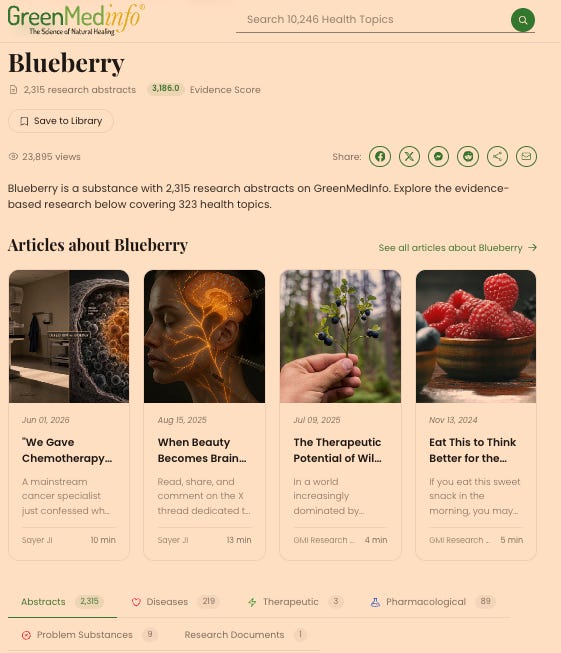
Welcome to the conversation. GreenMedInfo opened in 2008 to index exactly this kind of evidence, and the blueberry has been one of the most heavily documented foods in our database ever since. The blueberry page today holds 2,315 research abstracts, mapped to 219 diseases and 89 pharmacological actions, with 41 articles written on top of them (GreenMedInfo blueberry research page). Some of those articles are fourteen years old. Several of them anticipated, almost line for line, what the experts told Fox News this week.
So this is a two-part piece. First, what the new report actually rests on, with the primary trial in front of you. Then the longer story: what seventeen years of indexing this one berry has turned up, from memory and blood vessels to DNA repair and cancer biology, and where the record is still thin.
What the new report rests on
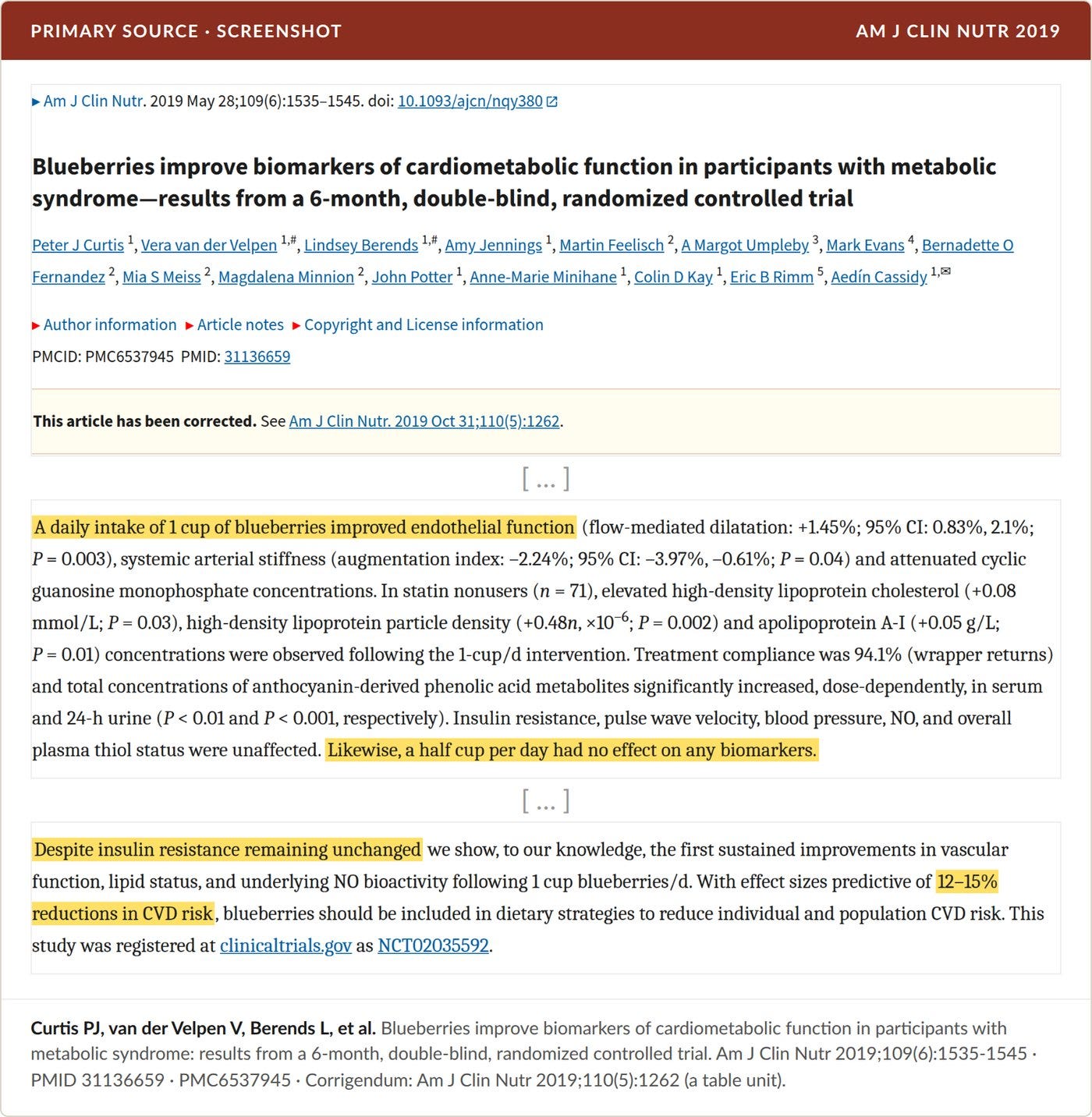
The clinical anchor in the Fox story is a six-month trial of 115 adults with metabolic syndrome, cited by Dr. Nadim Geloo of Abbott, in which people eating the equivalent of a cup of blueberries a day showed “improvements in blood-vessel function and arterial stiffness” (Fox News). That trial is Curtis and colleagues, published in the American Journal of Clinical Nutrition in 2019, and it remains the longest randomized blueberry trial ever run (Curtis et al., Am J Clin Nutr 2019).
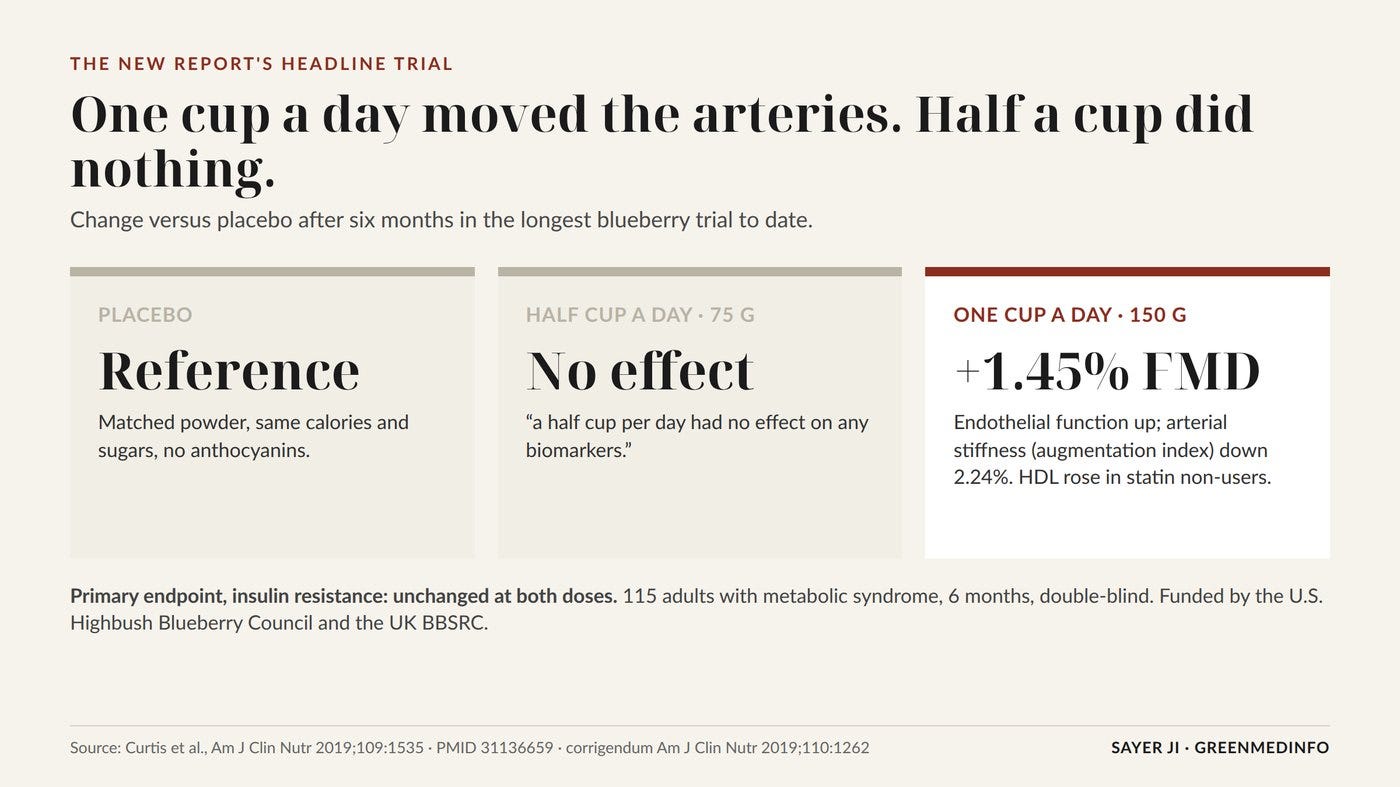
Here is the part the headlines compress. The trial tested two doses, half a cup and a full cup a day, as freeze-dried powder against a matched placebo. The full cup improved endothelial function and reduced arterial stiffness, and in people not taking statins it raised HDL cholesterol. The half cup did nothing. And the trial’s primary endpoint, insulin resistance, did not budge at either dose (Curtis et al., full text). The authors still concluded that the vascular effect sizes were “predictive of 12-15% reductions in CVD risk” (Curtis et al., abstract).
THE TECHNICAL RECORD: CURTIS ET AL. 2019
Design: double-blind, parallel randomized controlled trial, n = 115, mean age 63, 68% male, mean BMI 31.2, all with metabolic syndrome. Doses: freeze-dried blueberry powder equivalent to 75 g (half cup) or 150 g (one cup) fresh fruit daily for 6 months, versus matched placebo. Results for one cup versus placebo: flow-mediated dilatation +1.45% (95% CI 0.83 to 2.1; P = 0.003); augmentation index −2.24% (95% CI −3.97 to −0.61; P = 0.04); in statin non-users (n = 71), HDL cholesterol +0.08 mmol/L (P = 0.03) and apolipoprotein A-I +0.05 g/L (P = 0.01). Primary endpoint HOMA-IR: unchanged. Half cup: “no effect on any biomarkers.” Compliance 94.1% (Curtis et al., Am J Clin Nutr 2019, full text). A corrigendum corrected a unit label for insulin in Table 2; no result changed (corrigendum, Am J Clin Nutr 2019;110:1262). Funding: U.S. Highbush Blueberry Council with the UK Biotechnology and Biological Sciences Research Council (funding statement).
The Fox piece is, to its credit, careful. Dr. Geloo notes that most blueberry trials are “small and short, often use freeze-dried powder rather than whole fruit, measure markers like blood vessel function rather than actual heart attacks or strokes and are frequently funded by the blueberry industry.” Dr. Michael Aziz of Lenox Hill calls the cognitive effects modest. Biomedical researcher Rhonda Patrick says “the strongest benefit is vascular” and calls a cup a day a practical dose (Fox News). Every one of those caveats is correct, and every one of them has been part of our coverage for years. What the article could not do in 900 words is show you how deep the record actually goes.
Subscribe to follow GreenMedInfo Dispatch.
Seventeen years on the record
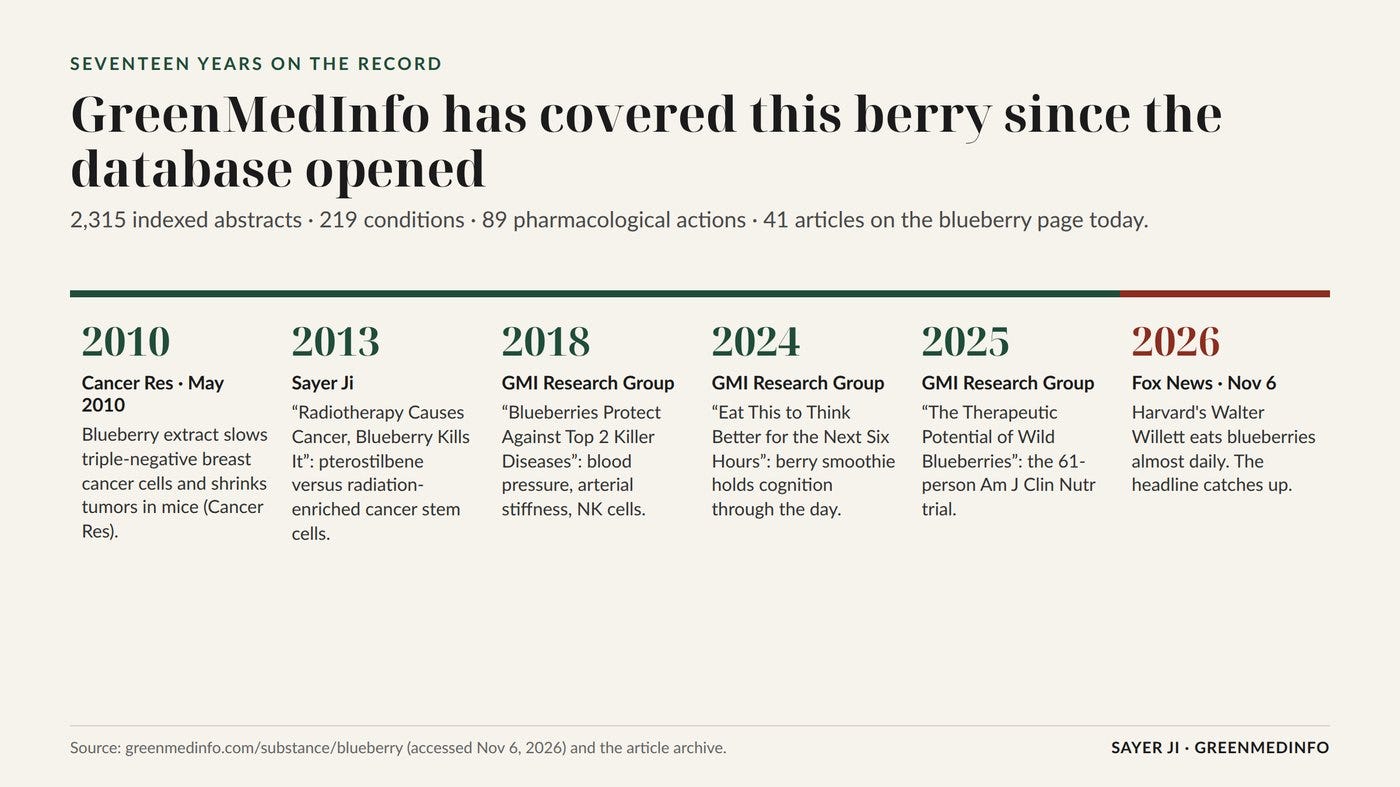
Among the earliest entries on our blueberry page is a May 2010 Cancer Research paper showing that blueberry extract slowed the growth of triple-negative breast cancer cells and shrank tumors in mice (Adams et al., Cancer Res 2010; GreenMedInfo blueberry page). In 2012 we asked whether blueberries held a key to defeating cancer, noting that not many years earlier, “nutrition experts were telling people to save their calories and skip the blueberries because they had no nutritional value” (GreenMedInfo, 2012). In 2013 I wrote about pterostilbene, a blueberry compound, suppressing the cancer stem cells that radiation therapy enriches (GreenMedInfo, 2013). In 2018 our research group wrote up the blood-pressure, arterial-stiffness and immune-cell trials under the headline “Blueberries Protect Against Top 2 Killer Diseases” (GreenMedInfo, 2018). In 2024 and 2025 we covered the day-long cognition study and the 61-person wild blueberry trial that this week’s experts are now citing (GreenMedInfo, 2024; GreenMedInfo, 2025).
The brain: what we reported, and what the trials went on to confirm
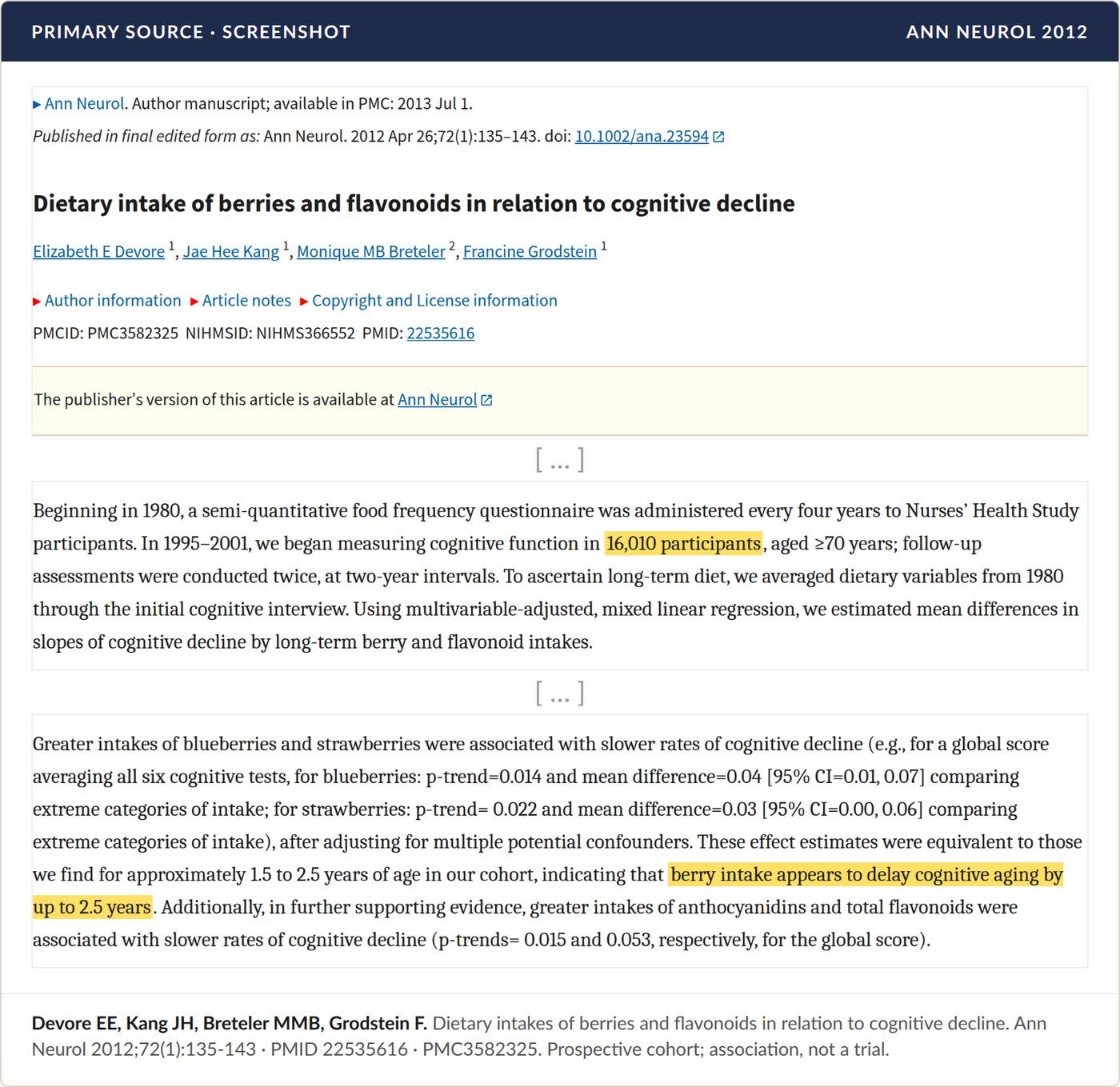
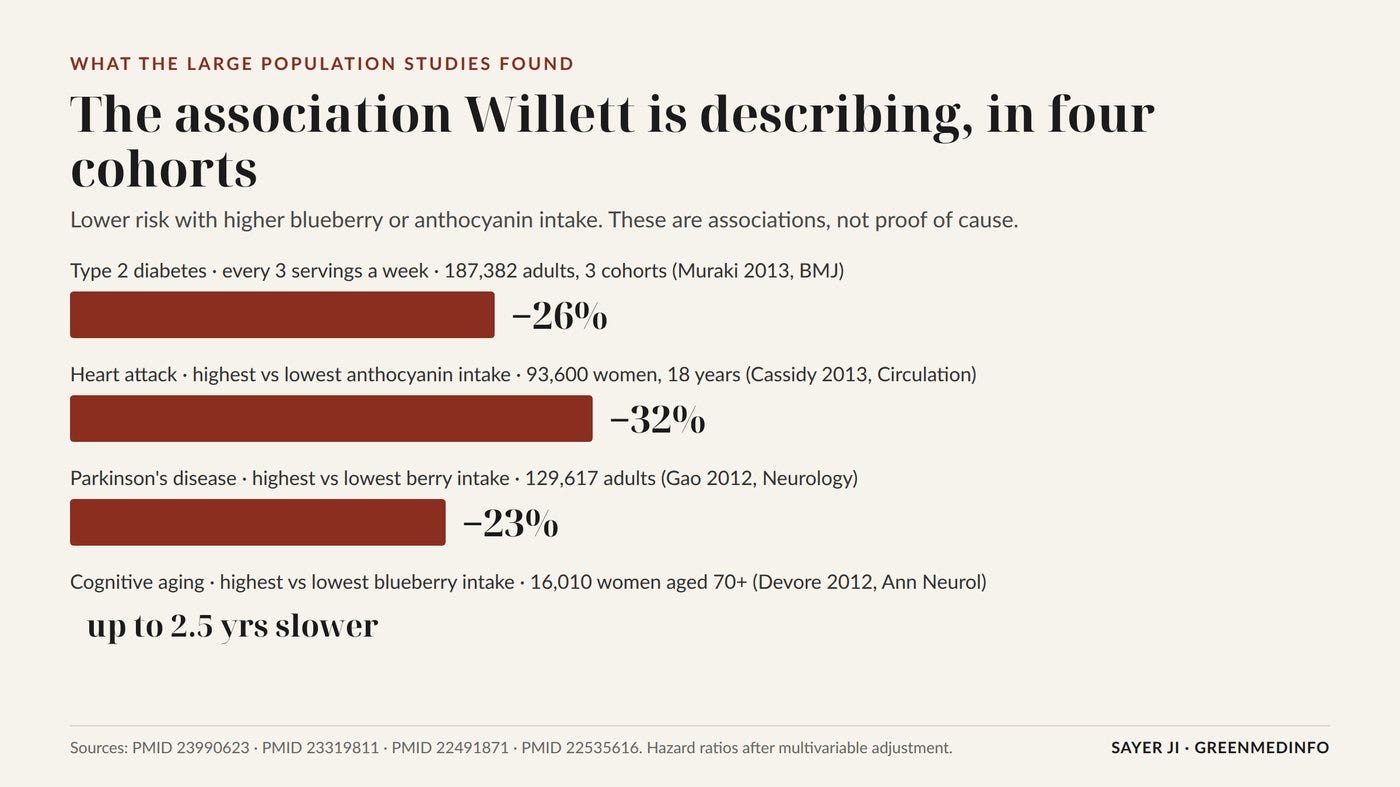
Willett’s instinct about the brain has a paper trail. The earliest human signal came from a tiny 2010 pilot: nine older adults with early memory changes drank wild blueberry juice daily for twelve weeks and improved on paired-associate learning and word-list recall (Krikorian et al., J Agric Food Chem 2010). Nine people is a hint, not a result. The population data arrived two years later and it was large: in 16,010 women aged 70 and over from the Nurses’ Health Study, higher blueberry and strawberry intake was associated with slower cognitive decline, an effect the authors equated to delaying cognitive aging by up to 2.5 years (Devore et al., Ann Neurol 2012).
Then the randomized trials started to line up. In 2017, twelve weeks of blueberry concentrate increased task-related brain activation and resting grey-matter perfusion on MRI in healthy older adults (Bowtell et al., Appl Physiol Nutr Metab 2017). In 2018, 37 adults aged 60 to 75 who ate a cup’s worth of freeze-dried blueberry daily for 90 days made fewer repetition errors on a verbal learning test and paid a smaller “switch cost” on a task-switching test than controls, though gait and balance did not change (Miller et al., Eur J Nutr 2018). The study we wrote up in 2024 found that a mixed-berry smoothie kept young adults’ executive function from sagging across a six-hour day, with the effect clearest when they were tired and the task was hard (Whyte et al., Nutrients 2019; GreenMedInfo, 2024). And in 2022, in overweight, insulin-resistant adults aged 50 to 65 with subjective memory complaints, daily blueberry improved lexical access and memory interference and corrected peripheral hyperinsulinemia (Krikorian et al., Nutrients 2022).
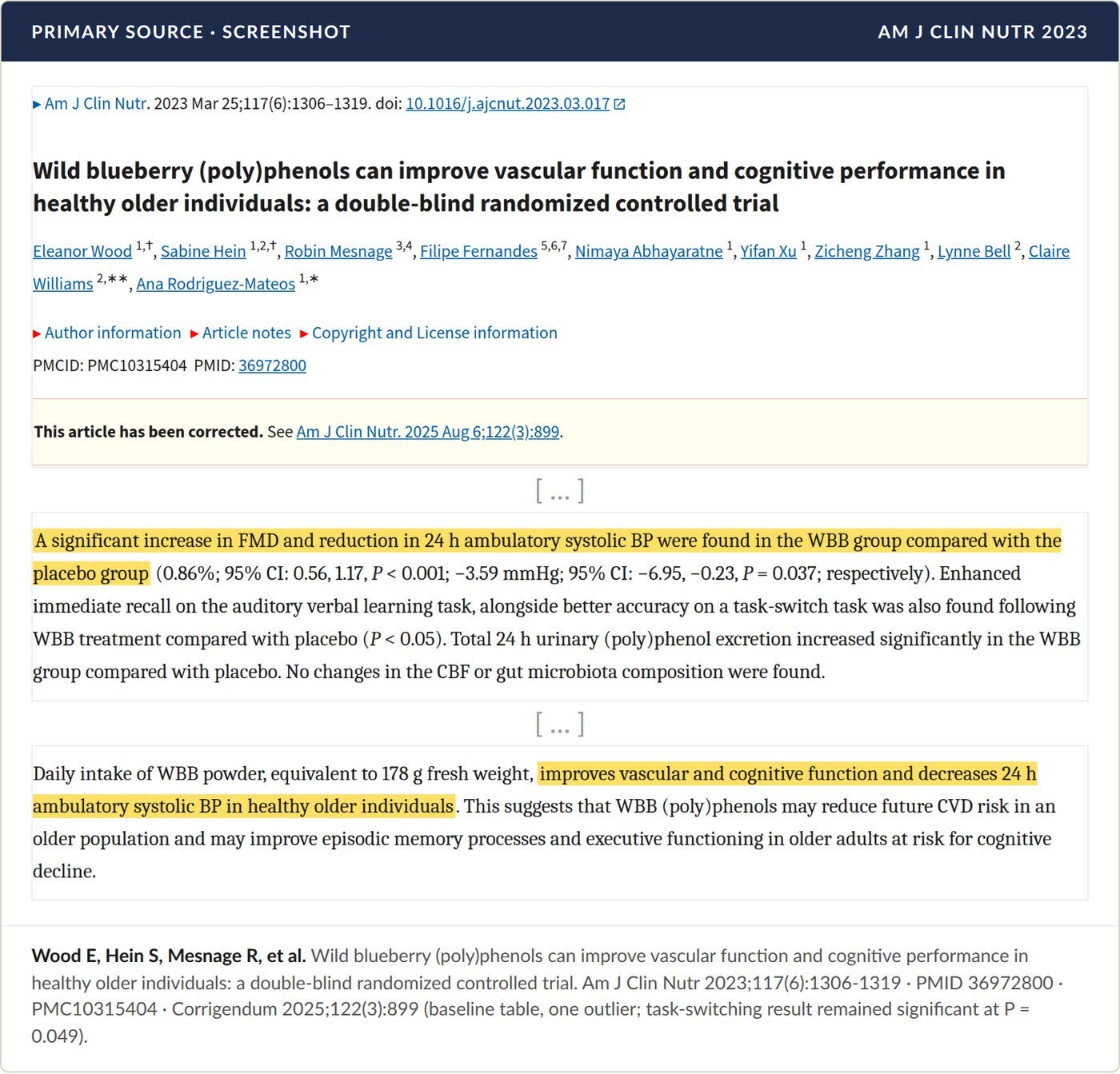
The trial the Fox experts lean on for memory is the one we covered in 2025: 61 healthy adults aged 65 to 80 took 26 g of freeze-dried wild blueberry powder, about 178 g of fresh fruit, or a matched placebo for twelve weeks. The blueberry group had better flow-mediated dilation, lower 24-hour systolic blood pressure, better immediate word recall and better accuracy on a task-switching test (Wood et al., Am J Clin Nutr 2023). Two things belong next to that. Delayed recall actually favored the placebo group in that trial, and a 2025 corrigendum, prompted by statisticians at Indiana University, corrected the baseline table and removed a missed outlier; the task-switching result survived, at P = 0.049 (corrigendum, Am J Clin Nutr 2025).
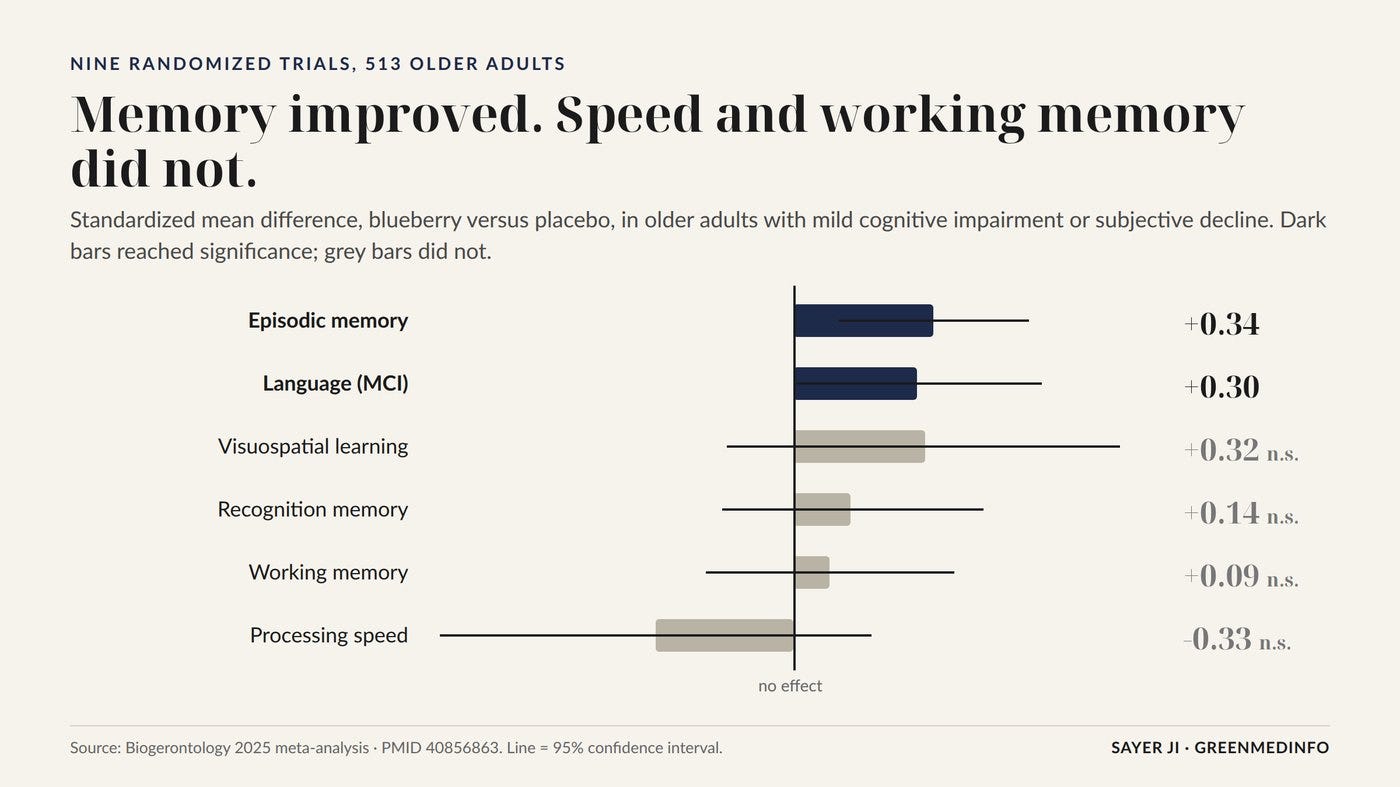
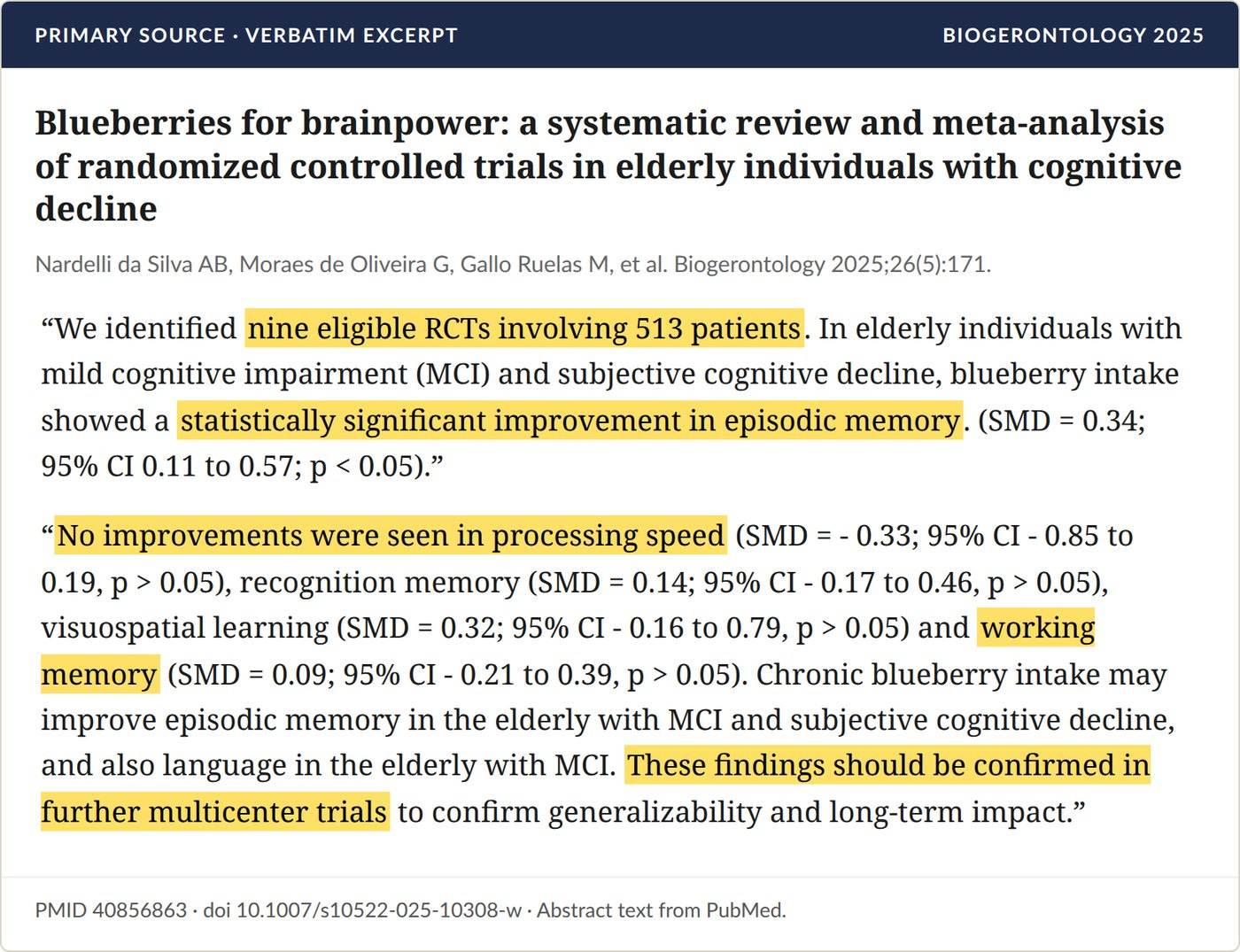
What happens when you pool all of this? A 2025 meta-analysis in Biogerontology gathered nine randomized trials, 513 older adults with mild cognitive impairment or subjective decline, and found a statistically significant improvement in episodic memory and, in the MCI subgroup, in language. It found no improvement in processing speed, recognition memory, visuospatial learning or working memory (Nardelli da Silva et al., Biogerontology 2025). An earlier systematic review of twelve trials across children, young adults and older people found that eight reported cognitive gains, mostly in memory, while noting that differences in dose and anthocyanin content made comparison hard (Travica et al., Brain Behav Immun 2020). That is the honest shape of the brain evidence: a consistent, modest effect on memory, and silence on the other domains. Dr. Aziz’s word “modest” is the right one. So is Willett’s “stand out.”
The heart, the blood, and the sugar
The vascular story is older and sturdier than the brain story, which is why Rhonda Patrick calls it the strongest benefit. In 2010, 48 obese adults with metabolic syndrome who drank a beverage made from 50 g of freeze-dried blueberries daily for eight weeks saw systolic and diastolic pressure fall 6% and 4%, against 1.5% and 1.2% in controls, and oxidized LDL fall 28% against 9%, while glucose and lipids did not change (Basu et al., J Nutr 2010). The same year, a six-week trial in 32 obese, insulin-resistant adults using the gold-standard clamp method found insulin sensitivity improved more with blueberry bioactives than with placebo (Stull et al., J Nutr 2010). In 2014, 25 sedentary adults who took 38 g of blueberry powder daily for six weeks had more natural killer cells and lower aortic stiffness and pressure (McAnulty et al., Nutr Res 2014). In 2015, 48 postmenopausal women with early hypertension who took 22 g of powder daily for eight weeks saw blood pressure and arterial stiffness fall and nitric oxide rise (Johnson et al., J Acad Nutr Diet 2015). We covered the last two in 2018 (GreenMedInfo, 2018).
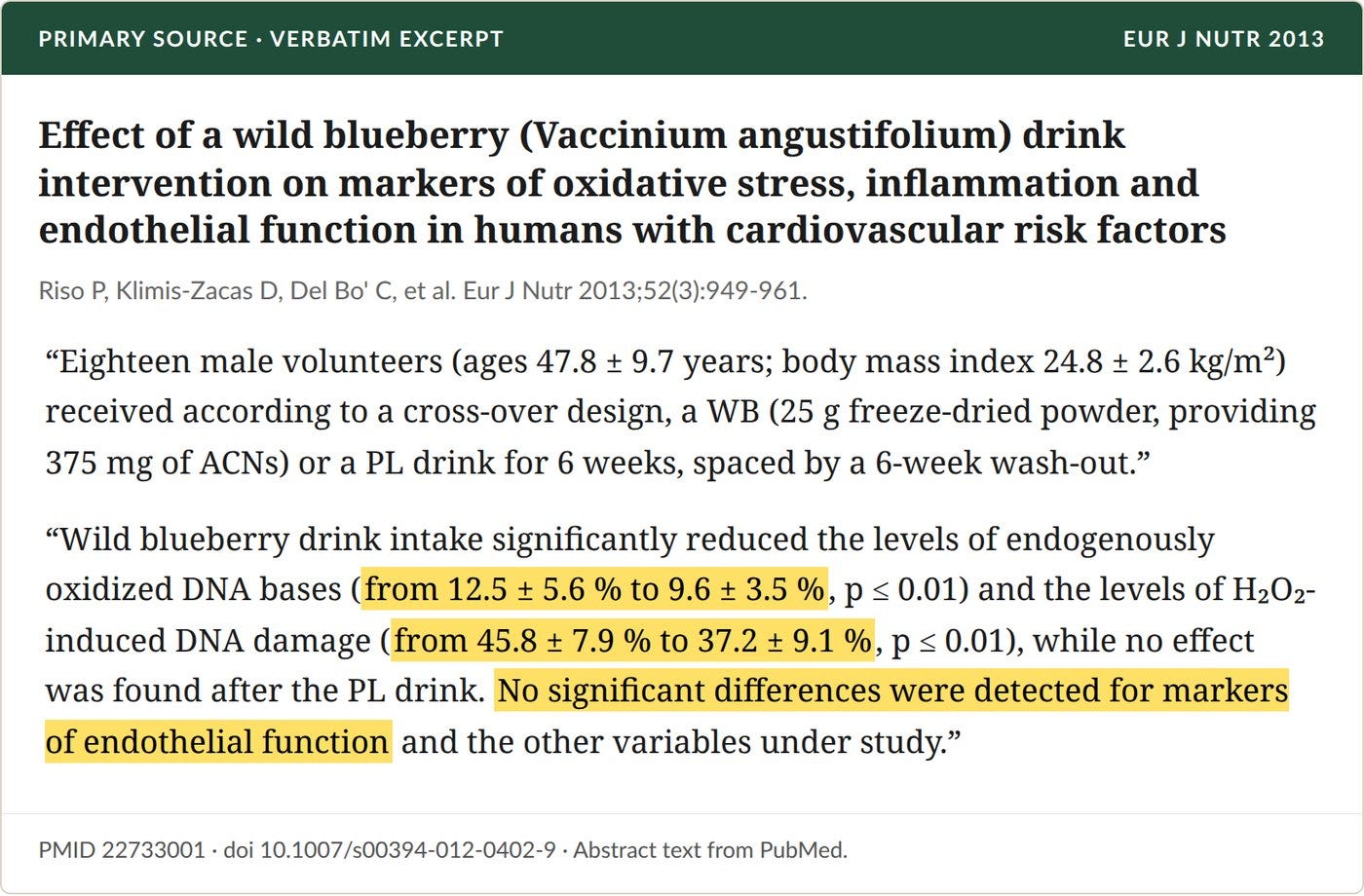
There is also a DNA finding that gets almost no press. In a six-week crossover trial, 18 men with cardiovascular risk factors drank a wild blueberry powder beverage and the proportion of oxidized DNA bases in their blood cells fell from 12.5% to 9.6%, while their cells’ resistance to induced DNA damage improved; the placebo drink did neither. Endothelial markers, in that trial, did not change (Riso et al., Eur J Nutr 2013).
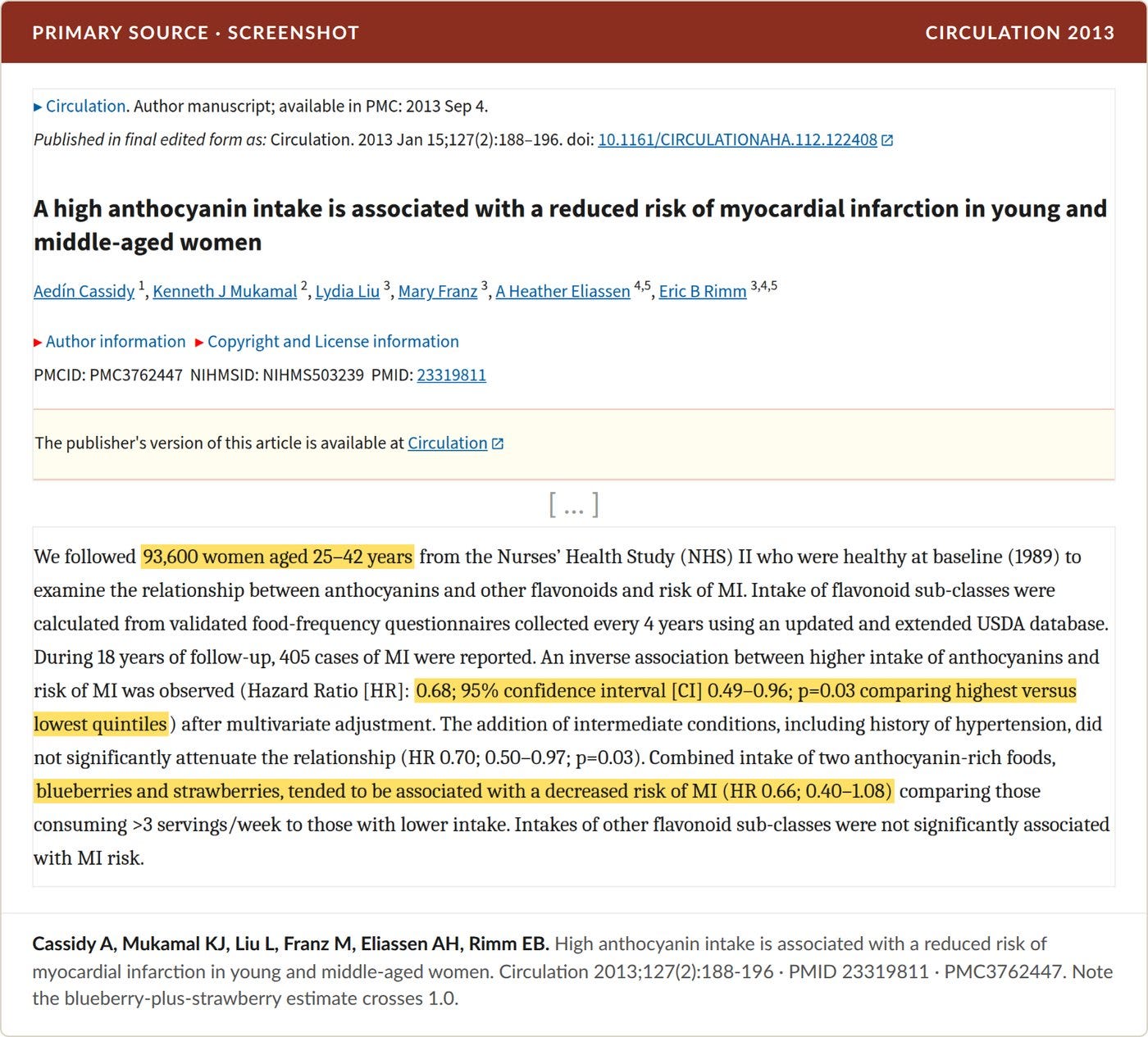
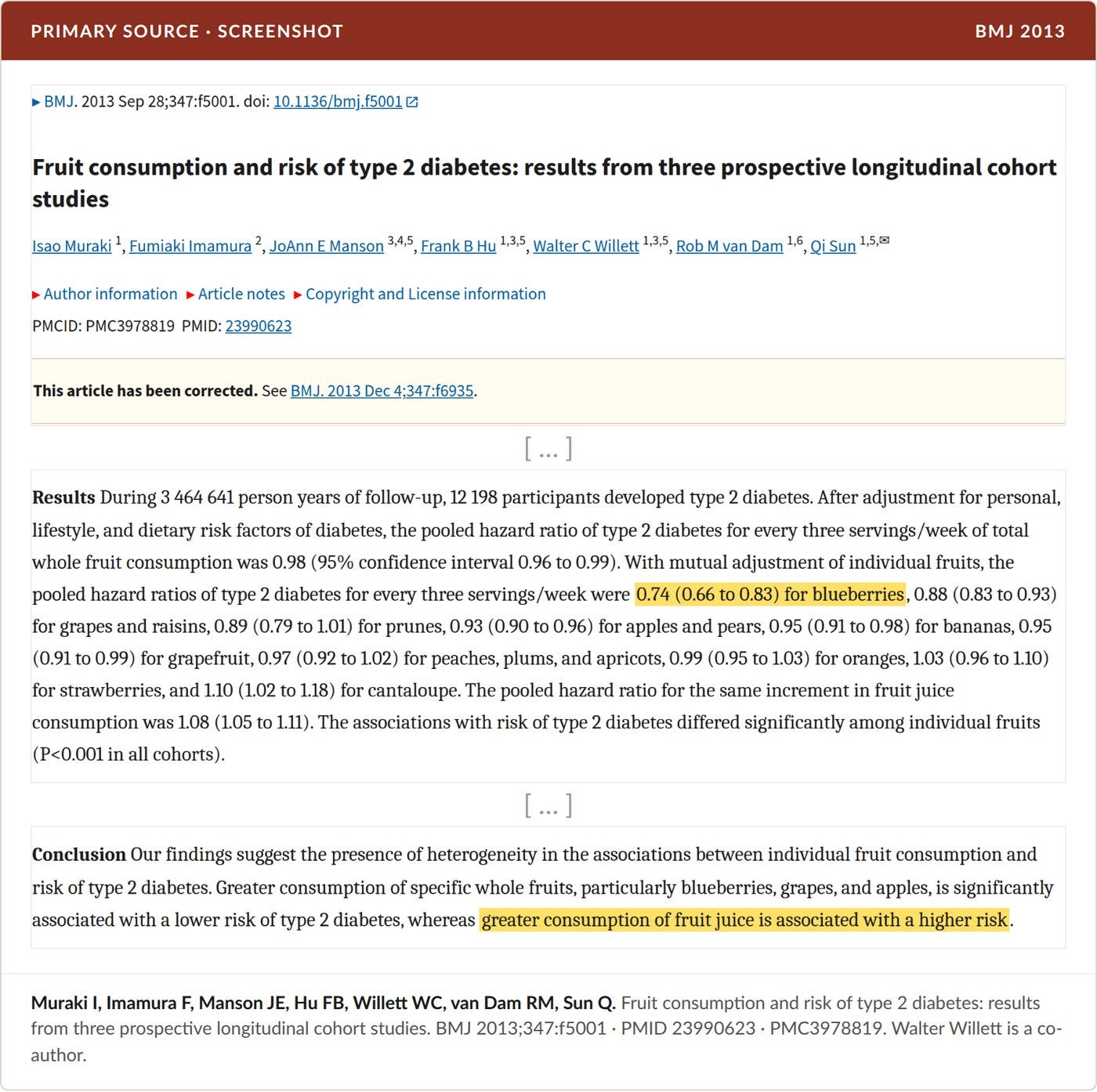
Then there are the big cohorts, the kind of data Willett himself built a career on. In 93,600 young and middle-aged women followed for 18 years, those in the highest fifth of anthocyanin intake had a 32% lower risk of heart attack than those in the lowest; the estimate for eating blueberries and strawberries more than three times a week pointed the same way but its confidence interval crossed one (Cassidy et al., Circulation 2013). In three cohorts totaling 187,382 health professionals, every three weekly servings of blueberries was associated with a 26% lower risk of type 2 diabetes, the strongest of any fruit, while fruit juice went the other way, with an 8% higher risk (Muraki et al., BMJ 2013). Willett is a co-author on that paper. And in 129,617 men and women followed for two decades, the highest berry intake was associated with a 23% lower risk of Parkinson’s disease, which is the finding behind his Parkinson’s remark (Gao et al., Neurology 2012).
The cancer research no one else covered
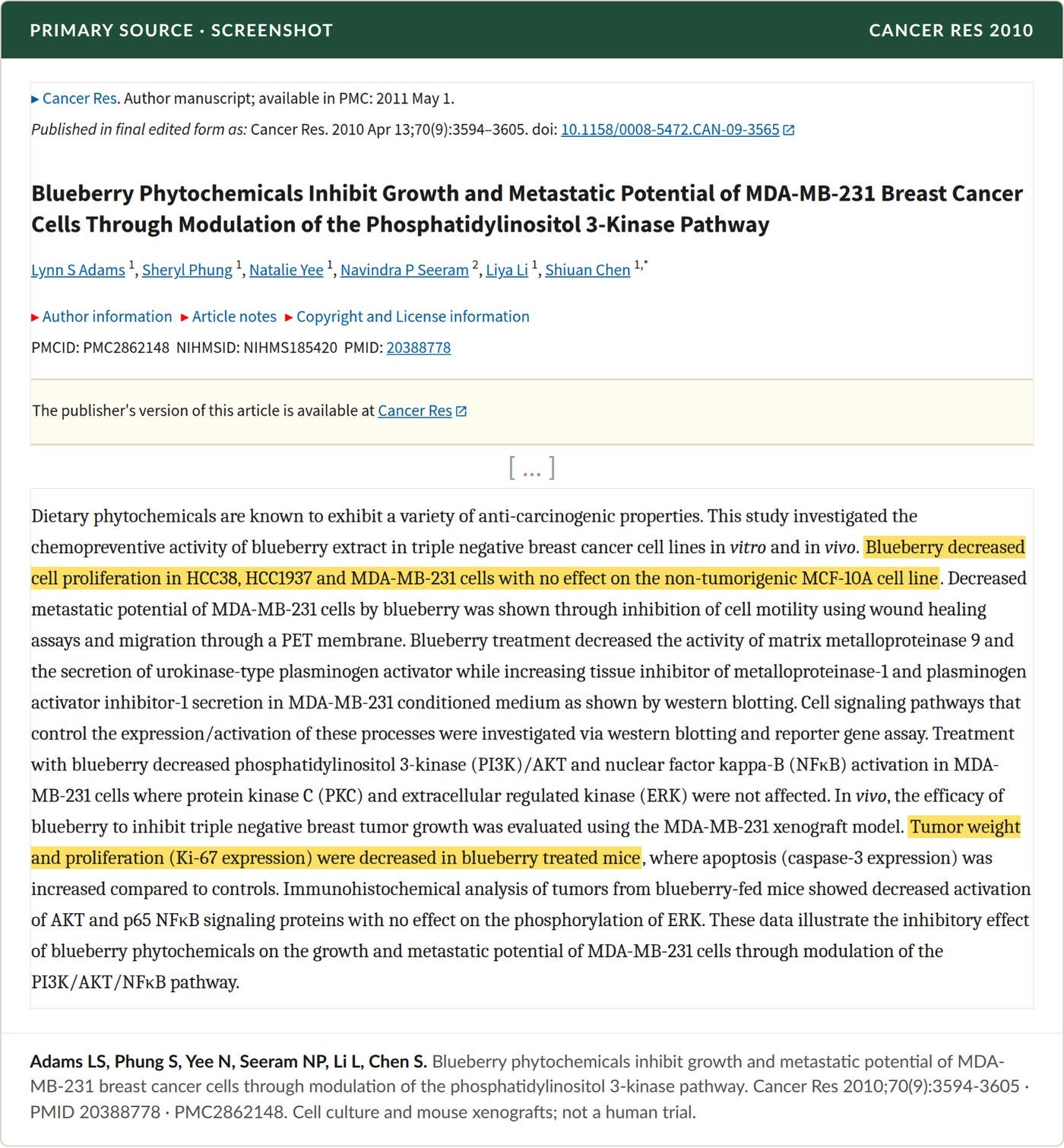
This is where our archive goes further than the mainstream, and where I want to be most precise about what the evidence is. In 2010, researchers at City of Hope showed that blueberry extract reduced proliferation in three triple-negative breast cancer cell lines while leaving a normal breast cell line alone, cut the cells’ ability to migrate, and, in mice fed blueberry, reduced tumor weight and proliferation while increasing cancer-cell apoptosis (Adams et al., Cancer Res 2010). The same City of Hope group reported the next year that whole blueberry powder in the diet modulated growth and metastasis of those tumors in mice (Adams et al., J Nutr 2011). In 2013, a Taiwanese team showed that radiation enriched a population of liver cancer stem cells, and that pterostilbene, a stilbenoid abundant in blueberries, dose-dependently reduced that enrichment, blocked tumor-sphere formation and increased apoptosis in those cells (Lee et al., Evid Based Complement Alternat Med 2013; GreenMedInfo, 2013).
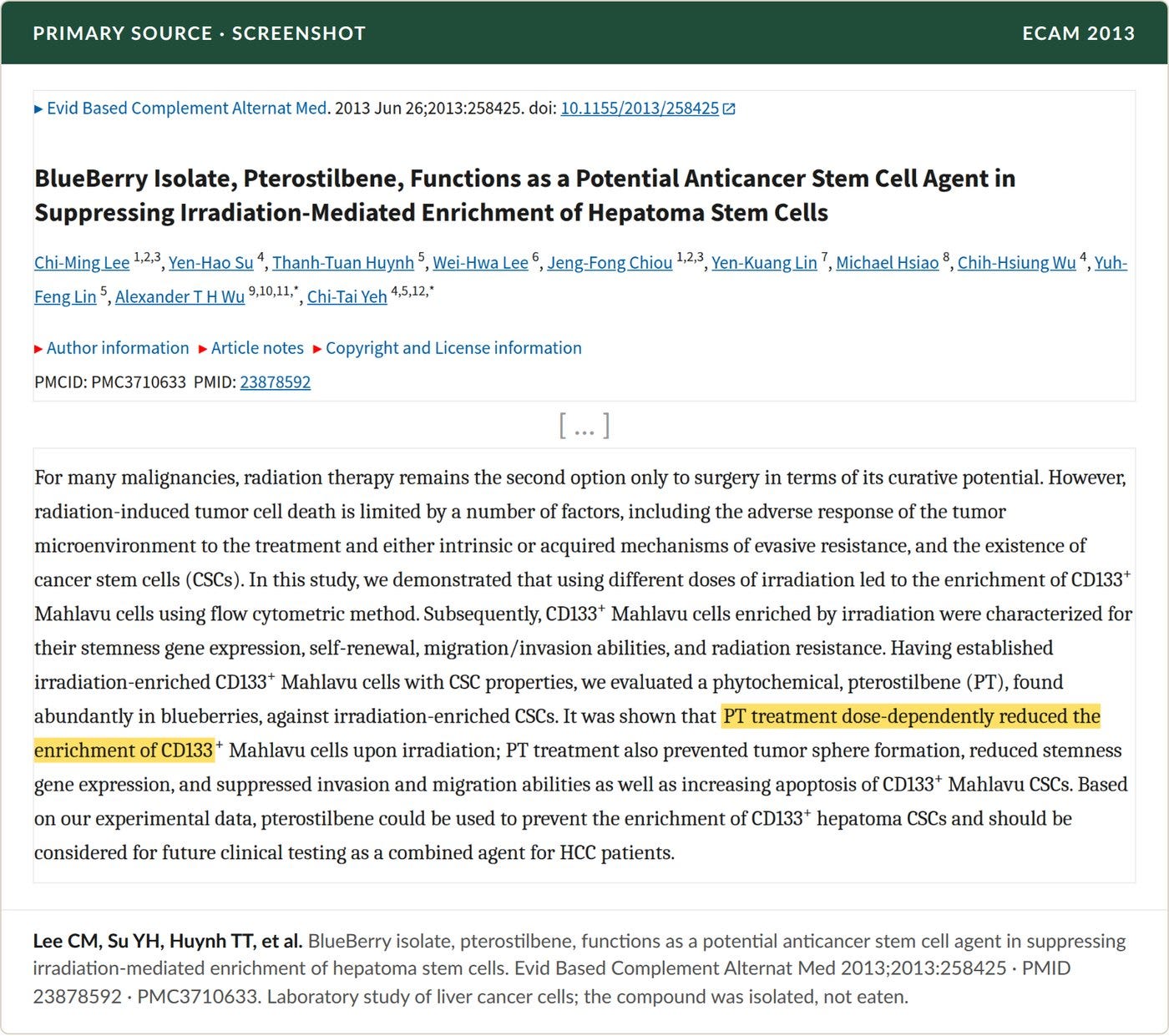
WHAT THE CANCER EVIDENCE IS, AND IS NOT
Both studies are preclinical: cell culture and mice in Adams et al. 2010 (PMID 20388778) and a cell-line model with isolated pterostilbene in Lee et al. 2013 (PMID 23878592). No randomized trial has tested blueberries as a cancer treatment in people. The one human cancer-relevant finding above is the reduction in oxidative DNA damage in 18 men (Riso et al. 2013). The GreenMedInfo database lists the breast-cancer and other oncology entries so researchers can find them; it does not list them as proof of clinical benefit (GreenMedInfo blueberry page).
The honest ledger
Every criticism in the Fox article is fair, and the archive carries the receipts for each one. The trials are small: nine, eighteen, twenty-five, forty-eight, sixty-one, a hundred and fifteen people. They are short: six weeks to six months. Most used freeze-dried powder, not fruit from a carton. The two biggest were co-funded by blueberry growers, the U.S. Highbush Blueberry Council in 2019 and the Wild Blueberry Association of North America in 2023, which does not make them wrong but does make replication by someone else important (Curtis et al. funding; Wood et al. funding). They measured flow-mediated dilation and word recall, not heart attacks or dementia diagnoses. The half-cup dose in the longest trial did nothing at all, and its primary endpoint failed (Curtis et al. 2019). In the 2023 trial, delayed recall favored placebo (Wood et al. corrigendum 2025). In a 2018 trial that combined blueberry with fish oil for 24 weeks, blueberry alone improved memory discrimination but the combination did not help (McNamara et al., Neurobiol Aging 2018). The cohorts cannot prove cause (Fox News).
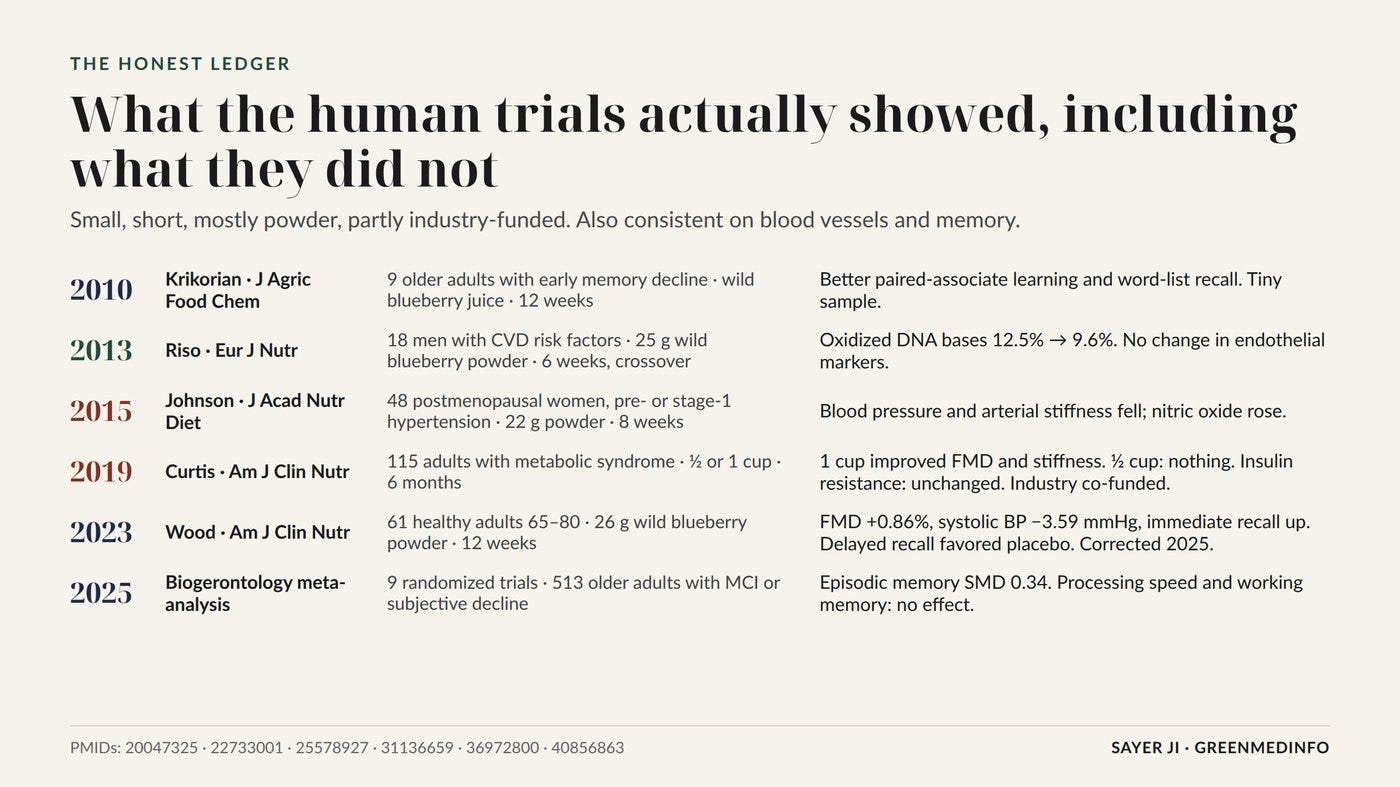
And yet. Set the ledger side by side and the direction never flips. Across seventeen years, independent groups in Cincinnati, Tallahassee, Boone, Milan, Reading, London, Norwich and Boston, using juice, powder, concentrate and whole fruit, in children, young adults, the middle-aged and the old, keep finding the same two things: blood vessels relax, and memory sharpens a little. The failures are failures of magnitude and scope, not of direction. That is roughly what Willett means by “study after study.”
DOSE AND SAFETY
The doses that produced effects in trials were one cup of fresh fruit a day or its freeze-dried equivalent, 22 to 26 g of powder (Curtis 2019; Wood 2023; Johnson 2015). Half a cup did not register in the one trial that tested it (Curtis 2019). Blueberries are a whole food; no trial above reported a safety signal, and one cup provides about 3.6 g of fiber (Fox News). Fresh and frozen both work; frozen is cheaper year-round (Fox News). Juice is a different food: in the 187,382-person BMJ analysis, fruit juice was associated with higher diabetes risk, not lower (Muraki 2013). Blueberry extracts and pterostilbene supplements are not the fruit and were not what the human trials tested.
The simplicity of it
What strikes me, reading seventeen years of this literature in one sitting, is how little it asks. There is no extraction, no standardization, no patent, no prescription. A cup of a fruit native to this continent, eaten in the morning, is the entire intervention in the trial that this week’s experts cite (Curtis 2019). The most-cited nutrition expert in the world does not take a blueberry pill. He puts the berries on his oatmeal (The Washington Post).
We built GreenMedInfo on the conviction that evidence like this deserves to be indexed as carefully as any drug trial, and that the public deserves to see the primary sources rather than a paraphrase of them. When a Harvard scientist’s breakfast makes national news, and the research behind it has been sitting in our database for a decade and a half, that is not a vindication of us. It is a vindication of the berry. We were just paying attention (GreenMedInfo blueberry research page).
Seventeen years, 2,315 studies, one cup a day.
“It’s an area where we need more research, but berries do seem to stand out, especially blueberries.”
Walter Willett, Harvard T.H. Chan School of Public Health, as quoted by Fox News, November 6, 2026
Sources
The Washington Post: https://www.washingtonpost.com/wellness/2026/10/08/what-walter-willett-most-cited-nutrition-expert-eats-day/
GreenMedInfo blueberry research page: https://greenmedinfo.com/substance/blueberry
Curtis et al., Am J Clin Nutr 2019: https://pubmed.ncbi.nlm.nih.gov/31136659/
Curtis et al., full text: https://pmc.ncbi.nlm.nih.gov/articles/PMC6537945/
corrigendum, Am J Clin Nutr 2019;110:1262: https://pmc.ncbi.nlm.nih.gov/articles/PMC6821540/
Adams et al., Cancer Res 2010: https://pubmed.ncbi.nlm.nih.gov/20388778/
GreenMedInfo, 2012: https://greenmedinfo.com/content/do-blueberries-hold-key-preventing-cancers
GreenMedInfo, 2013: https://greenmedinfo.com/content/research-radiotherapy-causes-cancer-blueberry-kills-it
GreenMedInfo, 2018: https://greenmedinfo.com/content/blueberries-protect-against-top-2-killer-diseases
GreenMedInfo, 2024: https://greenmedinfo.com/content/eat-think-better-next-six-hours-and-beyond
GreenMedInfo, 2025: https://greenmedinfo.com/content/therapeutic-potential-wild-blueberries-emerging-evidence-brain-and-heart-healt
Krikorian et al., J Agric Food Chem 2010: https://pubmed.ncbi.nlm.nih.gov/20047325/
Devore et al., Ann Neurol 2012: https://pubmed.ncbi.nlm.nih.gov/22535616/
Bowtell et al., Appl Physiol Nutr Metab 2017: https://pubmed.ncbi.nlm.nih.gov/28249119/
Miller et al., Eur J Nutr 2018: https://pubmed.ncbi.nlm.nih.gov/28283823/
Whyte et al., Nutrients 2019: https://pmc.ncbi.nlm.nih.gov/articles/PMC6893475/
Krikorian et al., Nutrients 2022: https://pubmed.ncbi.nlm.nih.gov/35458181/
Wood et al., Am J Clin Nutr 2023: https://pubmed.ncbi.nlm.nih.gov/36972800/
corrigendum, Am J Clin Nutr 2025: https://pmc.ncbi.nlm.nih.gov/articles/PMC12612743/
Nardelli da Silva et al., Biogerontology 2025: https://pubmed.ncbi.nlm.nih.gov/40856863/
Travica et al., Brain Behav Immun 2020: https://pubmed.ncbi.nlm.nih.gov/30999017/
Basu et al., J Nutr 2010: https://pubmed.ncbi.nlm.nih.gov/20660279/
Stull et al., J Nutr 2010: https://pubmed.ncbi.nlm.nih.gov/20724487/
McAnulty et al., Nutr Res 2014: https://pubmed.ncbi.nlm.nih.gov/25150116/
Johnson et al., J Acad Nutr Diet 2015: https://pubmed.ncbi.nlm.nih.gov/25578927/
Riso et al., Eur J Nutr 2013: https://pubmed.ncbi.nlm.nih.gov/22733001/
Cassidy et al., Circulation 2013: https://pubmed.ncbi.nlm.nih.gov/23319811/
Muraki et al., BMJ 2013: https://pubmed.ncbi.nlm.nih.gov/23990623/
Gao et al., Neurology 2012: https://pubmed.ncbi.nlm.nih.gov/22491871/
Adams et al., J Nutr 2011: https://pubmed.ncbi.nlm.nih.gov/21880954/
Lee et al., Evid Based Complement Alternat Med 2013: https://pubmed.ncbi.nlm.nih.gov/23878592/
Wood et al. funding: https://pmc.ncbi.nlm.nih.gov/articles/PMC10315404/
McNamara et al., Neurobiol Aging 2018: https://pubmed.ncbi.nlm.nih.gov/29458842/
Images: hero banner is an AI-generated illustration (GPT Image 2.5) with typeset headline; photographs by Green Yoshi (CC BY-SA 3.0) and Paul VanDerWerf (CC BY 2.0) via Wikimedia Commons; study screenshots from PubMed Central; verbatim excerpt cards from PubMed abstracts; charts by Sayer Ji / GreenMedInfo from the cited papers.