

CCDH chief loses his federal court challenge as temporary protection from detention begins to expire


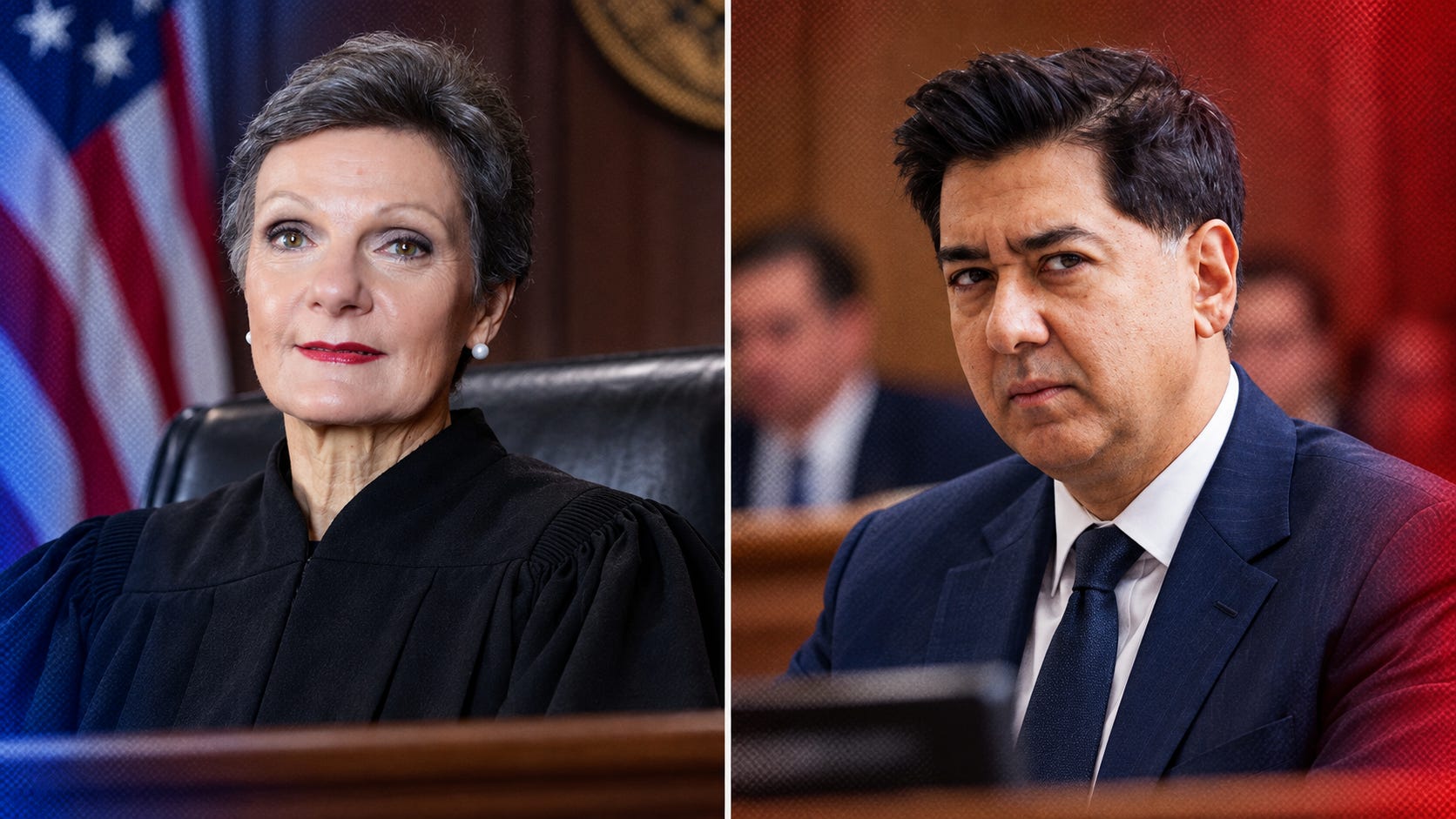
A federal judge has dismissed a lawsuit brought by Imran Ahmed, CEO of the Center for Countering Digital Hate (CCDH), seeking to stop the Trump administration from detaining him and pursuing his removal from the United States.
The September 8 ruling is a significant setback for Ahmed, whose organization has played a prominent role in campaigns targeting Americans, this author included, accused of spreading online “misinformation” and “disinformation,” and comparing the “disinformation dozen” to terrorists, sexual predators, and mass murderers.
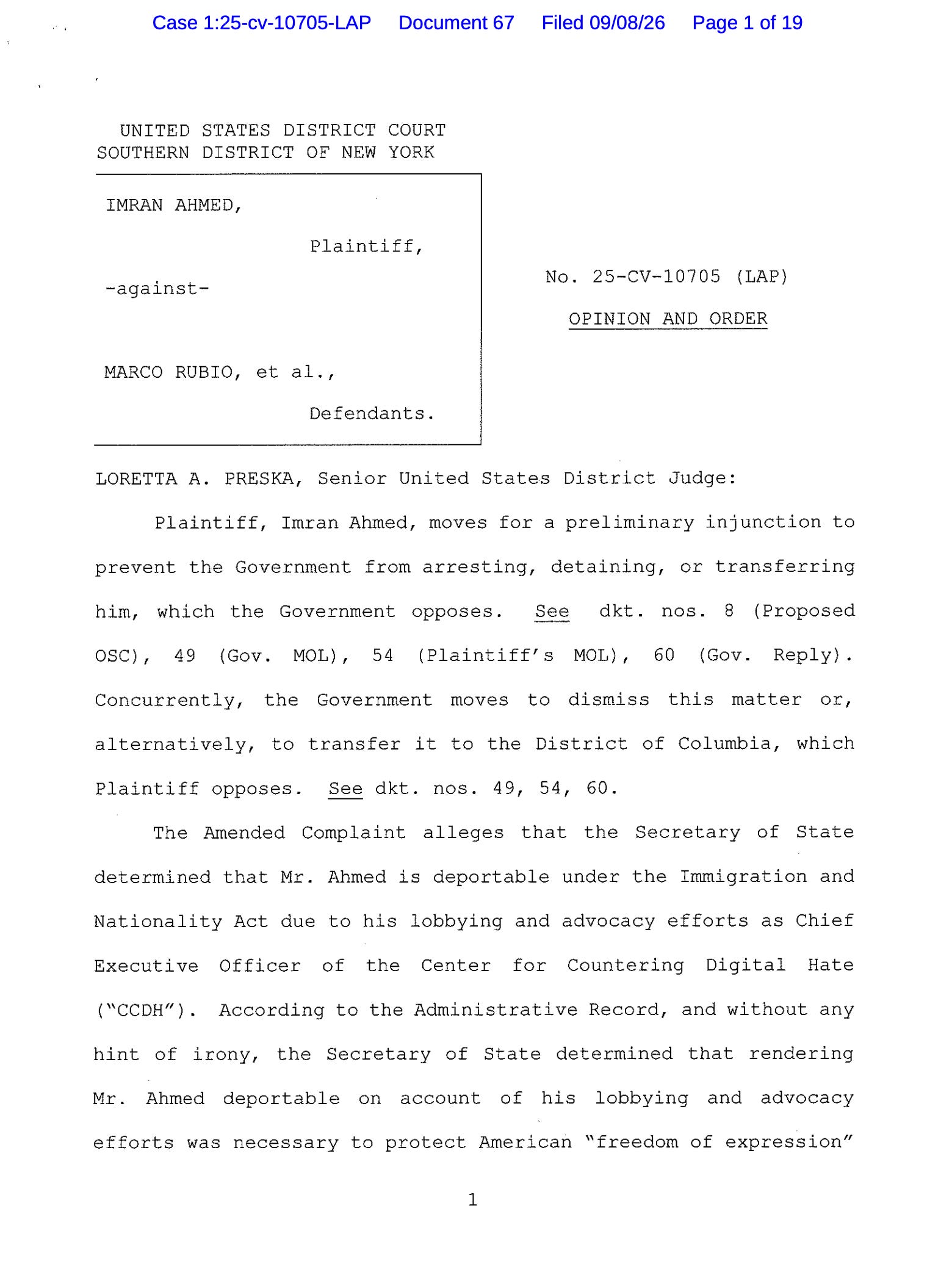
U.S. District Judge Loretta Preska ruled that her court does not have jurisdiction to hear Ahmed’s challenge at this stage of the immigration process.
That distinction is important.
The judge did not rule that every allegation against Ahmed or CCDH had been proven. Nor did she decide whether the government ultimately has the legal right to deport him.
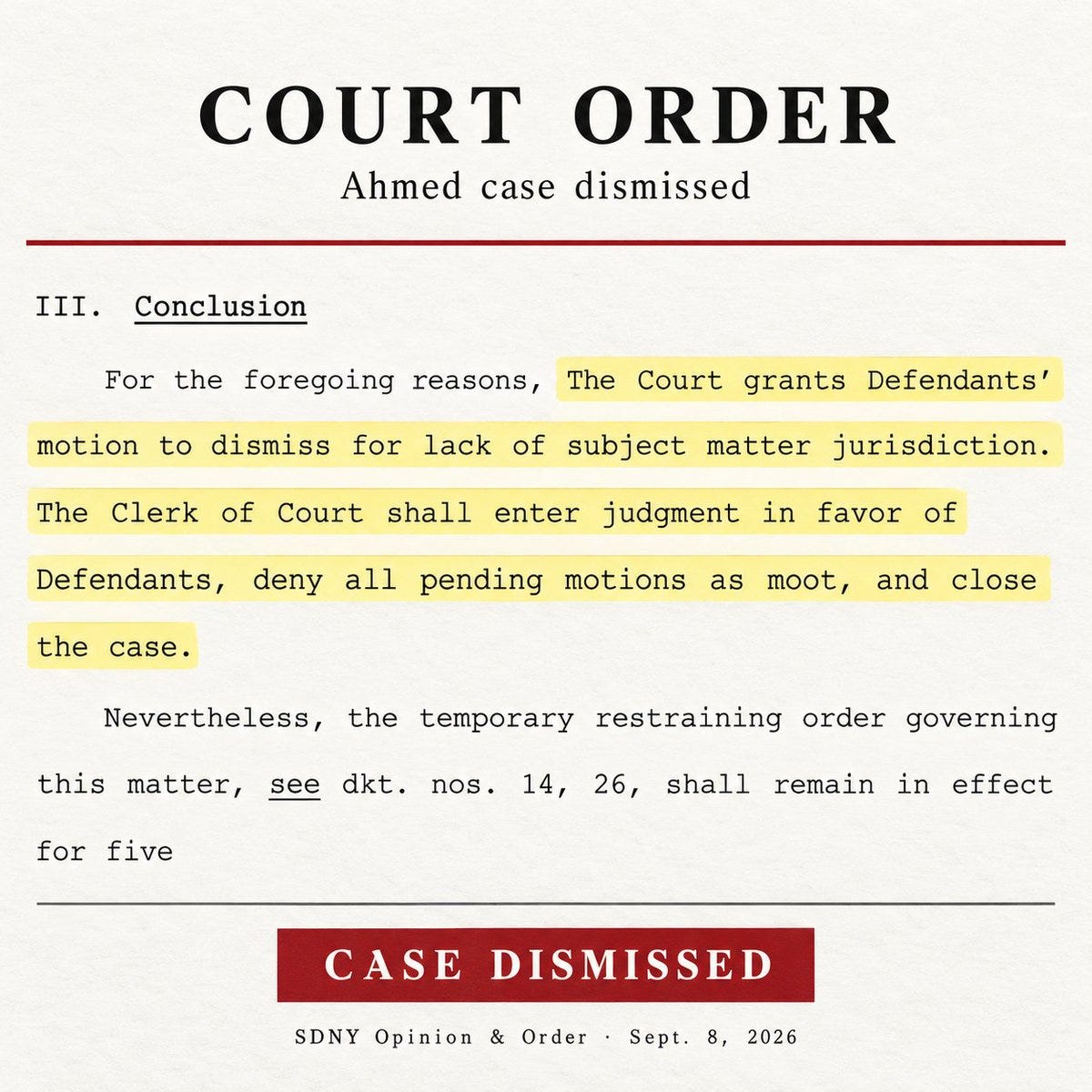
Instead, she ruled that Ahmed cannot use a federal district court lawsuit to stop the immigration process before it has run its course.
As Judge Preska put it, Ahmed “may very well have valid causes of action,” but Congress has directed challenges arising from removal proceedings through the immigration courts and, ultimately, to the federal Court of Appeals.
Reuters described the ruling as opening the door to Ahmed’s detention while giving him a short window to appeal.
I laid out last month why the Second Circuit’s Mahdawi ruling had put Ahmed’s federal case on life support, and estimated an 80% likelihood that Judge Preska would dismiss it. That is now what has happened.
The Courthouse Closes on Imran Ahmed

A three-page filing, a Second Circuit ruling, and a federal case that may end without any judge ever reaching the merits — and why that should concern every American, including the twelve of us his organization targeted.
Why did the U.S. government move against Ahmed?
Ahmed portrays the case as retaliation for his speech. But that framing leaves out the conduct at the center of the government’s action.
Ahmed is a British citizen and lawful permanent resident who founded and leads the Center for Countering Digital Hate (CCDH), a UK-founded organization that spent years pressuring technology companies, governments and regulators to take action against speech it classified as misinformation.
Its most notorious campaign was the “Disinformation Dozen.” CCDH singled out twelve individuals—many of them Americans—and urged social-media companies to remove or restrict their reach over claims concerning COVID-19 and vaccines. Ahmed publicly used extraordinarily inflammatory language about people whose views he opposed, while CCDH positioned itself as an influential intermediary between governments, media organizations and technology platforms.
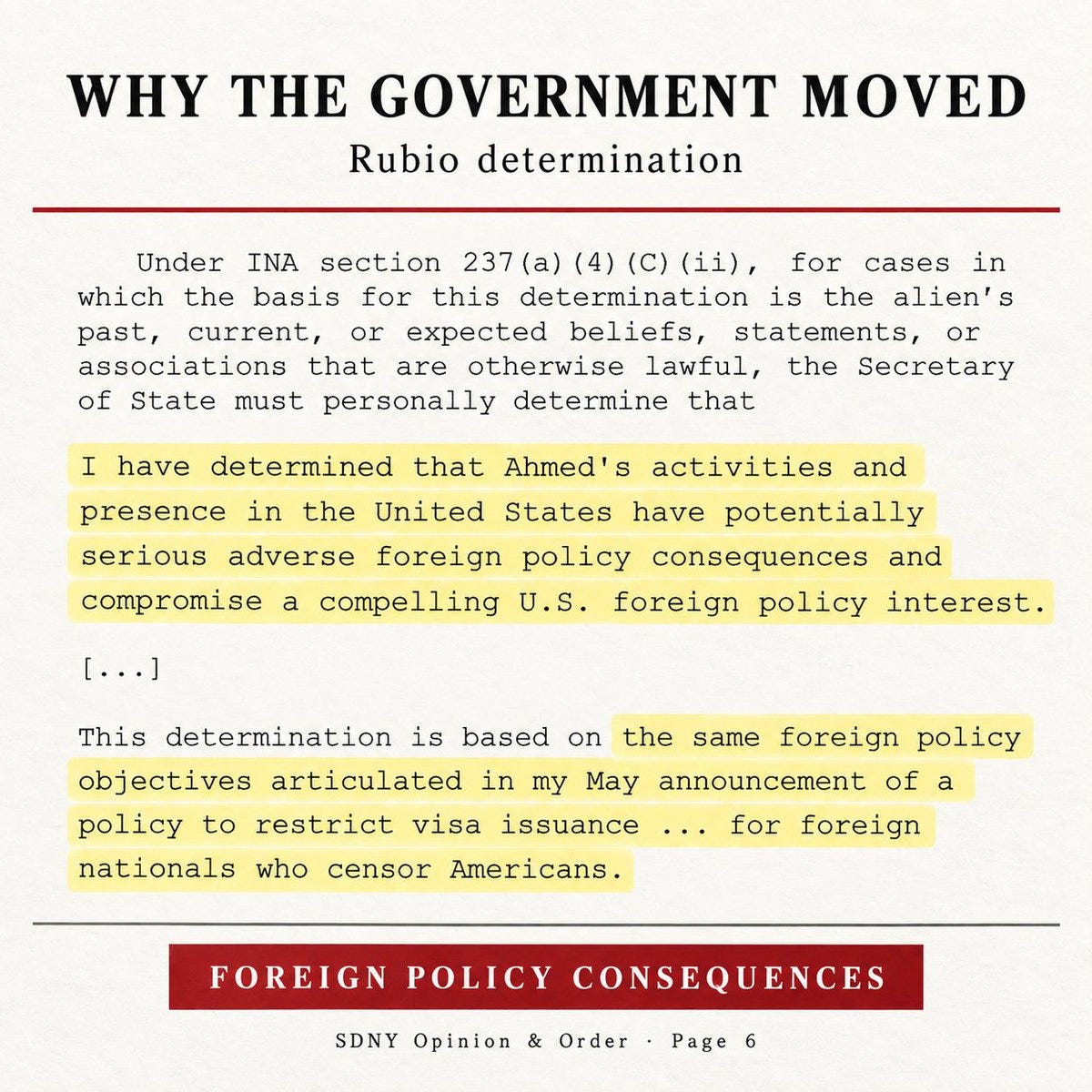
And the government’s case is not simply that Ahmed expressed opinions the administration disliked.
The administrative record cited by Judge Loretta Preska says Secretary of State Marco Rubio determined that Ahmed’s activities and presence in the United States could have “potentially serious adverse foreign policy consequences.” The determination specifically referenced CCDH’s campaigns directed at American speakers and platforms, its advocacy for regulatory action, and internal CCDH documents describing priorities including “Kill Musk’s Twitter” and triggering regulatory action in the United Kingdom and European Union.
That is the context largely missing from portrayals of Ahmed simply as an “anti-disinformation activist” facing deportation.
The question raised by the government is much larger: How far can a foreign national go in organizing pressure campaigns designed to restrict Americans’ lawful speech—and then claim constitutional protection when the United States imposes immigration consequences for those activities?
There is an unavoidable irony.
CCDH spent years arguing that certain lawful speakers were so dangerous that platforms should suppress, demonetize or remove them. When the machinery of government finally turned toward Ahmed himself, he went to federal court invoking the First Amendment, due process, and the very constitutional protections that many of the Americans targeted by CCDH argued had been systematically disregarded.
In December 2025, Rubio formally determined that Ahmed was deportable under federal immigration law. Ahmed responded by suing Rubio and other federal officials and obtained a temporary restraining order preventing his detention while the case proceeded.
That shield has now failed at the district-court level.
Judge Preska dismissed Ahmed’s case, holding that the federal district court lacks jurisdiction to stop the immigration process at this stage. She did not determine whether all of the government’s allegations about Ahmed or CCDH are true, nor did she rule on the ultimate constitutionality of the government’s actions.
But the practical consequence is significant: Ahmed can no longer rely on this district-court lawsuit to prevent the government from moving forward.
What happens next?
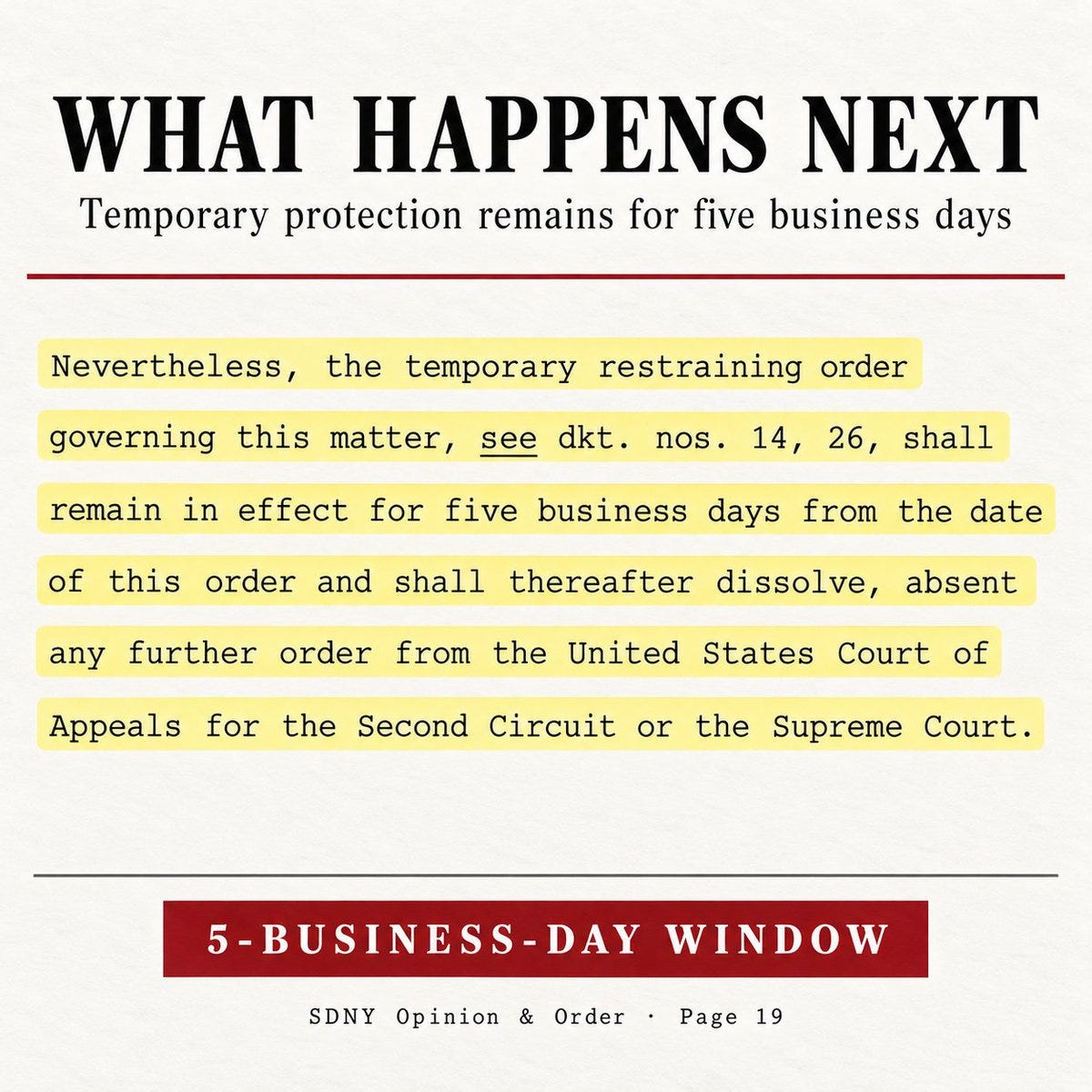
Judge Preska ordered the case closed.
However, she left the existing restraining order in place for five business days after her September 8 decision, specifically giving Ahmed an opportunity to seek relief from the Court of Appeals.
Ahmed therefore has an immediate choice: appeal and ask the Second Circuit to continue protecting him from detention, or allow the district court’s restraining order to expire.
Importantly, this does not mean Ahmed has already been ordered deported.
Formal removal proceedings had not yet begun when Preska issued her ruling. Instead, the decision removes the federal district-court barrier that Ahmed had erected against the government beginning that process.
What this ruling means
Ahmed has not yet been ordered deported, and the courts have not ruled on the ultimate merits of his First Amendment claims.
But his effort to stop the immigration process through federal district court has failed.
The case has been dismissed. The temporary restraining order protecting him from detention is expiring. And unless the Court of Appeals intervenes, the government is now free to move the immigration process forward.
UPDATE — SEPTEMBER 9: One day after Judge Preska dismissed his case, Ahmed's attorneys filed an emergency motion asking her to keep his temporary protection from detention in place while he appeals. His lawyers argue that the Second Circuit's decision to rehear the closely related Mahdawi case en banc creates substantial uncertainty over the jurisdictional basis for Preska's ruling. They have also told the court that Ahmed intends to seek an emergency stay directly from the Second Circuit. Preska has been asked to rule by September 11; absent further judicial intervention, Ahmed's existing protection expires after September 15.
UPDATE — SEPTEMBER 10: Judge Loretta Preska has temporarily extended Ahmed’s protection from detention while the Second Circuit considers his emergency stay request. Preska did not retreat from her dismissal or indicate that Ahmed is likely to prevail. Instead, she reiterated that Mahdawi II remains binding law and said the Court of Appeals is better positioned to determine whether that precedent should change. Ahmed’s TRO will now remain in effect until the Second Circuit rules on his stay motion.
You can bet your bottom dollar that when you hear about a phony organization called “countering digital hate” they are the ones implementing “digital hate” at the highest level. Make NO mistake.
"Retaliation for his free speech"!!!???? Give me a break. The King of Censorship claims his censorship of others was "free speech". His lawyers have some nerve.