


A medieval English town renamed itself after a flower. Kings paid ransoms in pepper. Plague-era Europe fought a fourteen-week war over a single shipment of saffron. Our ancestors paid fortunes for spices for a reason — and 1,280 studies in the GreenMedInfo archive now show they were right.


There is a market town in Essex, about an hour north of London, that changed its name in the 1540s to honor a crop. Not wool. Not grain. A crocus.
The town is Saffron Walden, and I came across it through a beautifully shot walking documentary by the MemorySeekers channel: the medieval church of St Mary the Virgin, the ancient turf maze on the common, the timber-framed houses with their decorative plasterwork. Over and over, the camera finds the same motif carved and plastered into the town’s bones — the saffron crocus. In 1549 the town put three saffron plants on its official seal, growing inside a set of battlements. Saffron walled-in. A pun, in stone, that lasted 500 years.
Watching it, one question would not leave me alone. Why did a flower make a town rich? Why was saffron — and pepper, and cloves, and cinnamon — worth so much that people would kill for it, tax it, counterfeit it, and in at least one German city, burn alive the people who adulterated it?
The usual answer is “flavor.” That answer is wrong, or at least radically incomplete. The real answer runs through the Black Death, through evolutionary biology, and straight into the clinical-trial literature of the last twenty years. This is that story — and then the data.
What a Kilogram Actually Costs
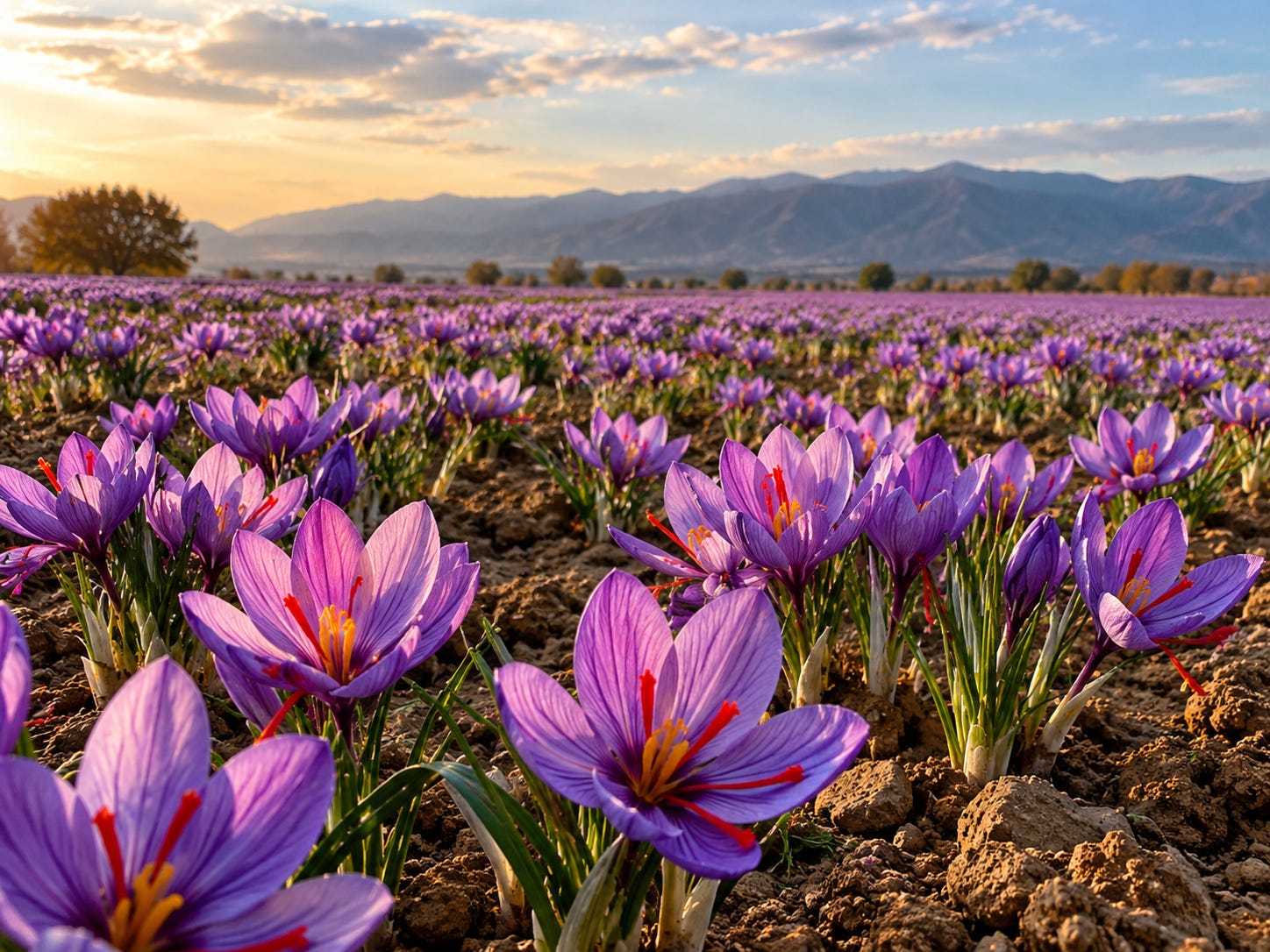
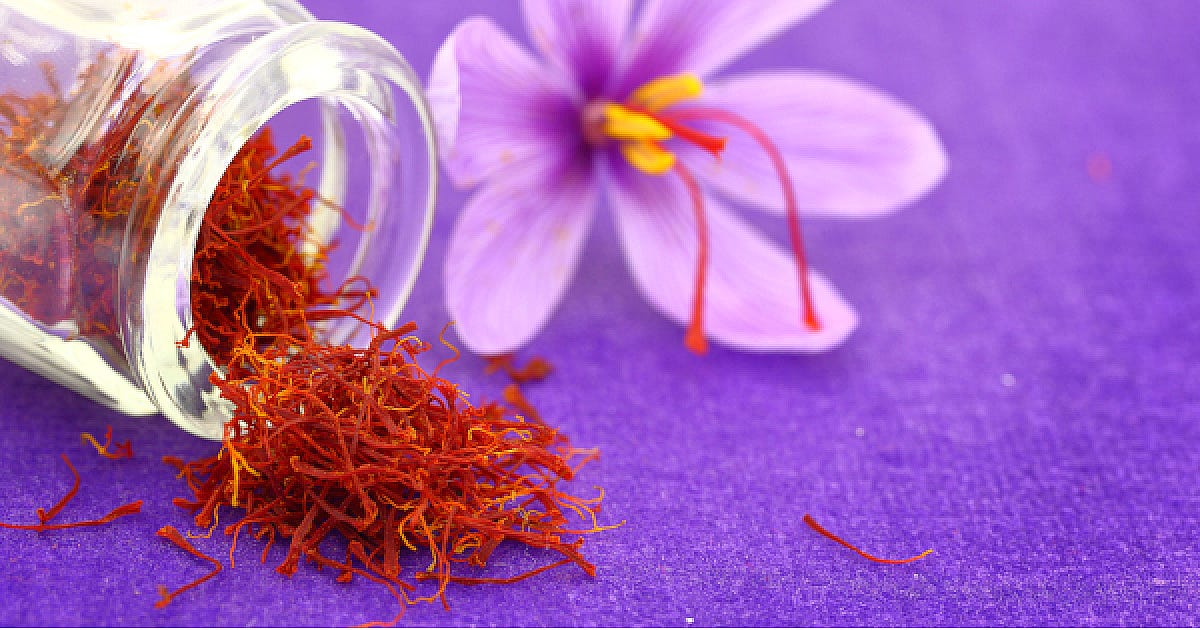
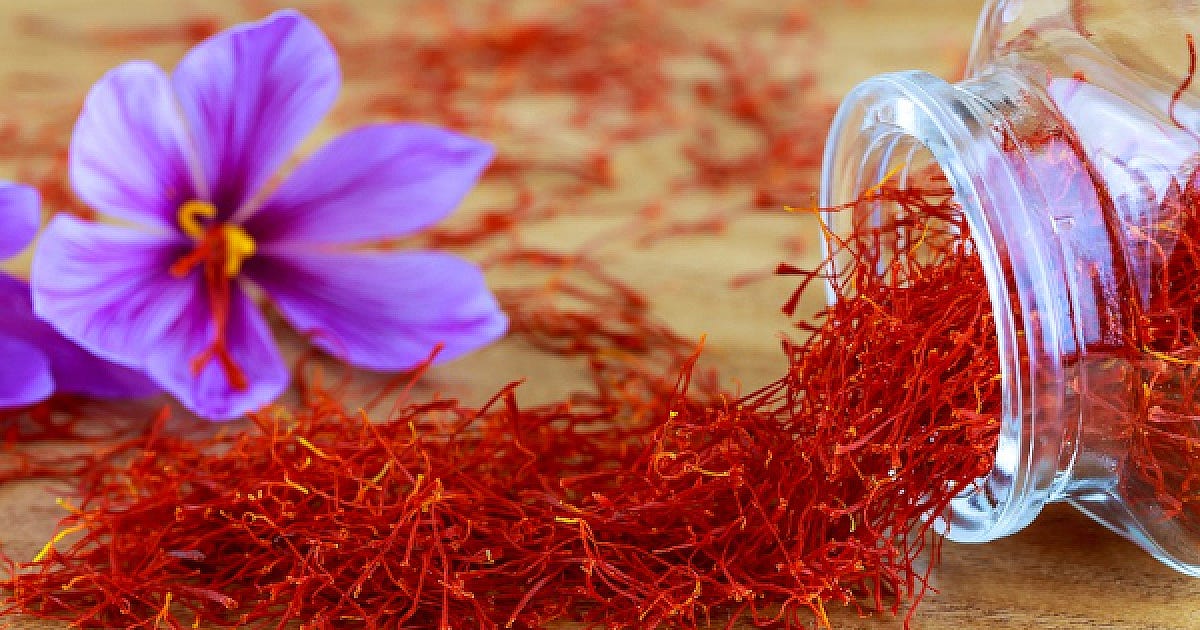
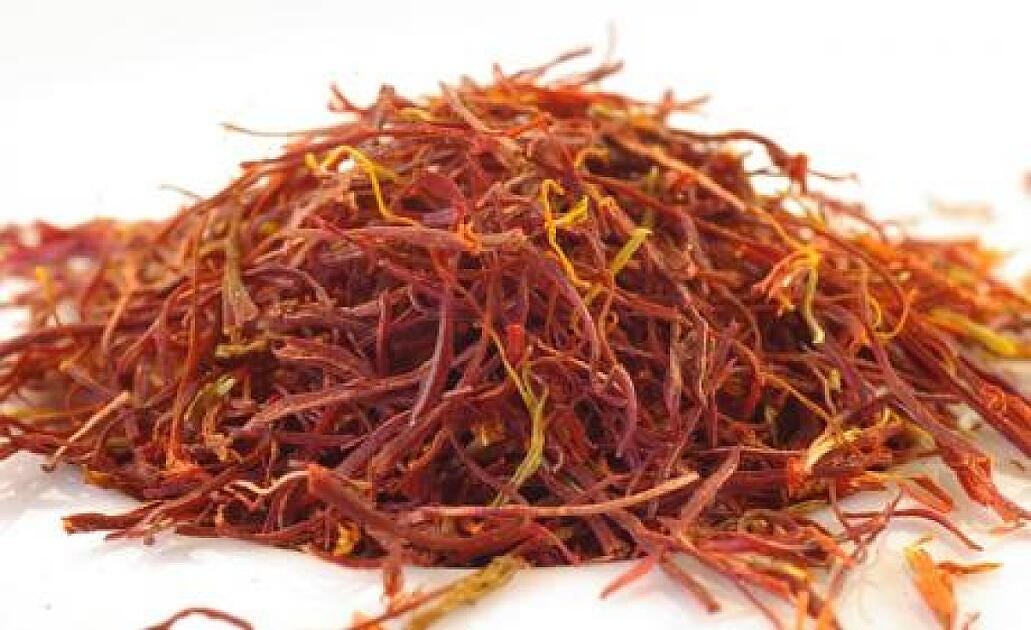
Saffron is the dried stigma of Crocus sativus — three crimson threads at the heart of a purple flower that blooms for roughly one week a year. Each flower yields about 7 milligrams of dried saffron. To make a single kilogram takes somewhere between 150,000 and 200,000 flowers, every one picked by hand at dawn as it opens, every stigma pulled by hand and dried the same day.
Cambridge University historians who studied the Saffron Walden trade put the labor at more than 400 hours per kilogram. In 1732, labor was estimated to be 75% of saffron’s cost. Nothing about that has changed. Saffron, as one GreenMedInfo contributor put it, “shuns mechanization.” You cannot build a machine that does this. You can only find hands.
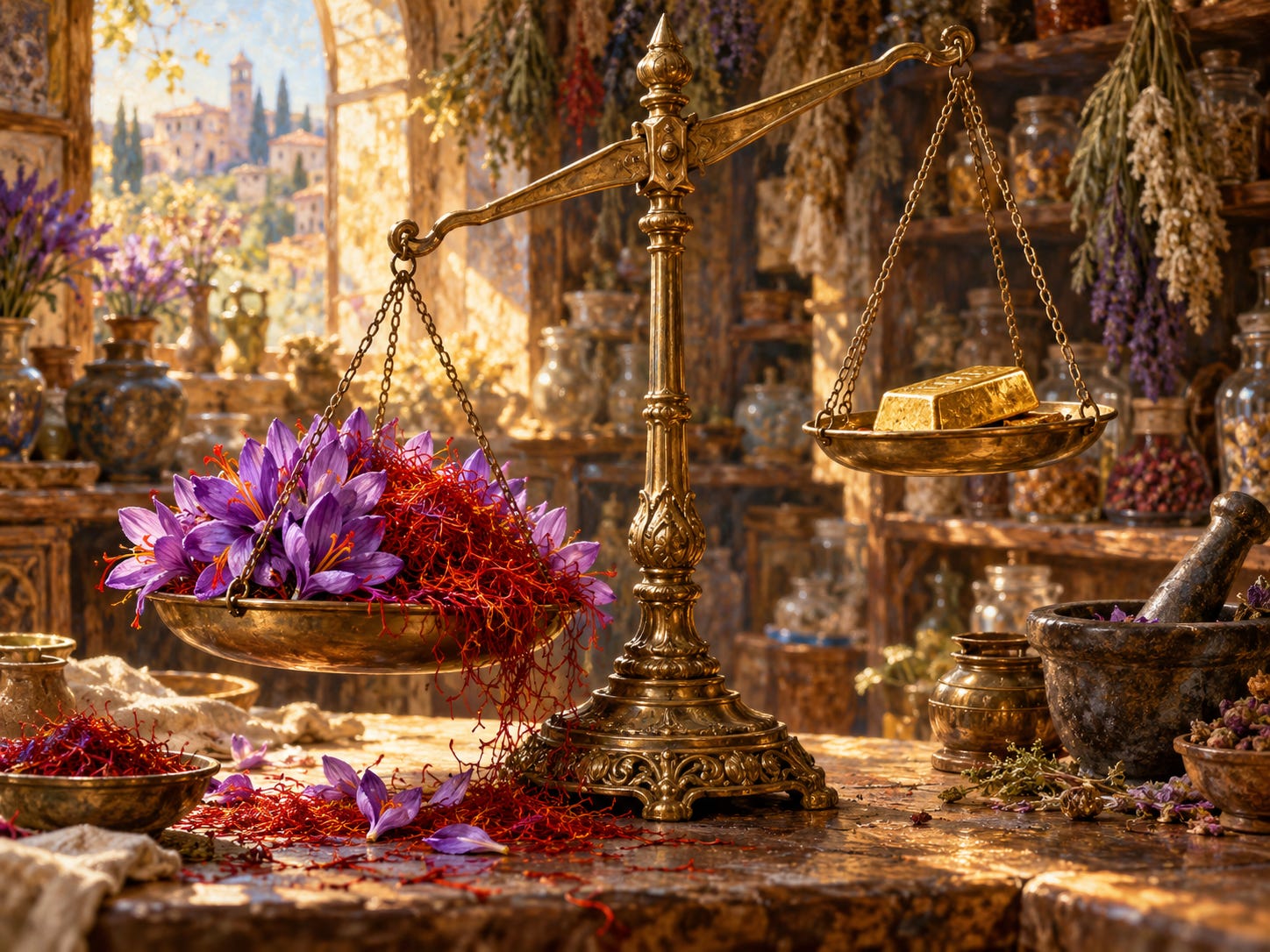
Which is why, from antiquity to the present day, saffron has been called red gold.
“Worth Its Weight in Gold” — Myth and Reality
Let’s be precise, because the cliché has been abused. The food historian Michael Krondl has pointed out that pepper was never literally worth its weight in gold; in fifteenth-century Venice you could get roughly 300 pounds of pepper for a pound of gold. That is still a staggering valuation for a dried berry — but it is not gold.
Saffron is the exception. At various points in history it has genuinely matched or exceeded gold by weight, and in the right circumstances it still does. The Saffron Walden Museum notes that authentic Essex-grown saffron, revived in recent years, sells in top London establishments for around £75 a gram — roughly three times the price of gold at the time the museum wrote it.
And in the Middle Ages the valuations were, if anything, more extreme:
A horse for a pound. Cambridge’s research found that even when grown locally in England, 500 grams of saffron cost as much as a horse — far more than imported mace or cinnamon.
The Saffron War. In 1374, nobles hijacked an 800-pound (363 kg) shipment of saffron bound for Basel. The fourteen-week conflict that followed is remembered as the Saffron War; the cargo would be worth more than half a million dollars at modern prices. Basel then planted its own saffron and posted armed guards around the fields.
Death by fire. In Nuremberg, the Safranschou code governed saffron purity. Adulterators — those who cut the threads with safflower, marigold, or dyed silk — could be fined, imprisoned, or executed by immolation.
Ransom in pepper. When Alaric the Visigoth besieged Rome in 408 AD, the price of leaving the city intact included 5,000 pounds of gold, 30,000 pounds of silver — and 3,000 pounds of pepper. In eleventh-century England, rents and taxes were sometimes paid in peppercorns. “Peppercorn rent” was once the opposite of trivial.
These were not luxury markets behaving irrationally. Something made spices worth that much to people who had very little. The clue is in the timing.
The Plague Years
Between 1347 and 1350, the Black Death killed something like a third of Europe. And in exactly those years, the historical record shows demand for saffron skyrocketing. Plague victims, and the people terrified of becoming plague victims, coveted saffron as medicine. So many farmers had died that European production collapsed, and huge quantities had to be imported — from Rhodes, from the Mediterranean, from anywhere the Crusades had not closed off. The Saffron War of 1374 happened in the long shadow of this demand.
Saffron was not alone. The medieval and early-modern pharmacopoeia against pestilence was essentially a spice rack:
Four Thieves Vinegar — the legendary plague-robbers’ formula of sage, clove, rosemary, wormwood and garlic steeped in vinegar, which (so the story goes) let its users loot the houses of the dead without catching the disease.
The plague doctor’s beak — reportedly packed with cloves, cinnamon, camphor and dried flowers, on the theory that the “miasma,” the bad air of disease, could be neutralized by stronger, cleaner air. I covered this remarkable subject in greater depth recently here.
Pomanders of clove-studded oranges and ambergris, carried by anyone who could afford them.
Modern readers smile at miasma theory. But look at what the theory made people do: surround themselves, their food, their water and their wounds with the most powerfully antimicrobial plant compounds on earth. Roman physicians rubbed saffron paste on the heads of the mad. Alexander the Great is said to have washed his battle wounds in saffron and drunk it as tea. Cleopatra bathed in it.
They had the wrong mechanism. It is far from clear they had the wrong medicine.
Why Some Like It Hot: The Darwinian Answer
In 1998, two Cornell biologists, Paul Sherman and Jennifer Billing, published a study in The Quarterly Review of Biologythat should be far more famous than it is. They asked a simple question: why do humans use spices at all? Spices have almost no calories. Many of them taste unpleasant on their own. Yet every traditional cuisine on earth uses them, and some use them heavily.
So they compiled 4,570 recipes from 93 cookbooks across 36 countries, mapped each spice’s known antibacterial activity, and cross-referenced it against the climate of every country. The result was unambiguous. The hotter the climate — the faster meat spoils — the more spices a cuisine used, and the more potent those spices were against food-borne bacteria. Nearly every meat recipe from India, Thailand and Malaysia called for spices; a large fraction of recipes from Norway, Sweden and Finland used none at all.
Their antimicrobial league table is worth memorizing:
Garlic, onion, allspice and oregano killed or inhibited 100% of the bacterial species tested.
Thyme, cinnamon, tarragon and cumin — up to 80%.
Chilies and other capsicums — up to 75%.
Black pepper, ginger, anise, celery seed — about 25%.
Sherman called it “Darwinian gastronomy.” Cultures that spiced their food survived their food. The taste for spice is, in his reading, an evolved and culturally transmitted form of medicine — and the prices our ancestors paid were the prices of survival.
Which brings us to the present, and to what the clinical literature actually shows.
1,280 Studies on One Flower
In the GreenMedInfo archive, saffron alone has 1,280 indexed research abstracts spanning 299 health topics, with a cumulative evidence score of 2,361. Its individual compounds — crocin, crocetin, safranal and picrocrocin — add hundreds more. What follows is the human-trial core of that evidence, with the design and the numbers for each so you can weigh it yourself.
→ Browse the full Saffron research database
1. Depression — Saffron vs. Prozac, Lexapro and Imipramine
The trials: This is the deepest vein in the saffron literature. In a six-week double-blind trial, 30 mg/day of saffron matched 20 mg of fluoxetine (Prozac) for mild-to-moderate depression. A 2004 trial found 30 mg of saffron as effective as 100 mg of imipramine. A 2007 study in Progress in Neuro-Psychopharmacology & Biological Psychiatry found even the petals — normally discarded — matched 10 mg of Prozac, with a quarter of participants in full remission. A 2016 trial matched saffron against Prozac for postpartum depression.
The standout: A 2020 study of 54 patients found 15 mg of saffron produced significantly greater reductions in Hamilton Depression scores — and higher response and remission rates — than 10 mg of escitalopram (Lexapro). A 2025 meta-analysis of eight randomized trials concluded saffron is as effective as SSRIs for depression, with fewer adverse events.
Medieval herbals prescribed saffron for melancholy. The Saffron Walden Museum lists depression among its traditional uses. They were, it turns out, running an uncontrolled trial for six centuries.
→ Read the full article: 6 Studies on Saffron Put Prozac to Shame
2. Obsessive-Compulsive Disorder — Saffron vs. Two SSRIs

The trials: In an eight-week study of 60 patients with mild-to-moderate OCD, 30 mg of saffron daily was compared with 40 mg of fluoxetine. Yale-Brown Obsessive Compulsive Scale scores improved significantly and equally in both groups — with “many fewer” adverse effects on saffron. A separate ten-week double-blind trial in 46 patients put 30 mg of saffron against 100 mg of fluvoxamine (Luvox). OCD scores fell slightly more in the saffron group.
→ Read the full article: Natural Help for OCD
3. ADHD — Saffron vs. Ritalin
The trials: A randomized, double-blind, six-week trial in the Journal of Child and Adolescent Psychopharmacology(2019) gave children with ADHD either 20–30 mg/day of saffron or 20–30 mg/day of methylphenidate (Ritalin), dosed by weight. Both worked equally well. A 2022 study in Nutrients followed children aged 7–17 for three months on 30 mg of evening saffron versus extended-release methylphenidate: comparable efficacy on core symptoms and executive function, saffron trending better on hyperactivity — and parents in the saffron group reported their children falling asleep faster, the opposite of the insomnia stimulants are notorious for.
→ Read the full article: Ancient Spice Saffron Works as Well as Ritalin for ADHD
4. Alzheimer’s Disease — Saffron vs. Aricept
The trial: A 22-week, multicenter, randomized, double-blind controlled trial in Psychopharmacology (2010) enrolled 54 adults aged 55 and older with mild-to-moderate Alzheimer’s. Half received 15 mg of saffron twice a day; half received 5 mg of donepezil (Aricept) twice a day. On both the Alzheimer’s Disease Assessment Scale and the Clinical Dementia Rating, saffron was as effective as the drug. Adverse events were similar — except vomiting, which was significantly more frequent on donepezil. A companion 16-week placebo-controlled trial in 46 patients found the same 30 mg/day dose both safe and effective.
→ Read the abstract: Saffron compares favorably to donepezil in mild-to-moderate Alzheimer’s
5. Macular Degeneration — Saffron for Failing Eyes
The trials: Age-related macular degeneration is the leading cause of blindness in the elderly, and conventional medicine has little to offer for the common “dry” form. In 2010, Italian and Australian researchers published a randomized, double-blind, placebo-controlled trial in Investigative Ophthalmology & Visual Science: 20 mg of saffron a day produced significant improvement in retinal function within 90 days. A 2012 follow-up tracked 29 patients aged 55–85 on the same dose for about 14 months — every patient reported improved quality of vision, including contrast, color perception, reading and seeing in low light. And in March 2024, BMJ Open Ophthalmology published a 12-month, 93-patient extension study confirming significantly higher retinal response density on saffron.
Saffron is one of the richest natural sources of zeaxanthin, the carotenoid that pigments the macula itself. The flower, in other words, contains the exact molecule the eye is running out of.
→ Read the full article: Saffron Protects Against Macular Degeneration
6. Sexual Function — the Ancient Aphrodisiac, Tested
The trials: Saffron’s reputation as an aphrodisiac is one of its oldest. In a three-center, double-blind, randomized, placebo-controlled trial published in 2022, 74 women with severe sexual dysfunction took 15 mg of saffron twice daily or placebo for six weeks. The saffron group’s Female Sexual Function Index score improved 62% from baseline, with superiority over placebo in desire, lubrication and satisfaction, and no one dropped out. Smaller trials have also tested saffron specifically for the sexual dysfunction caused by SSRIs — a side effect that afflicts the overwhelming majority of people on those drugs.
→ Read the study: Saffron in the treatment of female sexual dysfunction
7. Appetite and Weight — Saffron vs. Snacking
The trial: A randomized, double-blind, placebo-controlled study in Nutrition Research (2010) gave 60 mildly overweight women either a standardized saffron stigma extract (176.5 mg/day) or placebo for eight weeks, with no restriction on calories. The saffron group snacked significantly less, reported greater satiety, and lost significantly more weight than placebo. Given saffron’s effects on mood, the researchers suggested it works on the same stress-and-reward pathways that drive comfort eating.
→ Read the abstract: Saffron extract reduces snacking and increases satiety
8. Type 2 Diabetes — Blood Sugar, Lipids and the Liver
The trial: A randomized, double-blind, placebo-controlled trial in Phytotherapy Research (2023) gave 70 patients with type 2 diabetes either 100 mg of saffron daily or placebo for eight weeks. Saffron significantly reduced fasting blood sugar (by 7.57%), improved every lipid measure except HDL, lowered atherogenic indices and improved liver enzymes. Other trials in the archive show saffron improving glycemic and antioxidant status in overweight prediabetics.
→ Read the abstract: Saffron supplementation may alleviate type 2 diabetes
9. The Big Picture — 46 Randomized Trials
The review: In February 2024, Phytotherapy Research published a systematic review and meta-analysis of 46 randomized controlled trials of saffron, lasting 4 to 48 weeks, for cognition, depression, anxiety, sleep, ADHD and OCD. Against placebo, saffron produced large, significant improvements in depression (effect size −4.26), anxiety (−3.75) and sleep (−1.91). Against conventional drugs, it was non-inferior across the board — for cognitive disorders, depression, anxiety, ADHD and OCD — with good tolerance and few side effects.
→ Read the review: New horizons for saffron in neurological and psychiatric disorders
10. Infection — the Plague Doctors’ Spice Rack, Revisited
And so back to the pestilence. The spices that filled the plague doctor’s beak have now been tested against the pathogens that terrify modern hospitals:
Cinnamon bark showed the highest antimicrobial activity of 13 essential oils tested — particularly against antibiotic-resistant strains.
Cinnamon and oregano (cinnamaldehyde and carvacrol) show powerful activity against antibiotic-resistant Campylobacter.
Clove is among the spices with the highest synergy with antimicrobial drugs — restoring the power of antibiotics that have stopped working on their own.
Selected spice essential oils have shown high activity against the stationary-phase and biofilm forms of Borrelia burgdorferi, the Lyme bacterium, which standard antibiotics struggle to reach.
Saffron’s own compounds — crocetin, picrocrocin and safranal — have been studied for toning down the cytokine storm in severe viral infection, and saffron has demonstrated antioxidant, anti-inflammatory and tissue-protective effects in brain, heart, liver, kidney and lung.
→ Read the full article: 36 Natural Alternatives for Infection
What the Town Knew
Walk through Saffron Walden today and the crocus is everywhere — on the seal, in the plasterwork, in the museum, in the name. By 1654 the diarist John Evelyn called the town’s crop “esteemed the best of any foreign country.” The Tudor historian William Harrison said the saffron grown there “surmounteth all the rest, and therefore beareth worthily the higher price.”
The higher price. For a flower that treats melancholy, steadies the restless mind, sharpens failing eyes and memory, calms the appetite, and carries within it some of the most potent antimicrobial chemistry in the plant kingdom. A flower whose active molecule is the same pigment the human retina is built from.
Our ancestors could not run a double-blind trial. They ran something slower and crueler: centuries of survival, and a market that priced the results. When they said saffron was worth more than gold, they were not being romantic. They were being empirical.
It took us until 2010 to run the trial against Aricept. Until 2019 to run it against Ritalin. Until 2020 to run it against Lexapro. In every case, the flower held its own.
That is why GreenMedInfo exists: 1.4 million studies, hand-mapped to the substances, conditions and mechanisms people actually search for, free to use — so that the knowledge a medieval town carved into its walls is never again lost under the weight of what is patentable. In 2020 they tried to take it away. It’s still here. It’s still yours.
Watch the documentary that started this: Saffron Walden — The Medieval Town Built on the World’s Most Expensive Spice. Then search the archive — and the next time you pay for a few threads of red gold, know exactly what you’re buying.
Help us grow our project to encompass the totality of the world’s literature supporting natural and integrative health approaches by becoming a member of GreenMedInfo here.

Historical sources: University of Cambridge, “Saffron”; Saffron Walden Museum; History of Saffron; Michael Krondl, Spice Facts & Stats; Cornell Chronicle on Sherman & Billing (1998).