

The UN’s pandemic declaration commits governments to counter health “misinformation” and never mentions freedom of expression, privacy or informed consent. The United States objected to other things.
Disclosure: I am a named plaintiff in Finn et al. v. Global Engagement Center (dismissed with prejudice on 28 July 2026) and the founder of Restore the First, the coalition the plaintiffs convened.
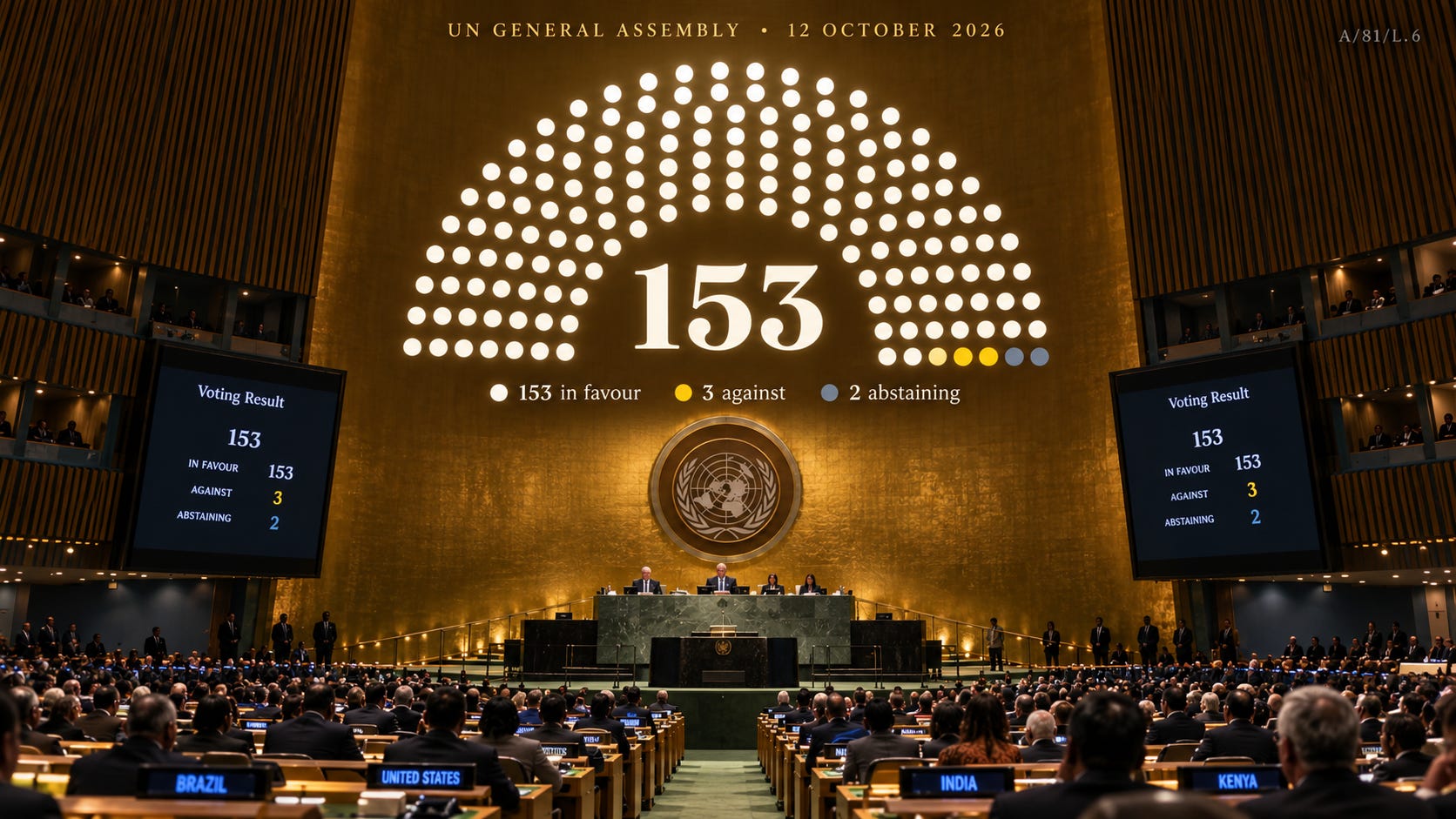
On 12 October 2026 the UN General Assembly adopted a pandemic declaration by 153 votes to 3, with 2 abstentions (UN News). Paragraph 57 commits governments to “take measures to counter and address” health “misinformation, disinformation,” and to foster “trust in public health systems and authorities.” It defines neither term and never mentions freedom of expression, privacy or informed consent. The one government I can confirm dissociating from that commitment on the record, Italy, voted yes. The United States, which called the vote, did not raise it.
The declaration is non-binding. By “permanent emergency” I mean the argument of my white paper: an emergency architecture with no exit conditions. The declaration does not declare one. The question is what it leaves out.
Paragraph 57, in full
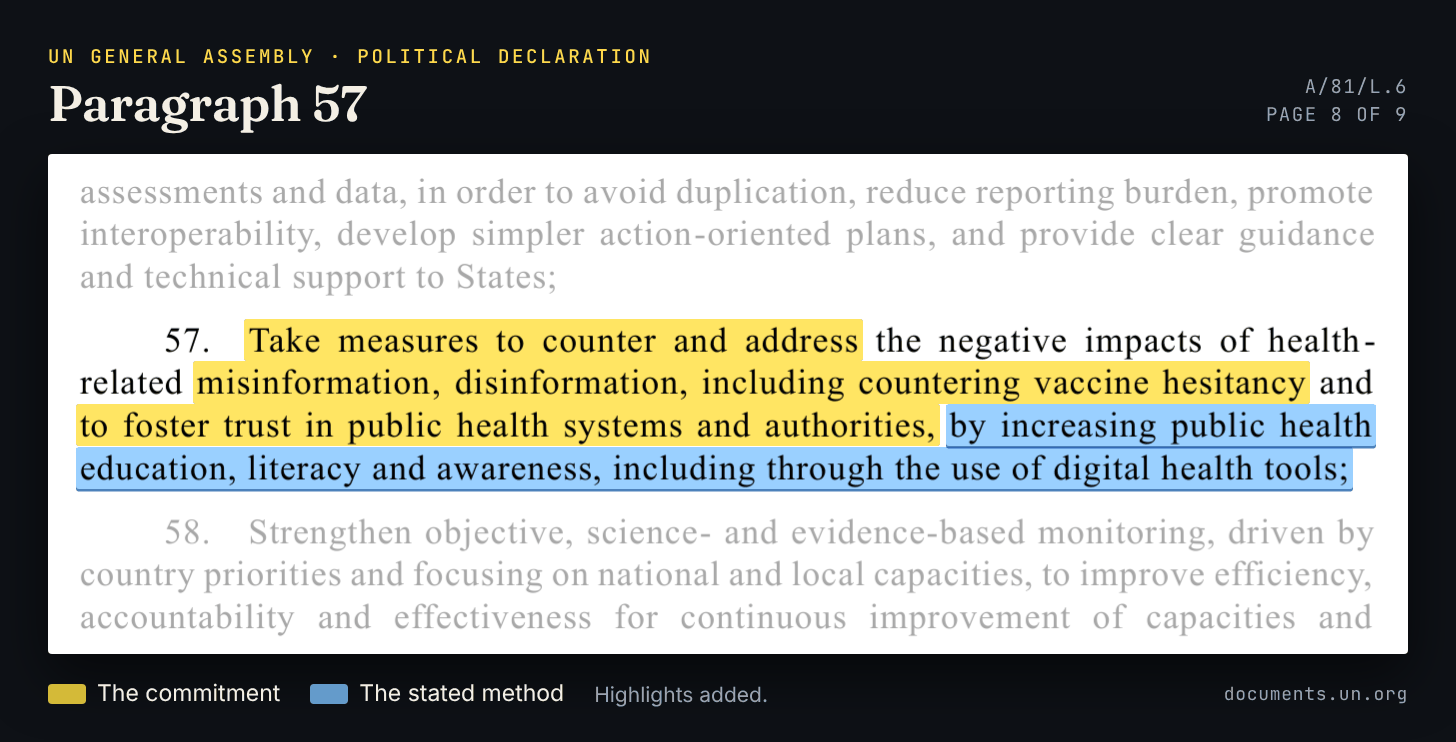
Start with what it says. The stated method is “public health education, literacy and awareness.” It names no platforms, content removal or penalties, and paragraph 29 ties trust to “accurate science and evidence-based information.” The vocabulary is not new either: the amended International Health Regulations (IHR) already list “risk communication, including addressing misinformation and disinformation” among core capacities (conference text). Three things still make this the sentence to watch.
Wider than its method. “Take measures to counter and address” is the operative phrase. Nothing says the measures stop at education, and no paragraph says what they may not include.
No definitions, no referee. Italy, which voted yes, called “infodemic management, misinformation, disinformation, and stigmatization” “not the subject of an agreed definition.”
A medical choice as a target. “Countering vaccine hesitancy” sits inside the commitment. The declaration never mentions informed consent.
What the floor record shows
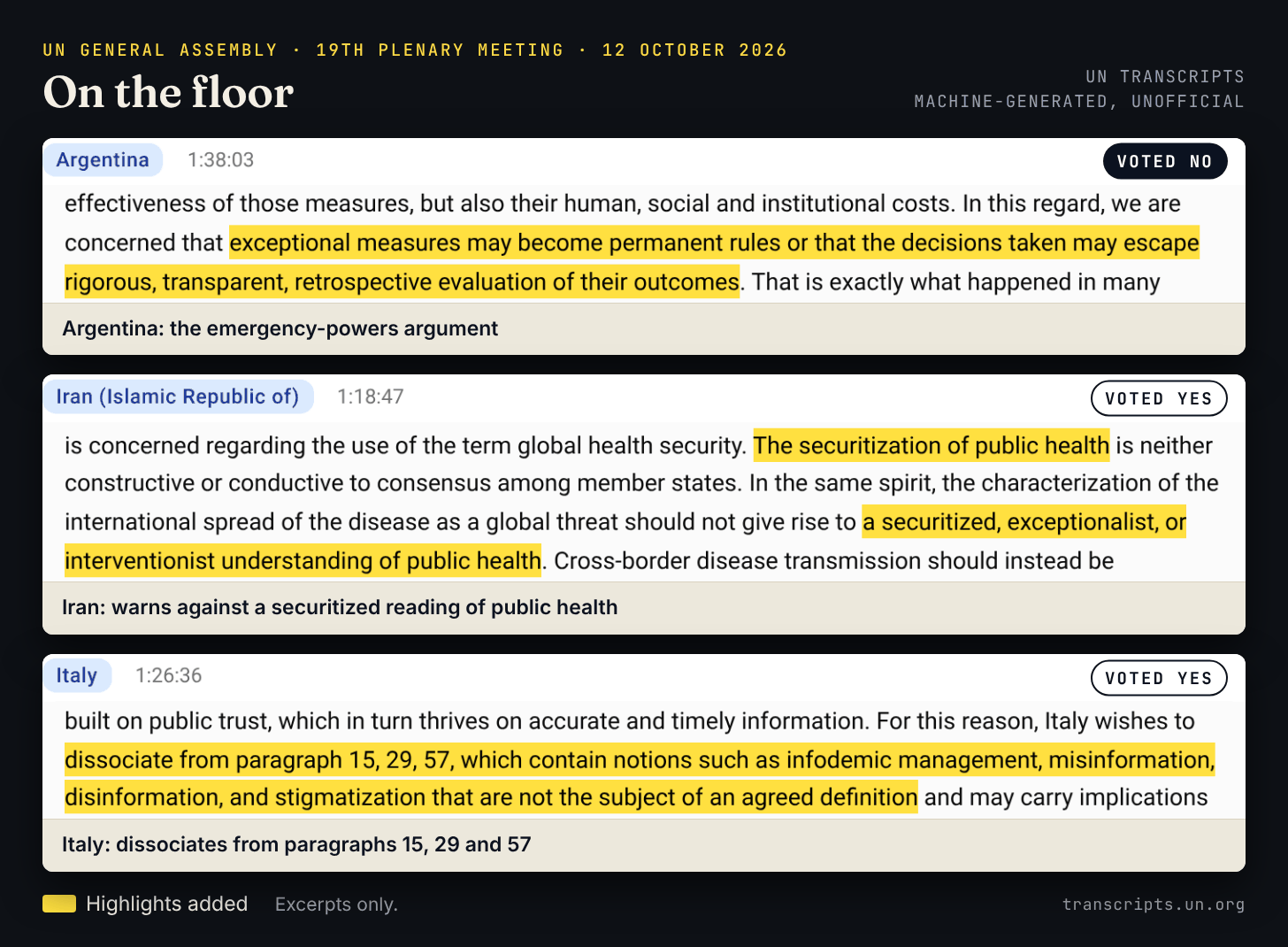
Coverage largely told this as Washington against the world, over gender, equity and treaty language. That is accurate as far as it goes, but three delegations raised other concerns and the United States raised none of them. It objected to treaty references, to sexual and reproductive health and “harmful gender ideology,” and to “the excessive and repetitive use of equity and its variants” (UN transcript). A “no” vote is a position, not a reform. On 25 September the US delegation said it “supports advancing coordination through bilateral, regional, non-governmental, private sector, and multi-sectoral engagement” (UN transcript). Leaving the multilateral body does not dismantle the network. It can move the work into bilateral agreements and public-private partnerships, which offer fewer points of democratic accountability than a General Assembly vote.
What the vote left untouched
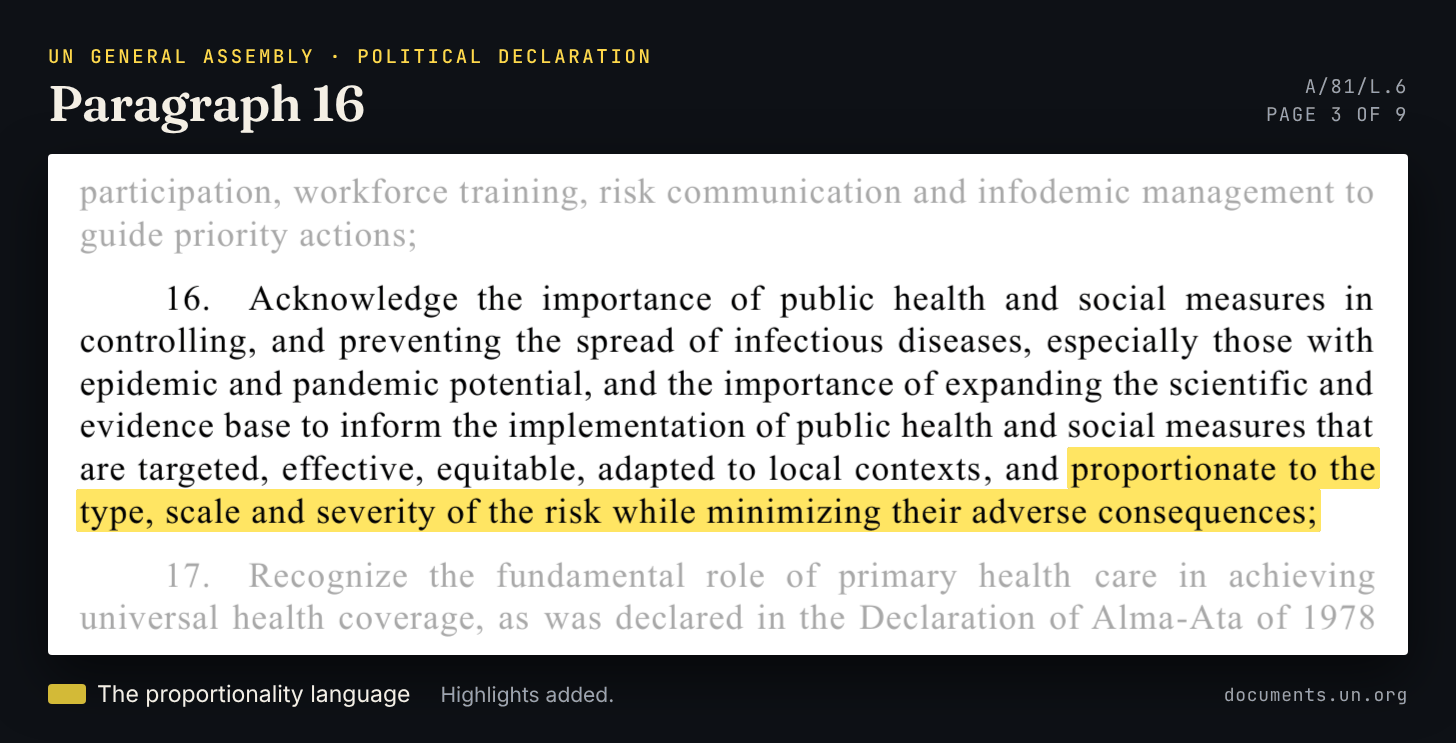
The declaration has no emergency thresholds, no sunset clause, no review by courts or legislatures, no list of rights that cannot be suspended and no informed-consent guarantee. Its nearest approach is paragraph 16, which asks for measures “proportionate to the type, scale and severity of the risk while minimizing their adverse consequences.” That echoes the Siracusa Principles’ proportionality test (§10(d), §51) without naming them. The IHR carry some protections (human rights in Article 3, traveller consent in Article 23(3)). The declaration echoes the first once, in paragraph 4, and never mentions the second.
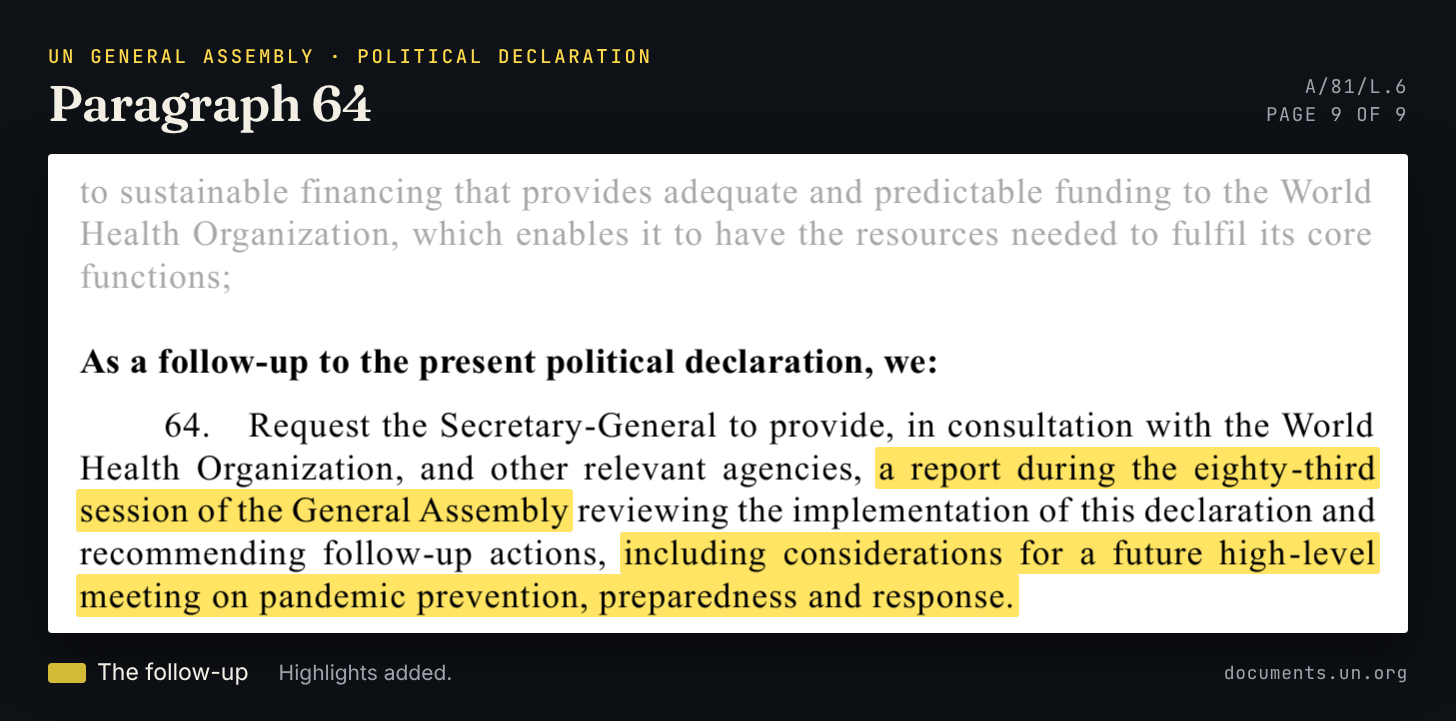
Paragraph 64 schedules no new summit. It asks the Secretary-General for a report “during the eighty-third session” of the General Assembly, which opens in September 2028, with “considerations for a future high-level meeting.” It sets no expiry for any commitment.
The consensus question
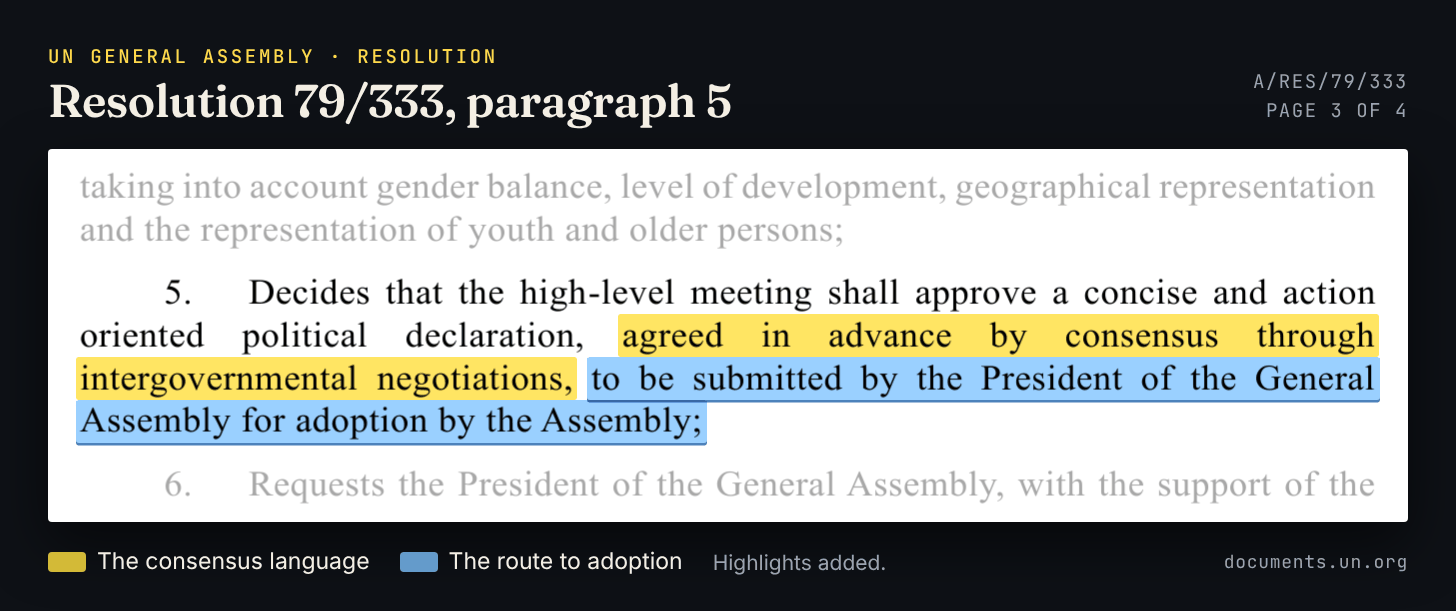
Resolution 79/333 called for a declaration “agreed in advance by consensus through intergovernmental negotiations” before the President submitted it for adoption. The President’s letter of 7 October says the text “enjoyed broad support, but some reservations remained, and the draft was left for further consideration by Member States” (PGA letter). The 12 October adoption was a recorded vote, and Argentina cited “reservations concerning the procedure.” An official UN Photo caption still says the declaration was “agreed upon by consensus.” A majority vote is not illegitimate. But “153 nations” will be cited as though everyone agreed.
What a serious declaration would have said
Seven of these eight come from my white paper. The fifth is new, added because paragraph 57 puts the issue on the table.
ICCPR Article 4 and the Siracusa Principles as the standard for emergency measures.
Sunset clauses, renewable only through legislative review.
Real-time judicial review.
Informed consent as non-derogable, building on ICCPR Article 7’s bar on “medical or scientific experimentation” without free consent.
No state pressure on platforms or publishers, in the name of countering misinformation, to restrict lawful speech.
Public disclosure of philanthropic and private funding of WHO and its partners.
Graduated emergency tiers beyond the pandemic-emergency tier the 2024 IHR amendments added.
Nutrition, sanitation and local capacity as primary prevention.
None of the first seven appears in the declaration, and the eighth only in part. On the floor, Argentina came closest on retrospective review, Iran on securitization, and Italy on definitions.
Endless Pandemics as a Failed Global Governance Model

A White Paper on Emergency Law, Global Health Governance, and the Infrastructure of Permanent Crisis
That sinking feeling that this too shall come again, as soon as team blue cycles through. I hope there are enough of us ready to RESIST!